
Spain Expands Muslim-Friendly Tourism Routes Beyond Andalusia to Valencia and Aragon in 2026

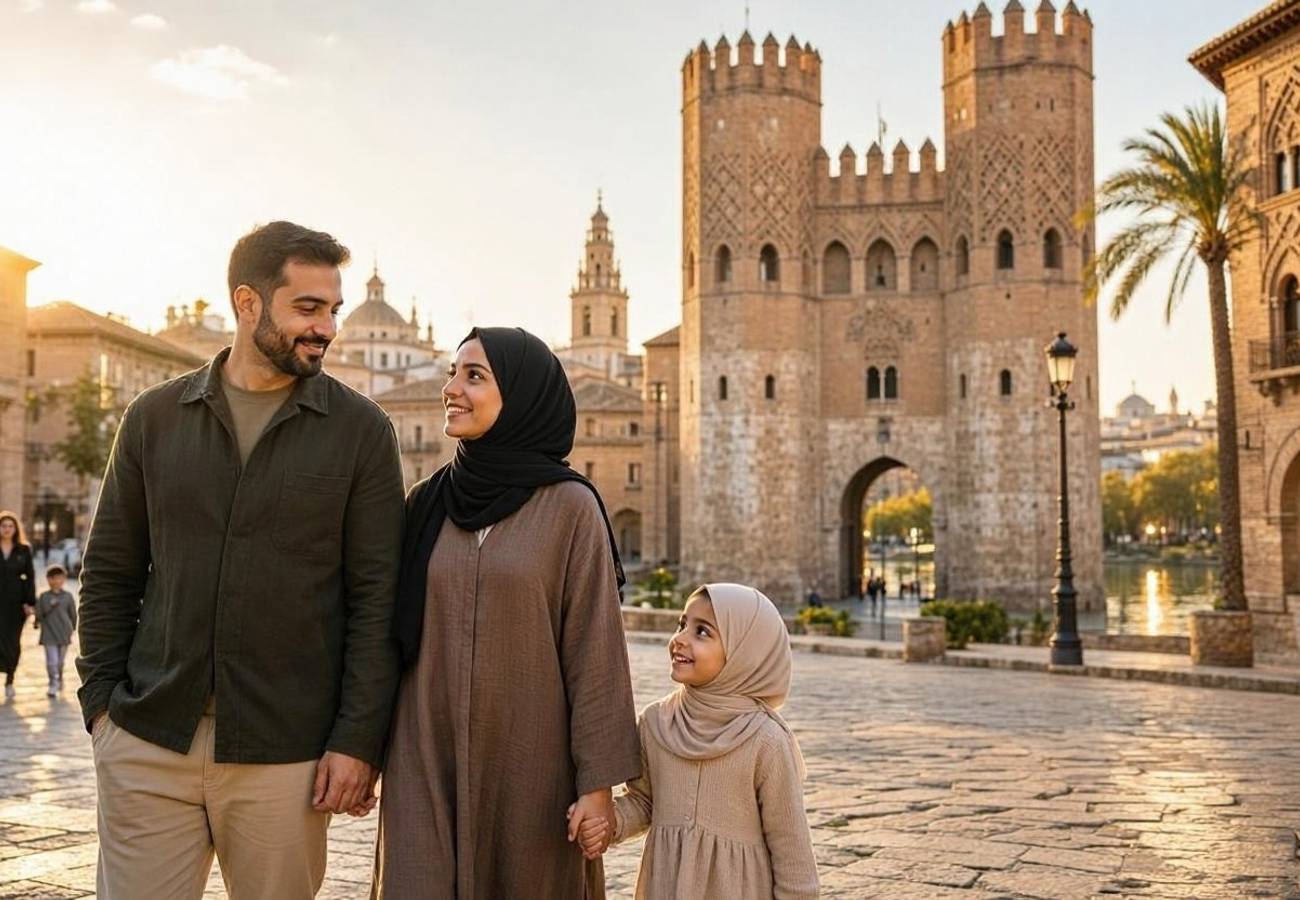
Image generated by AI
Saudi Arabian arrivals in Austria surged to 200,900 accommodation arrivals in 2025, representing a 15% year-over-year increase in overnight stays. This data point serves as a critical benchmark for Southern Europe, signaling a robust appetite for diverse European experiences among Muslim travelers that extends far beyond traditional hubs. Spain is now leveraging this regional momentum by decoupling its "Muslim-friendly" identity from the sole province of Andalusia and pushing it into the heart of the country.
The Expansion in Numbers: Beyond the Southern Coast
For years, Spain's appeal to Muslim travelers was concentrated in the Al-Andalus corridor—specifically Córdoba, Granada, and Seville. However, shifting demand from travel agencies in Singapore, Malaysia, and Indonesia has forced a strategic pivot. Spain's tourism authorities have expanded their national guides to integrate regions such as Valencia, Toledo, and Aragón (including Zaragoza).
This is not merely a marketing shift but a structural one. The updated guides now categorize services with granular precision to manage traveler expectations. Rather than a blanket "halal" label, the authorities have implemented a tiered classification system:
- Certified Halal: Services with independent certification.
- Halal Options: Establishments offering specific halal-compliant dishes.
- Self-Declared Halal: Businesses claiming compliance without third-party audits.
- Halal-Adjacent: Hotels that do not serve halal food on-site but provide curated lists of nearby certified restaurants or allow alcohol-free room modifications upon request.
Comparative Context: The European Halal Infrastructure
Spain's move mirrors a broader European trend where nations are competing for the high-spending Gulf and Southeast Asian demographics. While Spain focuses on historical heritage, Germany and Switzerland are utilizing digital accessibility and infrastructure to capture market share.
According to Switzerland Tourism, the organization has deployed over 2,400 pages of Arabic-language content to promote its lakes and regional experiences, treating the Gulf countries as a priority market. Meanwhile, Germany has standardized its approach by providing English and Arabic guides covering Berlin, Munich, Düsseldorf, and Dresden, focusing heavily on the proximity of prayer facilities to major landmarks.
The following table illustrates the divergent strategies currently employed by European destinations to attract this demographic:
| Destination | Primary Strategic Lever | Key Focus Areas | Data Point / Scale |
|---|---|---|---|
| Spain | Heritage Expansion | Valencia, Toledo, Aragón | Tiered Halal Certification |
| Austria | Volume Growth | Alpine/Winter Wellness | 15% $\uparrow$ Saudi overnight stays (2025) |
| Switzerland | Digital Localization | Lakes, Cities, Nature | 2,400+ Arabic web pages |
| Germany | Urban Infrastructure | Berlin, Munich, Dresden | Multi-language Urban Guides |
| UK | Cultural Soft Power | Lake District, Highlands | "Starring Great Britain" Campaign |
What This Means for Travelers
For the individual traveler, the expansion of these guides reduces the "planning friction" typically associated with visiting non-OIC (Organization of Islamic Cooperation) countries. However, the data suggests that the "last mile" of the journey remains the most variable.
Actionable Booking Advice:
- Verify the Label: Because Spain now distinguishes between "certified" and "self-declared" halal, travelers should explicitly ask for the certification body when booking hotels in Valencia or Zaragoza.
- Airport Logistics: For those entering via Madrid-Barajas, utilize the established mosque and multi-faith facilities to reset before heading to regional destinations. Check current access hours via the AENA airport authority.
- Advance Requests: Since many hotels in the new routes offer "alcohol-free rooms" only upon request, these must be codified in the booking confirmation rather than requested at check-in to ensure availability.
- Seasonal Timing: Following Austria's lead in promoting winter wellness, travelers should consider visiting the Aragón and Valencia regions in the shoulder seasons (Q4 and Q1) to avoid the summer crowds while still accessing the expanded halal infrastructure.
Forward Projection: The Trust Economy
The trajectory of European tourism suggests that the competitive edge will shift from "availability" to "verifiability." Spain's move to categorize food services is a direct response to a trust gap. As the World Tourism Organization (UNWTO) continues to track the growth of specialized tourism segments, we expect to see more European nations move away from generic "Muslim-friendly" tags toward a standardized, audited certification system.
The decline of Gulf guests in Germany during early 2026 suggests that market share is volatile and highly dependent on the perceived quality of local services. Spain's strategy of linking historical Islamic heritage in Toledo and Zaragoza with practical, certified modern services is a calculated attempt to create a "full-circuit" holiday that keeps travelers in the country longer.
FAQ: Spain Muslim-Friendly Travel 2026
Will halal food be easier to find outside Andalusia? Yes. The expansion of official guides to Valencia, Toledo, and Aragón provides a verified map of certified and self-declared halal options, though availability is still higher in major cities than in rural areas.
Is it a good time to book a trip to regional Spain? Yes, particularly for those wanting to avoid the congestion of Seville and Granada. The new infrastructure in Zaragoza and Valencia allows for a more diversified itinerary.
Which airlines are expanding on these routes? While specific carrier expansions weren't cited, the increase in Gulf arrivals in neighboring Austria suggests a broader trend of increased capacity from Middle Eastern carriers into Southern Europe.
The shift from regional niches to national networks marks the professionalization of halal tourism in the Mediterranean.
Related Travel Guides
This article is for informational purposes. Flight routes, passenger regulations, visa rules, and transit advisories are subject to change by airlines and aviation authorities. Readers are advised to verify schedules and travel documentation with relevant carriers and border agencies before departure.
Related Stories

Albany Christmas Festival and Pageant 2026: Essential Access and Transit Guide for Families

Victoria Inner Harbour to Host Free Harbour Holiday Lights Event with Santa Boat Arrival December 2026
