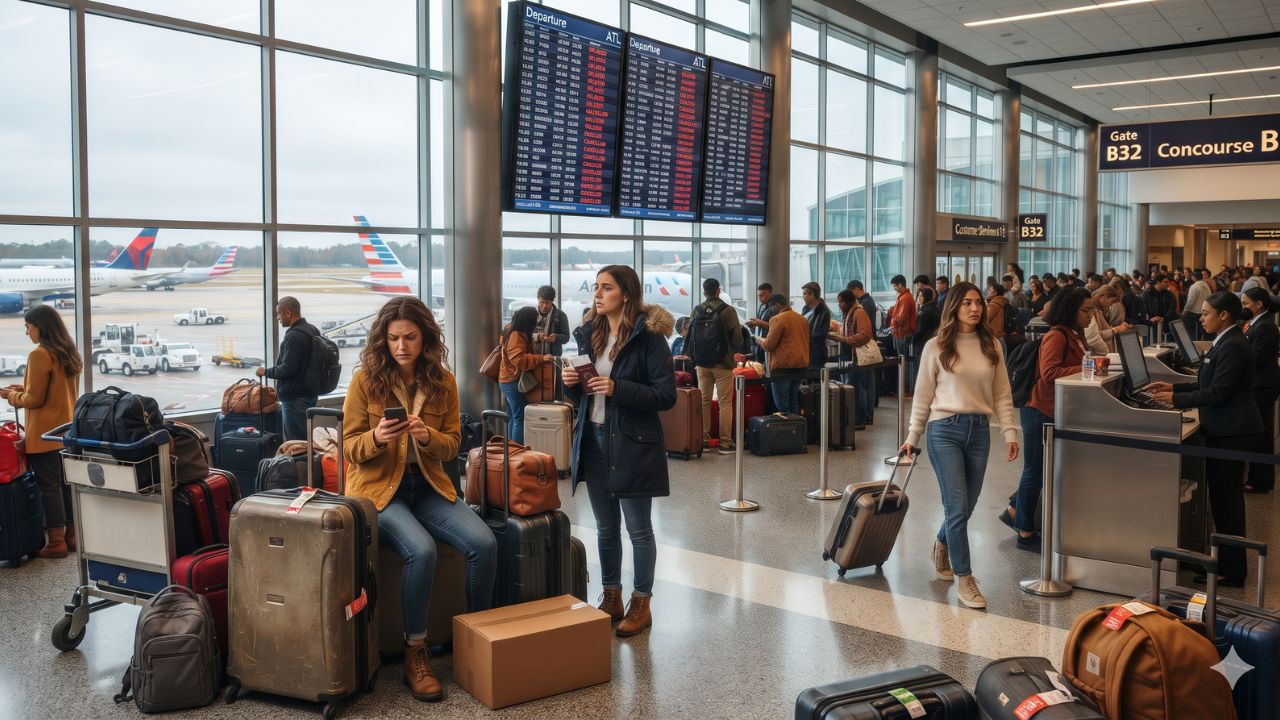
US Holiday Flight Turmoil: Over 4,200 Delays Strike Major Hubs Ahead of Thanksgiving Coastal Storm

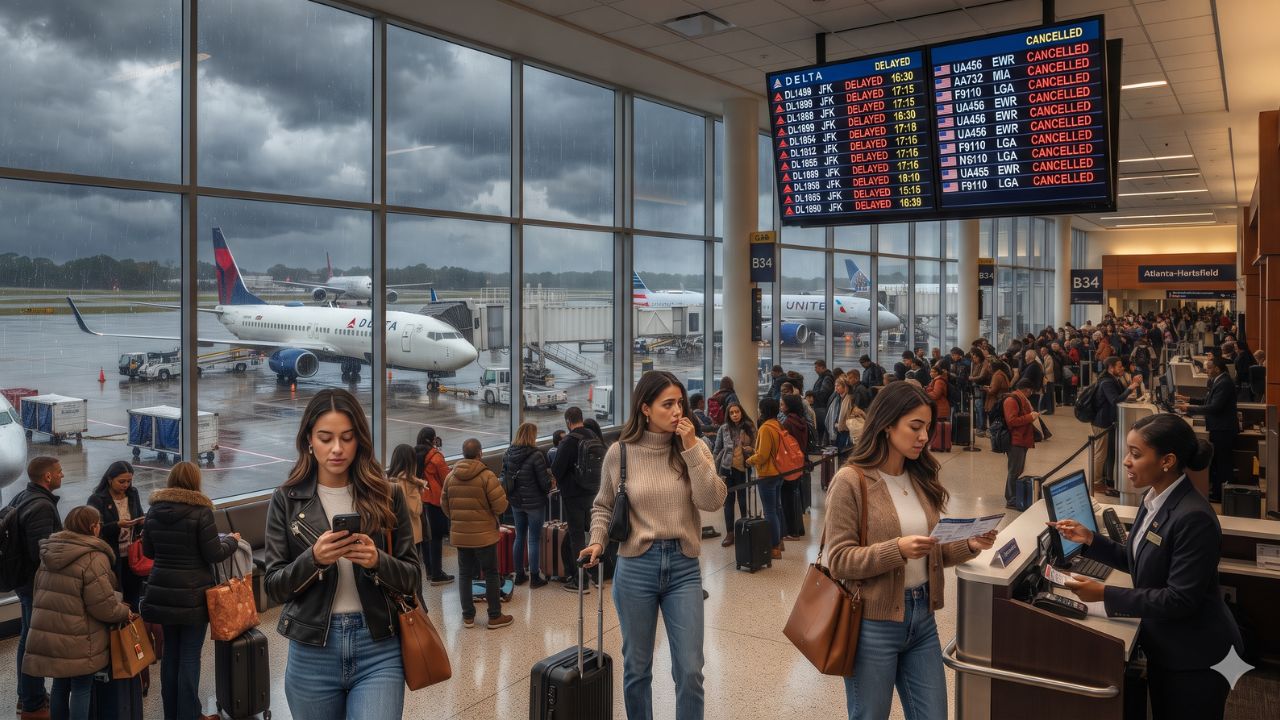
With seven of America's twelve most disrupted airports clustered along the Atlantic Seaboard, commercial airlines recorded 4,228 flight delays and 169 cancellations on Sunday alone, exhausting operational reserves just days before a major coastal storm threatens 20 states from Florida to Maine.
The sharp escalation in domestic flight disruptions recorded on 22 November 2026 at 1:22 PM Eastern Time signals acute vulnerability across the United States aviation corridor heading into Thanksgiving week. Led by Delta Air Lines' internal weight-and-balance automation breakdown and exacerbated by tight air traffic metering, airline schedules began collapsing well before any winter weather arrived. With meteorologists at the National Weather Service tracking a potent low-pressure system slated to sweep across the eastern third of the country on Thursday, 26 November, airport operations in Atlanta, New York, and Chicago have virtually zero scheduling buffer remaining.
Carriers Absorb Widespread Gridlock Across Domestic Hubs
The operational strain hit network trunk carriers and regional feeders simultaneously. Delta Air Lines took the steepest hit, logging 1,363 delays and 28 cancellations as dispatchers manually calculated load sheets following an automated system crash. American Airlines followed with 580 delays and two cancellations, while Southwest Airlines absorbed 527 delays and 28 cancellations across its point-to-point network.
Regional operators responsible for feeding mainlines into crowded hubs experienced severe schedule degradation. Endeavor Air logged 234 delays and 19 cancellations, while Republic Airways posted 208 delays and 16 cancellations. United Airlines registered 249 delays and 19 cancellations, while JetBlue Airways posted 195 delays and two cancellations. Regional carrier SkyWest Airlines recorded 141 delays alongside one cancellation, while Alaska Airlines and PSA Airlines each posted 93 delays, accompanied by seven and two cancellations respectively.
Airport hubs exhibited severe geographic concentration. While Hartsfield-Jackson Atlanta International Airport led the nation in raw delays with 922 late departures and 26 cancellations, New York’s LaGuardia Airport (LGA) posted the highest cancellation rate in the country, scrubbing 44 flights alongside 549 delays.
Data Matrix of Impacted Hubs and Operating Airlines
The operational data compiled on Sunday afternoon demonstrates the scale of delays across primary domestic hubs.
| Airport Facility & Code | Geographic Region | Recorded Delays | Recorded Cancellations | Primary Operational Stress Factor |
|---|---|---|---|---|
| Atlanta Hartsfield-Jackson (ATL) | Southeast (Georgia) | 922 | 26 | Delta weight-and-balance glitch & GDP |
| New York LaGuardia (LGA) | Northeast (New York) | 549 | 44 | Saturated runways & East Coast ATC holds |
| Miami International (MIA) | Southeast (Florida) | 236 | 0 | Severe gate holds & inbound connection delays |
| Chicago O’Hare (ORD) | Midwest (Illinois) | 235 | 7 | Midwest arrival metering & taxi queues |
| Newark Liberty (EWR) | Northeast (New Jersey) | 226 | 13 | Terminal airspace compression & flow delays |
| New York JFK (JFK) | Northeast (New York) | 206 | 5 | International widebody bank congestion |
| Fort Lauderdale (FLL) | Southeast (Florida) | 163 | 2 | South Florida airspace flow management |
| San Francisco (SFO) | West Coast (California) | 149 | 7 | Parallel runway spacing & marine cloud layer |
| Houston Bush (IAH) | Gulf Coast (Texas) | 85 | 11 | Hub feeder rotation and crew timeouts |
| Austin-Bergstrom (AUS) | Southwest (Texas) | 79 | 8 | Cascading regional turn delays |
| Washington Dulles (IAD) | Mid-Atlantic (Virginia) | 65 | 5 | Inbound flow controls from southern hubs |
| Houston Hobby (HOU) | Gulf Coast (Texas) | 63 | 14 | Southwest turnaround bottlenecks |
Examining this geographic distribution reveals that seven of the twelve most impacted facilities—Atlanta, LaGuardia, Miami, Newark, JFK, Fort Lauderdale, and Washington Dulles—line the Atlantic coastline. This is the exact corridor projected to absorb the brunt of the developing Thanksgiving holiday storm.
Approaching Thanksgiving Storm Threatens 20 Eastern States
Compounding these current carrier difficulties is an incoming frontal boundary modeled to hit during peak Thanksgiving travel. Weather models project a strong coastal low-pressure disturbance developing over the Gulf Coast on Wednesday, tracking rapidly northeast along the Eastern Seaboard on Thursday, 26 November 2026.
The storm system threatens to produce drenching rains and sustained gale-force winds exceeding 45 miles per hour across coastal hubs from Florida through Georgia, the Carolinas, the Mid-Atlantic, and New England. Inland, cold Canadian air wrapping around the low-pressure center is expected to drop accumulating snow across the Great Lakes basin, upstate New York, and higher elevations of Vermont, New Hampshire, and Maine.
When sustained crosswinds exceed 35 knots, airports like LaGuardia and Newark—managed by the Port Authority of New York and New Jersey—must deactivate intersecting crosswind runways, slashing hourly arrival capacity by up to 50 percent. Because airlines already operated with zero slack on Sunday, storm ground delay programs on Thanksgiving Day could trigger mass multi-day cancellations.
Visitor Insider Tips for Thanksgiving Travelers
Fliers scheduled to depart between Tuesday, 24 November, and Friday, 27 November, must execute active schedule defenses:
- Move Itineraries Ahead of the Wednesday Storm Window: If your airline posts a weather waiver for East Coast airports, immediately rebook to an earlier flight on Monday or Tuesday morning. Securing a seat 24 hours before the front hits avoids the mass scramble that occurs when ground stop programs take effect.
- Prioritize Direct Morning Nonstops: Departures scheduled between 6:00 AM and 7:30 AM have the highest on-time reliability because aircraft sit at departure gates overnight. Connecting afternoon flights through Atlanta, Charlotte, or New York face an extreme probability of missing onward connections.
- Avoid Tight Connections in New York and Atlanta: With LGA, EWR, and ATL already logging over 1,700 combined delays under clear skies, connection buffers under 90 minutes are dangerous. If your scheduled layover is under an hour, request an earlier origin flight via your carrier's customer service chat.
- Keep Essential Travel Gear in Personal Daypacks: In the event of mass gate delays or weather holds, baggage handling systems become saturated, frequently trapping checked luggage in transit holds for 24 to 48 hours. Ensure essential medications, electronic power banks, winter outerwear, and basic toiletries remain on your person.
The Fragility of Modern Airspace Architecture
The convergence of internal airline technology failures and seasonal winter meteorology exposes the razor-thin tolerances of contemporary commercial aviation. Modern airlines operate at asset utilization rates near 100 percent, meaning airframes fly continuous multi-leg rotations from dawn until past midnight.
When an internal glitch delays more than 1,300 flights on a major carrier like Delta on Sunday, pilots and flight attendants burn through their federally mandated duty hours while waiting on taxiways. This leaves hundreds of flight crews legally out of hours by Sunday evening, stranding aircraft in outstations without certified replacement crews available. As federal controllers at the Federal Aviation Administration (FAA) prepare for holiday passenger counts exceeding 2.7 million travelers per day, any severe coastal squall on Thanksgiving morning will instantly tip an already strained system into widespread operational paralysis.
Frequently Asked Questions
Which US airport had the most cancellations on Sunday, 22 November?
New York's LaGuardia Airport (LGA) recorded the highest cancellation count in the country with 44 canceled flights, alongside 549 delayed departures.
Which airline suffered the highest number of delays ahead of Thanksgiving?
Delta Air Lines absorbed the steepest operational impact, logging 1,363 delayed flights nationwide and 28 cancellations following an automated weight-and-balance system glitch.
How will the Thanksgiving coastal storm affect holiday flights?
The developing weather system threatens heavy rain, high winds, and inland snow across more than 20 states from Florida to Maine on Thursday, 26 November, likely triggering severe air traffic ground delays and runway capacity reductions.
Proactively checking departure statuses and securing early morning flight alternatives is the most effective strategy for outrunning the holiday travel rush.
Related Travel Guides
- FAA Imposes Atlanta Ground Delays as Delta Dispatches Over 1,100 Late Flights Ahead of Thanksgiving
- Delta Air Lines Weight and Balance Automation Glitch Triggers Nationwide Delays Ahead of Thanksgiving
- Bypassing Auckland: Christchurch Adds 1.27 Million International Seats in South Island Tourism Surge
This article is for informational purposes. Flight routes, passenger regulations, visa rules, and transit advisories are subject to change by airlines and aviation authorities. Readers are advised to verify schedules and travel documentation with relevant carriers and border agencies before departure.
Related Stories
US Holiday Travel Rush Faces Disruption Risks Following Nationwide FAA Telecommunications Outage

Saudi Arabia Travel Warnings Renew Focus on Middle East Stopover Refunds and Passenger Rights in 2026