
The Zero-Buffer Holiday: Why Thanksgiving Air Travel Fails and How Travelers Can Adapt

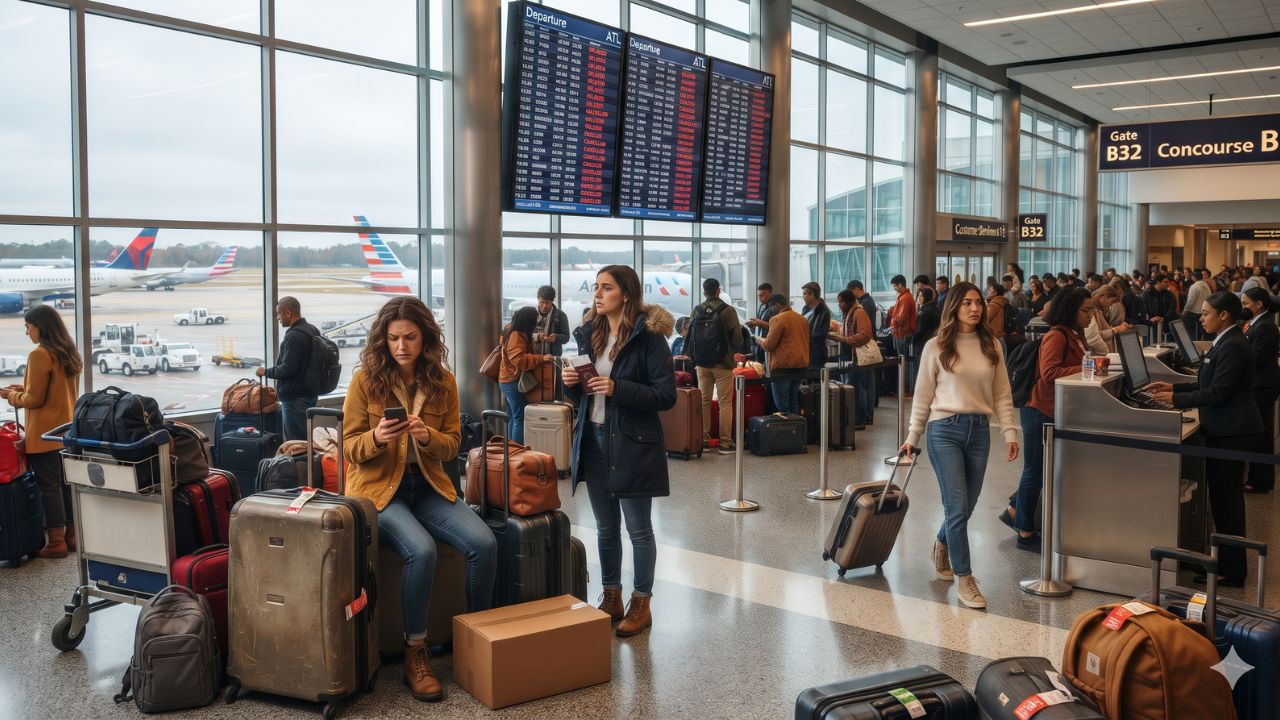
When a single canceled flight can force a holiday traveler to choose between paying thousands of dollars for an emergency walk-up ticket or missing Thanksgiving entirely, relying on traditional airline customer service queues has become a high-risk gamble.
With Thanksgiving arriving on 26 November 2026, the United States commercial aviation network is operating at peak passenger density with zero slack. As recent widespread ground stops demonstrated, contemporary air travel is engineered entirely for volume rather than operational resilience. When minor software glitches, telecommunication holds, or weather fronts ground aircraft, passengers absorb the physical and financial consequences. Industry specialists, including Audrey Kohout, co-chief executive of door-to-door luggage shipping specialist Luggage Forward, stress that surviving holiday travel demands abandoning reactive habits in favor of aggressive schedule defense and luggage decoupling.
Why Modern Aviation Networks Collapse Under Minor Disruptions
The structural vulnerability of holiday air travel stems from hyper-efficient fleet utilization. Commercial airlines schedule airframes and flight crews on tight daisy-chained rotations spanning four to six legs daily. If a morning aircraft in Dallas suffers a 90-minute delay, that deficit cascades into Chicago, Charlotte, and Boston by evening.
When the Federal Aviation Administration (FAA) implements a localized ground stop, the system breaks. Pilots and flight attendants reach their federally mandated duty-hour limits while sitting on taxiways, causing sudden flight cancellations even after weather clears.
For stranded passengers, recovery is grueling. Because commercial aircraft operate at load factors exceeding 90 percent over holiday weeks, airlines have virtually no empty seats to accommodate displaced travelers. A passenger whose evening connection dissolves often faces lines of hundreds of fliers waiting for overwhelmed gate agents, with subsequent open seats days away.
Strategic Comparison of Holiday Travel Tactics
Understanding the trade-offs between conventional travel habits and defensive scheduling reveals how proactive choices mitigate disruption risk.
| Travel Strategy Variable | Conventional Passenger Choice | Defensive Tactical Alternative | Operational Risk Reduction |
|---|---|---|---|
| Departure Flight Timing | Mid-afternoon or evening flights | First departure of the day (05:30–07:00 AM) | Aircraft parked at gate overnight; rested flight crew |
| Routing Architecture | Connecting itinerary (Lower base fare) | Direct nonstop routing | Eliminates hub layovers and missed gate transfers |
| Luggage Management | Checked suitcases at ticket counter | Ship bags ahead via courier or carry-on only | Total mobility to rebook, sprint, or switch terminals |
| Flight Status Tracking | Airport flight monitors / gate boards | Aircraft tail-number radar tracking | 2 to 3 hours advance notice of upstream delays |
| Irregular Operations Action | Wait in concourse customer service line | Call international desk while using app rebooking | Bypasses hundreds of stranded terminal passengers |
| Overnight Contingency | Assume airline provides hotel room | Book cancellable airport room immediately | Protects lodging before nearby hotels reach capacity |
As Kohout noted when analyzing recent airport freezes: "This past weekend’s ground stop showed that air travel is built for volume, not resilience, and travelers are often left absorbing the fallout. Thousands of people spent the weekend stranded in random cities, waiting in rebooking lines and dragging their bags from terminal to hotel and back again. Thanksgiving and other holiday travel is around the corner and more disruptions are likely, so travelers should start planning accordingly. Book the first flight of the day, and choose non-stop routes when you can. Ship your bags ahead, so you can deal with the chaos without the burden of lugging them around."
Decoupling Luggage: The Hidden Operational Advantage
The physical burden of baggage is one of the most overlooked bottlenecks during mass flight disruptions. When an airline abruptly cancels a flight, checked suitcases do not appear on baggage carousels immediately. Ramp handlers frequently lock bags in subterranean transit holds for 12 to 24 hours while prioritizing outbound departures.
A traveler tethered to checked luggage cannot leave the airport easily, cannot hop on an Amtrak train, and cannot book an alternative departure from another regional airport. Decoupling your luggage—either by packing strictly into an overhead-compliant carry-on or shipping suitcases ahead directly to your holiday destination via door-to-door courier services—restores complete personal mobility.
Without suitcases holding you hostage at terminal carousels, you can rebook alternative flights on rival carriers, walk out of the terminal within minutes, or hail a rideshare to a hotel before local accommodation sells out.
Visitor Insider Tips for Holiday Air Travel
Executing a smooth Thanksgiving journey requires strict adherence to practical travel rules:
- Book the First Flight on the Schedule: Select the 6:00 AM departure. Early morning aircraft sit at the gate overnight, undergoing maintenance and pre-flight checks hours before departure. If a mechanical issue occurs, you have the entire calendar day to secure backup rebookings. Late evening cancellations, by contrast, leave travelers stranded overnight.
- Invest in Nonstop Routings: A connecting flight through Atlanta, Chicago O'Hare, or Denver doubles your exposure to runway ground delay programs. Paying an extra $100 to $150 for a direct flight is significantly cheaper than paying for last-minute hotel rooms, ground transport, and restaurant meals during an unplanned overnight layover.
- Keep Survival Essentials in Your Personal Item: Ensure that all prescription medications, essential hygiene items, eyeglasses, phone battery packs, and irreplaceable valuables stay in a backpack that fits underneath the seat in front of you. Never place critical medication in checked bags or roller bags that gate agents might force you to gate-check.
- Know Your Cash Refund Rights: Rules enforced by the U.S. Department of Transportation Aviation Consumer Protection guarantee that passengers are entitled to an automatic cash refund back to their original payment method if an airline cancels a flight or introduces a significant schedule change and the traveler declines the rebooking options offered.
Aviation Capacity Constraints and the Passenger Mindset
The modern aviation ecosystem operates on algorithms optimized to maximize passenger volume per square foot of terminal space. Security screening checkpoints operated by the Transportation Security Administration (TSA), curbside access roads, and boarding gates operate at redline capacity during the Thanksgiving travel period.
When the system hiccups, customer service departments inevitably fall short. Recognizing that airlines cannot provide personalized white-glove rescue services during mass irregular operations empowers travelers to take control of their own itineraries. By securing early flights, eliminating checked bags, and monitoring aircraft movements hours before heading to the terminal, holidaymakers can successfully navigate the busiest travel week of the year.
Frequently Asked Questions
Why is the first flight of the day the safest choice for holiday travel?
Early morning flights have the highest on-time departure rate because the aircraft is parked at the gate overnight and the flight crew has completed mandatory rest periods, eliminating upstream delays.
What are my rights if my flight is canceled during Thanksgiving week?
Under federal Department of Transportation rules, you are entitled to a full cash refund if an airline cancels your flight and you decline their proposed rebooking alternatives.
How does shipping luggage ahead help during flight cancellations?
Shipping bags ahead frees you from terminal baggage claim carousels. If your flight is canceled, you can switch airlines, take a train, or head straight to a hotel without waiting hours for luggage to be offloaded.
Mastering holiday travel requires stripping away logistical deadweight, booking dawn departures, and taking charge of your own schedule long before terminal boarding doors close.
Related Travel Guides
This article is for informational purposes. Flight routes, passenger regulations, visa rules, and transit advisories are subject to change by airlines and aviation authorities. Readers are advised to verify schedules and travel documentation with relevant carriers and border agencies before departure.
Related Stories
US Holiday Travel Rush Faces Disruption Risks Following Nationwide FAA Telecommunications Outage
Brussels and Charleroi Airports Face Major Flight Disruptions as National Strike Threatens 59,500 Passenger Journeys
