
Vanishing Americana: Cheyenne's Twin Chimneys Demolition Sparks National Motel Preservation Battle

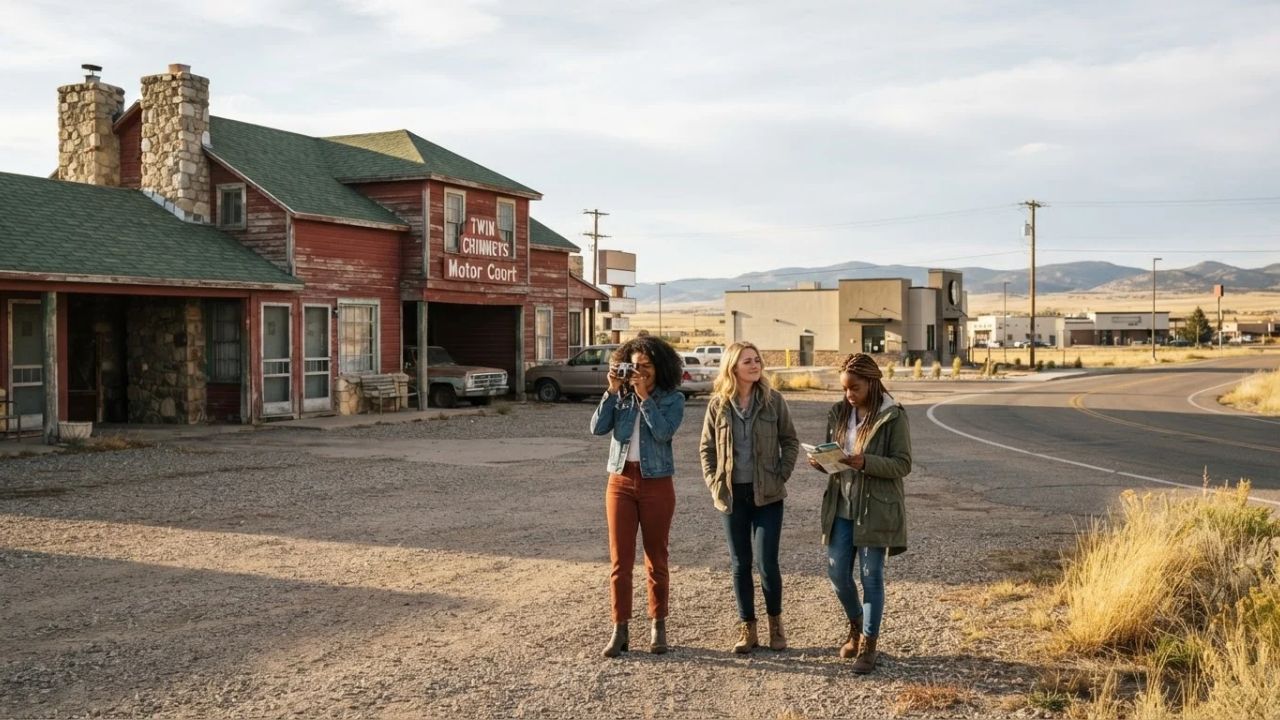
The demolition of Cheyenne's nearly 90-year-old Twin Chimneys Motor Court for a commercial drive-thru underscores an accelerating crisis across America's historic highways. As vintage motor courts from the Lincoln Highway to Route 66 disappear, heritage travelers and conservation groups are pushing for adaptive reuse to rescue the nation's mid-century roadside culture.
The Local Trend Revealed: The Disappearing Icons of American Road Travel
In Cheyenne, Wyoming, the sudden leveling of the Twin Chimneys Motor Court at 2405 East Lincolnway marks another painful chapter in the slow erosion of classic American roadside lodging. Built during the 1930s, the motor court stood for nearly nine decades as an unmistakable gateway symbol along the historic Lincoln Highway—the nation's premier coast-to-coast automobile thoroughfare. Heavy machinery cleared the entire complex, reducing its signature red exterior walls, green gables, knotty pine interiors, and namesake hand-cut twin stone chimneys to rubble to make way for a 7 Brew Coffee drive-thru franchise.
The property owner pursued commercial redevelopment after completing municipal permitting approvals, reflecting an intensifying national trend where escalating suburban land values collide with aging, unprotected travel architecture. From the wind-swept high plains of Wyoming to historic bypasses in Missouri, New Mexico, and California, independent roadside motels face immense economic headwinds. While vintage motor courts once defined the great American family road vacation, hundreds have been demolished over the past three decades to accommodate modern retail pads, cookie-cutter chain lodging, and highway widening initiatives.
STRUCTURAL EVOLUTION: TWIN CHIMNEYS SITE TRANSFORMATION
| Category / Entity | Details / Impact |
|---|---|
| Historical Attribute (1930s) | Modern Commercial Replacement (2026) |
| Twin stone exterior chimneys | High-speed prefabricated beverage service drive-thru lanes |
| Knotty pine paneled interiors | Standardized commercial drive-up kiosk |
| Integrated covered carports | Automated dual-lane ordering stations and asphalt queue |
| Transcontinental highway motel | National beverage retail chain operation (7 Brew Coffee) |
Anatomy of an Era: How Motor Courts Shaped 20th-Century Tourism
Motor courts emerged during the 1920s and 1930s as a direct response to the democratization of private automobile travel. Prior to the establishment of the Interstate Highway System, motorists navigated long-distance two-lane roads such as the Lincoln Highway (U.S. Route 30) and Route 66. Early road trippers found grand downtown hotels impractical, expensive, and lacking parking space for vehicles.
Motor courts solved these friction points by pioneering integrated, auto-centric lodging. Drivers pulled their vehicles directly alongside individual private cabins or covered carports, keeping luggage secure and vehicles within arm's reach. The architectural design of the Twin Chimneys Motor Court represented classic vernacular tourism design: durable stone hearths providing radiant warmth in high-plains winters, distinctive exterior color schemes visible to approaching motorists at 45 miles per hour, and wood-paneled motor rooms designed for clean, unpretentious overnight rest.
WHY HISTORIC MOTOR COURTS FACE NATIONAL EXTINCTION
| Category / Entity | Details / Impact |
|---|---|
| Market Challenge | Direct Impact on Historic Roadside Lodging |
| Interstate Highway Bypasses | Diverts long-haul traffic away from original commercial corridors |
| Franchise Hotel Chains | Standardized amenities (pools, loyalty points) outcompete motels |
| Escalating Urban Land Values | High commercial real estate values incentivize total redevelopment |
| Deferred Maintenance Costs | High restoration expenses for aging electrical, plumbing, roofs |
| Regulatory Zoning Pressures | Suburban commercial codes often mandate drive-thru conversions |
Cultural and Environmental Value: Preservation Battles and Adaptive Reuse
Preservation advocates across the Mountain West voiced profound grief over the demolition. Megan Stanfill, executive director of the Alliance for Historic Wyoming, emphasized that the loss of Twin Chimneys represents more than the disappearance of old timbers; it strips a physical anchor of 20th-century working-class mobility from the community. Stanfill pointed out that many roadside structures do not carry formal National Register status, leaving them vulnerable to swift demolition despite their deep resonance in local collective memory.
For the visitor, the real impact is the continuing homogenization of travel corridors. When authentic roadside properties vanish, every town begins to look identical, dominated by identical drive-thru signs and franchise facades. Across the United States, several landmark properties have suffered similar fates when preservation interventions arrived too late.
ICONIC LOST AND THREATENED AMERICAN MOTOR COURTS AT A GLANCE
| Column 1 | Column 2 | Column 3 | Column 4 | Column 5 |
|---|---|---|---|---|
| Historic Motel Landmark | City and State | Built Era | Fate / Closure Date | Historical Value |
| Twin Chimneys Motor Court | Cheyenne, Wyoming | 1930s | Demolished (2026) | Lincoln Highway icon |
| Coral Court Motel | Marlborough, Missouri | 1941 | Demolished in 1995 | Art Deco Route 66 |
| Aztec Motel (Auto Court) | Albuquerque, NM | 1932 | Demolished in 2011 | Route 66 neon gem |
| Sun-n-Sand Motor Hotel | Jackson, Mississippi | 1960 | Partially razed (2021) | Civil rights history |
| Topanga Ranch Motel | Malibu, California | 1929 | Wildfire loss (2025) | Pacific Coast trail |
In Marlborough, Missouri, outside St. Louis, the famed Coral Court Motel—built in 1941 in sleek Art Deco style with Vitrolite glass tiles and private garages—was listed on the National Register of Historic Places. Despite international acclaim, it was shuttered in 1993 and razed in 1995 for a suburban residential subdivision. In Albuquerque, New Mexico, the 1932 Aztec Motel stood on Route 66 for 79 years before high remediation costs led to its demolition in 2011. Mississippi's mid-century Sun-n-Sand Motor Hotel in Jackson, tied to civil rights organizing and state political history, suffered partial demolition in 2021. In California, the seaside 1929 Topanga Ranch Motel along the Pacific Coast Highway survived decades of commercial threats only to be destroyed by the Palisades Fire in 2025.
Adaptive reuse presents a proven, sustainable alternative to landfill waste and cultural erasure. Rather than tearing down historic motels, forward-thinking hospitality groups and community land trusts have retrofitted motor courts into boutique hotels, artisan studios, community co-working hubs, and open-air food halls. Properties like the restored Boots Court in Carthage, Missouri, and the Blue Swallow Motel in Tucumcari, New Mexico, prove that retro motels generate substantial heritage tourism revenue when modernized with high-speed internet, premium bedding, and preserved neon signage.
Visitor Insider Tips: Exploring Lincoln Highway and Vintage Roadside Heritage
-
Cheyenne's Remaining Heritage Stops: While the Twin Chimneys no longer stands on East Lincolnway, heritage travelers can still visit the historic Cheyenne Depot Museum in the heart of downtown, marvel at the Big Boy Steam Locomotive in Holliday Park, and tour the historic Plains Hotel (opened in 1911), which welcomed early transcontinental motorists.
-
Off-Peak Architectural Scouting: The best time for photographing historic roadside neon along surviving segments of the Lincoln Highway (U.S. 30) and Route 66 is the blue hour—roughly 30 minutes after sunset—when restored vintage neon tubes illuminate against the western sky.
-
Etiquette at Independent Roadside Stops: When photographing surviving, privately owned vintage motels, always ask management for permission before shooting on-site. Support these fragile independent operations directly by purchasing retro merchandise, leaving tips at on-site diners, or booking a night's stay directly through their front desk rather than third-party booking aggregators.
-
Local Dining Specialty in Cheyenne: While in Cheyenne, sample authentic Western comfort cuisine at historic local establishments like The Albany Restaurant, serving prime rib and hand-cut steaks beside the Union Pacific tracks since 1942, or enjoy a bison burger accompanied by locally brewed microbrews.
Tourism Outlook: The Future of Roadside Heritage Tourism
The loss of Cheyenne's Twin Chimneys Motor Court serves as a clarion call for tourism boards, municipal planners, and preservation trusts. Cultural tourism is among the fastest-growing sectors of North American travel, with Gen Z and millennial road trippers actively seeking out retro Americana, authentic storytelling, and nostalgic photo backdrops over sterile business hotels.
To prevent further losses, state tourism offices and local historic commissions are beginning to craft designated historic motel grants, tax-abatement programs, and highway preservation corridors. By integrating historic motor court preservation into local economic development master plans, destinations can protect their irreplaceable travel heritage while fostering thriving, distinctive community economies.
Related Travel Guides
Disclaimer
This article is for informational and educational purposes only. It does not constitute legal, financial, or professional advice. While we strive to provide accurate and up-to-date information, travel policies, regulations, and conditions change rapidly. Always verify information with official sources before making travel decisions. Nomad Lawyer makes no representations about the accuracy, reliability, completeness, or suitability of the information provided. Readers should consult qualified professionals for advice specific to their circumstances. The views expressed in this article are those of the author and do not necessarily reflect the views of Nomad Lawyer.
Naina Thakur
Contributor & Travel Specialist
Travel enthusiast and legal writer covering visa regulations, responsible tourism, and cultural journeys across global destinations.
Learn more about our team →