
Turkey Expands Aegean Heritage Tourism Across Izmir, Cesme, and Ayvalik Linking Greek Cultural History with Modern Industrial Growth
Turkey's Aegean corridor balances Greek heritage tourism across Izmir, Cesme, and Ayvalik with rapid industrial expansion amid macroeconomic currency pressures.

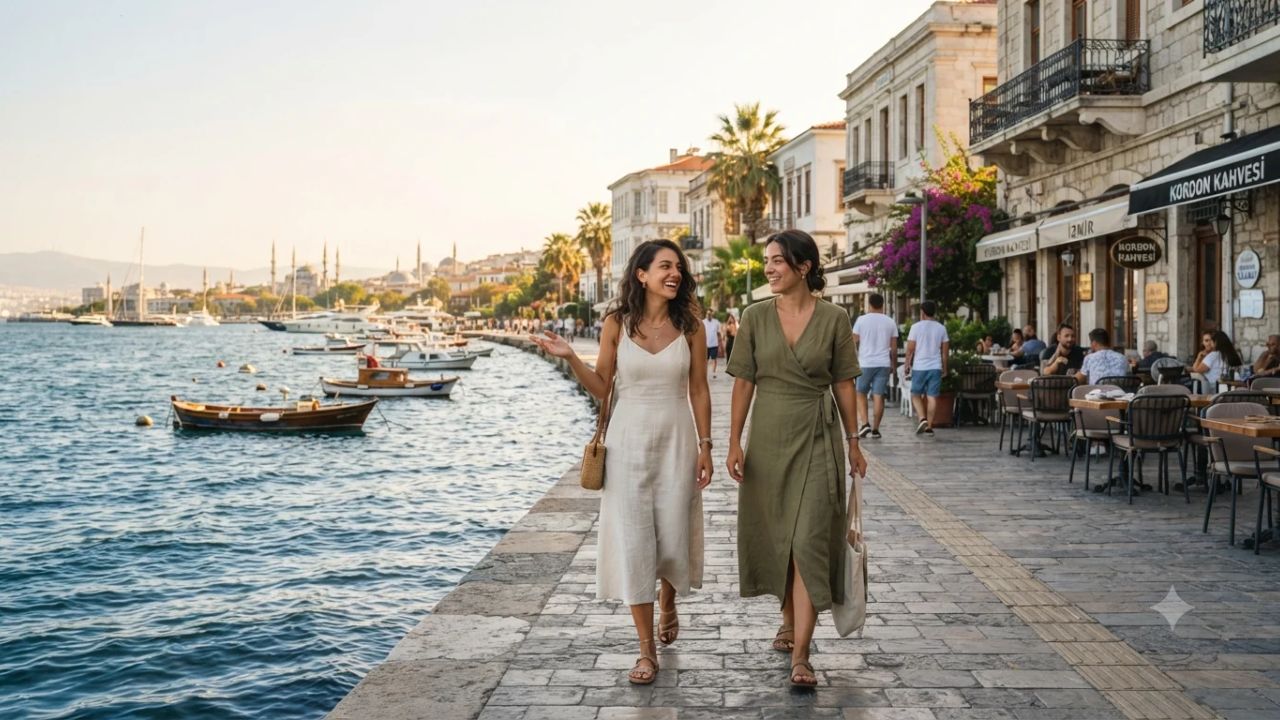
Image generated by AI
Turkey's Aegean corridor is experiencing a profound tourism transformation as Izmir, Cesme, Alacati, and Ayvalik expand cross-border Greek cultural heritage initiatives, archaeological conservation, and maritime links with Greece, balancing rapid industrial development against domestic macroeconomic pressures.
IZMIR, Turkey — Stretching along the eastern Aegean Sea opposite the Greek islands of Chios and Lesbos, Turkey's western littoral is emerging as one of the Mediterranean's most intricate travel environments. According to the Republic of Türkiye Ministry of Culture and Tourism, promoted globally through the GoTürkiye Official Tourism Portal, and complemented by cross-border maritime flows monitored by the Greek National Tourism Organisation, the region is redefining its appeal beyond seasonal beach tourism.
Travelers entering Izmir—Turkey's third-largest metropolis and historically renowned as Smyrna—encounter restored neoclassical Greek mansions, Byzantine and Ottoman fortifications, and UNESCO-listed Greco-Roman archaeological wonders at Pergamon alongside export-driven manufacturing parks, multi-billion-dollar wind turbine plants, and state housing projects. This multi-layered identity unfolds against a complex national macroeconomic backdrop characterized by an estimated US$1.6 trillion gross domestic product, 3.5% economic growth, 30% consumer inflation, 35% benchmark interest rates, and ongoing Turkish lira fluctuations.
          AEGEAN CROSS-BORDER HERITAGE & ECONOMIC CORRIDOR LAYOUT
          =======================================================

    [ GREEK AEGEAN ISLANDS ]             [ TURKISH AEGEAN LITTORAL ]
    • Lesbos (Mytilene)      ◄── Ferries ──► Ayvalik (Kydonies) & Moschonisia
    • Chios                  ◄── Ferries ──► Cesme & Alacati Coastal Enclaves
                                                  │
                                                  ▼
                                         [ PERGAMON (BERGAMA) ]
                                         • Ancient Acropolis & Asclepieion
                                         • Historical Link to Berlin Museums
                                                  │
                                                  ▼
                                      [ IZMIR METROPOLIS (SMYRNA) ]
                                      • Historic Kapetanakis House & St Voukolos
                                      • Manufacturing Hub: Auto, Wind, Defense
                                      • Exports Exceeding US$270 Billion
                                      • Higher Education: Central Asian Mobility
Smyrna's Enduring Footprint: Preserving Greek Cultural Heritage in Modern Izmir
Izmir's contemporary urban character remains deeply intertwined with its multicultural past. Prior to the momentous population displacement and urban destruction associated with the events of 1922, Smyrna was one of the Mediterranean's most cosmopolitan trading emporiums, anchored by a prominent Greek merchant and intellectual community whose cultural influence defined whole neighborhoods.
Today, municipal conservation authorities and diplomatic partners are methodically restoring surviving heritage landmarks across former residential quarters:
- Kapetanakis House: This elegant neoclassical mansion in the historic waterfront quarter survived the 1922 cataclysm. Following meticulous structural rehabilitation, the building now houses the Greek Consulate General in Izmir, symbolizing diplomatic and cultural continuity between neighboring nations.
- St Voukolos Church (Ayavukla): Situated in the historic Basmane district, this late-nineteenth-century Greek Orthodox church was carefully restored by the Izmir Metropolitan Municipality. Complete with preserved interior frescoes depicting Christian iconography, the building operates as a secular cultural pavilion and memorial venue hosting international concerts, exhibitions, and inter-faith symposia.
- Traditional Quarter Streetscapes: Restored stone townhouses lining the alleys of Alsancak and Karatas illustrate the hybrid architectural vernacular developed by Smyrna's Levantine, Greek, Jewish, and Ottoman master masons.
For international cultural tourists and Greek diaspora visitors seeking family heritage roots, these preserved structures offer an authentic encounter with a poignant, shared Aegean past.
Coastal Crossings: Linking Cesme and Alacati to the Greek Island of Chios
Positioned on the western tip of the Karaburun Peninsula, the resort municipalities of Cesme and Alacati provide a natural geographic bridge connecting the Turkish mainland with the Greek island of Chios, located just seven kilometers across the Chios Strait.
The towns preserve exceptional stone architecture that reflects their pre-1922 Greek maritime populations:
- Cesme Neoclassical Fabric: Central pedestrian promenades feature stone sea-captains' mansions, while the restored Church of St Charalambos has been repurposed as a municipal cultural center, regularly hosting art exhibitions, classical music recitals, and civic lectures.
- Alacati's Stone Preservation: World-famous for windsurfing and boutique lifestyle tourism, Alacati enforces strict municipal architectural ordinances to protect its wind-swept stone cottages.
- The Church of the Dormition of the Virgin Mary (Panagia Alatsatiani): Built in the early nineteenth century, this imposing stone basilica now operates as the Alacati Market Mosque (Pazaryeri Camii). In a remarkable demonstration of inter-religious preservation, curtains respectfully shield the surviving white marble iconostasis—crafted by celebrated Greek sculptor Ioannis Chalepas—during Muslim prayer times, while allowing heritage enthusiasts and art historians to admire the masterpiece outside prayer hours.
Scheduled daily passenger catamarans and vehicle ferries link Cesme directly with the port of Chios, enabling seamless cross-border Aegean itineraries that combine Greek island culture with Turkish coastal discovery.
| Destination | Opposite Island / Region | Signature Heritage Asset | Architectural & Cultural Significance |
|---|---|---|---|
| Izmir (Smyrna) | Aegean Maritime Hub | Kapetanakis House & St Voukolos Church | Neoclassical Greek consulate and restored 19th-century Orthodox basilica |
| Cesme | Chios (Greece) | Church of St Charalambos & Waterfront | Restored Greek Orthodox landmark operating as a municipal civic hall |
| Alacati | Chios Corridor | Panagia Alatsatiani (Pazaryeri Mosque) | Stone basilica retaining Ioannis Chalepas's original marble iconostasis |
| Ayvalik (Kydonies) | Lesbos (Greece) | Church of Panagia Orfani & Holy Trinity | Traditional stone coastal townhouses, ruins, and historic olive mills |
| Moschonisia (Cunda) | Lesbos Marine Route | Church of the Archangels (Taxiarchis) | Restored cathedral museum displaying a vintage 1949 British tractor |
| Pergamon (Bergama) | Global Museum Link | Acropolis & Asclepieion Sanctuary | Ancient Greco-Roman medical center; treasures displayed in Berlin |
Ayvalik and Moschonisia: Neoclassical Architecture Facing Lesbos
Further north along the Aegean coast lies Ayvalik, historically known in classical and Byzantine antiquity as Kydonies. Positioned directly opposite the Greek island of Lesbos (Mytilene), Ayvalik was predominantly inhabited by Greek merchants, olive oil producers, and maritime traders prior to the 1922 population exchange.
The town possesses one of the Mediterranean's most intact ensembles of nineteenth-century neoclassical residential architecture:
- Preserved Religious Structures: Landmark buildings include the historic Church of Panagia Orfani and the atmospheric stone ruins of the Church of the Holy Trinity, illustrating both the grandeur and the vulnerability of the region's historical fabric.
- Literary Geography: Ayvalik preserves the historic residence of celebrated Greek novelist Ilias Venezis, whose autobiographical works detailed the dramatic social transformations of Asia Minor, anchoring the town firmly on international literary tourism maps.
- Moschonisia (Cunda Island): Connected to Ayvalik via a causeway, the island of Moschonisia features cobblestone streets lined with boutique guesthouses and seafood tavernas. Its crowning jewel is the restored Church of the Archangels (Taxiarchis), now operating as the Rahmi M. Koc Museum. Demonstrating how industrial artifacts intersect with architectural conservation, an authentic British tractor manufactured in 1949 stands prominently at the museum's entrance, engaging visitors in reflections on the modernization of rural agriculture across post-war Europe.
Regular cross-border passenger ferries operate between Ayvalik and Mytilene port on Lesbos, allowing travelers to experience twin Aegean cultures within a single vacation window.
Pergamon's Ancient Splendor: Archaeological Tourism and Global Museum Connections
Inland from the coastline lies Pergamon (modern Bergama), expanding the Aegean travel experience into classical antiquity. Once the capital of the Hellenistic Attalid dynasty and a major Roman provincial metropolis, Pergamon is renowned for two exceptional archaeological complexes:
- The Pergamon Acropolis: Perched precipitously atop an elevated volcanic ridge, the Acropolis contains the world's steepest Hellenistic theater, the foundations of the legendary Great Altar of Zeus, the Temple of Trajan, and remnants of the ancient library that once housed 200,000 parchment scrolls.
- The Asclepieion Sanctuary: Situated in the valley below, this ancient medical sanctuary was dedicated to Asclepius, the god of healing. Renowned physicians—most notably Galen—practiced early forms of holistic medicine, hydrotherapy, dream analysis, and surgical intervention. Visitors explore the intact subterranean treatment tunnel, ancient sacred springs, and the Roman theater where convalescing patients attended dramatic performances.
Pergamon also connects Turkey's Aegean region directly to European museum tourism. During nineteenth-century archaeological excavations directed by German engineers, substantial architectural reliefs from the Great Altar of Zeus were transferred to Germany. Today, these masterpieces form the centerpiece of the Pergamon Museum on Berlin's Museum Island, creating a transatlantic cultural dialogue between the archaeological terrain in Bergama and cultural institutions in Western Europe.
Industrial Dynamism: Automobiles, Wind Turbines, and Export Surges in Izmir
While cultural tourists explore restored churches and ancient temples, Izmir functions simultaneously as one of Turkey's foremost manufacturing and logistics powerhouses. The metropolitan area is characterized by designated organized industrial zones, deepwater container terminals, and free-trade zones that drive national trade performance.
Key industrial pillars driving business travel and economic growth include:
- Renewable Energy Manufacturing: Izmir has evolved into the clean energy capital of Turkey, producing high-tech wind turbine blades, towers, and generators for domestic wind farms and export across the European Union.
- Automotive and Commercial Assembly: Global automotive component manufacturers and commercial vehicle assembly plants operate extensive production facilities in the region.
- Textiles and High-Fashion Apparel: Premium cotton cultivated in the Aegean valleys feeds state-of-the-art garment fabrication plants serving luxury fashion houses worldwide.
- Defense and Aerospace Production: Advanced manufacturing complexes contribute components to national aerospace and naval programs.
Official national trade data reveals that Turkey's merchandise exports exceeded US$270 billion over the latest 12-month reporting cycle, propelled by a 15.4% year-on-year surge in September. Izmir's exhibition infrastructure, notably Fuar Izmir—the country's largest specialized exhibition complex—draws hundreds of thousands of international commercial buyers, engineers, and delegates annually, creating year-round demand for hospitality and aviation services.
Housing Expansion and TOKI Development Across the Aegean Corridor
Rapid industrial and demographic growth has spurred substantial urban transformation along the corridor linking Cesme, Izmir, and Ayvalik. The influx of manufacturing workers, corporate professionals, and university personnel has intensified housing demand.
Turkey's Housing Development Administration, known as TOKI (Toplu Konut Idaresi Baskanligi), plays a central role in shaping the regional built environment:
- The TOKI Model: The state agency expropriates and designates state land, develops foundational utility and road infrastructure, and commissions private construction contractors through competitive public tenders to erect social and subsidized residential blocks.
- Balancing Urban Supply and Tourism Character: While TOKI initiatives expand residential availability for local working-class households, municipal planners face the ongoing challenge of ensuring that high-density modern apartment complexes do not encroaching upon fragile agricultural groves, historic stone districts, or scenic coastal vistas that underpin tourism appeal.
| Economic Parameter | Reported Figure / Dynamic | Direct Implication for Tourism and Regional Development |
|---|---|---|
| National Gross Domestic Product (GDP) | Approximately US$1.6 Trillion | Underscores Turkey's position as a major G20 emerging market economy |
| Annual Economic Growth | ~3.5% (Accelerating) | Drives commercial business travel, domestic leisure trips, and retail footfall |
| Consumer Price Inflation | Approximately 30% | Increases operational costs for hotels, dining venues, and domestic transport |
| Benchmark Interest Rates | Approximately 35% | Raises commercial borrowing costs for hotel construction and resort upgrades |
| National Merchandise Exports | Exceeds US$270 Billion (+15.4% in Sep) | Fuels high-volume corporate travel, international trade fairs, and MICE logistics |
| Currency Dynamics | Monthly Lira Depreciation | Provides foreign purchasing power advantages offset by rapid local menu price adjustments |
Macroeconomic Realities: Navigating 30% Inflation and Lira Depreciation
The rapid development of Turkey's Aegean tourism and industrial corridor unfolds against persistent macroeconomic headwinds. The national economy is navigating consumer inflation hovering near 30%, restrictive monetary policy characterized by 35% central bank interest rates, and continuous monthly depreciation of the Turkish lira against the US dollar and euro.
For international travelers and domestic hospitality businesses, these indicators create distinct operational dynamics:
- The Cost Perception Myth: While headline currency depreciation suggests that traveling in Turkey is inexpensive, persistent 30% inflation means that domestic hospitality providers frequently adjust menu prices, hotel room tariffs, and museum entrance fees to preserve profit margins against escalating energy and wholesale food costs.
- Business Investment Constraints: Benchmark interest rates of 35% make capital borrowing exceptionally costly, prompting resort operators to focus on operational efficiencies and service refinement rather than debt-financed real estate expansion.
- Consumer Budgeting Advice: Travelers are advised to confirm real-time lodging and dining rates rather than relying on outdated travel guidebook estimates, while budgeting with credit cards that utilize competitive interbank exchange rates.
Regional Student Mobility: Izmir as a Eurasian Higher Education Hub
Beyond seasonal vacationers and industrial executives, Izmir's visitor economy is bolstered by a substantial international student population. The city hosts multiple prestigious public and private universities that attract thousands of students from across the Turkic republics and Central Asia.
International student mobility contributes significant multi-seasonal vitality to local housing, food services, and cultural venues:
- Central Asian Connections: University campuses in Izmir host large student contingents from Azerbaijan, Turkmenistan, Kazakhstan, and Uzbekistan, reinforcing deep linguistic, historical, and commercial relationships between Turkey and Central Asia.
- Technical University Aspirations: Emerging technological institutes in the Izmir metropolitan area actively model academic curricula on leading global institutions, including documented technical relationships referencing the Massachusetts Institute of Technology (MIT) in the United States.
- Family and Academic Tourism: International students generate steady year-round traffic as visiting relatives, academic researchers, and conference participants patronize regional transport, coastal guesthouses, and cultural attractions outside peak summer months.
| Partner Country / Entity | Nature of Academic / Cultural Touchpoint | Impact on Regional Visitor Economy |
|---|---|---|
| Greece | Shared 1922 heritage, consular presence, island ferry links | Drives cross-border cultural tourism, diaspora visits, and heritage conservation |
| Azerbaijan | High-density university student enrollment in Izmir | Supports long-term rental housing, student spending, and visiting family travel |
| Turkmenistan & Kazakhstan | Central Asian student mobility and commercial exchange | Broadens retail commerce and regional transit outside traditional summer windows |
| Uzbekistan | Academic participation and Eurasian trade links | Extends year-round hotel demand and university-linked symposium logistics |
| Germany | Archaeological stewardship of Pergamon treasures in Berlin | Inspires transatlantic museum exchanges and international archaeological tourism |
| United States | Higher education benchmarks citing MIT institutional links | Fosters technical research visits, engineering exchanges, and executive conferences |
| United Kingdom | Historical 1949 British tractor artifact at Moschonisia | Enriches museum storytelling regarding post-war European agricultural technology |
Why This Matters: The Dual Identity of the Aegean Economic and Cultural Corridor
The evolution of Turkey's Aegean coastline illustrates how modern tourism destinations must transcend the narrow confines of seasonal sun-and-sand resort models. In Izmir, Cesme, and Ayvalik, tourism viability is anchored in the deliberate embrace of a layered, cross-border cultural history that honors the Greek communities that shaped the region prior to 1922.
Simultaneously, the region avoids the trap of becoming an economic museum. Supported by over US$270 billion in national exports and advanced wind-power engineering, Izmir proves that high-capacity industrial production, sustainable renewable energy, and sensitive historic preservation can coexist within the same metropolitan framework.
As Turkey navigates 30% inflation and monetary adjustments, the Aegean region's diversified economic engine—uniting cross-border Greek island tourism, ancient archaeological scholarship, international student mobility, and cutting-edge clean manufacturing—serves as a resilient model for sustainable Mediterranean regional development.
Frequently Asked Questions: Travel and Heritage Across Turkey's Aegean Region
What makes Izmir significant for cultural and heritage tourism?
Izmir—historically known as Smyrna—preserves rich Greek, Levantine, and Ottoman architectural heritage, featuring restored landmarks such as the neoclassical Kapetanakis House and the 19th-century St Voukolos Church alongside ancient Agora ruins.
How do travelers access Greek islands from Turkey's Aegean coast?
Daily scheduled passenger catamarans and ferries operate across the Aegean, connecting Cesme directly with the Greek island of Chios, and linking Ayvalik directly with the port of Mytilene on Lesbos.
What archaeological sites can visitors explore near Izmir?
Pergamon (Bergama) is the region's premier archaeological site, featuring the mountain Acropolis with the world's steepest theater, the Temple of Trajan, and the ancient Asclepieion healing sanctuary once led by Galen.
How does inflation affect travel budgets in Turkey during 2026?
With national inflation running at approximately 30%, hotel tariffs, restaurant menus, and museum admissions are adjusted frequently, meaning travelers should check current prices rather than relying solely on exchange-rate currency advantages.
Related Travel Guides
- Japan's Shonan Candle 2026 Illuminates Enoshima Island with 10,000 Flame Displays, Creative Workshops, and Autumn Cultural Performances
- China Domestic Tourism Surpasses 5.3 Billion Trips as Nine-Month Travel Spending Hits 4.95 Trillion Yuan in 2026
- Thailand Partners with IMPACT Catering to Deliver Specialized Nutritional Services for National Athletes at 2026 Asian Games in Japan
Disclaimer
This article is for informational and educational purposes only. It does not constitute legal, financial, or professional advice. While we strive to provide accurate and up-to-date information, travel policies, regulations, and conditions change rapidly. Always verify information with official sources before making travel decisions. Nomad Lawyer makes no representations about the accuracy, reliability, completeness, or suitability of the information provided. Readers should consult qualified professionals for advice specific to their circumstances. The views expressed in this article are those of the author and do not necessarily reflect the views of Nomad Lawyer.
Kunal K Choudhary
Co-Founder & Contributor
A passionate traveller and tech enthusiast. Kunal contributes to the vision and growth of Nomad Lawyer, bringing fresh perspectives and driving the community forward.
Learn more about our team →