US Air Travel Grounded by Fiber Cable Cut and Telecom Outage: Newark, Philadelphia, and Major Hubs Face Over 6,400 Delays

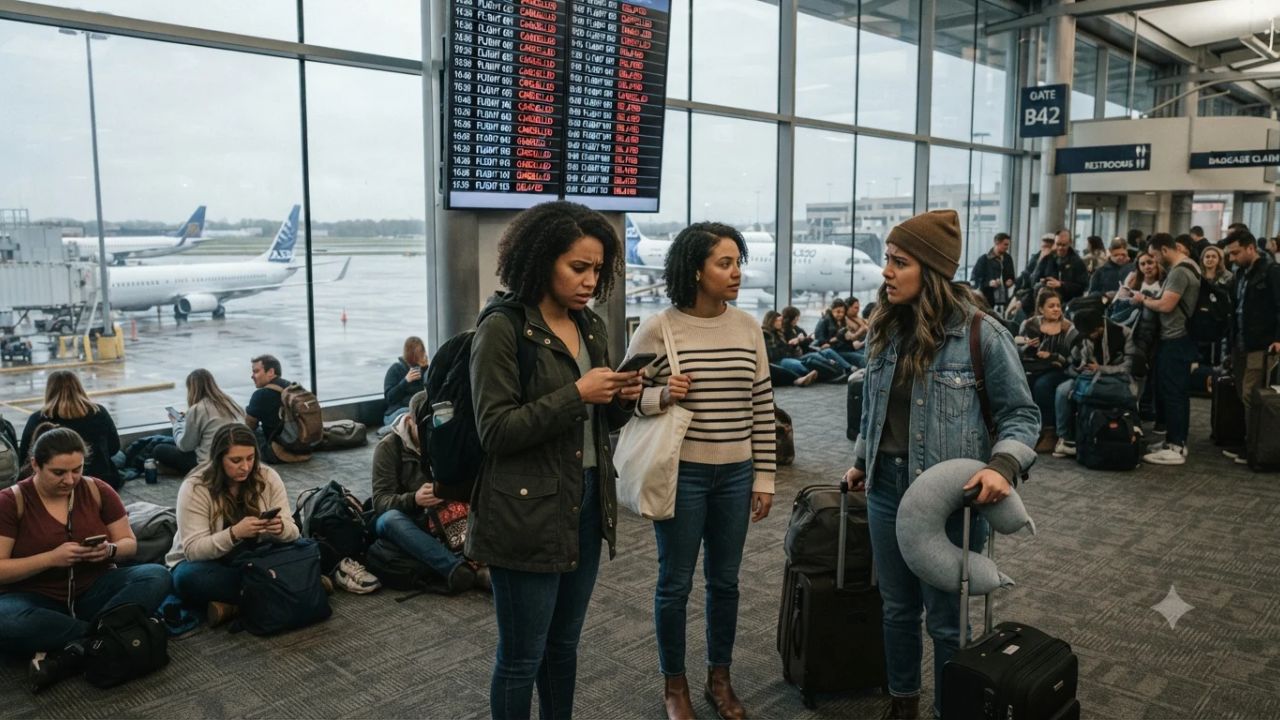
An unexpected dual telecommunications breakdown—triggered by a primary circuit failure followed immediately by the accidental severing of a backup fiber-optic cable—crippled air traffic control feeds across the northeastern United States, grounding flights as 130 world leaders arrived in New York for the United Nations General Assembly. By the evening of September 21, 2026, nationwide flight disruptions escalated from an initial morning wave of 3,710 delays and 376 cancellations to an astonishing 6,452 delays and 1,018 cancellations affecting domestic and international itineraries.
The infrastructure collapse prompted the Federal Aviation Administration to enforce urgent ground stops and ground delay programs across key transatlantic gateways. Incoming flights were temporarily halted across all three major New York metropolitan airports—Newark Liberty, John F. Kennedy International, and LaGuardia—alongside Philadelphia International and Boston Logan. The resulting gridlock rippled through hub-and-spoke networks across North America, scattering flight crews, displacing aircraft frames, and stranding thousands of passengers during one of the most security-sensitive diplomatic weeks on the global calendar.
The Telecom Severance: Why East Coast Airspace Froze During UN Week
The acute disruption originated when a critical regional air traffic communications circuit malfunctioned, shifting operations to a redundant secondary pathway. Minutes later, construction crews accidentally cut the underground backup fiber line, severing radar and digital flight data transmission to regional control facilities. With automated handoffs between sectors compromised, federal controllers were forced to increase separation buffers and restrict arrivals to maintain rigorous safety thresholds.
The timing magnified the crisis. With high-level delegations, heads of state, and security details landing in New York for the annual UN General Assembly debate, regional airspace was already operating at maximum capacity. According to operations bulletins from the Port Authority of New York and New Jersey, Newark Liberty International Airport bore the brunt of the shutdown, recording 220 cancellations and 233 delays, representing an 18 percent cancellation rate and a 20 percent delay rate across both origin and destination operations.
Simultaneously, Philadelphia International experienced 390 delays and 55 cancellations, with departure delays averaging 60 minutes and climbing through the evening peak. At Philadelphia, originating flights saw 36 percent delays and 5 percent cancellations, while inbound flights registered a 37 percent delay rate and a 4 percent cancellation rate.
Weather and Network Multipliers: From Logan Fog to Bay Area Ceilings
While telecommunications failures crippled the Atlantic seaboard, adverse atmospheric conditions across coastal regions prevented airlines from absorbing the schedule shocks. Low cloud ceilings forced ground delay programs at Boston Logan International Airport, where 278 delays and 29 cancellations stacked up with average ground delays stretching to 105 minutes. Inbound traffic to Boston faced a 27 percent delay rate alongside a 13 percent origin delay figure.
On the West Coast, marine layer cloud ceilings compounded the disruption at San Francisco International Airport, causing 270 delays and 14 cancellations with average ground hold times of 62 minutes. Destination arrivals into San Francisco saw a 31 percent delay rate.
Major inland transfer hubs also buckled under the rotational strain:
- Chicago O’Hare (ORD) recorded 281 delays and 17 cancellations, with a 9 percent origin delay rate and an 8 percent destination delay rate.
- Hartsfield-Jackson Atlanta (ATL) logged 184 delays and 11 cancellations, maintaining a 7 percent delay rate across domestic banks.
- Denver International (DEN) faced 179 delays and 9 cancellations, registering a 9 percent origin delay rate.
- New York LaGuardia (LGA) posted 145 delays and 6 cancellations with 30-minute departure ground delays and a 12 percent destination delay rate.
- New York JFK absorbed 140 delays and 6 cancellations under FAA ground stop orders, seeing 12 percent destination delays.
Airline Impacts: Southwest Delays and United Fleet Cancellations
The systemic shutdown exposed stark operational differences in how domestic carriers manage irregular operations (IROPS). Southwest Airlines absorbed the heaviest schedule friction nationwide, logging 708 delays and 9 cancellations as point-to-point aircraft rotations cascaded out of sequence across intermediate stations.
American Airlines recorded 676 delays and 7 cancellations, with a 20 percent delay rate across its primary network. Regional operators feeding mainline hubs were heavily impacted, with Republic Airways suffering 138 delays and 65 cancellations, while Piedmont Airlines logged 65 delays and 26 cancellations.
United Airlines suffered the highest cancellation volume of any carrier, registering 343 delays and 154 cancellations, largely driven by the prolonged FAA ground stops at its primary transatlantic fortress hub at Newark Liberty. When regional ground stops prevent aircraft from landing at a mega-hub, airlines must proactively cancel outbound evening rotations to avoid stranding aircrews past legal duty limits.
Visitor Insider Tips: Rebooking Tactics and Northeast Transit Alternatives
Navigating widespread aviation meltdowns requires quick action and localized transit alternatives, particularly when traveling through the Northeast Megalopolis corridor.
- Divert to Amtrak Northeast Regional or Acela: If your flight between Washington DC, Philadelphia, New York, or Boston is cancelled, do not wait in airport customer service lines. Take regional rail directly from Philadelphia 30th Street Station, Newark Penn Station, or New York Penn Station; trains run unaffected by air traffic ground stops.
- Utilize Dedicated Carrier Apps Over Phone Queues: Rebook instantly through airline mobile applications while standing in line. Apps update available inventory seconds before gate agents can manually reassign seats.
- Track Airport Inbound Flow via FAA Status Tools: Check the official FAA National Airspace System Operations dashboard before leaving for the terminal. If a ground stop is active, aircraft cannot depart their origin cities, giving you early warning before an airline officially posts a departure delay.
- Keep Essentials in Carry-On Baggage: Never check prescription medications, electronics chargers, or vital identification. During mass cancellations, baggage retrieval from grounded aircraft can take four to eight hours.
Cultural and Infrastructure Context: Resiliency in American Airspace
The simultaneous breakdown of primary and backup telecommunications pathways highlights vulnerability in modern transport systems. As commercial air travel reaches record volumes, the interconnected nature of airspace management means that a physical incident at a single regional switching node can disrupt passenger journeys thousands of miles away.
Airport operators like Philadelphia International Airport are coordinating with municipal transit agencies to ensure stranded international travelers receive emergency accommodation access, meal vouchers, and ground transfer support. Meanwhile, federal regulators are reviewing telecommunications redundancy protocols to mandate physically separated utility corridors for safety-critical aviation links.
For travelers, the incident emphasizes the necessity of maintaining flexible travel windows, understanding passenger rights under Department of Transportation guidelines, and leveraging multi-modal rail alternatives across densely connected regional corridors.
FAQ: Navigating US Flight Disruptions 2026
What caused the widespread flight ground stops across US airports? An initial telecommunications circuit failure combined with the accidental physical severing of a backup fiber line by construction crews disabled radar and data feeds to East Coast air traffic facilities.
Are airlines required to provide hotel accommodation for telecom delays? Because the FAA telecommunications outage is categorized as an air traffic control infrastructure failure outside airline direct control, mandatory hotel compensation rules generally do not apply, though carriers offer free rebooking.
Can I switch my ticket to an alternate nearby airport during a ground stop? Yes, during major irregular operations, airlines typically issue travel waivers allowing passengers to change origin or destination airports within the same metropolitan area without paying fare differences.
How can I check if an FAA ground stop is active at my departure airport? Travelers can view live airspace restrictions, ground delay programs, and airport acceptance rates directly on the FAA Air Traffic Control System Command Center public portal.
[When telecommunications lines snap and runways stand quiet, prepared travelers look to the rails and agile apps to navigate the storm.]
Related Travel Guides
The Complete Guide to Amtrak Northeast Corridor Travel: NYC, Philly, and DC
How to Handle Flight Cancellations and Airline Rebooking Delays Like a Pro
New York to Boston Scenic Road Trip: Historic Coastal Routes and Ferry Links
This article is for informational purposes. Flight routes, passenger regulations, visa rules, and transit advisories are subject to change by airlines and aviation authorities. Readers are advised to verify schedules and travel documentation with relevant carriers and border agencies before departure.
Related Stories
US Flight Disruptions: Over 1,440 Delays and 140 Cancellations Hit Dallas, Miami, and Chicago
FAA Airspace Restrictions Across Caribbean 2026: Haiti Prohibitions and Cuba Fuel Crisis Guide