
US Flash Flood Emergency 2026: Grand Canyon Death and Massive Disruptions Across Arizona, New Jersey, and Hawaii
Severe flash flooding across the US has resulted in one confirmed death at the Grand Canyon, dozens of evacuations, and widespread infrastructure collapse across Arizona, New Jersey, and the Northeast.

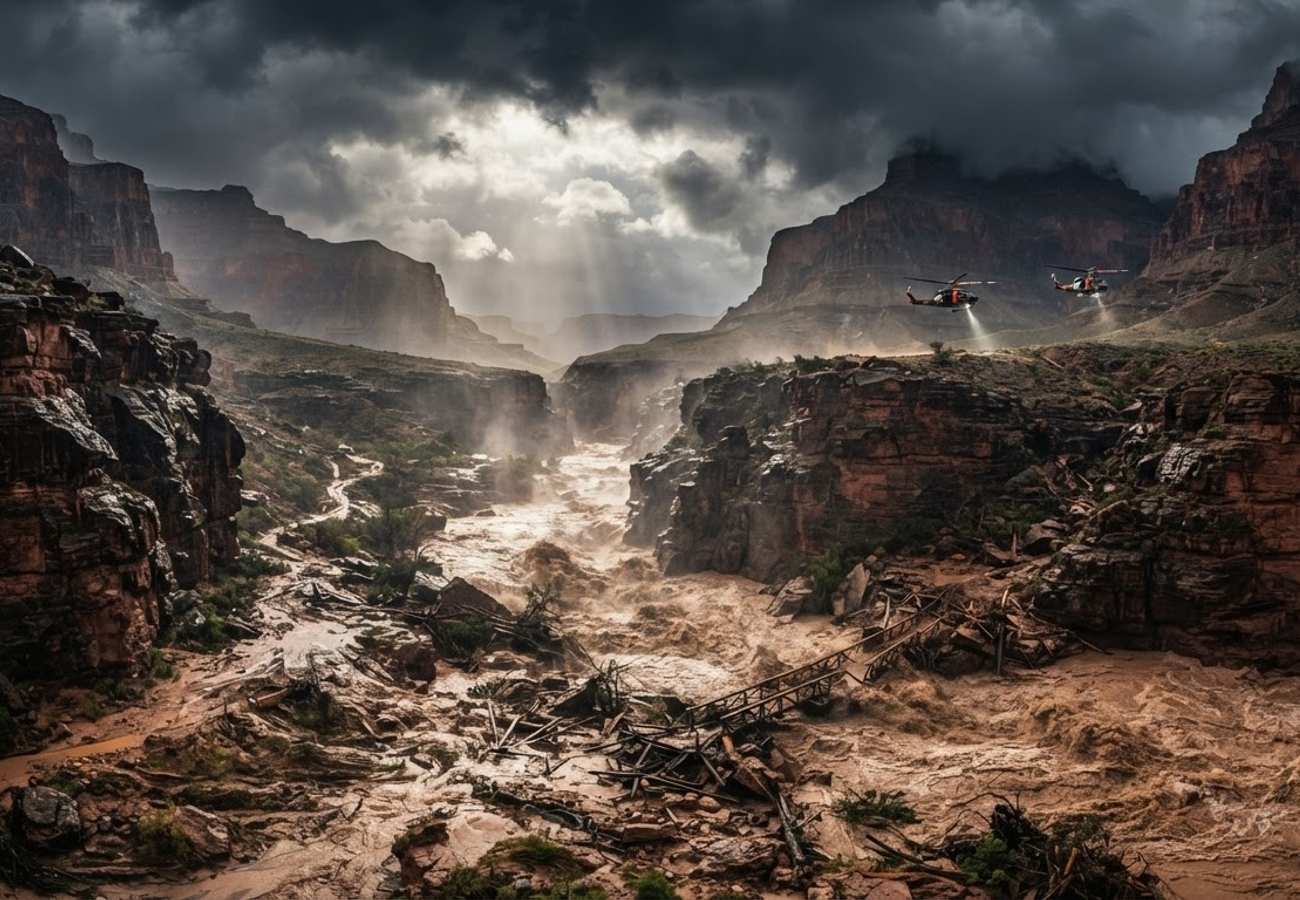
Image generated by AI
Severe flash flood emergencies across the United States have resulted in one confirmed fatality, the evacuation of over 60 visitors from the Grand Canyon, and systemic transport failures across New Jersey and the Northeast.
Grand Canyon Emergency: Casualties and Infrastructure Collapse
Arizona’s Grand Canyon National Park has been declared an emergency zone following powerful floodwaters sweeping through primary visitor corridors. The impact was concentrated in the Bright Angel Creek and Phantom Ranch regions, where steep topography accelerated rainfall into lethal torrents.
Our analysis of the incident confirms the following impact data:
- Casualties: One confirmed death.
- Missing Persons: At least 20 individuals were initially reported missing or unaccounted for.
- Evacuations: Over 60 visitors were extracted via helicopter operations.
- Infrastructure Loss: Multiple footbridges crossing Bright Angel Creek were destroyed.
- Closures: Phantom Ranch, Bright Angel Campground, and sections of the North Kaibab Trail are closed indefinitely.
The disaster extended beyond immediate safety to critical utilities. A destroyed pipeline has compromised the park's water supply system, forcing the suspension of several overnight accommodation facilities and the implementation of strict water conservation mandates.
Regional Disruption Breakdown: Urban and Island Hubs
While the Grand Canyon faced a wilderness crisis, other US regions are grappling with urban and coastal flooding that threatens transport networks and business travel.
New Jersey and the Northeast In New Jersey, heavy rainfall has overwhelmed urban drainage networks, causing significant water accumulation on major travel corridors. This has created a ripple effect across New York and Pennsylvania, where saturated ground has increased the risk of landslides and road closures. For the business traveler, this means significant delays in transit between major metropolitan hubs and airports.
Hawaii The island state is experiencing extreme rainfall, leading to the temporary closure of hiking trails and restrictions on access to waterfalls and mountain slopes. The geography of Hawaii makes narrow valleys particularly susceptible to rapid-onset flooding, posing a high risk to adventure tourists.
Texas and the Midwest Recurring flood threats in Texas continue to impact regional parks and lakes. Simultaneously, Oklahoma, Missouri, Illinois, and Wisconsin are reporting storm-related disruptions to countryside tourism and seasonal camping sites.
West Virginia The mountainous terrain of West Virginia has seen rapid water movement through valleys, placing immense pressure on river-based tourism and hiking infrastructure.
Passenger Rights & Safety Advisory
For travelers caught in these disruptions, the legal and financial recourse depends on the nature of the service interrupted.
For the affected passenger, this means:
- Flight Cancellations: If flash floods lead to airport closures or flight cancellations (particularly in the Northeast or Hawaii), passengers are entitled to a full refund of the unused portion of the ticket under US DOT guidelines, regardless of whether the weather is considered an "act of God."
- Hotel & Accommodation: In the case of the Grand Canyon, where overnight facilities were suspended due to pipeline failure, guests are generally entitled to a refund for the unused nights. Our analysis suggests checking the "Force Majeure" clause in booking contracts, though consumer protection laws often override these when the facility becomes uninhabitable.
- Tour Operators: For those booked on guided hikes or river tours in West Virginia or Arizona, operators are typically required to provide either a reschedule or a refund if safety protocols mandate a closure.
Immediate Safety Actions:
- Avoid Low-Lying Areas: In the Southwest, "dry washes" can become torrents in minutes.
- Monitor Official Feeds: Rely on National Park Service (NPS) alerts and local meteorology centers rather than third-party travel blogs.
- Verify Infrastructure: Before attempting any trail in the Northeast or West Virginia, verify bridge integrity via official park rangers.
The 2026 flood patterns indicate a systemic vulnerability in US tourism infrastructure. The transition from "seasonal weather" to "emergency events" is happening faster than infrastructure can adapt. The destruction of the Grand Canyon's water pipeline is a primary example of how a single weather event can paralyze a multi-million dollar tourism operation. We expect to see a shift toward "climate-resilient" tourism planning, where operators will be forced to implement more aggressive early-warning systems and redundant utility networks to avoid total operational shutdowns.
Travelers should anticipate higher insurance premiums for nature-based tourism in high-risk zones through the remainder of 2026.
Related Travel Guides
Disclaimer
This article is for informational and educational purposes only. It does not constitute legal, financial, or professional advice. While we strive to provide accurate and up-to-date information, travel policies, regulations, and conditions change rapidly. Always verify information with official sources before making travel decisions. Nomad Lawyer makes no representations about the accuracy, reliability, completeness, or suitability of the information provided. Readers should consult qualified professionals for advice specific to their circumstances. The views expressed in this article are those of the author and do not necessarily reflect the views of Nomad Lawyer.
Preeti Gunjan
Contributor & Community Manager
A passionate traveller and community builder. Preeti helps grow the Nomad Lawyer community, fostering engagement and bringing the reader experience to life.
Learn more about our team →