
CBP Seizes $6 Million Cocaine Shipment at Lewiston Bridge: Canadian Driver Detained in 2026
U.S. Customs and Border Protection intercepted a commercial truck carrying 450 pounds of cocaine valued at $6 million at the New York-Ontario border, highlighting increased outbound surveillance.

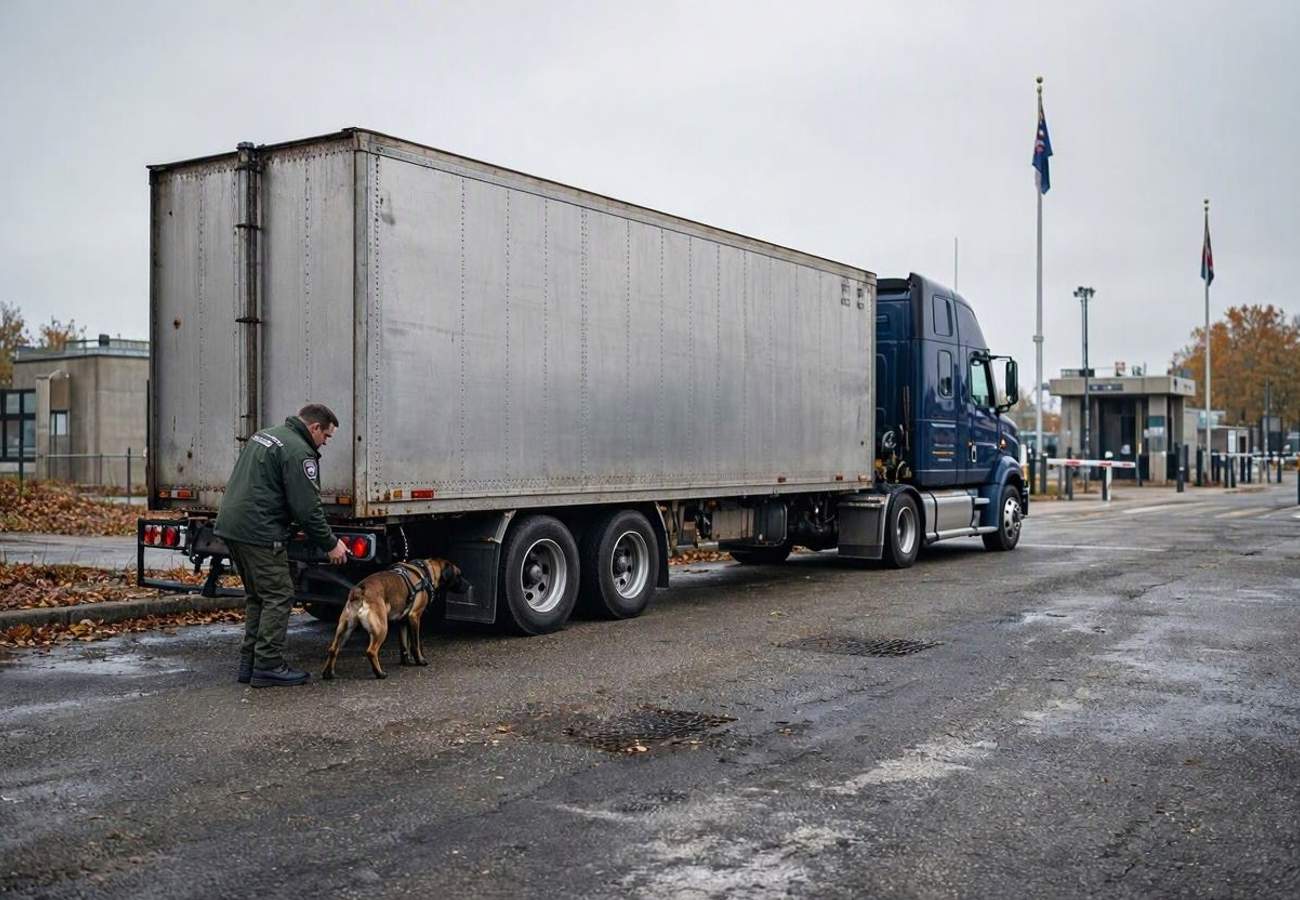
Image generated by AI
[Buffalo, October 5, 2026] — U.S. Customs and Border Protection (CBP) officers intercepted a commercial truck carrying approximately $6 million worth of cocaine just minutes before it crossed the border into Canada. The seizure occurred at the Lewiston Bridge port of entry, which links Lewiston, New York, with Queenstown, Ontario.
The operation took place on September 22, when officers operating in the outbound lanes stopped a 21-year-old Canadian national. Following a physical inspection and a canine alert, officials discovered 174 vacuum-sealed packages of cocaine concealed within a modified trailer floor. The total weight of the narcotics was estimated at 450 pounds.
The Outbound Interception
The detection began when CBP officers noticed structural anomalies in the flooring of the commercial trailer. A specialized canine team subsequently alerted handlers to the presence of narcotics, prompting a transition to secondary inspection. Using non-intrusive inspection technology, officers confirmed the hidden compartments.
Sharon Swiatek, acting port director for the Area Port of Buffalo, credited the success to the "exceptional vigilance" and training of the canine teams and officers. While most border security efforts focus on inbound arrivals, a U.S. Customs and Border Protection (CBP) spokesperson confirmed that outbound operations are equally prioritized to disrupt transborder criminal networks.
The case has been handed over to Homeland Security Investigations (HSI) in Buffalo for a full investigational review. Under Drug Enforcement Administration (DEA) guidelines, a first-time cocaine smuggling conviction can carry a sentence ranging from 10 years to life in prison, alongside fines reaching $10 million.
Border Enforcement Trends and Seizure Data
The Lewiston Bridge incident is part of a broader surge in border enforcement. CBP has expanded its authority to inspect not only vehicles and luggage but also digital devices, including smartphones and laptops, to verify the legality of a traveler's visit.
Recent enforcement actions demonstrate that neither citizenship nor "trusted traveler" status provides immunity from rigorous searches:
| Fiscal Year | CBP Drug Seizure Events |
|---|---|
| 2023 | 53,538 |
| 2024 | 58,082 |
| 2025 | 54,666 |
| 2026 (as of August) | 58,516 |
High-Profile Border Detentions (2026)
Beyond narcotics, CBP has intensified its focus on espionage and prohibited substances. In August, a 24-year-old University of Waterloo student was arrested at the Ambassador Bridge after a phone search revealed suspicious images of aircraft. The individual, who had previously taken photos at Chicago O'Hare International Airport, now faces potential espionage charges.
Other significant 2026 seizures include:
- Laredo Port of Entry: A seizure of cocaine valued at $628,000 involving a Mexican and U.S. citizen on September 30.
- San Ysidro-Tijuana Port: The discovery of 16.53 pounds of fentanyl powder (valued at $238,032) hidden inside an electric moped on August 3.
- San Ysidro-Tijuana Port: A SENTRI-enrolled American traveler arrested in April after $1.1 million in cocaine was found in a Honda Civic's door panels.
- BWI Airport: The seizure of 412 pounds of khat—a stimulant leaf from East Africa—recovered from abandoned bags arriving from London on August 11.
What This Means for Travelers
For the average traveler, these events signal a shift toward "zero-exception" enforcement. The following impacts are immediate:
1. Digital Privacy Risks: CBP officers may request access to your phone, laptop, or GPS. Refusal can lead to denied entry, detention, or the confiscation of the device for forensic analysis. 2. Outbound Scrutiny: Travelers often assume that once they have entered the U.S., the "hard part" is over. This case proves that outbound inspections are active and rigorous. 3. Strict Liability for Vehicle Contents: As seen in the case of a Texas university student banned over a single marijuana joint, "lack of knowledge" regarding a vehicle's contents is rarely an acceptable defense at the border. 4. Increased Wait Times: The use of "non-intrusive inspection" technology and canine sweeps can lead to unpredictable delays at land ports of entry.
Future Border Protocols
CBP is expected to continue integrating advanced scanning technology and expanding the use of canine units across all land ports. Travelers should expect more frequent "secondary inspections" as the agency attempts to dismantle narcotics networks and monitor for espionage. The referral of the Lewiston case to HSI suggests a move toward deeper intelligence-led policing rather than simple opportunistic seizures.
FAQ: US-Canada Border Security 2026
Can CBP search my phone without a warrant? Yes. Border search exceptions allow CBP officers to search electronic devices without a warrant to determine if a traveler is admissible or if they are transporting prohibited items.
Do I have rights if I am sent to secondary inspection? You have the right to legal counsel, but exercising this may not prevent the search of your vehicle or devices, and it may result in a prolonged detention or denial of entry.
What happens if I am found with a prohibited item I didn't know was there? CBP generally operates on a strict liability basis. You can still be detained, fined, or banned from the U.S., regardless of whether you were aware of the item's presence.
Border crossings are no longer mere checkpoints; they are high-tech screening centers where nothing is overlooked.
Related Travel Guides
Disclaimer
This article is for informational and educational purposes only. It does not constitute legal, financial, or professional advice. While we strive to provide accurate and up-to-date information, travel policies, regulations, and conditions change rapidly. Always verify information with official sources before making travel decisions. Nomad Lawyer makes no representations about the accuracy, reliability, completeness, or suitability of the information provided. Readers should consult qualified professionals for advice specific to their circumstances. The views expressed in this article are those of the author and do not necessarily reflect the views of Nomad Lawyer.
Kunal K Choudhary
Co-Founder & Contributor
A passionate traveller and tech enthusiast. Kunal contributes to the vision and growth of Nomad Lawyer, bringing fresh perspectives and driving the community forward.
Learn more about our team →