
US Aviation Industry Enters a New Growth Era as Passenger Demand and Airline Innovation Reshape Air Travel
Handling tens of thousands of daily flights and hundreds of millions of passengers, the US aviation sector pivots toward FAA air traffic modernization and airport capacity expansion.

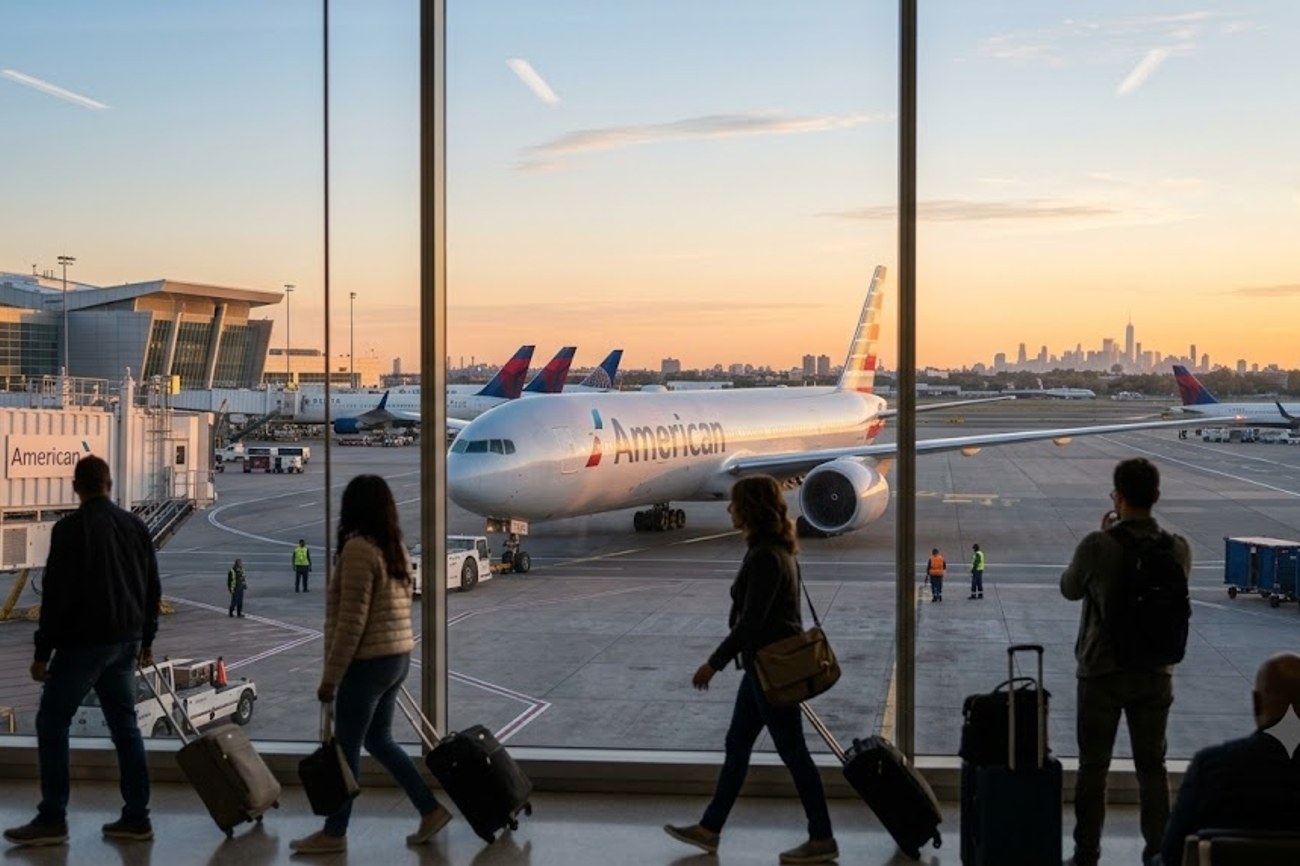
Image generated by AI
Handling tens of thousands of commercial flights daily while transporting hundreds of millions of passengers annually across the National Airspace System, the United States aviation sector has entered a decisive operational transition in late 2026. Moving decisively beyond post-pandemic traffic recovery, the Federal Aviation Administration (FAA) alongside commercial air carriers and municipal airport authorities is executing a coordinated infrastructure overhaul centered on capacity management, digital air traffic control, and terminal throughput. With official federal registries from the Bureau of Transportation Statistics (BTS) confirming sustained historical passenger volumes across domestic and international networks, the commercial aviation ecosystem is shifting its performance benchmarks from raw volume expansion to operational reliability and systemic resilience.
This structural pivot reflects a fundamental recognition among regulators and airline executives that physical tarmac space and legacy radar systems can no longer support unbridled schedule growth without triggering cascading air traffic disruptions. Federal aviation agencies are allocating billions in targeted grants through the Airport Improvement Program, modernizing communications networks, and upgrading airfield geometry from coast to coast. At the same time, commercial carriers are investing heavily in real-time customer data platforms, predictive scheduling algorithms, and sustainable fleet renewals, redefining the modern passenger journey across American skies.
Structural Airspace Congestion and the Limits of Legacy Infrastructure
The primary driver behind this national aviation restructuring is the acute operational strain bearing down on the National Airspace System. Domestic aviation across the United States constitutes one of the largest and most complex internal transport markets worldwide, operating thousands of daily departures that link primary mega-hubs with secondary regional markets. However, decades-old air traffic management platforms, dating back to ground-based radio navigational aids and analog radar architectures, have struggled to maintain efficiency during peak travel corridors and severe convective weather patterns.
Data collected by the Bureau of Transportation Statistics illustrates that modern flight performance depends heavily on four interdependent variables: meteorological disruptions, physical airport gate capacity, airframe and flight crew availability, and tactical air traffic separation standards. When any single variable degrades, the ripple effect across interconnected route networks produces widespread schedule instability. Instead of flooding busy airports with incremental peak-hour flight banks, major airlines are exercising capacity discipline. Network planning desks are prioritizing high-gauge aircraft, schedule de-peaking, and realistic turn-around buffers, aligning flight schedules with the actual ground handling realities enforced by the U.S. Department of Transportation.
Federal Modernization Mandates: AIP Funding and Digital Transformation
To expand throughput without compromising aviation safety, federal authorities are synchronizing physical airport investments with next-generation digital air traffic management programs. Through the Airport Improvement Program (AIP), federal funding supports public-use facilities recognized within the National Plan of Integrated Airport Systems (NPIAS). These capital allocations target safety-critical airfield enhancements, including runway rehabilitation, taxiway geometric improvements to reduce runway incursions, advanced airfield lighting, and terminal expansions designed to process dense passenger flows smoothly.
Concurrently, airline operators are deploying advanced passenger-facing and operational technologies to minimize friction along every touchpoint of the journey. Mobile passenger applications now integrate real-time aircraft tracking, automated seat and rebooking reassignments during irregular operations, and digital biometric boarding solutions. In the cockpit and dispatch centers, algorithmic dispatch engines assess real-time weather feeds and airspace sector workloads to optimize cruise altitudes and flight trajectories, directly reducing excess fuel burn.
| Modernization Pillar | Governing Program | Technical Focus Area | Core Operational Objective | Direct Passenger Impact |
|---|---|---|---|---|
| Air Traffic Control Upgrades | FAA Next-Gen Modernization | Digital communications, radar automation & surveillance | Replace legacy copper radar with satellite and digital data-links | Reduced en-route holding times and fewer vectoring delays |
| Airport Infrastructure | Airport Improvement Program (AIP) | Runway rehabilitation, taxiway widening, lighting systems | Eliminate ground bottlenecks and improve runway safety | Smoother ground movements, fewer taxiway holds, lower incursion risks |
| Terminal Efficiency | NPIAS Terminal Development Grants | Automated security lanes, expanded gate hold-rooms | Accelerate passenger processing and improve terminal comfort | Shorter security queues and less terminal congestion |
| Airline Digital Integration | Carrier Software Investments | Predictive dispatch engines, mobile rebooking, biometric gates | Improve operational recovery and streamline passenger transit | Instant flight updates, automated irregular-operation rebooking |
| Environmental Compliance | Federal Climate Initiatives | Sustainable Aviation Fuel (SAF) logistics, fleet renewals | Accelerate net-zero carbon goals through cleaner propulsion | Healthier terminal environments and lower carbon travel footprints |
The revitalization of regional airports plays an equally vital role in this national strategy. Hundreds of smaller communities rely exclusively on regional air connectivity for commercial enterprise, emergency medical access, and inbound tourism. Federal investment in regional runway infrastructure and instrument landing systems ensures that regional carriers can maintain reliable year-round schedules. This decentralized regional framework also provides essential relief to congested primary mega-hubs by providing point-to-point alternative routings across secondary aviation corridors.
Expert Analysis: Network Resilience, Pricing Pressure, and Capacity Discipline
The transition into a quality-driven aviation environment fundamentally alters the financial and operational mechanics of commercial flying across North America. For years, the commercial aviation business model prioritized raw capacity expansion to gain airport market share, frequently creating bloated flight schedules that collapsed at the earliest sign of localized summer thunderstorms or winter de-icing bottlenecks. By capping flights to match true runway acceptance rates, the industry is establishing a new operating equilibrium.
For travelers booking this route, the direct consequence is a tangible reduction in cascading schedule failures, accompanied by a shift toward larger aircraft operating at slightly reduced frequencies. Where an airline might previously have operated six daily regional jet flights between a mid-size city and an international hub, network planners are increasingly substituting four daily mainline flights on Airbus A220 or Boeing 737 aircraft. This consolidation reduces air traffic controller workload and tarmac congestion, though it narrows the flexibility of departure times for business flyers who require hourly flight options.
The pricing pressure this creates means that airfares during peak holiday travel periods and popular weekend travel windows will maintain elevated floors. When airlines limit seat capacity growth to protect schedule integrity while simultaneously absorbing capital expenditures related to fleet modernization and Sustainable Aviation Fuel (SAF) procurement, ticket yields rise. Passengers benefit from a more predictable, punctual travel product, but budget travelers must book further in advance to secure affordable inventory. In essence, the era of ultra-cheap, over-scheduled domestic flying is giving way to a premium-focused, highly structured travel ecosystem where reliability commands a measurable price premium.
Key Takeaways
- U.S. commercial aviation is managing tens of thousands of daily flights and hundreds of millions of annual travelers while transitioning from post-pandemic recovery to structured infrastructure modernization.
- The Federal Aviation Administration is overhauling air traffic control through digital communications, modern radar systems, and predictive airspace management to cut holding delays.
- The Airport Improvement Program (AIP) is channeling federal resources into runway rehabilitation, taxiway geometry, and terminal expansions outlined in the National Plan of Integrated Airport Systems (NPIAS).
- Airlines are prioritizing operational reliability and capacity discipline over aggressive schedule expansion, substituting high-frequency regional flights with larger mainline aircraft.
- Capital expenditures in airport infrastructure and sustainable aviation fuel adoption will maintain upward pricing pressure on peak domestic airfares while enhancing overall schedule predictability.
FAQ: US Aviation Growth and Modernization 2026
Why are flight delays still occurring despite major aviation modernization investments? Passenger demand continues to run at record volumes, testing the limits of physical runways and gate space. Modernization programs are progressively replacing legacy air traffic systems, but complete systemwide deployment takes several years of phased construction and testing.
How does the FAA Airport Improvement Program directly benefit ordinary airline passengers? The program funds essential airfield enhancements including extended runways, safer taxiway configurations, and modern terminal facilities. These upgrades reduce tarmac taxi times, improve bad-weather landing capabilities, and streamline passenger boarding processes.
Will ongoing airport expansions and air traffic upgrades lead to higher airfares? Airlines managing capacity discipline and absorbing infrastructure upgrade expenses will keep peak airfares firm. However, improved operational reliability eliminates costly multi-hour delays and cancellations, ultimately delivering travelers greater schedule dependability and better overall value.
What specific role does the Bureau of Transportation Statistics play in aviation policy? The bureau tracks comprehensive flight metrics including on-time performance, cancellation rates, ticket pricing, and passenger volumes. Federal regulators and airline network planners rely on this empirical data to identify congestion bottlenecks and allocate infrastructure capital effectively.
As America's aviation network redefines its operational foundation, the future of flight belongs to system reliability, smarter terminals, and disciplined airspace management.
Related Travel Guides
- Delta Air Lines LAX and Atlanta Hub Strategy: Long-Haul Fleet Deployments and Premium Lounge Realignment
- American and United Airlines Holiday Flight Reductions: Managing Fuel Price Volatility and Winter Airfares
- Mexico Joins Guatemala and More as Air Canada Adds New Winter Routes Across Key International Markets in December 2026
Disclaimer
This article is for informational and educational purposes only. It does not constitute legal, financial, or professional advice. While we strive to provide accurate and up-to-date information, travel policies, regulations, and conditions change rapidly. Always verify information with official sources before making travel decisions. Nomad Lawyer makes no representations about the accuracy, reliability, completeness, or suitability of the information provided. Readers should consult qualified professionals for advice specific to their circumstances. The views expressed in this article are those of the author and do not necessarily reflect the views of Nomad Lawyer.
Preeti Gunjan
Contributor & Community Manager
A passionate traveller and community builder. Preeti helps grow the Nomad Lawyer community, fostering engagement and bringing the reader experience to life.
Learn more about our team →