Australia Reinvents Ultra-Long-Haul Aviation: 22-Hour Nonstop Flights to London and New York Reshape Global Travel


To conquer the final frontier of commercial aviation—flying uninterrupted for 22 continuous hours from Sydney to London—engineers had to rip over 100 seats out of the world's largest twin-engine Airbus, capping the passenger count at just 238 travelers while installing a custom rear center fuel tank capable of carrying thousands of additional liters of kerosene. The dawn of marathon point-to-point corridors is fundamentally restructuring intercontinental travel. By partnering with key international aviation nodes including the United Kingdom, Singapore, and Chile, Tourism Australia and domestic carrier networks are turning historical multi-day stopovers into a single continuous flight, eliminating layovers in the Gulf and Southeast Asia while slicing up to four full hours off door-to-door transit schedules.
The Non-Stop Revolution: Bypassing Legacy Mega-Hubs
For more than eight decades, traveling between Australia and Europe or the eastern United States required enduring the grueling "Kangaroo Route"—a multi-stage itinerary demanding refueling stops and tedious terminal transfers across Singapore, Hong Kong, Bangkok, Dubai, or Doha. While these middleman hubs built thriving duty-free empires on transiting passengers, layovers introduced flight connection risks, lost baggage hazards, and circadian disruption.
Under the framework of Qantas’s Project Sunrise, modern aerospace manufacturing has rewritten these constraints. The deployment of custom-engineered Airbus A350-1000ULR (Ultra Long Range) jets allows airlines to fly continuous missions spanning 20 to 22 hours across 17,000 kilometers. Governed by the Australian Government’s Department of Infrastructure, Transport, Regional Development, Communications and the Arts alongside the UK’s Department for Transport, these air corridors eliminate intermediate customs queues and tarmac taxi delays entirely.
The strategy extends far beyond Australian shores:
- Australia: Launches non-stop links connecting Sydney and Melbourne with London and New York, building on the established commercial success of Perth-to-London and Perth-to-Paris nonstops.
- United Kingdom: Consolidates London Heathrow as Europe's premier terminal gateway for nonstop Southern Hemisphere arrivals, providing direct commercial access for corporate commerce.
- Singapore: Operates the world’s benchmark marathon corridors between Singapore Changi and New York (both JFK and Newark), utilizing Airbus A350-900ULR aircraft while pioneering high-blend Sustainable Aviation Fuel (SAF) contracts.
- Chile: Establishes a direct Southern Hemisphere transpacific bridge connecting Santiago with Sydney, Melbourne, and Auckland, allowing South American travelers to reach Australasia without detouring thousands of miles north through Los Angeles or Miami.
| Country / Operating Entity | Focus Role & Corridor | Primary Non-Stop Routes | Aircraft Model & Tech Enhancements | Strategic & Traveler Benefits |
|---|---|---|---|---|
| Australia (Qantas) | Marathon route pioneer | Sydney / Melbourne to London; Sydney / Melbourne to New York; Perth to London / Paris | Airbus A350-1000ULR (Extra center fuel tank; restricted to 238 seats) | Eliminates Asian/Gulf stops; trims 4 hours of total transit; features dedicated onboard Wellbeing Zones. |
| United Kingdom (UK DfT) | European gateway terminal | London to Perth, Sydney, Melbourne, and Singapore | Airbus A350-1000ULR / Boeing 787-9 Dreamliner | Bypasses intermediate continental hubs; shields corporate travelers from transit delays. |
| Singapore (Singapore Airlines) | Decarbonization leader | Singapore to New York (JFK / Newark) & London | Airbus A350-900ULR (High-blend SAF contracts; advanced fuel monitoring) | Proves environmental viability of ULH flights; integrates SAF into direct airport hydrant fueling. |
| Chile (LATAM Airlines) | Transpacific southern link | Santiago to Sydney, Melbourne, and Auckland | Boeing 787-9 Dreamliner (GEnx / Trent 1000 engines; composite fuselage) | Bypasses North American hubs entirely; cuts multiple flight hours between Latin America and Oceania. |
| Aviation Supply Chain | Fleet efficiency benchmark | Transoceanic polar and great-circle tracks | Advanced carbon-fiber composites and high-bypass turbofans | Cuts airframe weight, withstands pressurization fatigue, and optimizes endurance range. |
What Makes Ultra-Long-Haul Aircraft Experientially Unique
Spending nearly an entire solar day inside a pressurized cabin demands an absolute reinvention of interior cabin design. On standard commercial widebodies, an Airbus A350-1000 carries between 350 and 410 passengers in high-density layouts. To ensure the A350-1000ULR can carry enough fuel to reach London non-stop while battling unpredictable seasonal head-winds, airlines stripped the cabin down to just 238 seats across four classes: First, Business, Premium Economy, and Economy.
Over 40 percent of the aircraft floor space is allocated to premium seating, while standard Economy passengers enjoy extended 33-inch seat pitch—two inches more than industry standard. Positioned directly between the Premium Economy and Economy cabins is a dedicated physical Wellbeing Zone. This specialized space features sculpted wall handles, stretching mats, interactive digital movement screens, and hydration counters serving herbal teas and fruit-infused waters, encouraging travelers to leave their seats and stimulate blood circulation.
The cabin atmospheric systems operate under enhanced environmental parameters. Cabin pressure is maintained at an equivalent altitude of 6,000 feet rather than the typical 8,000 feet found on older aluminum aircraft, substantially reducing headache frequency and physical fatigue. High-tech LED mood-lighting systems cycle through dynamic, multi-hour lighting recipes developed in collaboration with sleep scientists at the University of Sydney, gradually aligning passengers' circadian body clocks with the local time zone of their destination before landing.
Visitor Insider Tips: Mastering the 22-Hour Marathon Flight
- The Hydration Discipline: The air inside an ultra-long-haul composite cabin is humidified up to 20 percent—higher than older planes, but still significantly drier than sea-level air. Commit to drinking 250 milliliters of still water every single hour. Avoid caffeine and alcohol during the initial ten hours of flight, as both accelerate dehydration, exacerbate jet lag, and disrupt deep REM sleep cycles.
- Utilize the Mid-Flight Wellbeing Zone: Set a smartphone timer to visit the Wellbeing Zone every four hours during waking periods. Perform calf raises, hamstring stretches, and shoulder rolls using the wall-mounted balance bars. Stimulating deep vein blood flow prevents stiffness and lowers the risk of deep vein thrombosis (DVT) on marathon sectors.
- Adopt the Immediate Time-Zone Shift: The second the aircraft wheels leave the runway in Sydney or Melbourne, adjust your watch and phone clocks to London or New York time. Sync your eating and resting habits strictly with the destination clock: if it is midnight at your destination, pull down your eye mask, put in earplugs, and sleep, regardless of what time your body thinks it is.
- Select Aisle or Bulkhead Seats in Economy: If traveling in the 238-seat main cabin, reserve an aisle seat or forward bulkhead row well in advance. While the 33-inch legroom provides generous space, having direct, unimpeded access to the aisle ensures you can stand up and walk freely throughout the 22-hour voyage without disturbing resting seatmates.
- Bypass Baggage Mishaps Entirely: The greatest logistical advantage of a non-stop point-to-point corridor is the total elimination of baggage transfer risks. Because your luggage is loaded directly in Australia and unloaded at your final destination without being handled by third-party ramp agents in intermediate hubs, baggage loss rates on direct flights approach zero.
Cultural and Environmental Context: Tyranny of Distance and Decarbonization
For two centuries, the cultural identity of Australia and the southern nations of Latin America was shaped by what historian Geoffrey Blainey famously termed the "tyranny of distance." Geographic isolation from Europe and North America created psychological barriers to international trade, artistic exchange, and family reunification. By shrinking global transit times to a single sleep cycle, ultra-long-haul aviation effectively dissolves geographic isolation, drawing distant societies into immediate proximity.
However, operating high-endurance flights over 22 hours carries distinct environmental responsibilities. An aircraft carrying heavy fuel loads burns a higher percentage of fuel during the initial hours of flight simply to support the weight of its own fuel tanks.
To offset this intensity, partner nations are integrating Sustainable Aviation Fuel (SAF) mandates into their departure corridors. Singapore leads this effort by mandating high-percentage SAF blending at Changi Airport, requiring airlines to bunk fuels refined from waste cooking oils and agricultural residues that cut lifecycle carbon emissions by up to 80 percent. Coupled with high-bypass Rolls-Royce Trent XWB engines and aerodynamic winglets, non-stop point-to-point corridors prove that global connectivity can evolve toward carbon-neutral horizons.
FAQ: Ultra-Long-Haul Flights 2026–2027
How long does the nonstop flight from Sydney to London take?
Project Sunrise flights operate continuously for 20 to 22 hours, depending on seasonal jet streams and upper-level wind directions, cutting up to four hours off one-stop itineraries.
How many passengers can fly on the Airbus A350-1000ULR?
To optimize fuel efficiency and extended flight range, the A350-1000ULR is configured with only 238 seats across four cabins, far below the standard 350-to-400-seat capacity.
What is the onboard Wellbeing Zone?
The Wellbeing Zone is a dedicated physical space located between Premium Economy and Economy cabins equipped with stretching stations, movement guides, hydration bars, and circadian lighting to minimize travel fatigue.
Can I fly nonstop from South America to Australia?
Yes. Carriers utilize Boeing 787-9 Dreamliners to fly directly between Santiago, Chile, and Sydney or Auckland, bypassing North American transit hubs entirely.
As giant composite wings carve straight across the polar night, the vast oceans below no longer separate humanity—they become the quiet backdrop to our boldest journey yet.
Related Travel Guides
The Best Ultra-Long-Haul Survival Gear and Jet Lag Hacks, According To Reddit (Coming Soon)
This article is for informational purposes. Flight routes, passenger regulations, visa rules, and transit advisories are subject to change by airlines and aviation authorities. Readers are advised to verify schedules and travel documentation with relevant carriers and border agencies before departure.
Related Stories

Qantas Frequent Flyer Status Credits Expand to Home Loans and Banking in December 2026
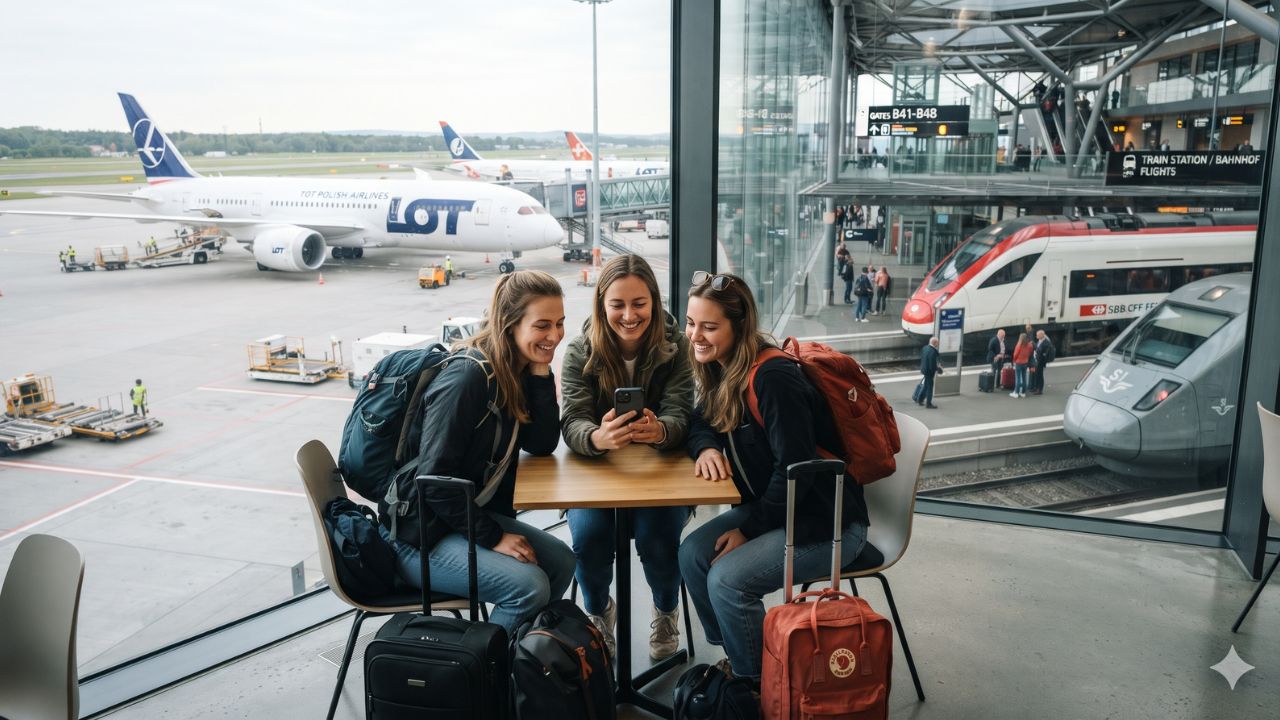
LOT Polish Airlines Launches Fly&Rail in Switzerland and Sweden: AccesRail Intermodal Booking Guide