
Mexico Joins Guatemala and More as Air Canada Adds New Winter Routes Across Key International Markets in December 2026: Here Are All the Details You Should Know
Air Canada launches six strategic international routes in December 2026, linking four Canadian hubs with Ecuador, Guatemala, Mexico, and Japan.

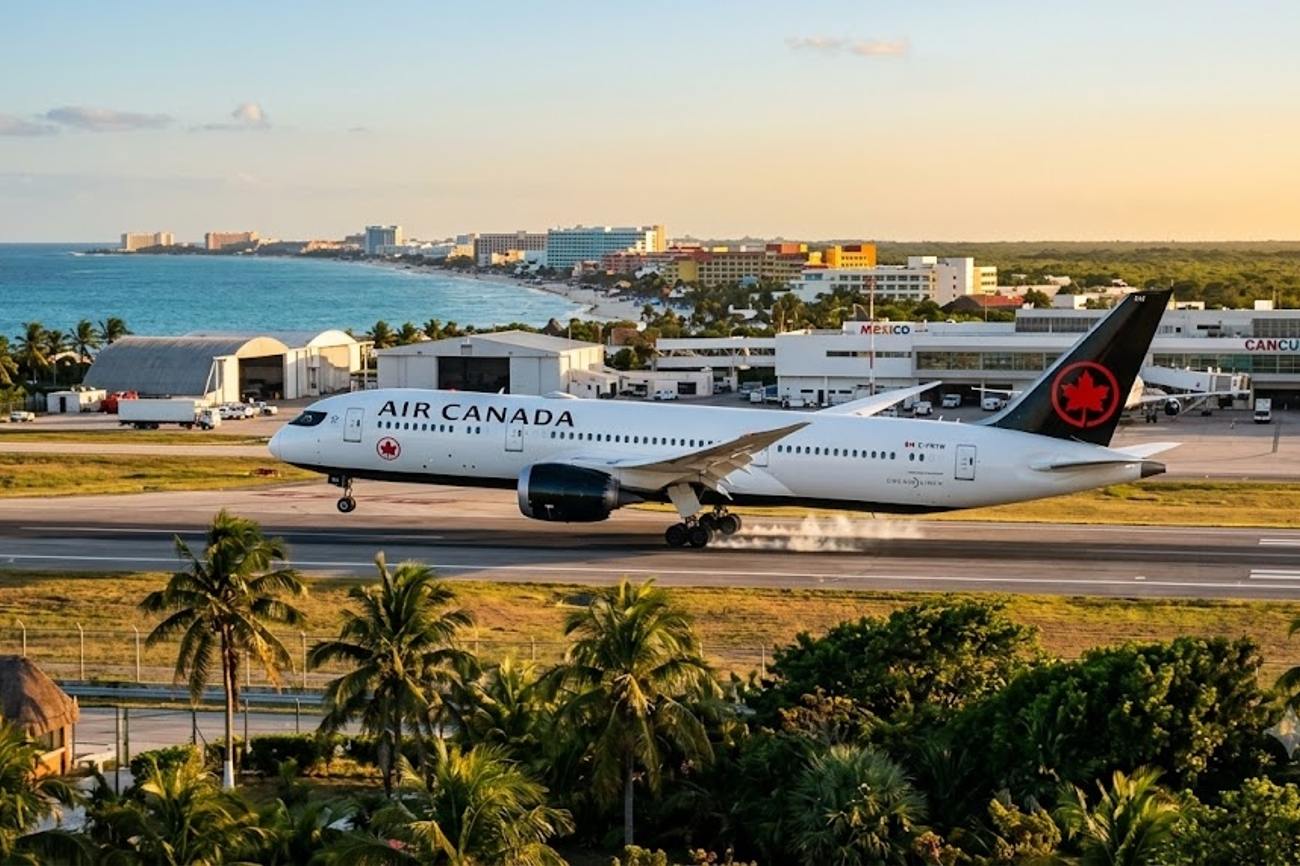
Image generated by AI
Six strategic international routes deploying long-range wide-body Boeing 787 Dreamliners, Airbus A330-300s, and Boeing 737 MAX jets will connect four Canadian gateway cities across four sovereign nations beginning December 4, 2026. The focused winter schedule rollout represents an aggressive real-time network realignment by Air Canada, deploying long-haul capacity toward high-yield seasonal leisure corridors in South America, Central America, Mexico, and northern Japan. By establishing four entirely new international city pairs alongside two restored western Canadian winter leisure links, the country's flag carrier is capturing underserved trans-Pacific ski traffic and Latin American business connections while routing international travelers past congested transit points in the continental United States.
This December network wave highlights a clear shift in how Canadian network planners deploy twin-aisle long-haul assets during the northern hemisphere's winter off-peak period. With transatlantic European point-to-point traffic dipping between November and March, Air Canada is reassigning premium wide-body hulls to secondary leisure epicenters that historically depended on indirect routings through legacy American mega-hubs. From dedicated powder ski corridors into Hokkaido to direct equatorial access in the high Andes, the expansion illustrates how structural fleet adjustments create distinct schedule advantages across competitive international airways.
Trans-Pacific and Latin Expansion: Shifting Long-Haul Fleet Deployments
The underlying operational catalyst behind this six-route package centers on direct route exclusivity and seasonal capacity optimization. Throughout the aviation sector, legacy carriers face intensifying cost structures driven by airport handling fees, airframe financing overhead, and fluctuating jet fuel spot prices. To maintain high aircraft productivity throughout the winter quarter, airlines must strategically position wide-body airframes into regions showing counter-cyclical strength. The northern Japanese island of Hokkaido represents one of the most resilient inbound winter travel sectors globally, driven by international demand for alpine skiing and snow sports. By launching Vancouver to Sapporo, Air Canada establishes the sole nonstop air bridge linking North America with New Chitose Airport, eliminating the conventional, time-consuming multi-sector journey through Tokyo Haneda or Narita.
Concurrently, the airline is fundamentally altering its posture in Latin America. Central and South American transit routes have long suffered from fragmented schedules, requiring travelers to endure multiple layovers or clear customs protocols at intermediate transit airports. By introducing direct flights from Montréal and Toronto into Quito, Ecuador, and initiating nonstop wide-body service between Toronto and Guatemala City, Air Canada captures direct corporate, visiting-friends-and-relatives (VFR), and premium ecotourism traffic. According to regulatory oversight frameworks governed by Transport Canada, operating direct point-to-point long-haul international corridors also simplifies customs compliance for transit passengers flowing across eastern Canadian hubs from Europe, establishing Montréal and Toronto as viable northern transatlantic-to-Latin transit channels.
December 2026 Route Specifications and Aircraft Allocations
The December 2026 timetable introduces four brand-new city pairs and restores two seasonal sun corridors from Calgary. Across these operations, equipment assignments have been calibrated to balance seat capacity, cargo hold volume, and premium cabin yields.
| Route Corridor | Canadian Gateway | Foreign Destination | Launch Date | Operating Window | Weekly Frequency | Aircraft Assigned | Network Classification |
|---|---|---|---|---|---|---|---|
| Montréal (YUL) – Quito (UIO) | Montréal | Quito, Ecuador | 4 Dec 2026 | 4 Dec 2026 – 26 Mar 2027 | 3x Weekly (Wed, Fri, Sun) | Boeing 787-8 | New International Route |
| Toronto (YYZ) – Quito (UIO) | Toronto | Quito, Ecuador | 5 Dec 2026 | 5 Dec 2026 – 20 Mar 2027 | 1x Weekly (Saturday) | Boeing 787-8 | New International Route |
| Toronto (YYZ) – Guatemala City (GUA) | Toronto | Guatemala City | Early Dec 2026 | Seasonal; Year-Round 6 May 2027 | Winter Schedule / 1x Weekly Thu | Airbus A330-300 | New International Route |
| Calgary (YYC) – Puerto Vallarta (PVR) | Calgary | Puerto Vallarta, Mexico | 10 Dec 2026 | 10 Dec 2026 – 10 Apr 2027 | 3x Weekly (Tue, Thu, Sat) | Boeing 737 MAX (Rouge) | Returning Winter Route |
| Calgary (YYC) – Cancún (CUN) | Calgary | Cancún, Mexico | 11 Dec 2026 | 11 Dec 2026 – 11 Apr 2027 | 4x Weekly (Mon, Wed, Fri, Sun) | Boeing 737 MAX (Rouge) | Returning Winter Route |
| Vancouver (YVR) – Sapporo (CTS) | Vancouver | Sapporo, Japan | 17 Dec 2026 | 17 Dec 2026 – 25 Mar 2027 | 3x Weekly (Mon, Thu, Sat) | Boeing 787 Dreamliner | New International Route |
In Ecuador, the flag carrier initiates its footprint through two distinct operations. Flight AC962 departs Montréal at 17:40 on Wednesdays, Fridays, and Sundays, arriving at Quito's Mariscal Sucre International Airport at 00:10 the following day. The southbound rotation concludes on March 26, 2027, with return sectors departing Quito on Mondays, Thursdays, and Saturdays from December 5, 2026, through March 27, 2027. Complementing this, Toronto–Quito launches on December 5, 2026, operating weekly departures on Saturdays through March 20, 2027, with return legs operating Sundays from December 6, 2026, to March 21, 2027. Both routes utilize the long-range Boeing 787-8, providing lie-flat seating and pressurized cabin comfort suited for high-altitude Andean arrivals.
In Central America, Air Canada secures an exclusive nonstop monopoly between Toronto and Guatemala City starting in early December 2026. The route deploys a three-class Airbus A330-300 equipped with Signature Class, Premium Economy, and Economy cabins. While launched as a winter addition, the service permanently transitions to year-round operation on May 6, 2027, when flight AC1300 departs Toronto on Thursdays at 18:15 to arrive in Guatemala City at 21:15. This development reinforces the existing Montréal–Guatemala City link established in October 2025, which is also converting into a year-round scheduled service.
Western Canadian operations balance trans-Pacific long-haul exclusivity with leisure sun capacity. On December 17, 2026, flight AC55 commences three weekly rotations from Vancouver to Sapporo on Mondays, Thursdays, and Saturdays aboard a Boeing 787 Dreamliner, while return flight AC54 departs Sapporo on Tuesdays, Fridays, and Sundays through March 26, 2027. This trans-Pacific link complements Air Canada's existing services to Tokyo Narita, Tokyo Haneda, and seasonal flights to Osaka Kansai. Meanwhile, Calgary regains vital winter sun links to Mexico operated by Air Canada Rouge Boeing 737 MAX aircraft: Puerto Vallarta runs three times weekly from December 10, 2026, to April 10, 2027, and Cancún operates four times weekly from December 11, 2026, to April 11, 2027.
Expert Analysis: Yield Strategy, Aircraft Utilization, and Transit Economics
From an airline fleet strategy perspective, this deployment pattern illustrates how major network carriers manage seasonal variance without letting expensive twin-aisle aircraft sit idle on airport aprons. Operating wide-body Boeing 787 and Airbus A330 airframes on routes such as Toronto–Guatemala City and Montréal–Quito enables the airline to capture high cargo freight yields alongside passenger tickets. Andean agricultural exports and Central American trade flows generate steady belly-hold freight income that supplements seasonal passenger seat revenues.
For travelers booking this route, the direct consequence is a drastic reduction in total transit elapsed time, accompanied by insulation from erratic cross-border connection risks. Passengers traveling between Canada and Central or South America traditionally faced complex layovers in Miami, Houston, or Atlanta, where mandatory baggage re-checks and immigration queues add hours to travel itineraries. By circumventing American border control entirely, Canadian and European transit travelers experience seamless terminal transfers in Toronto or Montréal under international transit guidelines managed by the International Air Transport Association (IATA).
The pricing pressure this creates means that regional legacy carriers and low-cost competitors operating through Central American hubs will be compelled to discount connecting itineraries to remain competitive. When a full-service legacy carrier introduces nonstop wide-body alternatives featuring lie-flat business suites and dedicated premium economy cabins, price-sensitive passengers may still accept multi-stop connections, but high-margin corporate, government, and premium leisure buyers will quickly migrate to nonstop alternatives. This dynamic grants Air Canada considerable pricing power on exclusive links such as Vancouver–Sapporo, where zero direct competition exists across the entire North American continent.
Key Takeaways
- Air Canada launches six strategic international services starting in December 2026, spreading connectivity across Ecuador, Guatemala, Mexico, and Japan from four domestic hubs.
- Four brand-new city pairs include Montréal–Quito, Toronto–Quito, Toronto–Guatemala City, and Vancouver–Sapporo, while Calgary regains seasonal winter links to Cancún and Puerto Vallarta.
- Exclusive nonstop status is established on Vancouver–Sapporo as the only direct link between North America and Hokkaido, and on Toronto–Guatemala City as the sole direct carrier.
- Wide-body long-range equipment, including Boeing 787 Dreamliners and Airbus A330-300s, will operate all Asian and South American additions, ensuring three-class premium comfort.
- Toronto–Guatemala City transitions to year-round scheduled service on May 6, 2027, complementing the existing Montréal–Guatemala City route inaugurated in October 2025.
FAQ: Air Canada Winter Routes 2026
When do the new nonstop flights to Quito and Sapporo begin? Montréal to Quito starts December 4, 2026, followed by Toronto to Quito on December 5. The exclusive Vancouver to Sapporo Dreamliner service commences on December 17, 2026.
Is the Toronto to Guatemala City route seasonal or permanent? While launching as a winter addition in early December 2026, the Airbus A330-300 service becomes a permanent year-round operation on May 6, 2027, operating weekly on Thursdays.
What aircraft will Air Canada fly on the Calgary to Mexico routes? Air Canada Rouge operates both Calgary routes using Boeing 737 MAX aircraft, serving Puerto Vallarta three times weekly and Cancún four times weekly through April 2027.
Why is the Vancouver to Sapporo flight significant for North American travelers? The service provides the only nonstop commercial flight connection between North America and Hokkaido, allowing travelers to reach Japan's premier ski resorts without connecting through Tokyo.
Strategic wide-body deployments and direct route monopolies cement Canada's northern gateways as potent international transit corridors for the winter travel season ahead.
Related Travel Guides
- Delta Air Lines LAX and Atlanta Hub Strategy: Long-Haul Fleet Deployments and Premium Lounge Realignment
- American and United Airlines Holiday Flight Reductions: Managing Fuel Price Volatility and Winter Airfares
- Hundreds of Travelers Impacted Throughout Asia as 177 Cancelled and 3,487 Delayed Flights Disrupt Hubs
Disclaimer
This article is for informational and educational purposes only. It does not constitute legal, financial, or professional advice. While we strive to provide accurate and up-to-date information, travel policies, regulations, and conditions change rapidly. Always verify information with official sources before making travel decisions. Nomad Lawyer makes no representations about the accuracy, reliability, completeness, or suitability of the information provided. Readers should consult qualified professionals for advice specific to their circumstances. The views expressed in this article are those of the author and do not necessarily reflect the views of Nomad Lawyer.
Kunal K Choudhary
Co-Founder & Contributor
A passionate traveller and tech enthusiast. Kunal contributes to the vision and growth of Nomad Lawyer, bringing fresh perspectives and driving the community forward.
Learn more about our team →