
US Air Traffic Control Faces $574 Million Funding Bombshell as FAA Reform Runs Into Major Risks
US Air Traffic Control Faces $574 Million Funding Bombshell as FAA Reform Runs Into Major Risks

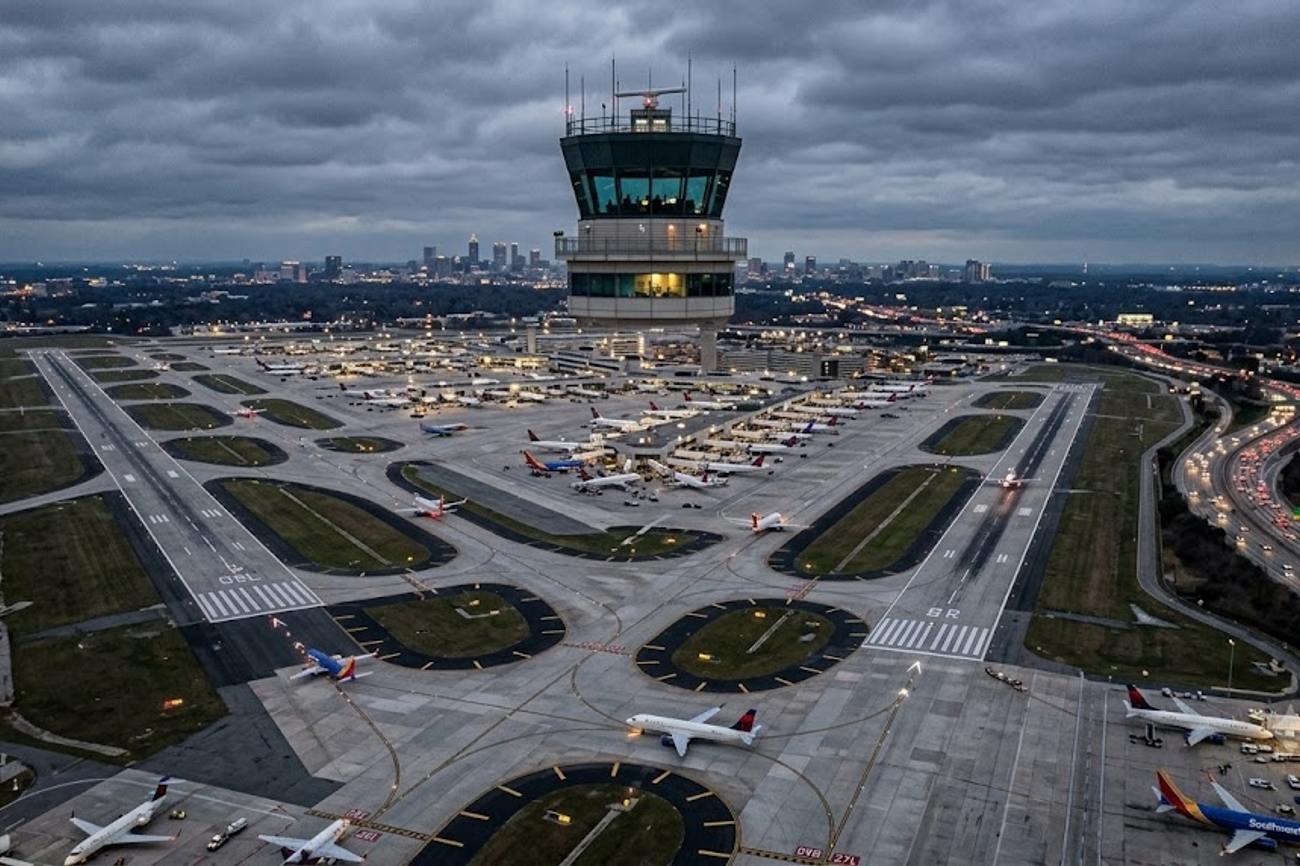
Image generated by AI
title: FAA Air Traffic Control Modernization Funding Gap: Passenger Impact and Rights date: 2026-09-15 category: Aviation Disruption tags: [FAA, AirTrafficControl, US-DOT, GAO-Report-2026, AviationInfrastructure]
A traveler departing from Hartsfield-Jackson Atlanta International Airport may find their flight delayed or rerouted not because of a storm, but because the very systems guiding their aircraft are stalled by a multi-billion dollar budget shortfall. As the Federal Aviation Administration (FAA) struggles to finance its critical infrastructure overhaul, the risk of systemic inefficiency and operational bottlenecks increases for every passenger in US airspace.
The $10.6 Billion Infrastructure Crisis
A Government Accountability Office (GAO) report released on September 14, 2026, has exposed a severe financial and planning deficit within the FAA's air traffic control (ATC) modernization program. The initiative, designed to overhaul the aging backbone of US aviation, is now estimated to cost $10.6 billion. This figure significantly exceeds the $9 billion previously authorized by Congress for the first phase of the project.
The financial gap is not merely a bookkeeping error; it represents a structural failure in project estimation. While the FAA has attempted to mitigate the damage by diverting $1 billion from its current-year budget, a deficit of $574 million remains. This remaining balance requires urgent congressional approval to ensure the first phase of the modernization can be completed without stalling.
Beyond the immediate funding gap, the GAO has flagged three systemic failures that could lead to prolonged disruptions for air travelers:
- Operational Blind Spots: The FAA has failed to produce a comprehensive evaluation of the long-term costs required to operate the system once it is active.
- Planning Deficits: There is currently no detailed, milestone-based timeline for the completion of the reforms.
- Prioritization Errors: The agency has prioritized the speed of deployment over structural planning, a move the GAO warns could lead to the same cost overruns and performance failures seen in previous federal technology projects.
Affected Routes and Systems
While this is a systemic infrastructure issue rather than a single-flight cancellation, the impact is felt most acutely in high-density corridors and major hubs. The lack of modernized ATC capacity directly contributes to "ground delay programs" and "air traffic flow management" restrictions.
| Impact Area | Risk Factor | Passenger Experience |
|---|---|---|
| Major Hubs (ATL, ORD, JFK, LAX) | Capacity Bottlenecks | Increased tarmac delays and missed connections |
| Transcontinental Routes | Inefficient Routing | Longer flight times and increased fuel burn |
| Regional Feeders | Sequencing Delays | "Holding patterns" and diverted flights |
| International Arrivals | Integration Gaps | Slower descent profiles and arrival delays |
Passengers can monitor real-time systemic delays via FlightAware or FlightRadar24 to see if their specific route is experiencing abnormal holding patterns.
Your Rights as a Passenger
When systemic ATC failures lead to delays or cancellations, passengers often find themselves in a legal grey area because airlines frequently claim "ATC delays" are "extraordinary circumstances" beyond their control. However, your rights depend on the jurisdiction and the nature of the disruption.
For Flights Within or Departing the United States: Under US Department of Transportation (DOT) guidelines, airlines are not legally required to provide monetary compensation for delays caused by air traffic control. However, you are entitled to:
- A Full Refund: If your flight is cancelled or significantly changed and you choose not to travel, you are entitled to a full refund to the original form of payment, regardless of the reason for the cancellation. You can verify these protections at the US DOT Air Consumer portal.
- Rebooking: Airlines must rebook you on the next available flight at no additional cost.
For Flights Departing from EU or UK Airports (EU261/2004 & UK261): If your flight departs from an EU or UK airport and is delayed by more than three hours or cancelled, the rules are stricter. While "ATC restrictions" are often cited as an extraordinary circumstance to avoid paying compensation, the airline must prove that the disruption was unavoidable.
- Right to Care: Regardless of the cause, if you are delayed, the airline must provide food, drinks, and communication. If an overnight stay is required, they must provide hotel accommodation and transport.
- Compensation: If the delay is not deemed an "extraordinary circumstance" (e.g., if the airline could have mitigated the ATC issue through better planning), you may be entitled to up to €600 (£520) depending on the distance of the flight. Refer to the UK CAA for specific claim guidelines.
Rebooking Strategy and Alternatives
When systemic ATC issues cause a cascade of delays, waiting in line at the airport customer service desk is the least effective strategy. Use the following professional tactics to secure your travel:
1. The Digital First Approach Before speaking to an agent, check your airline's official status page (e.g., British Airways Flight Status) and the airline's mobile app. Often, rebooking options appear in the app 30 minutes before they are announced at the gate.
2. The "Competitor Pivot" If the FAA's infrastructure failures cause a prolonged ground stop for a specific airline's hub, check if a competitor using a different terminal or hub is still moving. If you are entitled to a refund due to a cancellation, you may be better off booking a one-way ticket on a different carrier and claiming the refund from the original airline.
3. Route Diversification If a major hub like O'Hare (ORD) is paralyzed by ATC capacity issues, look for "secondary" airports. For example, if flying into Chicago, check flights into Midway (MDW) or even Milwaukee (MKE) with a ground transfer.
4. Refund vs. Voucher Trade-off Airlines will often offer travel vouchers to avoid paying cash refunds. Unless the voucher is worth significantly more than the ticket price (e.g., 150% value), always insist on a cash refund to your original payment method, especially during periods of systemic instability.
FAQ: FAA ATC Reform 2026
Am I entitled to compensation for an ATC delay? In the US, no monetary compensation is required for ATC delays. In the EU/UK, you are entitled to "duty of care" (meals/hotels), but cash compensation is only available if the airline cannot prove the ATC issue was an unavoidable extraordinary circumstance.
Can I get a full refund if the FAA's funding issues cause my flight to be cancelled? Yes. Under US DOT rules, any passenger whose flight is cancelled—regardless of the reason—is entitled to a full refund if they choose not to be rebooked.
How do I know if my delay is actually caused by the FAA? Check the "Reason for Delay" in your airline app or ask the gate agent. You can also cross-reference your flight on FlightRadar24 to see if other aircraft are circling in holding patterns, which indicates an ATC capacity issue.
What should I do if the airline refuses a refund for a cancelled flight? Document all communications and file a formal complaint with the US Department of Transportation via their online aviation consumer protection form.
When the systems that guide the skies are underfunded, the passenger becomes the primary shock absorber for the failure.
Related Travel Guides
Disclaimer
This article is for informational and educational purposes only. It does not constitute legal, financial, or professional advice. While we strive to provide accurate and up-to-date information, travel policies, regulations, and conditions change rapidly. Always verify information with official sources before making travel decisions. Nomad Lawyer makes no representations about the accuracy, reliability, completeness, or suitability of the information provided. Readers should consult qualified professionals for advice specific to their circumstances. The views expressed in this article are those of the author and do not necessarily reflect the views of Nomad Lawyer.
Preeti Gunjan
Contributor & Community Manager
A passionate traveller and community builder. Preeti helps grow the Nomad Lawyer community, fostering engagement and bringing the reader experience to life.
Learn more about our team →