American Airlines and US Carriers Face Fuel Price Shocks Ahead of Christmas 2026 Travel Season

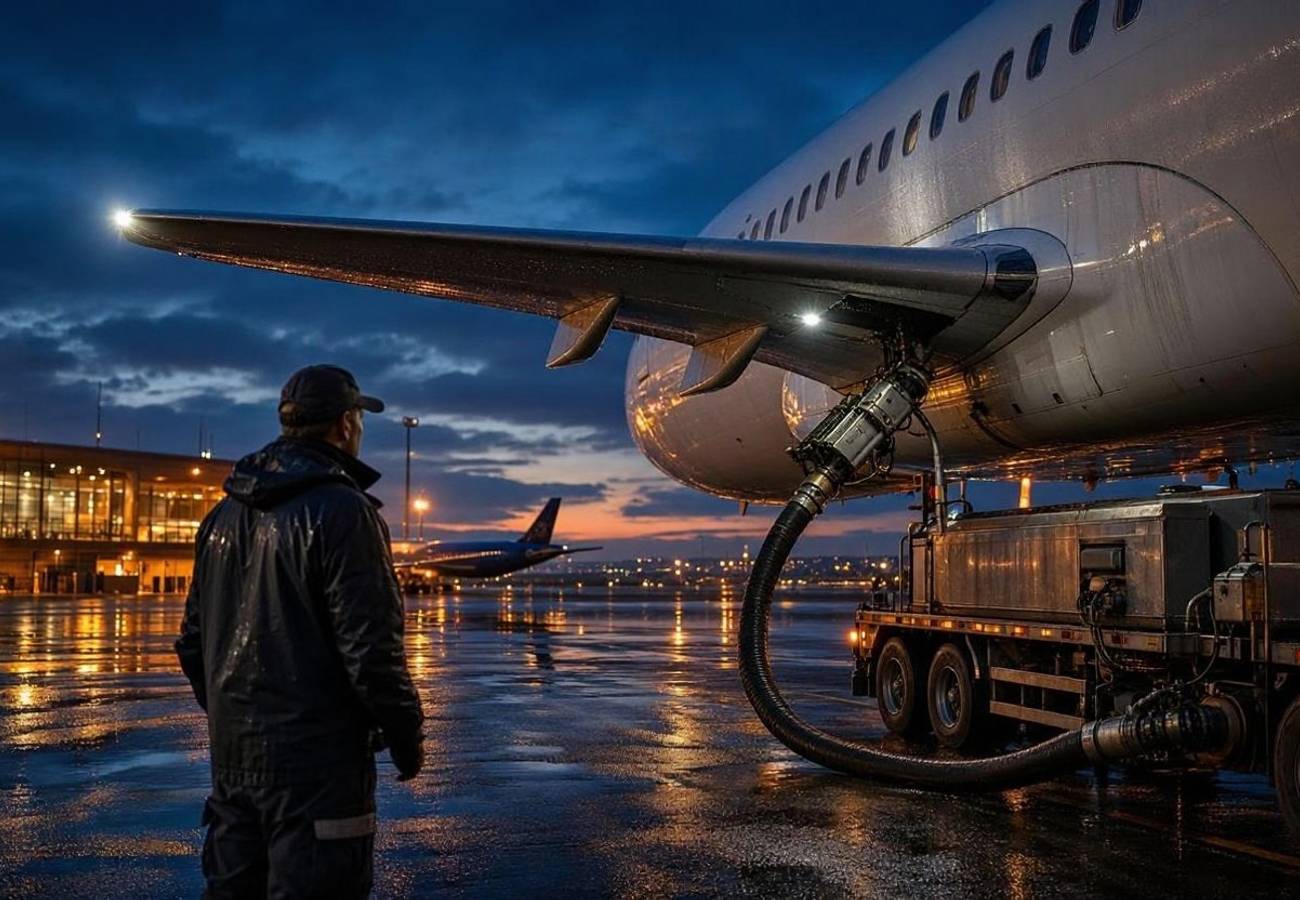
Image generated by AI
American Airlines expects its fuel bill to skyrocket by $2.8 billion compared to last year, a staggering figure that highlights the volatility currently gripping the US aviation sector. As the industry pivots toward the critical Christmas travel window, the primary battle is no longer just about capturing passenger demand, but surviving a "fuel shock" that threatens to erase holiday profits.
The 2026 Holiday Capacity Crunch
The US aviation market is entering December 2026 in a state of strategic tension. While millions of travelers are booking flights, the carriers are quietly auditing their networks to prune "marginal" routes—those that fly but don't generate enough profit to cover the soaring cost of kerosene.
This isn't a uniform retreat. We are seeing a fragmented response: budget carriers like Frontier are actually expanding capacity by 5% to 6%, betting on the efficiency of newer aircraft and a surge in leisure demand. Meanwhile, legacy giants are tightening the belt. United Airlines is actively removing specific December frequencies where demand doesn't justify the expense, particularly on routes that aren't bolstered by high-paying premium cabin passengers.
The Economics of the Sky: 2026 Cost Pressures
For the modern traveler, the "fuel shock" manifests as higher ticket prices and fewer flight options. According to data from Airlines for America, average jet fuel prices hit roughly $4.64 per gallon in October 2026. When combined with rising labor costs, these two factors now consume approximately 55% of total operating expenses for US carriers.
The financial strain is most evident at American Airlines. Despite bringing in $16.3 billion in third-quarter revenue, the carrier posted a GAAP net loss of $269 million. This gap proves that high passenger volume does not always equal profitability when the cost of keeping the planes in the air climbs faster than ticket prices.
2026 Q4 Airline Capacity and Cost Outlook
| US Airline | Capacity Change (vs Q4 2025) | Fuel Forecast (per gallon) | Primary Strategic Pivot |
|---|---|---|---|
| American Airlines | +5.5% to +6.5% | $4.70 | Reviewing marginal routes; cost control |
| United Airlines | Flat to +2% | $4.80 | Cutting weak December frequencies |
| Delta Air Lines | < 2% | $4.25 | Focus on premium and loyalty yields |
| Southwest | +3% to +4% | N/A | Optimizing seating; controlling unit costs |
| JetBlue | +3% to +4% | $4.64 | Reducing structural costs; aircraft utilization |
| Alaska Air Group | +1% to +1.5% | $4.65–$4.85 | Limiting expansion; Hawaiian integration |
| Frontier | +5% to +6% | $4.75 | Efficient aircraft replacement |
| Allegiant/Sun Country | Broadly Flat | $4.75 | Peak-day concentration |
Visitor Insider Tips: Navigating the 2026 Holiday Rush
If you are flying within the US this December, the "capacity pruning" mentioned above will directly impact your itinerary. Here is how to handle the current climate:
- Avoid the "Marginal" Routes: United and American are cutting low-frequency flights. If you usually fly a direct route that only has one or two daily options, check your booking now. If those flights are cut, you'll be forced into hubs like Dallas Fort Worth, Charlotte, or Chicago O'Hare, where delays are more likely.
- The Premium Hedge: Delta is focusing heavily on premium demand. If you have loyalty status or are booking Business/First, you will likely find more availability and better service, as the airline is prioritizing these high-yield seats to offset fuel costs.
- Budget Carrier Risks: While Frontier is increasing seats, remember that their "low unit cost" model often means stricter baggage enforcement. Budget for these fees upfront to avoid surprises at the gate.
- Booking Window: With airlines adjusting frequencies in real-time based on fuel costs, avoid "waiting for a deal" this December. Capacity is being managed tightly, and once a frequency is cut, the remaining seats will spike in price.
Cultural and Environmental Context
The current crisis underscores a systemic vulnerability in global aviation: the reliance on volatile fossil fuels. While the industry discusses "sustainable aviation fuel" (SAF), the immediate reality for 2026 is a hard dependence on traditional jet fuel. This financial pressure is accelerating the retirement of older, "gas-guzzling" aircraft in favor of more fuel-efficient models, a move that is environmentally beneficial but requires massive capital expenditure during a period of financial loss.
Furthermore, the tension between labor costs and fuel prices is creating a precarious environment for airport staff and crew. As airlines like Southwest struggle with non-fuel unit cost increases of 4% to 4.5%, the pressure to maintain "operational reliability" during the Christmas rush is immense, often leading to increased stress on the frontline workforce. For more information on aviation regulations and safety standards, visit the Federal Aviation Administration (FAA).
FAQ: Visiting the US December 2026
Will fuel prices lead to widespread flight cancellations? Not necessarily. Airlines are reducing "marginal" frequencies and adjusting capacity rather than canceling existing schedules. However, you may see fewer flight options on less-popular routes.
Which airlines are the most stable for holiday travel? Delta and United reported strong third-quarter profits ($756 million and $1 billion respectively), giving them more financial flexibility to absorb fuel shocks than carriers currently reporting net losses.
How can I find the cheapest flights during the fuel shock? Frontier and Allegiant are maintaining higher capacity and low-cost models. Compare these with legacy carriers, but be mindful of additional fees for bags and seat assignments.
Are hub airports more prone to delays this season? Yes. As airlines prune direct routes, more passengers are funneled through major hubs like Newark Liberty and Denver, increasing the likelihood of congestion.
The sky is getting more expensive, but the journey remains essential.
Related Travel Guides
This article is for informational purposes. Flight routes, passenger regulations, visa rules, and transit advisories are subject to change by airlines and aviation authorities. Readers are advised to verify schedules and travel documentation with relevant carriers and border agencies before departure.
Related Stories

US Airlines Overhaul Overseas Routes: Nonstop Flights to Regional Europe and Asia Expand for 2027
United Airlines Boeing 777-200ER N27015 Connects Tokyo Haneda to Washington Dulles in 2026