
UK Extends Fuel Duty Cut as Prices Surge from Iran Conflict
The UK extends its 5 pence per litre fuel duty cut until August 2026 amid soaring pump prices from Iran tensions, joining Hungary, Slovakia, Poland, and Austria in urgent responses. Petrol hits 143.0p and diesel 163.2p per litre as of March 2026.

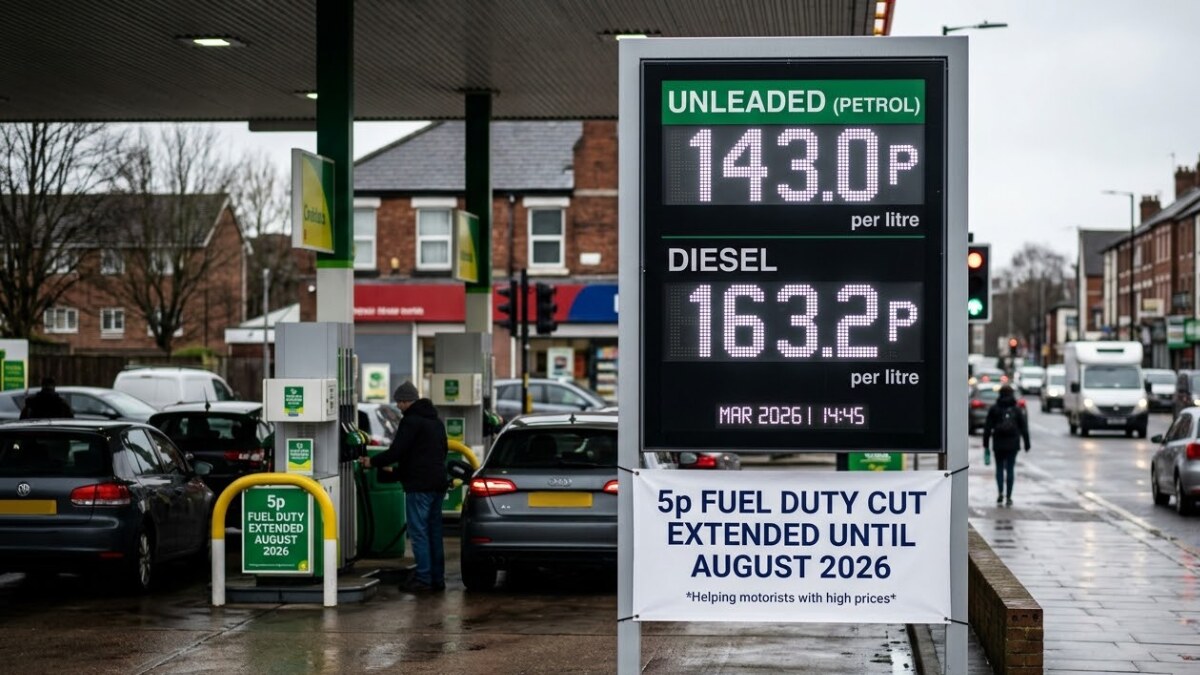
Image for illustrative purposes
Quick Summary
- UK Fuel Policy: Extends 5 ppl fuel duty cut to 31 August 2026, effective 23 March 2026, to counter surging prices.
- Europe Coordination: Joins Hungary, Slovakia, Poland, Austria in urgent measures amid Iran conflict disruptions[ref].
- Traveler Impact: Petrol at 143.0p/litre, diesel 163.2p/litre; higher costs for road trips, airport transfers.
- What's Next: Duty rates rise from 1 September 2026; monitor HMRC updates for fleet impacts.
The United Kingdom has aligned with Hungary, Slovakia, Poland, and Austria by extending its temporary fuel duty reduction through August 2026. This move counters skyrocketing fuel costs driven by geopolitical strains from the Iran conflict, which are upending global supply chains and hitting travelers hard. As of March 2026, average petrol prices stand at 143.0p per litre, with diesel at 163.2p per litre across UK forecourts.
Why This Matters for European Travelers
Surging fuel prices threaten road-based travel across Europe, from UK motorway drives to Central European tours. The Iran conflict has spiked wholesale oil costs, pushing UK pump prices up—petrol rose 5p to 137.5p per litre since late February, diesel by 9p amid the tensions. Drivers face calls to shorten journeys as costs climb further into March 2026.
This UK extension prevents a planned 5 pence per litre (ppl) duty hike set for March 2026. It builds on the cut first launched in March 2022, now prolonged to ease pressure on households and businesses reliant on road fuel. For aviation and ground transport to airports like Heathrow (LHR/EGLL) or Gatwick (LGW/EGLF), indirect effects loom via higher jet fuel pass-throughs.
UK Fuel Duty Extension Breakdown
The UK Treasury announced the measure at Budget 2025, with operative effect from 23 March 2026. Main fuel duty rates for light oils like unleaded petrol drop to a continued cut rate of 0.5295 ppl until 31 August 2026.
| Type | Continued Cut Rates (to 31 Aug 2026) | Rates from 1 Sep 2026 | Rates from 1 Dec 2026 | Rates from 1 Mar 2027 |
|---|---|---|---|---|
| Unleaded petrol | 0.5295 | 0.5395 | 0.5595 | 0.5795 |
| Light oil (other than unleaded petrol or aviation gasoline) | 0.6267 | 0.6367 | 0.6567 | 0.6767 |
| Aviation gasoline (Avgas) | 0.3629 | 0.3667 | 0.3743 | 0.3820 |
Heavy oils follow suit, with diesel at 0.5295 ppl under the extension. Biofuels like biodiesel and bioethanol match at 0.5295 ppl, while road fuel gases such as LPG hold at 0.2888 £ per kg.
| Type | Continued Cut Rates (to 31 Aug 2026) | Rates from 1 Sep 2026 | Rates from 1 Dec 2026 | Rates from 1 Mar 2027 |
|---|---|---|---|---|
| Heavy oil (diesel) | 0.5295 | 0.5395 | 0.5595 | 0.5795 |
| Biodiesel | 0.5295 | 0.5395 | 0.5595 | 0.5795 |
| Liquefied petroleum gas (LPG) | 0.2888 £ per kg | 0.2943 £ per kg | 0.3052 £ per kg | 0.3161 £ per kg |
HMRC's March 2026 advisory fuel rates (AFRs) reflect stability for most vehicles amid these shifts. Petrol up to 1400cc stays at 12p per mile, diesel at 12p for up to 1600cc. LPG sees cuts: 10p per mile for small engines (down from 11p). Electric rates differentiate: 7p home, 15p public charging (up from 14p).
Mark Checksfield, Head of Operations at Fleetmaxx Solutions, noted: “These figures shape reimbursement policies, influence cost forecasting, and ensure businesses remain aligned with HMRC guidance for employee travel.”
Key Facts at a Glance
- Fuel Prices (March 2026): Petrol 143.0p/litre, diesel 163.2p/litre (UK average from 7384 stations).
- Duty Cut Extension: 5 ppl reduction to 31 August 2026; effective 23 March 2026.
- Impacted Fuels: Unleaded petrol, diesel, LPG, biofuels, aviation gasoline.
- Europe Context: UK joins Hungary, Slovakia, Poland, Austria vs. Iran-driven surges[ref].
- AFR Stability: Petrol/diesel unchanged; LPG down, public EV up to 15p/mile.
- Price Drivers: Iran conflict since Feb 28; wholesale oil up, forecourt petrol +5p, diesel +9p.
What This Means for Travelers
Road warriors planning UK-Europe drives or airport shuttles face steeper costs without the duty extension. A full tank for a London-to-Edinburgh round trip could add £20-30 at current pumps. Tour operators in Hungary or Poland may pass on similar hikes from coordinated measures.
Electric vehicle adopters gain from split AERs—home charging at 7p per mile suits long-haul prep to hubs like Manchester Airport (MAN/EGCC). Yet public chargers at 15p signal caution for on-the-go recharges near Vienna (VIE/LOWW) or Warsaw (WAW/EPWA).
Aviation feels ripples: while passenger jet fuel escapes direct duty, supply chain strains from Iran elevate IATA warnings on global fares. Check FlightAware for any knock-on delays from ground ops costs.
Challenges and Risks Ahead
The cut expires post-August 2026, with phased rises: +1ppl in September, +2ppl December, full revert by March 2027. Iran tensions persist, with no quick resolution—wholesale oil volatility could push prices beyond 163p diesel.
Fleet managers risk tax hits if ignoring AFRs; overpayments above advisory rates trigger HMRC scrutiny. Travelers in Slovakia or Austria face parallel uncertainties if local measures falter.
Traveler Action Checklist
- Track pump prices via apps like Fuel Finder UK before road trips or airport runs.
- Budget for hikes—add 10-15% to fuel costs for Europe itineraries amid Iran effects.
- Opt for EVs at home—use 7p AER for cheaper mileage to airports like Edinburgh (EDI/EGPH).
- Know AFRs for business travel—reimburse at HMRC rates from 1 March 2026 to avoid tax.
- Consider alternatives—trains via National Rail or nearby airports like Stansted (STN/EGSS) for cost savings.
| Detail | Data |
|---|---|
| Primary Trigger | Iran conflict disrupting supplies since Feb 28, 2026 |
| UK Measure | 5 ppl duty cut to 31 Aug 2026 (from 23 Mar 2026) |
| Current Prices | Petrol 143.0p/l, diesel 163.2p/l (Mar 2026) |
| Partner Nations | Hungary, Slovakia, Poland, Austria[ref] |
| EV Public Rate | 15p per mile (up from 14p) |
Frequently Asked Questions
Are UK fuel prices rising in March 2026?
Yes, petrol averages 143.0p per litre and diesel 163.2p as of March 2026, up due to Iran conflict wholesale spikes—petrol +5p, diesel +9p since late February. The duty cut extension mitigates but does not reverse trends.
What are UK passenger rights on fuel-related travel costs?
No direct refunds for pump prices, but US DOT equivalents via UK CAA apply to flights; claim reimbursements for airport transfers if delays occur. Keep receipts for business AFR compliance.
How does this affect international travelers to Europe?
Higher road fuel hits UK-Hungary drives; aviation indirect via jet fuel. Use FAA or EASA alerts for supply impacts; consider Poland (KRK/EPKK) as cheaper hub alternative.
When do UK fuel duty rates rise next?
Rates tick up 1ppl on 1 September 2026, then 2ppl December 2026, returning to pre-cut levels (e.g., petrol 0.5795 ppl) by 1 March 2027.
Related Travel Guides
Europe Fuel-Saving Road Trips 2026
Iran Conflict Travel Alerts
UK EV Charging Guide for Airports
Disclaimer
This article is for informational and educational purposes only. It does not constitute legal, financial, or professional advice. While we strive to provide accurate and up-to-date information, travel policies, regulations, and conditions change rapidly. Always verify information with official sources before making travel decisions. Nomad Lawyer makes no representations about the accuracy, reliability, completeness, or suitability of the information provided. Readers should consult qualified professionals for advice specific to their circumstances. The views expressed in this article are those of the author and do not necessarily reflect the views of Nomad Lawyer.
Raushan Kumar
Founder & Lead Developer
Full-stack developer with 11+ years of experience and a passionate traveller. Raushan built Nomad Lawyer from the ground up with a vision to create the best travel and law experience on the web.
Learn more about our team →