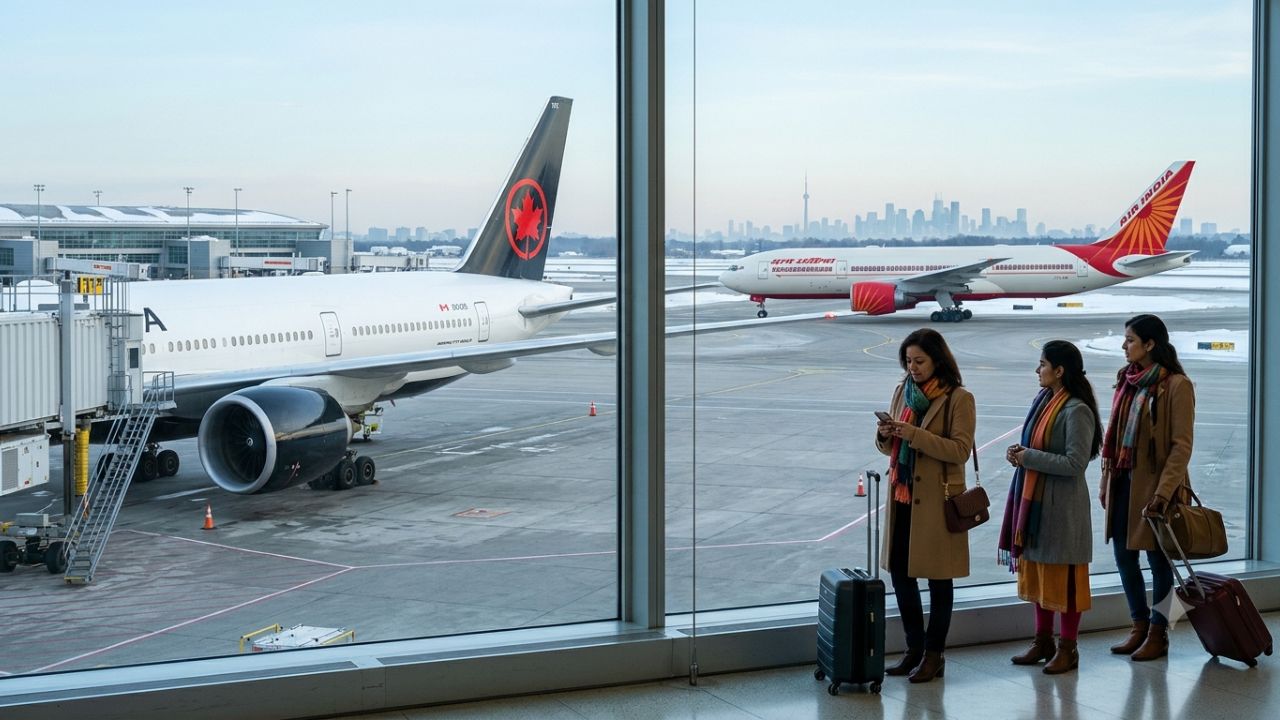
Sydney to Cape Town Nonstop: Qantas Launches Historic Boeing 787-9 Route Unlocking Direct Access to South Africa's Western Cape in 2027

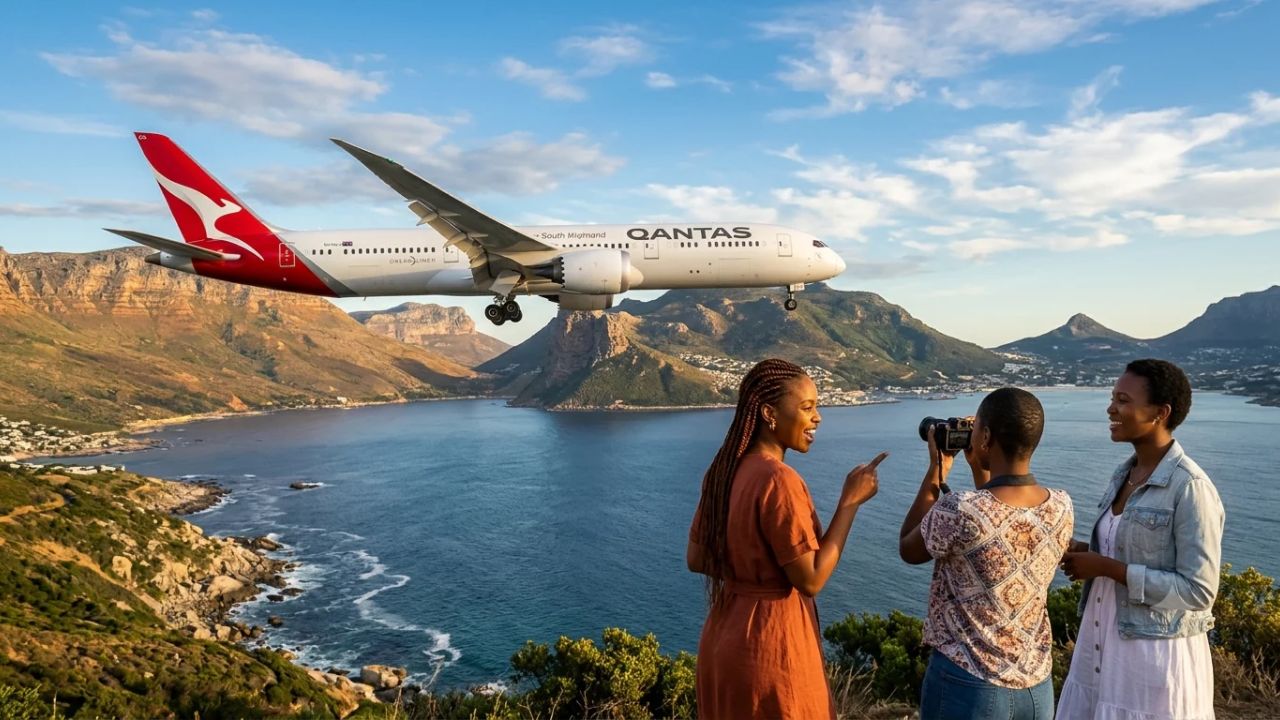
SYDNEY, Australia — In a milestone transoceanic aviation breakthrough that will transform intercontinental connectivity across the Southern Hemisphere, Qantas has announced the launch of the first-ever nonstop commercial passenger service connecting Sydney with Cape Town.
Commencing on October 19, 2027, the seasonal service will operate three times weekly throughout the Southern Hemisphere summer season, utilizing long-range Boeing 787-9 Dreamliner widebody aircraft. Scheduled to run through March 24, 2028, the 14-hour-and-25-minute flight will add nearly 30,000 seasonal seats between Australia and South Africa, eliminating the traditional requirement for Australian travelers to transfer through Johannesburg to reach the Western Cape.
The route launch represents a decisive structural shift in Southern Ocean aviation. By establishing a direct link between Australia's most populous metropolitan area and South Africa's premier international tourist destination, Qantas is capitalizing on surging Australian leisure demand.
In mid-2026, Australia surpassed Germany to become South Africa's third-largest overseas tourism source market, with visitor arrivals expanding by 19 percent year-on-year. Supported by a 225,000-strong South African diaspora resident in Australia—over a quarter of whom reside in New South Wales—the new air bridge serves dual imperatives: capturing high-yield premium holidaymakers seeking direct access to Cape Town’s coastal landscapes and vineyards, while providing expedited travel for visiting families and commercial delegations.
+----------------------------------------------------------------------------------------------------+ | QANTAS SYDNEY–CAPE TOWN NONSTOP FLIGHT METRICS & ROUTE SCORECARD | +----------------------------------------------------------------------------------------------------+ | Route Pairing | Sydney Kingsford Smith (SYD) – Cape Town International (CPT) | | Maiden Flight Date | October 19, 2027 | | Operating Season | October 19, 2027 to March 24, 2028 (Peak Southern Summer) | | Weekly Frequency | 3x Weekly (Tuesdays, Fridays, Sundays) | | Flight Number & Westbound | QF89: Departs SYD 09:15, Arrives CPT 14:40 Local Time | | Scheduled Airborne Duration | 14 Hours 25 Minutes (Westbound) / ~12 Hours 45 Minutes (Eastbound) | | Operating Aircraft | Boeing 787-9 Dreamliner (42 Business, 28 Prem Econ, 166 Economy) | | Total Seasonal Seat Addition | Approximately 29,800 Seats across 5-Month Operational Window | | Launch Fares (Introductory) | Return Economy starting at A$2,470 (Subject to availability) | | Geographic Airspace Trajectory| Trans-Southern Indian Ocean Great Circle Track (ETOPS-330 Compliant)| +----------------------------------------------------------------------------------------------------+
The First-Ever Sydney–Cape Town Nonstop: Flight Schedule, Capacity, and Fleet
The introduction of flight QF89 establishes a new milestone in Qantas' century-long history of pioneering ultra-long-haul commercial flight paths. Historically, scheduled passenger air services between Australia and South Africa have terminated in Johannesburg, forcing travelers destined for Cape Town to clear customs, retrieve baggage, and navigate domestic connections.
Starting in October 2027, the direct service bridges the 11,000-kilometer expanse of the Southern Indian Ocean in a single flight sector. The seasonal schedule is calibrated to match the peak holiday travel window across the Southern Hemisphere, aligning with the South African school holidays, the Western Cape grape harvest, and Australia's summer vacation period.
                  QANTAS FLIGHT QF89 FLIGHT SCHEDULE & ROTATION

   SYDNEY (SYD) ===============================================> CAPE TOWN (CPT)
   Departure: 09:15 AEDT (Tue, Fri, Sun)                         Arrival: 14:40 SAST (Same Day)
   Flight Time: 14 Hours 25 Minutes                              Aircraft: Boeing 787-9

   CAPE TOWN (CPT) =============================================> SYDNEY (SYD)
   Departure: 17:00 SAST (Tue, Fri, Sun)                         Arrival: 16:15 AEDT (+1 Day)
   Flight Time: ~12 Hours 45 Minutes (Jetstream Assisted)        Aircraft: Boeing 787-9
The flight schedule provides travelers with exceptional convenience. Departing Sydney at 9:15 AM enables passengers from Brisbane, Melbourne, Canberra, and Adelaide to connect seamlessly onto QF89 on morning domestic feeder flights without requiring an overnight hotel stay in Sydney. Arriving in Cape Town at 2:40 PM local time allows travelers to clear border control, check into accommodations along the Atlantic Seaboard or the Victoria & Alfred Waterfront, and enjoy an evening in the city on their arrival date.
The return service takes full advantage of powerful southern polar jet streams that circulate from west to east around Antarctica. With strong tailwinds propelling the aircraft across the ocean, the eastbound return crossing is completed in roughly 12 hours and 45 minutes, shaving nearly two hours off the outbound westbound journey.
Qantas will deploy its long-range Boeing 787-9 Dreamliner on the corridor, equipped with three distinct cabin classes:
- Business Suites (42 Seats): Arranged in a 1-2-1 layout offering direct aisle access, fully flat beds, privacy partitions, and large touchscreen entertainment monitors.
- Premium Economy (28 Seats): Configured 2-3-2 with an ergonomic cradle seat design, 38 inches of pitch, dedicated footrests, and elevated dining selections.
- Economy Class (166 Seats): Configured 3-3-3 with contoured cushioning, personal device holders, multi-angle headrests, and USB-C fast-charging ports.
+----------------------------------------------------------------------------------------------------+ | BOEING 787-9 CABIN SPECIFICATIONS & PASSENGER COMFORT | +----------------------------------------------------------------------------------------------------+ | Cabin Pressurization Level | Pressurized to 6,000 feet (Reduces fatigue and physiological strain)| | Ambient Humidity Systems | Advanced HEPA filtration with active humidification bladders | | Window Architecture | Electrochromic dimming glass (30% larger than previous generation) | | Acoustic Engineering | Scalloped engine chevrons reducing interior cabin decibel levels | | Seating Distribution | 42 Business / 28 Premium Economy / 166 Standard Economy | | Total Passenger Load | 236 Passengers per Transoceanic Flight | +----------------------------------------------------------------------------------------------------+
Trans-Southern Ocean Flight Dynamics: ETOPS-330 and Oceanic Meteorology
Operating a twin-engine commercial airliner across the Southern Indian Ocean presents one of the most demanding navigational and regulatory undertakings in modern aviation. The oceanic expanse between southwestern Australia and the southern tip of Africa is an immense maritime wilderness characterized by shifting weather fronts, intense sub-polar low-pressure systems, and a complete absence of intermediate continental landmasses.
                    SOUTHERN OCEAN GREAT CIRCLE NAVIGATION

    [SYDNEY (SYD)]
          \
           \  Great Circle Track over Southern Ocean
            \
             +=====> [Perth (PER) - Primary In-Flight Divert]
             |
             +=====> [Cocos/Keeling Islands (CCK) - Emergency Alternate]
             |
             +=====> [Mauritius (MRU) & Réunion (RUN) - Mid-Ocean Diversions]
             |
            /
           /  Sub-Polar Jetstream Boundary (Eastbound Tailwinds)
          /
    [CAPE TOWN (CPT)]
To operate this corridor safely, Qantas relies on Extended-range Twin-engine Operational Performance Standards (ETOPS-330) certification granted by Australia's Civil Aviation Safety Authority (CASA). An ETOPS-330 rating permits a twin-engine aircraft to operate flight paths that are up to 330 minutes (5.5 hours) flying time on a single engine from the nearest suitable diversionary airfield.
Throughout the transoceanic crossing, flight dispatchers and oceanic air traffic controllers track designated diversion airports:
- Western Australian Airfields: Perth Airport (PER) and Learmonth serve as initial diversion alternates during the early oceanic crossing phase.
- Indian Ocean Island Outposts: Cocos (Keeling) Islands Airport (CCK), Sir Seewoosagur Ramgoolam International Airport in Mauritius (MRU), and Roland Garros Airport in Réunion (RUN) provide critical diversionary coverage across the central transoceanic corridor.
- Sub-Antarctic Weather Boundaries: While flight paths route south of the 45th parallel south to capture Great Circle geographic efficiencies, pilots continually monitor atmospheric turbulence along the Antarctic polar front. The Boeing 787-9's composite carbon-fiber fuselage structure, advanced fly-by-wire turbulence dampening systems, and fuel-tank inerting systems ensure passenger safety during turbulent crossings.
Sea-Level Cape Town vs. Johannesburg's "Hot-and-High" Constraints
Beyond passenger convenience, Qantas' introduction of Cape Town flights resolves a stubborn aerodynamic challenge that has long complicated the airline’s operations in Johannesburg.
Johannesburg’s O.R. Tambo International Airport (JNB) is situated at an elevation of 1,700 meters (5,558 feet) above mean sea level. In commercial aviation, high elevation combined with elevated summertime temperatures creates a phenomenon known as "hot-and-high" conditions. Under these conditions, the ambient atmospheric air is significantly thinner and less dense than at sea level.
              AERODYNAMIC COMPARISON: CAPE TOWN VS. JOHANNESBURG

  CAPE TOWN INTERNATIONAL (CPT)               JOHANNESBURG O.R. TAMBO (JNB)
+---------------------------------------+   +---------------------------------------+
| Elevation: 46 meters (151 feet)       |   | Elevation: 1,700 meters (5,558 feet)  |
| Atmospheric Density: High / Standard  |   | Atmospheric Density: Thin ("Hot & High")|
| Engine Thrust Generation: Maximum     |   | Engine Thrust Generation: Degraded    |
| Lift Generated: Optimal Aerodynamic   |   | Lift Generated: Lower Lift Velocity   |
| Runway Takeoff Weight: Unrestricted   |   | Runway Takeoff Weight: Penalized      |
| Commercial Consequence: Full Payload  |   | Commercial Consequence: Cargo Capped  |
+---------------------------------------+   +---------------------------------------+
When an aircraft departs Johannesburg in the heat of a South African summer afternoon, its engines produce reduced thrust, and its wings generate lower aerodynamic lift at a given airspeed. Consequently, heavily fueled aircraft attempting ultra-long-haul nonstop crossings to Australia frequently face strict Maximum Takeoff Weight (MTOW) penalties.
To depart safely from Johannesburg's 4,400-meter runways without exceeding tire speed or obstacle clearance limits, airlines often must leave behind commercial belly cargo or cap passenger seat sales.
Cape Town International Airport (CPT) completely eliminates these density altitude constraints. Located just 46 meters (151 feet) above sea level on the coastal flats of the Cape Peninsula, CPT provides dense maritime air that enables the Boeing 787-9’s General Electric GEnx-1B engines to generate full rated takeoff thrust.
The aircraft can lift off at its maximum certified takeoff weight of 254 metric tons, carrying a full complement of 236 passengers, complete luggage allotments, and up to 15 metric tons of revenue-generating commercial cargo without requiring offloading or weight compromises.
Dismantling the Johannesburg Transfer Bottleneck
For decades, the dominant friction point for Australian tourists traveling to Cape Town has been the compulsory airport transfer through Johannesburg. O.R. Tambo International Airport processes the vast majority of South Africa's intercontinental traffic, functioning as the primary hub for regional connector airlines.
However, transiting through Johannesburg has historically involved considerable logistical strain:
+----------------------------------------------------------------------------------------------------+ | FRICTION AUDIT: TRANSIT VIA JOHANNESBURG VS. DIRECT CAPE TOWN | +----------------------------------------------------------------------------------------------------+ | Immigration Clearance | Must clear South African border control in JNB before domestic leg | | Baggage Collection | Mandatory luggage claim, customs inspection, and domestic re-check | | Terminal Transit | 15-minute walk between International Arrivals and Domestic Terminal | | Regional Flight Transfer | 2-to-3-hour minimum connection window required to avoid missed hops | | Total Elapsed Travel Time | 19.5 to 22 Hours from Sydney to Cape Town via Johannesburg | | Direct Flight Elapsed Time | 14 Hours 25 Minutes (Saves 5 to 7.5 hours of transit disruption) | | Baggage Mishandling Exposure | Doubled due to multi-carrier transfer to regional partner Airlink | +----------------------------------------------------------------------------------------------------+
Upon arriving in Johannesburg after a grueling fourteen-hour flight from Sydney, passengers were required to disembark, pass through international immigration passport control queues, collect their checked luggage from the baggage carousel, pass through South African customs screening, and push their luggage carts to the domestic departures terminal.
There, travelers had to check in again with domestic partner airline Airlink, pass through domestic security checkpoints, and wait for a two-hour connector flight to Cape Town.
                    PASSENGER JOURNEY COMPARISON

  TRADITIONAL ROUTE VIA JOHANNESBURG (~20 - 22 Hours Total)
  [SYDNEY] === 14.5h ===> [JOHANNESBURG] === 3h Layover/Customs ===> [CAPETOWN]
                                |
                   (Baggage Re-Check & Terminal Sprint)

  NEW DIRECT QANTAS SERVICE (~14.5 Hours Total)
  [SYDNEY] ====================== 14.5h Nonstop ======================> [CAPETOWN]
                                |
                   (Single Border Clearance at CPT)
The introduction of flight QF89 eliminates this entire multi-step process. Passengers board in Sydney, sleep through the ocean crossing, clear South African immigration directly at Cape Town's modern international terminal, collect their bags, and step directly into awaiting ground transportation to their hotels in Camps Bay, the City Bowl, or Stellenbosch within forty-five minutes of touchdown.
Australia's Rising Stature in South African Tourism
The timing of Qantas' route announcement aligns with a significant geopolitical realignment in South Africa's international visitor economy. According to official annual figures released by Qantas and South African tourism authorities, more than 120,000 Australian citizens visited South Africa in 2025.
In June 2026, an extraordinary milestone was reached: Australian arrivals grew by 19 percent year-on-year, allowing Australia to officially overtake Germany to become South Africa’s third-largest overseas tourism source market, trailing only the United Kingdom and the United States.
            SOUTH AFRICA'S TOP OVERSEAS SOURCE MARKETS (2026 RANKING)

   RANK      NATION           KEY CHARACTERISTICS & MOTIVATION
  +--------+----------------+------------------------------------------------+
  |  #1    | United Kingdom | Historical diaspora, winter sun, wildlife safaris|
  |  #2    | United States  | High-spend luxury ecotourism, heritage travel  |
  |  #3    | AUSTRALIA      | Wine tourism, wildlife, shared sports culture  |
  |  #4    | Germany        | Nature conservation, adventure driving, hiking|
  |  #5    | Netherlands    | Cultural ties, garden route travel, birding    |
  +--------+----------------+------------------------------------------------+
This rapid growth in Australian tourism is propelled by powerful consumer affinities. Australian travelers possess high discretionary incomes, benefit from a favorable currency exchange rate between the Australian Dollar (AUD) and the South African Rand (ZAR), and share a deep cultural affinity for South African outdoor lifestyles, gastronomy, coastal adventures, and sporting rivalries across rugby union and cricket.
National tourism statistics underscore this broader recovery. Statistics South Africa reported that the country welcomed 10,498,506 international overnight tourists in 2025—a 17.7 percent increase compared to the previous year.
This performance surpassed pre-pandemic benchmarks, demonstrating the underlying strength of South Africa's global brand. Direct aviation connections from affluent source markets like Australia provide the high-capacity channels needed to sustain this economic momentum.
Diaspora Dynamics: The 225,000-Strong South African Community in Australia
While holidaymakers represent the most visible passenger segment, the economic foundation of the Sydney–Cape Town route is anchored by substantial Visiting Friends and Relatives (VFR) traffic. Australia is home to one of the largest and most prosperous South African expatriate communities in the world.
According to the Australian Bureau of Statistics, approximately 225,000 South African-born individuals reside in Australia. New South Wales hosts more than 55,000 South African-born residents—representing roughly one-quarter of the national total—with dense concentrations across Sydney’s North Shore, Eastern Suburbs, Northern Beaches, and Hills District.
               AUSTRALIAN SOUTH AFRICAN DIASPORA DISTRIBUTION

+-----------------------------------------------------------------------------------+
| TOTAL SOUTH AFRICAN-BORN POPULATION IN AUSTRALIA: ~225,000                        |
+-----------------------------------------------------------------------------------+
|                                                                                   |
|  NEW SOUTH WALES (~55,000 Residents)        WESTERN AUSTRALIA (~48,000 Residents) |
|  - Sydney North Shore, St Ives, Ku-ring-gai - Perth Suburbs, Joondalup, Cottesloe |
|  - Strong Corporate & Financial Links       - Mining Engineering & Family Links   |
|  - Core Market for Direct QF89 Flights      - Served by Existing PER-JNB Nonstop  |
|                                                                                   |
|  QUEENSLAND (~42,000 Residents)             VICTORIA (~38,000 Residents)          |
|  - Brisbane, Gold Coast, Sunshine Coast     - Melbourne Bayside & Eastern Suburbs |
+-----------------------------------------------------------------------------------+
For this expatriate demographic, the direct Cape Town link provides an invaluable emotional and practical conduit. Prior to this route, visiting family members residing in the Western Cape or attending life events such as weddings, milestone birthdays, and funerals required navigating complicated multi-leg flights.
Because South African expatriates in Australia maintain high homeownership rates and household earnings well above the national average, their propensity to book Premium Economy and Business Class cabins ensures strong year-round seat yields for Qantas.
Western Cape Tourism Renaissance: Reaching the 5-Million-Visitor Benchmark
The municipal government of Cape Town and regional authorities in the Western Cape have embraced Qantas' route commitment as a major catalyst for their long-term economic development strategy. In September 2026, the City of Cape Town reported that the metropolitan area hosted approximately 2.8 million international and domestic overnight visitors during the preceding twelve months.
Tourism represents an indispensable pillar of the regional economy:
- Economic Contribution: Tourism generates approximately R24.5 billion (roughly $1.4 billion USD) annually in direct, indirect, and induced economic output across the Western Cape.
- Employment Generation: The hospitality, transport, and excursion sectors support approximately 106,000 direct and indirect regional jobs.
- Strategic Growth Horizon: The City of Cape Town’s integrated tourism development master plan targets expanding annual overnight visitors beyond 5 million by the early 2030s, increasing tourism’s provincial economic impact past R30 billion.
                    WESTERN CAPE TOURISM TARGET ACCELERATION

    CURRENT PERFORMANCE (2025/2026)                 STRATEGIC MASTER PLAN TARGETS
+--------------------------------------+          +--------------------------------------+
| - Overnight Visitors: 2.8 Million    |          | - Overnight Visitors: 5.0+ Million   |
| - Economic Output: R24.5 Billion     | =======> | - Economic Output: R30.0+ Billion    |
| - Supported Jobs: ~106,000 Workers   |          | - Expanded Employment: 140,000+ Jobs |
| - Traditional Gateway: JNB Transfers |          | - Direct Long-Haul Diversification   |
+--------------------------------------+          +--------------------------------------+
Wesgro, the official tourism, trade, and investment promotion agency for Cape Town and the Western Cape, played an instrumental role in facilitating the air service agreement through its Cape Town Air Access initiative. By adding 30,000 nonstop seats during the summer peak, the route channels high-spending international tourists directly into the regional economy.
Visitors landing at Cape Town International can travel immediately to iconic geographic landmarks, including Table Mountain National Park, the dramatic coastal cliffs of Cape Point, the penguin colonies at Boulders Beach, and the historic streets of the Bo-Kaap.
Additionally, regional tourism benefits substantially. Rather than staying confined to urban hotels, Australian visitors frequently rent vehicles to tour the Cape Winelands—sampling world-class vintages in Stellenbosch, Franschhoek, and Paarl—or embark on extended driving tours along the Garden Route toward Hermanus, Knysna, and Plettenberg Bay.
Crafting the Open-Jaw "Golden Triangle" Itinerary
The introduction of direct Sydney–Cape Town flights creates an unprecedented opportunity for travel agencies and independent travelers to construct open-jaw (multi-city) travel itineraries that eliminate backtracking across South Africa.
Previously, travelers flying Qantas were restricted to entering and exiting the country via Johannesburg. To visit Cape Town and experience a premier private game reserve in the Greater Kruger National Park, visitors had to book internal flights back and forth across the continent.
                 THE OPEN-JAW "GOLDEN TRIANGLE" ITINERARY

     [SYDNEY (SYD)] ========================================> [CAPE TOWN (CPT)]
                                                                    |
                                                     (4 to 5 Days: Table Mountain,
                                                      Cape Peninsula & Winelands)
                                                                    |
                                                                    v
     [SYDNEY (SYD)] <=== Qantas Nonstop === [JOHANNESBURG] <=== [KRUGER SAFARI]
                                             (Final Departure)  (3 to 4 Days:
                                                                 Big Five Safaris)
With the new service operating in parallel with Qantas’ existing Sydney–Johannesburg (QF63/64) and Perth–Johannesburg (QF9/10) flights, travelers can execute an open-jaw "Golden Triangle" journey:
- Leg 1 (Nonstop Direct Entry): Board flight QF89 in Sydney, arriving directly in Cape Town. Spend four to five days touring Table Mountain, the Atlantic Seaboard, and the Franschhoek wine valley.
- Leg 2 (Overland Scenic Exploration): Drive the scenic Garden Route along the southern coast or take a short regional flight to Mpumalanga or Skukuza Airport.
- Leg 3 (Big Five Safari Experience): Spend three to four nights at an exclusive private safari lodge in the Sabi Sand Reserve or Greater Kruger, viewing lions, leopards, rhinos, elephants, and cape buffalo.
- Leg 4 (Direct Departure from Johannesburg): Complete a short domestic transfer to Johannesburg's O.R. Tambo and board Qantas' direct flight QF64 back to Sydney, avoiding the expense and fatigue of retracing steps back to Cape Town.
This open-jaw flexibility optimizes traveler time, allowing international visitors to experience South Africa’s premier urban landscapes, culinary destinations, and wildlife habitats within a standard two-week holiday window.
Historical Evolution: From the 66-Hour Wallaby Route to 14.5 Hours Nonstop
The inauguration of nonstop Sydney–Cape Town service carries deep historical resonance for Qantas, marking the modern culmination of the legendary "Wallaby Route."
On September 1, 1952, Qantas operated its first scheduled passenger service between Australia and South Africa. Flying a Lockheed L-749 Constellation christened the Charles Kingsford Smith, the pioneering flight departed Sydney and hopped across the continent to Perth, before embarking on an arduous transoceanic journey across the Indian Ocean.
+----------------------------------------------------------------------------------------------------+ | THE WALLABY ROUTE TRANSFORMATION: 1952 VS. 2027 | +----------------------------------------------------------------------------------------------------+ | Performance Metric | 1952 Maiden Flight (Lockheed Constellation) | 2027 Nonstop (Boeing 787-9) | +------------------------------+---------------------------------------------+-------------------------------+ | Aircraft Type | Lockheed L-749A Constellation (Piston Engine)| Boeing 787-9 (Twin Turbofan) | | Total Elapsed Journey Time | Approximately 66 Hours | 14 Hours 25 Minutes | | Number of Intermediate Stops | 3 Intermediate Stops (PER, Cocos, Mauritius)| ZERO Intermediate Stops | | Total Passenger Capacity | 38 Passengers | 236 Passengers | | Pressurization & Altitude | Unpressurized / Low Altitude (~10,000 feet) | Pressurized 6,000 ft / FL410 | | Navigation Systems | Celestial Navigation & Radio Drift Meters | Triple Inertial & Satellite GPS| +----------------------------------------------------------------------------------------------------+
In 1952, crossing the Indian Ocean required extraordinary logistical endurance:
- The Constellation flew from Perth to the remote coral atoll of the Cocos (Keeling) Islands, landing on a crushed-coral runway built during World War II.
- After refueling, the aircraft crossed the open expanse of the Indian Ocean to the island of Mauritius, where passengers and crew rested overnight in local hotels.
- On the final leg, the aircraft flew from Mauritius across Madagascar and the Mozambique Channel, finally landing at Palmietfontein Airfield outside Johannesburg.
   1952: THE 66-HOUR "WALLABY ROUTE" (Lockheed Constellation)
   [SYDNEY] -> [PERTH] -> [COCOS ISLANDS] -> [MAURITIUS] -> [JOHANNESBURG]

   2027: THE 14.5-HOUR DIRECT DREAMLINER CROSSING (Boeing 787-9)
   [SYDNEY] =============================================> [CAPE TOWN]
The entire 1952 Wallaby Route journey required nearly sixty-six hours of elapsed travel time. When Qantas’ Boeing 787-9 takes off from Sydney Runway 34L on October 19, 2027, it will compress that historic route into a single, seamless, fourteen-and-a-half-hour transoceanic crossing, highlighting seventy-five years of commercial aviation engineering progress.
Strategic Booking and Travel Planning Guide for Sydney–Cape Town
For travelers and corporate travel managers preparing to book seats on Qantas' maiden Sydney–Cape Town service, strategic booking practices will ensure optimal value and seating comfort.
Fare Structures and Ticketing Dynamics
Qantas has launched introductory round-trip Economy Class fares starting at A$2,470, subject to inventory allocation and seasonal restrictions:
- Peak Holiday Fare Spikes: Given the strictly seasonal nature of the flight (operating only from October through March), airfares over the peak Christmas and New Year holiday period (mid-December through mid-January) will command significant price premiums. Travelers should secure peak holiday bookings nine to eleven months in advance.
- Premium Cabin Demand: Business Class and Premium Economy cabins are expected to sell out rapidly due to strong corporate interest from financial and mining institutions operating between Sydney and South Africa, as well as affluent wine collectors and luxury safari travelers.
                      PASSENGER CABIN SELECTION MATRIX

  CABIN CLASS        SEAT LAYOUT    KEY ATTRIBUTES              TARGET TRAVELER
+------------------+--------------+---------------------------+-----------------------------------+
| Business Suite   | 1-2-1 Config | Lie-flat bed, aisle access| Corporate executives, luxury pairs|
| Premium Economy  | 2-3-2 Config | 38" pitch, ergonomic rest | High-comfort leisure, diaspora    |
| Standard Economy | 3-3-3 Config | Slimline, USB-C, 32" pitch| Budget holidaymakers, students    |
+------------------+--------------+---------------------------+-----------------------------------+
Frequent Flyer Miles and Redemption Strategy
Qantas Frequent Flyer (QFF) members can leverage points for Classic Flight Rewards on flight QF89:
- Reward Seat Allocation: Classic Flight Reward seats in Business and Premium Economy are strictly limited on ultra-long-haul debut routes. Platinum One, Platinum, and Gold frequent flyers will receive priority access to released reward seat inventory 353 days prior to departure.
- Status Credits Accrual: A round-trip flight between Sydney and Cape Town in Business Class yields substantial Status Credits, assisting frequent flyers in retaining Gold or Platinum tier status.
- Points Upgrades: Passengers holding confirmed Economy (Flex or Saver) tickets can register for points upgrades to Premium Economy or Business Class, with upgrade requests processed in order of frequent flyer tier status beginning seven days prior to departure.
Seating Recommendations on the Boeing 787-9
- Solo Business Travelers: Reserve single "A" or "K" window suites. Seats positioned directly adjacent to the fuselage windows (such as rows 2A, 4A, 2K, 4K) provide recessed privacy from aisle movement.
- Couples in Business Class: Select center "E" and "F" seats. The center divider can be lowered during cruise, allowing shared conversation and dining.
- Premium Economy Comfort: Target bulkhead row 20. These seats offer unrestricted forward knee clearance and immediate meal service, although floor storage during takeoff and landing is restricted to overhead bins.
- Economy Class Window Strategy: On the westbound flight QF89 departing Sydney in the morning, reserve window seats on the port (left) side of the aircraft (A seats) to minimize direct sunlight glare during the ocean crossing while enjoying panoramic views of Table Mountain upon descent into Cape Town.
Related Travel Guides
- Cape Town Luxury Travel Guide: Atlantic Seaboard, Table Mountain, and Winelands
- Qantas Boeing 787-9 Dreamliner Business Suite and Premium Economy Review
- The Open-Jaw South Africa Itinerary: From Cape Town Winelands to Kruger Safaris
- Ultra-Long-Haul Oceanic Flights: Navigating ETOPS Regulations and Jet Lag
This article is for informational purposes. Flight routes, passenger regulations, visa rules, and transit advisories are subject to change by airlines and aviation authorities. Readers are advised to verify schedules and travel documentation with relevant carriers and border agencies before departure.