Air Canada Scraps Toronto–Mumbai Route for 2027: Russian Airspace Bans, London Stopover Costs, and Air India's Nonstop Dominance Reshape Subcontinent Aviation

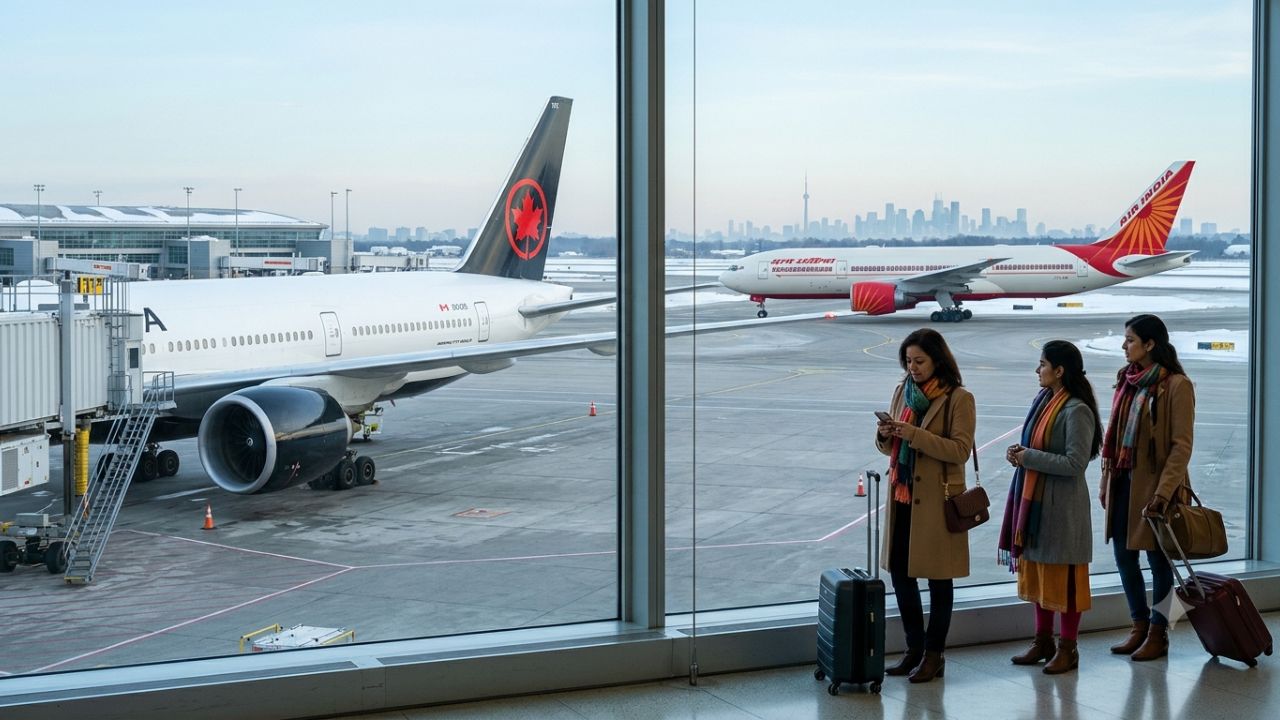
TORONTO — Air Canada has officially abandoned its plans to resurrect seasonal flight services connecting Toronto Pearson International Airport with Mumbai's Chhatrapati Shivaji Maharaj International Airport for the 2027 operating season, permanently dismantling a marquee commercial bridge linking Canada's financial capital with India's commercial hub.
The decision marks the conclusion of a complex operational experiment that struggled against insurmountable geopolitical headwinds, punitive airspace closures, and shifting fleet economics. Originally launched with high expectations in October 2024 as a dedicated nonstop link utilizing ultra-long-range Boeing 777-200LR widebody aircraft, the route quickly succumbed to the structural realities of the post-2022 global aviation environment.
Banned from traversing Russian airspace following reciprocal governmental sanctions stemming from the Russia-Ukraine war, Canadian operators cannot utilize historical Great Circle polar tracks across Siberia. In an attempt to sustain the route, Air Canada inserted a technical and commercial stopover at London Heathrow Airport (LHR).
However, the intermediate European stop ballooned total journey times, doubled ground-handling and landing expenses, inflated crew costs, and diluted passenger appeal against competitive one-stop Middle Eastern and direct Indian competitors. Following the conclusion of its seasonal schedule in March 2026, the Canadian flag carrier confirmed that the service will not return in 2027, citing insufficient yields and severe routing inefficiencies.
+----------------------------------------------------------------------------------------------------+ | TORONTO–MUMBAI AVIATION CORRIDOR STATUS & ROUTE METRICS | +----------------------------------------------------------------------------------------------------+ | Discontinued Service | Air Canada (AC) Seasonal Toronto Pearson (YYZ) – Mumbai (BOM) | | Original Nonstop Launch | October 2024 (4x Weekly via Boeing 777-200LR) | | Modified Operating Track | YYZ – London Heathrow (LHR) – BOM (Discontinued March 2026) | | Status for 2027 Season | Permanently Cancelled / Scrapped from Network Plan | | Active Nonstop Competitor | Air India (AI) Winter 2026–27 Seasonal Nonstop (3x Weekly) | | Air India Operating Aircraft | Boeing 777-300ER (8 First Suites, 40 Business, 280 Economy) | | Air India Winter Schedule | October 25, 2026 through March 26, 2027 | | Key Operational Bottlenecks | Russian airspace closure, LHR slot costs, extended crew duty limits | | Ongoing Canadian Gateways | Air Canada maintains nonstop Delhi (DEL) flights from YYZ & YUL | +----------------------------------------------------------------------------------------------------+
The Demise of the Toronto–Mumbai Service: Timeline, Economics, and Strategy
The commercial relationship between Toronto and Mumbai has long represented an alluring yet elusive opportunity for North American aviation strategists. The Greater Toronto Area contains the largest concentration of Indian diaspora communities in North America, while Mumbai serves as the financial engine of South Asia, housing the Reserve Bank of India, the Bombay Stock Exchange, sovereign investment funds, and India's entertainment conglomerates.
When Air Canada inaugurated its nonstop Toronto–Mumbai connection in October 2024, the airline positioned the four-times-weekly service as the definitive solution for high-value business travelers and diaspora families seeking to bypass congested transfer hubs in the Persian Gulf or Western Europe. Operating the specialized Boeing 777-200LR—an aircraft engineered specifically for extreme intercontinental distances—Air Canada aimed to capture premium corporate yields while offering reliable belly-hold cargo capacity for high-value commercial shipments.
                 CHRONOLOGY OF AIR CANADA'S TORONTO–MUMBAI SERVICE

   [OCTOBER 2024]                     [MID-2025 - MARCH 2026]              [NOVEMBER 2026]
+----------------------+           +---------------------------+       +---------------------+
| Nonstop Launch       |           | Airspace Realities Force  |       | Route Officially    |
| YYZ - BOM Direct     | ========> | London Heathrow (LHR)     | ====> | Scrapped for 2027   |
| 4x Weekly Boeing 777 |           | Stopover Routing;         |       | Capacity Reallocated|
| Extreme Polar Track  |           | Operating Costs Escalate  |       | to High-Yield Routes|
+----------------------+           +---------------------------+       +---------------------+
However, the commercial viability of the nonstop route deteriorated rapidly under escalating operational complexities. Operating between eastern Canada and western India without overflying Russian airspace required protracted southern detours across continental Europe, the Mediterranean, Egypt, Saudi Arabia, and the Arabian Sea.
These elongated tracks pushed the Boeing 777-200LR to its maximum operational limits, requiring substantial fuel reserves that triggered restrictive payload penalties. In adverse winter jet stream conditions, the airline frequently faced the costly choice of leaving commercial cargo behind or capping passenger bookings to ensure safe fuel reserves.
To stabilize operations, Air Canada restructured the service into a one-stop flight routing via London Heathrow. While the European stopover resolved payload restrictions, it fatally undermined the flight's core value proposition.
Travelers were forced to deplane or endure prolonged tarmac delays at Heathrow, extending total transit times past twenty-one hours. The additional takeoff and landing cycles drove up fuel consumption, triggered expensive Heathrow airport user charges, and required dual crew rotations, rendering the route economically unsustainable against competing one-stop carriers.
The Geopolitical Airspace Divide: The Asymmetry of the Siberian Corridor
The fundamental driver behind Air Canada's exit from the Mumbai market is the deep geopolitical fragmentation dividing international civil aviation. Following the outbreak of conflict between Russia and Ukraine in February 2022, the Canadian government prohibited Russian aircraft from entering Canadian airspace. In reciprocal retaliation, the Russian Federal Agency for Air Transport (Rosaviatsiya) closed Russian airspace to all Canadian commercial and cargo operators.
This mutual ban established a severe operational disadvantage for Western legacy carriers operating between North America and Asia:
                    THE GEOPOLITICAL AIRSPACE ASYMMETRY

   WESTERN CARRIERS (Air Canada, US Airlines)        NON-ALIGNED CARRIERS (Air India, Gulf Airlines)
+---------------------------------------------+   +---------------------------------------------+
| RESTRICTED: Russian Airspace Barred         |   | PERMITTED: Full Russian Airspace Overflight |
| - Must detour south via Europe/Middle East  |   | - Direct Great Circle polar corridors       |
| - Adds 2 to 4 flight hours per sector       |   | - Optimal aerodynamic flight trajectories   |
| - Burns 15 to 25 tons extra jet fuel        |   | - Minimal fuel burn and lower carbon footprint|
| - Severe payload & cargo restrictions       |   | - Full passenger & freight payload capacity |
| - High intermediate airport charges (LHR)   |   | - Maximum aircraft utilization & efficiency |
+---------------------------------------------+   +---------------------------------------------+
Prior to the airspace closure, flights between eastern North America and northern or western India relied on Siberian overflight corridors. Aircraft climbed over northern Canada, crossed the Arctic Circle, navigated directly south through Russian airspace into Central Asia, and descended into the Indian subcontinent. This polar routing represented the shortest, most fuel-efficient trajectory on earth, enabling non-stop flight times of roughly fourteen to fifteen hours.
When Canadian operators were cut off from Russian skies, flight distances expanded by thousands of nautical miles. A detour south across Europe and the Middle East added up to four hours of airborne flight time per rotation.
This spatial penalty had severe cascading consequences:
- Fuel Consumption Surges: The extended flight paths required an additional 15 to 25 metric tons of aviation kerosene per round trip, drastically inflating operating expenses during periods of volatile global crude oil prices.
- Crew Duty Exceedances: The protracted airborne hours exceeded standard single-crew legal duty time limitations established by Transport Canada. Maintaining the flights required carrying augmented flight crews (four pilots instead of three) and relief flight attendants, driving up labor costs and occupying revenue-generating passenger seats.
- Aircraft Utilization Penalties: An airframe tied up in an extended twenty-hour journey cannot be redeployed efficiently across other network routes, reducing total fleet productivity.
Conversely, carriers based in India, China, and the Middle East continue to operate through Russian airspace without restriction. Because India maintains diplomatic neutrality in the conflict, Air India operates directly over Siberia, enjoying an unimpeded competitive advantage in flight duration, fuel expenditure, and payload reliability that Western airlines cannot mathematically match.
The London Heathrow Stopover Trap: How Interlining Costs Destroyed Margins
When Air Canada transitioned its Toronto–Mumbai flight into a one-stop service via London Heathrow, network planners attempted to leverage the airline's established operational presence at Europe's busiest international hub. Air Canada already maintained extensive terminal infrastructure and ground-handling agreements at Heathrow's Terminal 2 (The Queen's Terminal) as a founding member of Star Alliance.
However, operating an intercontinental tag-on service through Heathrow introduced severe structural expenses that destroyed route margins:
+----------------------------------------------------------------------------------------------------+ | FINANCIAL & OPERATIONAL IMPACT OF THE LONDON HEATHROW STOPOVER | +----------------------------------------------------------------------------------------------------+ | Airport Landing & Parking Fees | Heathrow maintains some of the highest airport user tariffs worldwide| | Passenger Facility Charges | Mandatory UK terminal handling and security fees applied per transit| | Ground Handling Costs | Aircraft turnaround, ramp servicing, and baggage sorting in London | | Crew Staging Expenses | Overnight hotel accommodations, per diems, and rest staging in the UK| | Flight Slot Scarcity | High opportunity cost of utilizing valuable LHR takeoff/landing slots| | Elapsed Travel Time Penalty | Total journey extended to 21–23 hours vs. 14.5 hours nonstop | +----------------------------------------------------------------------------------------------------+
London Heathrow is notorious among commercial airlines for possessing some of the steepest aeronautical user charges in global aviation. Every time an Air Canada widebody touched down on Heathrow's runways, the carrier incurred hefty landing fees based on maximum takeoff weight (MTOW), noise emissions tariffs, terminal passenger facility charges, and ramp handling costs.
Additionally, staging flight crews in central London hotels to comply with mandatory crew rest regulations added millions of dollars in annual lodging and ground transportation expenses.
                    THE ROUTE ATTRACTIVENESS DEFICIT

  AIR INDIA (Nonstop Direct)                 AIR CANADA (via London LHR)
+-------------------------------+         +------------------------------------+
| Duration: ~14.5 - 15 Hours    |  VS.    | Duration: 21 - 23 Hours            |
| Intermediate Stops: ZERO      |         | Intermediate Stops: ONE (Heathrow) |
| Aircraft: Boeing 777-300ER    |         | Aircraft: Boeing 777-200LR         |
| Deplaning Required: NO        |         | Deplaning Required: YES            |
| Baggage Mishandling Risk: LOW |         | Baggage Mishandling Risk: ELEVATED |
+-------------------------------+         +------------------------------------+
               |                                             |
               v                                             v
  [Preferred by High-Yield Business]            [Yield Dilution / Discount Fares]
From the consumer's perspective, the Heathrow stop stripped the flight of its primary competitive asset: speed. Passengers departing Toronto at midday faced an uncomfortable middle-of-the-night arrival in London, followed by a mandatory two-hour layover, security re-screening, and a subsequent seven-hour sector to Mumbai.
Given this reality, travelers naturally gravitated toward Middle Eastern carriers such as Emirates, Qatar Airways, and Etihad Airways. These carriers offered one-stop connections through modern Gulf hubs with superior in-flight service, brand-new aircraft, and shorter overall layover times—often at significantly lower economy airfares.
Concurrently, corporate travelers with flexible budgets refused to pay premium Business Class fares for a one-stop flight when Air India offered a genuine nonstop alternative. Air Canada was caught in a classic margin squeeze: burdened by premium operating costs while forced to discount tickets to attract price-sensitive leisure passengers.
Air India's Strategic Expansion: Nonstop Boeing 777-300ER Deployment
While Air Canada retreats from the Mumbai market, Air India is actively exploiting its structural advantages to consolidate control over the lucrative Canada–India transcontinental corridor. On October 25, 2026, the newly privatized Indian flag carrier—operating under the revitalized ownership and multi-billion-dollar capitalization of the Tata Group—launched a seasonal nonstop service connecting Mumbai and Toronto for the winter 2026–27 scheduling period.
Air India's seasonal deployment is calibrated to address the peak winter travel surge, when hundreds of thousands of Indo-Canadian families travel between North America and India for family reunions, weddings, and holidays. The nonstop service operates three times weekly in each direction through March 26, 2027, utilizing long-range Boeing 777-300ER aircraft.
                  AIR INDIA WINTER 2026–27 NONSTOP SCHEDULE

   FLIGHT AI193 [MUMBAI (BOM) TO TORONTO (YYZ)]
   +-----------------------------------------------------------------+
   | Departure: 04:00 IST (Wed, Fri, Sun)                            |
   | Arrival:   10:00 EST (Same Day)                                 |
   | Flight Time: Approximately 15 Hours 30 Minutes (Direct Polar)   |
   +-----------------------------------------------------------------+

   FLIGHT AI192 [TORONTO (YYZ) TO MUMBAI (BOM)]
   +-----------------------------------------------------------------+
   | Departure: 12:30 EST (Wed, Fri, Sun)                            |
   | Arrival:   14:10 IST (+1 Day Arrival)                           |
   | Flight Time: Approximately 14 Hours 10 Minutes (Direct Polar)   |
   +-----------------------------------------------------------------+
The introduction of the Boeing 777-300ER injects substantial premium and main cabin inventory into the corridor. Configured with eight First Class suites, 40 lie-flat Business Class seats, and 280 standard Economy Class seats, each rotation provides 328 passenger seats.
According to official capacity metrics released by Air India's commercial planning department, the three-weekly service adds nearly 2,000 seats per week between Toronto and Mumbai, contributing to an overall monthly capacity expansion of approximately 4,400 seats across the airline's broader Canadian network.
+----------------------------------------------------------------------------------------------------+ | AIR INDIA BOEING 777-300ER THREE-CLASS CABIN ARCHITECTURE | +----------------------------------------------------------------------------------------------------+ | First Class Suites | 8 Enclosed Suites (1-2-1 Configuration, 80-inch fully flat bed) | | Business Class Cabin | 40 Lie-Flat Seats (Direct aisle access, 78-inch sleeping surface) | | Economy Class Cabin | 280 Ergonomic Seats (3-3-3 Configuration, 32-inch seat pitch) | | Total Seating Capacity | 328 Passengers per Aircraft | | Belly-Hold Freight Capacity | Approximately 18 to 22 Metric Tons per Intercontinental Sector | | Onboard In-Flight Systems | High-Definition IFE with Live Live Television and Wi-Fi Capability | +----------------------------------------------------------------------------------------------------+
By overflying Russian airspace, Air India completes the Toronto–Mumbai crossing in approximately 14 to 15 hours—shaving between six and eight hours off Air Canada's discontinued Heathrow routing. For high-net-worth individuals, multinational executives, and elderly diaspora travelers, the elimination of intermediate airport transfers represents an overwhelming competitive differentiator.
In addition, Air India leverages its massive domestic hub at Mumbai's Terminal 2. Passengers arriving on flight AI193 clear Indian customs and immigration before connecting onto Air India's domestic network, which offers high-frequency onward connections to southern and western Indian industrial centers including Ahmedabad, Bengaluru, Chennai, Hyderabad, Pune, and Kochi.
Diaspora Demographics and the Economics of Subcontinent Aviation
To evaluate the broader economic implications of Air Canada's route cancellation, one must examine the demographic composition of Canada's Indian diaspora. The 2021 Canadian Census reported that over 1.8 million residents identified as having Indian heritage, representing approximately 5.1 percent of Canada's total population. By 2026, rapid immigration, international student enrollments, and professional temporary foreign worker programs pushed this demographic past 2.2 million individuals.
The overwhelming majority of this diaspora resides within the Greater Toronto Area (GTA), specifically concentrated within suburban municipalities including Brampton, Mississauga, Markham, and Vaughan. This demographic concentration creates one of the highest-volume international travel corridors originating in North America.
                     CANADA–INDIA PASSENGER SEGMENTATION

   SEGMENT                KEY CHARACTERISTICS              CARRIER PREFERENCE
+-----------------------+--------------------------------+-----------------------------------+
| VFR (Visiting Friends | - Extremely price sensitive    | Gulf Carriers (Emirates/Qatar)    |
| & Relatives)          | - Large multi-piece baggage    | Air India (Direct Nonstop)        |
|                       | - Seasonal winter/holiday peak | Star Alliance / Connecting Hubs   |
+-----------------------+--------------------------------+-----------------------------------+
| International Student | - High volume August/December  | Budget-oriented one-stop routing  |
| Migration Flow        | - Heavy luggage requirements   | European Transit (Lufthansa/BA)   |
|                       | - Highly elastic booking lead  | Special Student Fare Programs     |
+-----------------------+--------------------------------+-----------------------------------+
| Corporate & Financial | - Inelastic booking demand     | Air India Nonstop (BOM Direct)    |
| Executives            | - Requires lie-flat comfort    | Air Canada (DEL Nonstop Gateway)  |
|                       | - Year-round constant frequency| European Premium Hubs (FRA/LHR)   |
+-----------------------+--------------------------------+-----------------------------------+
However, the commercial nature of Canada–India passenger traffic presents structural challenges for airline profitability:
- VFR Yield Dynamics: Visiting Friends and Relatives (VFR) travelers constitute over 70 percent of total passenger volume on the route. Unlike corporate business travelers whose tickets are funded by corporate expense accounts, VFR travelers pay out-of-pocket, making them exceptionally sensitive to airfare differentials as low as $50 per ticket.
- Extreme Seasonality: Demand surges dramatically between late October and mid-February, driven by Diwali celebrations, wedding seasons, and Canadian winter holiday breaks. Conversely, during the scorching summer months and monsoon season in western India (May through August), outbound passenger demand softens considerably, making year-round route maintenance difficult.
- Heavy Baggage Allowances: Diaspora travelers typically travel with maximum allowable baggage limits (two 23-kilogram checked bags per person plus carry-on baggage). In an aviation environment where airlines increasingly monetize ancillary baggage fees, handling heavy baggage loads increases aircraft ramp weight, requiring additional fuel and reducing the availability of belly-hold cargo space for high-yield industrial freight.
Because Air Canada could not capture sufficient high-yielding corporate travelers on its one-stop Heathrow route, it was forced to fill seats with low-yielding VFR traffic. With operating costs inflated by the European stopover, every discounted ticket sold eroded the route's overall profitability.
Fleet Reallocation: Where Air Canada Is Deploying Widebody Capacity
Airlines operate in an environment of constrained physical resources. A long-range widebody aircraft represents an asset valued at hundreds of millions of dollars that must generate optimal return on invested capital (ROIC). When an international route fails to achieve profitability targets, executive management reallocates those airframes to higher-performing sectors.
Air Canada's decision to scrap the Toronto–Mumbai route is directly tied to the carrier's broader fleet optimization strategy for 2027. By freeing up long-range Boeing 777-200LR and 777-300ER airframes previously assigned to the labor-intensive Mumbai service, Air Canada is redeploying widebody capacity into high-margin transatlantic, transpacific, and South American markets:
               AIR CANADA WIDEBODY AIRCRAFT REDEPLOYMENT STRATEGY

  DISCONTINUED SERVICE                           STRATEGIC CAPACITY REALLOCATION
+-------------------------+                    +------------------------------------+
| Toronto (YYZ) to        |                    | Transatlantic Expansion:           |
| Mumbai (BOM) via LHR    |                    | - London, Paris, Rome, Frankfurt   |
| Boeing 777-200LR Assets | =================> | - Premium leisure & corporate yield|
+-------------------------+                    +------------------------------------+
                                               | Transpacific & Sun Markets:        |
                                               | - Tokyo Narita & Seoul Incheon     |
                                               | - High-yielding South America routes|
                                               +------------------------------------+
                                               | Core Subcontinent Defense:         |
                                               | - Consolidated Nonstop Delhi (DEL) |
                                               | - Higher cargo & business yields   |
                                               +------------------------------------+
The strategic pivot emphasizes several core operational priorities:
- Strengthening Transatlantic Trunk Routes: Transatlantic routes between Toronto/Montreal and major European business capitals (London, Paris, Frankfurt, Zurich) generate consistent year-round corporate revenues with robust premium cabin demand and minimal detour penalties.
- Consolidating the Delhi (DEL) Gateway: Air Canada continues to serve the Indian market through its flagship nonstop connections linking Toronto and Montreal directly with Indira Gandhi International Airport in Delhi. By concentrating its operational footprint in Delhi, Air Canada preserves its commercial presence in India while optimizing ground resources, marketing expenditures, and codeshare partnerships with Indian domestic carriers.
- Capitalizing on Premium Leisure Surges: Post-pandemic travel patterns continue to demonstrate unprecedented demand for premium leisure travel. Deploying widebody aircraft with large signature Business Class and Premium Economy cabins on routes to southern Europe, Japan, and Hawaii yields significantly higher margins per available seat kilometer (ASK) than maintaining low-yielding, detour-burdened routes to South Asia.
Alternative Transit Routes for Canadian Travelers Heading to Mumbai
With Air Canada departing the Mumbai market and Air India operating exclusively on a seasonal schedule through late March 2027, travelers journeying between Toronto and Mumbai must navigate a diverse landscape of connecting options:
+-----------------------------------------------------------------------------------------------------------------------------+ | CONNECTING AIRLINE ROUTINGS: TORONTO (YYZ) TO MUMBAI (BOM) | +-----------------------------------------------------------------------------------------------------------------------------+ | Airline Carrier | Intermediate Hub Airport | Elapsed Transit Time | Key Strengths & Operational Considerations | +--------------------+--------------------------+----------------------+------------------------------------------------------+ | Air India | Nonstop Direct Service | 14.5 – 15.5 Hours | Fastest overall journey; zero transfer disruptions | | Emirates | Dubai International(DXB) | 17.5 – 19.5 Hours | Industry-leading inflight service; multiple daily BOM| | Qatar Airways | Doha Hamad (DOH) | 18.0 – 20.0 Hours | Award-winning Qsuite business product; modern hub | | Etihad Airways | Abu Dhabi (AUH) | 18.0 – 20.0 Hours | Seamless Zayed International Airport connections | | British Airways | London Heathrow (LHR) | 20.0 – 22.5 Hours | Requires UK terminal transfer; extensive frequencies | | Lufthansa | Frankfurt Main (FRA) | 18.5 – 21.0 Hours | Star Alliance baggage interlining; reliable transit | | Air France / KLM | Paris (CDG) / Amsterdam | 19.0 – 21.5 Hours | SkyTeam network options; competitive economy fares | | Turkish Airlines | Istanbul Airport (IST) | 19.5 – 22.0 Hours | Large modern mega-hub; generous baggage allowances | +-----------------------------------------------------------------------------------------------------------------------------+
The competitive dominance of the Gulf carriers—Emirates, Qatar Airways, and Etihad Airways—presents the most formidable alternative for Canadian travelers. These airlines operate modern widebody fleets departing Toronto Pearson, connecting through modern mega-hubs in Dubai, Doha, and Abu Dhabi.
From their Middle Eastern hubs, these carriers operate multiple daily flights into Mumbai, providing seamless transfers, minimal baggage loss rates, and access to luxurious transit lounges. For passengers traveling outside of Air India's winter seasonal window, the Gulf corridor remains the primary choice for comfort and schedule flexibility.
For travelers loyal to airline alliances, European carriers like Lufthansa and Swiss International Air Lines (Star Alliance) provide convenient one-stop connections through Frankfurt, Munich, and Zurich. Because Air Canada is a Star Alliance member, travelers booking through Lufthansa can earn and redeem Aeroplan points while checking their baggage through to Mumbai.
                    TRANSIT ROUTE GEOGRAPHIC COMPARISON

       [TORONTO (YYZ)]
              |
              +---> OPTION 1: Nonstop Direct (Air India) ===> [MUMBAI (BOM)] ~15h
              |
              +---> OPTION 2: Gulf Hub (Emirates/Qatar) =====> DXB/DOH =====> [MUMBAI] ~18-19h
              |
              +---> OPTION 3: European Hub (Lufthansa/BA) ==> FRA/LHR ======> [MUMBAI] ~20-22h
Bilateral Air Transport Agreements and the Future of Canada–India Corridors
The evolving dynamics of Canada–India aviation are deeply influenced by intergovernmental air transport frameworks. In November 2022, the governments of Canada and India executed an expanded Bilateral Air Transport Agreement (BATA).
The revised agreement removed the historic restriction that capped scheduled services at 35 weekly flights per country, allowing designated carriers from both nations to operate an unlimited number of frequencies between their respective territories.
However, the operational impact of this regulatory liberalization has been deeply uneven:
- Indian Carrier Expansion: Indian airlines possess the twin advantages of Russian airspace access and lower labor cost bases. Consequently, Air India and potentially emerging long-haul competitors like IndiGo are strategically positioned to add nonstop routes between Indian gateways (Delhi, Mumbai, Bengaluru, Amritsar) and Canadian destinations (Toronto, Vancouver, Montreal, Calgary).
- Canadian Carrier Constraints: Canadian airlines remain commercially constrained. As long as Russian airspace remains closed to Canadian operators, launching new nonstop routes from western Canada (such as Vancouver to Delhi or Mumbai) or eastern Canada requires inefficient southern routing detours that undermine economic viability.
Industry analysts anticipate that until geopolitical relations normalize and Russian airspace reopens to Western civil aviation, the direct Canada–India air corridor will increasingly become the near-exclusive domain of Indian carriers.
Actionable Booking and Travel Planning Guide for Toronto–Mumbai Travelers
For business travelers, international students, and families planning itineraries between Toronto and Mumbai in 2027, strategic scheduling and ticketing vigilance are paramount.
Navigating Seasonal Operating Calendars
Travelers must account for the strict seasonality of direct flights:
- Air India Winter Nonstop Window: Air India's nonstop Boeing 777-300ER service operates only through March 26, 2027. Passengers planning spring, summer, or early autumn journeys cannot book direct flights and must select one-stop connecting routes.
- Booking Lead Times for Peak Travel: For travel during the intense November-to-January holiday peak, airfares escalate rapidly. Securing bookings six to eight months in advance is essential to avoid exorbitant economy fares that often exceed $2,500 CAD round trip.
                  ANNUAL TICKET PRICING & DEMAND CYCLE

  HIGH DEMAND PEAK (Diwali & Holidays)         LOW DEMAND OFF-PEAK (Monsoon)
  [OCTOBER TO FEBRUARY]                        [MAY TO AUGUST]
+--------------------------------------+     +--------------------------------------+
| - Fares: Peak Premium ($1,800-$2,800)|     | - Fares: Promotional ($1,100-$1,500) |
| - Nonstop Available: YES (Air India) |     | - Nonstop Available: NO (Connecting) |
| - Seat Availability: Extremely Tight |     | - Seat Availability: Open / Flexible |
| - Early Booking Recommended: 6+ Mos  |     | - Lead Time: 4 to 8 Weeks Prior      |
+--------------------------------------+     +--------------------------------------+
Baggage Allowance Optimization
Given the substantial cargo and luggage needs of diaspora travelers, baggage allowances often dictate overall trip costs:
- Air India: Nonstop intercontinental tickets typically include two checked bags weighing up to 23 kilograms (50 lbs) each in Economy Class, two bags up to 32 kilograms (70 lbs) in Business Class, and three 32-kilogram bags in First Class.
- Gulf and European Carriers: Always verify baggage pooling rules. While Emirates and Qatar Airways offer generous allowances, interlined itineraries involving multiple regional carriers may enforce restrictive domestic baggage limits on connecting Indian sectors.
Loyalty Programs and Alliance Accrual
- Aeroplan Members: With Air Canada no longer serving Mumbai directly, Aeroplan loyalty members can redeem points for travel to Mumbai by booking Star Alliance partners including Lufthansa, Swiss, and Turkish Airlines. Alternatively, Aeroplan points can be redeemed on Air Canada's nonstop Toronto–Delhi service, with travelers booking separate domestic flights into Mumbai.
- Air India Flying Returns: Travelers booking Air India's nonstop flights can credit miles to Air India's Flying Returns program or to any Star Alliance frequent flyer account, preserving elite qualifying mileage status.
Related Travel Guides
- Navigating Global Airspace Restrictions: Polar Routes and Modern Aviation Economics
- Air India Boeing 777-300ER First and Business Class Review: The Post-Tata Experience
- Toronto Pearson International Airport Long-Haul Departure and Transit Guide
- Top One-Stop Connecting Flights to India: Comparing Emirates, Qatar, and Lufthansa
This article is for informational purposes. Flight routes, passenger regulations, visa rules, and transit advisories are subject to change by airlines and aviation authorities. Readers are advised to verify schedules and travel documentation with relevant carriers and border agencies before departure.