Vietjet Revenue Surges 41% to $2.88 Billion: Expanding 176-Route Network to Prague, Central Asia, Australia, and the Maldives Reshapes Asian Low-Cost Aviation

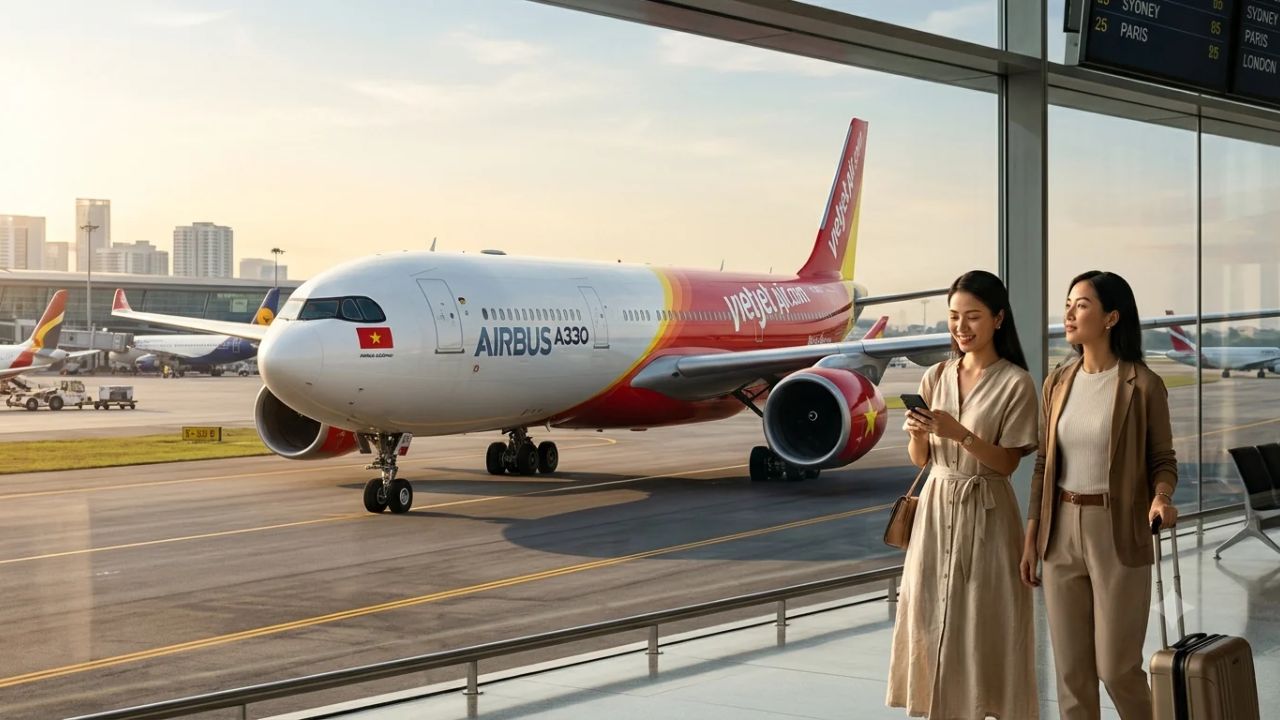
HANOI, Vietnam — Demonstrating the dramatic acceleration of Southeast Asia's international aviation sector, private carrier Vietjet has posted a 41 percent year-on-year surge in consolidated revenue to VND 74.385 trillion (approximately $2.88 billion USD) during the first nine months of 2026.
The financial milestone, announced via official filings reported by the Vietnam Government Portal, highlights an aggressive operational transformation as the carrier rapidly shifts from a regional budget operator into an expansive intercontinental carrier. Operating across an international network of 176 routes, Vietjet transported more than 20.7 million passengers aboard 111,700 flights between January and September 2026, while moving over 58,000 metric tons of air freight.
With net profit after tax climbing to VND 1.721 trillion—reaching 82 percent of its annual profit guidance before the fourth quarter commenced—Vietjet is funneling operational cash flow into a high-stakes network expansion. The carrier has introduced transcontinental services linking Hanoi with Almaty in Kazakhstan and Prague in the Czech Republic, opened bookings for Indian Ocean island leisure links to Sri Lanka and the Maldives, and secured early international operating rights at Australia's upcoming Western Sydney International Airport.
Supported by new aircraft deliveries from Boeing and Airbus, in-house maintenance agreements at Vietnam's flagship Long Thanh International Airport, and high-speed satellite Wi-Fi partnerships with SpaceX Starlink, Vietjet is actively reshaping low-cost long-haul travel across the Asia-Pacific region.
+----------------------------------------------------------------------------------------------------+
| VIETJET 9M 2026 FINANCIAL & OPERATIONAL SCORECARD |
+----------------------------------------------------------------------------------------------------+
| Consolidated Revenue (9M 2026) | VND 74.385 Trillion ($2.88 Billion USD) | +41% Year-on-Year |
| Net Profit After Tax (9M 2026) | VND 1.721 Trillion ($66.8 Million USD) | 82% of Full-Year Target|
| Q3 2026 Standalone Revenue | VND 22.849 Trillion (~$885 Million USD) | +35% Year-on-Year |
| Passenger Throughput (9M 2026) | 20.7+ Million Passengers | 111,700 Total Flights |
| Cargo Volume Handled | 58,000+ Metric Tons | Robust Air Freight Lift|
| International Route Network | 176 Active Scheduled Routes | Global Reach Expansion |
| New Transcontinental Gateways | Almaty (Kazakhstan), Prague (Czechia) | Eurasia Transit Bridge |
| New Island & Leisure Gateways | Colombo (Sri Lanka), Malé (Maldives) | South Asia Expansion |
| Future Australian Hub | Western Sydney International (WSI) | Service Commencing 2027|
| Modern Fleet Assets | Boeing 737 MAX 8, Airbus A330neo, A321neo| Starlink In-Flight Wi-Fi|
+----------------------------------------------------------------------------------------------------+
Record Financial Execution: Revenue Surges, Margin Resiliency, and Annual Guidance
Vietjet's 9M 2026 financial metrics underscore the commercial strength of the carrier's internationalization strategy. The VND 74.385 trillion top-line performance reflects an acceleration across both primary passenger ticket yields and secondary ancillary revenue streams. By achieving 86 percent of its full-year revenue projection and 82 percent of its net profit target by the end of September, the airline enters its traditionally lucrative fourth-quarter holiday peak with exceptional balance sheet momentum.
The standalone third-quarter results confirm that growth is not merely seasonal. During Q3 2026, Vietjet operated approximately 39,000 commercial flights, transporting 7.3 million travelers. Consolidated revenue for the three-month period expanded by 35 percent year-on-year to reach VND 22.849 trillion.
                    VIETJET 9M 2026 FINANCIAL EXPANSION

     CONSOLIDATED REVENUE (9M)                     NET PROFIT AFTER TAX (9M)
+----------------------------------+          +----------------------------------+
| 2025: VND 52.75 Trillion         |          | 2025: VND 1.25 Trillion          |
| 2026: VND 74.39 Trillion (+41%)  |          | 2026: VND 1.72 Trillion (+37.7%) |
| US$ Equiv: ~$2.88 Billion USD    |          | 82% of Annual Target Achieved    |
+----------------------------------+          +----------------------------------+
A primary driver behind this margin expansion has been Vietjet's disciplined control over Cost per Available Seat Kilometer (CASK), excluding fuel. While full-service legacy airlines across the Asia-Pacific region have contended with rising ground costs and wage inflation, Vietjet has maintained an asset-light operating model supported by high aircraft utilization rates exceeding 13.5 block hours per day.
Additionally, the international passenger segment delivers significantly higher average fares and ancillary spending—including baggage fees, seat selection, onboard duty-free retail, and travel insurance—than mature domestic trunk sectors. As international routes expanded to represent a dominant share of total passenger kilometers flown, Vietjet's yield profile strengthened correspondingly.
Cargo operations have emerged as an equally vital profit center. Handling over 58,000 metric tons of air freight in nine months, Vietjet Cargo has capitalized on Vietnam's position as a global manufacturing powerhouse. Electronics, garments, agricultural commodities, and high-value semiconductors originating in northern industrial clusters around Hanoi and Bac Ninh are transported in widebody aircraft belly holds to regional hubs across Northeast Asia, Australia, and Central Europe.
The Eurasian Transit Corridor: Linking Hanoi, Almaty, and Prague
Among the most strategically consequential milestones of Vietjet's international network expansion is the launch of its transcontinental routing connecting Southeast Asia with Central Asia and Europe. In October 2026, the carrier inaugurated scheduled services linking Hanoi’s Noi Bai International Airport (HAN) with Almaty International Airport (ALA) in Kazakhstan, continuing onward to Vaclav Havel Airport Prague (PRG) in the Czech Republic.
                    VIETJET EURASIAN TRANSCONTINENTAL AXIS

   HANOI (HAN) ===================> ALMATY (ALA) ===================> PRAGUE (PRG)
  (Southeast Asia Hub)             (Central Asia Hub)               (Central Europe Hub)
           |                                |                                 |
           +---> 7.5 Hour Flight Sector     +---> 6.5 Hour Flight Sector      +
           +---> Direct Trade Link          +---> Refueling & Traffic Rights  +
           +---> Vietnam Export Engine      +---> Kazakh Tourism Gateway      +
This multi-sector routing represents an innovative approach to intercontinental long-haul budget flying:
- Strategic Refueling and Traffic Rights: Rather than operating an extreme ultra-long-haul nonstop flight between Hanoi and Central Europe that would impose severe payload penalties on its twin-engine fleet, Vietjet utilizes Almaty as an intermediate technical and commercial hub. Kazakhstan's open-skies aviation policy has enabled Vietjet to exercise fifth-freedom traffic rights, allowing the airline to board and deplane passengers traveling strictly between Kazakhstan and the Czech Republic, as well as those completing the full journey from Vietnam.
- The Central Asian Resource Bridge: Almaty serves as the financial and cultural capital of Kazakhstan, a nation experiencing rapid economic modernization. By establishing direct air links, Vietjet facilitates business delegations, energy investments, and bilateral tourism, offering Kazakh vacationers affordable tropical escapes to coastal resort destinations such as Phu Quoc, Da Nang, and Nha Trang.
- The Historical Diaspora Corridor to Prague: Prague holds immense cultural significance for Vietnam. The Czech Republic is home to one of the largest recognized Vietnamese diaspora populations in Europe, numbering over 80,000 residents whose roots trace back to bilateral labor and education agreements established during the mid-twentieth century. For decades, diaspora families commuting between Prague and Hanoi relied on costly one-stop routings via Middle Eastern or Western European hubs. Vietjet's direct corridor dramatically lowers airfares while offering substantial baggage allowances tailored for family travel.
The deployment of widebody Airbus A330 aircraft on the Hanoi–Almaty–Prague corridor provides the range and cargo capacity necessary to ensure route profitability. The service directly challenges legacy European and Gulf operators by offering economy fares up to 40 percent below prevailing market averages.
South Asia and the Indian Ocean: Colombo, the Maldives, and Halal Tourism
In tandem with its transcontinental European expansion, Vietjet is systematically building an extensive operational footprint across South Asia and the Indian Ocean. The airline has commenced scheduled direct flights linking Ho Chi Minh City’s Tan Son Nhat International Airport (SGN) with Bandaranaike International Airport in Colombo, Sri Lanka (CMB), while simultaneously opening reservations for direct flights connecting both Ho Chi Minh City and Hanoi with Velana International Airport in Malé, Maldives (MLE).
+----------------------------------------------------------------------------------------------------+ | VIETJET SOUTH ASIA & INDIAN OCEAN EXPANSION BLUEPRINT | +----------------------------------------------------------------------------------------------------+ | Route Pairing | Fleet Aircraft Utilized | Target Passenger Profile | +------------------------------+-------------------------+-------------------------------------------+ | Ho Chi Minh City – Colombo | Airbus A321neo / A330 | Cultural tourism, tea trade, pilgrim travel| | Hanoi – Colombo | Airbus A321neo | Heritage tourism, business delegations | | Ho Chi Minh City – Maldives | Airbus A321neo (LR/XLR) | Luxury leisure travelers, honeymooners | | Hanoi – Maldives | Airbus A321neo | High-income Southeast Asian holidaymakers | +----------------------------------------------------------------------------------------------------+
This dual-market deployment targets distinct leisure and demographic segments:
- The Maldivian Leisure Democratization: Traditionally, the Maldives has been viewed by Southeast Asian travelers as an exclusive luxury destination accessible primarily via expensive full-service connections through Singapore, Kuala Lumpur, or Colombo. Vietjet's direct services lower air travel expenses significantly, allowing travelers to allocate their budgets toward luxury island resort accommodations and marine excursions.
- Sri Lanka’s Tourism Resurgence: Sri Lanka is experiencing a sustained tourism revival, with international visitors drawn to its wildlife national parks, ancient Buddhist heritage sites, and picturesque hill country. Direct links from Vietnam provide Sri Lankan travelers with seamless onward connections across Vietjet's extensive network into Japan, South Korea, and Taiwan.
- Halal Tourism Integration: Recognizing the rapid growth of Islamic travel across Southeast Asia, Central Asia, and the Middle East, Vietjet has tailored its onboard hospitality standards. The airline provides certified Halal-compliant meal options, dedicated prayer timing guidance on international flights, and culturally sensitive service protocols, positioning the carrier to capture high-spending outbound travelers from Kazakhstan, Uzbekistan, and South Asia.
                    INDIAN OCEAN LEISURE & TRANSIT WEB

                           +---> COLOMBO (Sri Lanka)
                           |     (Cultural Tourism, Gemstones & Tea)
     [VIETNAM HUBS] =======+
     (HAN & SGN)           |
                           +---> MALÉ (Maldives)
                                 (Overwater Villas & Coral Marine Eco-Tours)
By connecting these destinations directly to Hanoi and Ho Chi Minh City, Vietjet transforms Vietnam into a regional transit gateway, encouraging international tourists to combine an island holiday in the Indian Ocean with a cultural tour of Indochina.
The Australian Strategy: Western Sydney International as an Intercontinental Asset
Australia represents one of Vietjet's highest-yielding international growth frontiers. Having successfully established high-frequency services from Ho Chi Minh City and Hanoi to Melbourne, Sydney Kingsford Smith, Brisbane, and Perth, the airline has formally announced plans to begin operations at Western Sydney International Airport (WSI) in January 2027.
Western Sydney International Airport (Nancy-Bird Walton Airport) represents a historic development in Australian civil aviation infrastructure. Located in Badgerys Creek, the new airport is engineered to relieve congestion at Sydney Kingsford Smith Airport (SYD), which operates under severe regulatory constraints, including strict hourly slot limits and a mandatory overnight flight curfew between 11:00 PM and 6:00 AM.
            SYDNEY INFRASTRUCTURE & AIRLINE EFFICIENCY COMPARISON

  SYDNEY KINGSFORD SMITH (SYD)                WESTERN SYDNEY INTERNATIONAL (WSI)
+--------------------------------------+    +--------------------------------------+
| - Strict Curfew: Closed 23:00 - 06:00|    | - 24/7 Curfew-Free Flight Operations |
| - High Landing Fees & Terminal Dues  |    | - Competitive Aeronautical Tariffs   |
| - Severe Slot Constraints & Delays   |    | - High Slot Flexibility & Turnarounds|
| - Far from Western Sydney Diaspora   |    | - Heart of Vietnamese Diaspora Center|
+--------------------------------------+    +--------------------------------------+
Vietjet's commitment to launch flights at Western Sydney International yields decisive competitive advantages:
- Curfew-Free 24/7 Operations: Unlike Kingsford Smith, Western Sydney International will operate around the clock without an overnight curfew. This operational flexibility allows Vietjet to schedule late-night departures from Sydney that arrive in Vietnam at dawn, maximizing aircraft utilization and providing passengers with full working days upon arrival.
- Demographic Proximity to Diaspora Strongholds: Greater Western Sydney is home to the densest concentration of Vietnamese-Australians in the nation. Municipalities such as Fairfield, Bankstown, Liverpool, and Cabramatta contain hundreds of thousands of residents with direct familial, cultural, and business connections to Vietnam. Passengers departing from Western Sydney avoid the lengthy, congested highway commute to Kingsford Smith, boarding flights directly from their regional hub.
- Favorable Airport User Charges: As a newly commissioned greenfield facility seeking to attract anchor international carriers, Western Sydney International offers competitive aeronautical charging structures, reduced turnaround fees, and state-of-the-art automated baggage handling systems. These cost savings directly support Vietjet's low-fare commercial model.
Vietjet's early commitment to Western Sydney positions the airline as a pioneer in Australia's next aviation chapter, cementing its market share along the trans-Tasman and Australasian travel corridors.
Modern Fleet Investments: Boeing 737 MAX, Airbus A330neo, and Trent 7000 Power
To execute an international network spanning 176 routes across five continents, Vietjet is undertaking a massive fleet modernization and expansion program. The airline's multi-billion-dollar order book includes commitments for hundreds of single-aisle Boeing 737 MAX aircraft and widebody Airbus A330neo jetliners.
During the third quarter of 2026, Vietjet took formal delivery of its 11th Boeing 737-8 (737 MAX 8) aircraft from Boeing's manufacturing facility in Seattle, Washington. The Boeing 737-8 delivers a 15 to 20 percent reduction in fuel burn and carbon dioxide emissions compared to previous-generation aircraft, powered by advanced CFM International LEAP-1B engines. The narrowbody aircraft are ideally configured for high-density regional routes across Southeast Asia, China, and India.
                    VIETJET ADVANCED FLEET MATRIX

  AIRCRAFT TYPE        ENGINE POWERPLANT         PRIMARY OPERATIONAL SECTORS
+--------------------+-------------------------+------------------------------------+
| Boeing 737-8       | CFM International       | Regional Southeast Asia, India,    |
| (737 MAX 8)        | LEAP-1B Turbofans       | East Asia high-frequency routes    |
+--------------------+-------------------------+------------------------------------+
| Airbus A321neo     | Pratt & Whitney GTF /   | Domestic trunk lines, medium-haul  |
| (Current Fleet)    | CFM LEAP-1A             | regional international services    |
+--------------------+-------------------------+------------------------------------+
| Airbus A330-300    | Rolls-Royce Trent 700   | Australia, Japan, Kazakhstan,      |
| (Current Widebody) | High-Bypass Engines     | High-density domestic trunk        |
+--------------------+-------------------------+------------------------------------+
| Airbus A330-900    | Rolls-Royce Trent 7000  | Long-haul transcontinental routes: |
| (A330neo Fleet)    | Next-Gen Turbofans      | Prague, Europe, Western Sydney     |
+--------------------+-------------------------+------------------------------------+
For long-haul transcontinental missions, Vietjet is expanding its widebody division through the acquisition of advanced Airbus A330-900 (A330neo) widebodies. In support of this fleet, the airline executed a comprehensive TotalCare service agreement with British aerospace manufacturer Rolls-Royce to support the Trent 7000 engines powering the aircraft.
Under the TotalCare framework, Rolls-Royce assumes direct responsibility for engine health monitoring, predictive maintenance, and off-wing overhaul management, providing Vietjet with predictable operating costs and maximizing fleet dispatch reliability on long-haul routes.
Simultaneously, Vietjet has strengthened technical cooperation with CFM International to establish domestic maintenance and overhaul capabilities for LEAP engines within Vietnam. These engineering partnerships reduce the airline's reliance on overseas maintenance facilities, dramatically shortening engine shop visit turnaround times and lowering foreign currency expenditures.
Infrastructure and Maintenance Anchor: Long Thanh International Airport
A structural bottleneck that has historically constrained aviation growth in southern Vietnam is the severe congestion at Ho Chi Minh City’s Tan Son Nhat International Airport. Operating at nearly 150 percent of its intended passenger design capacity, Tan Son Nhat suffers from congested airspace, saturated runways, and limited aircraft parking stands.
To permanently overcome these infrastructure limitations, the Vietnamese government is constructing Long Thanh International Airport (LTK) in Dong Nai Province, approximately 40 kilometers east of Ho Chi Minh City. Designed to become one of the premier aviation mega-hubs in Southeast Asia, Long Thanh's Phase 1 development includes a 4,000-meter runway, a modern passenger terminal capable of processing 25 million passengers annually, and dedicated cargo handling facilities.
               LONG THANH INTERNATIONAL AIRPORT (LTK) ECOSYSTEM

+-----------------------------------------------------------------------------------+
|               PHASE 1 COMMERCIAL HUB (25 Million Annual Capacity)                  |
+-----------------------------------------------------------------------------------+
|                                        |                                          |
|      AERONAUTICAL PASSENGER OPS        |         IN-HOUSE MRO ENGINEERING HUB     |
| - 4,000m Cat III All-Weather Runway    | - Multi-Bay Widebody Maintenance Hangars |
| - High-Throughput Transit Terminal     | - CFM LEAP Engine Overhaul Test Cells    |
| - Automated High-Speed Baggage Network | - Heavy C-Check & D-Check Certification  |
| - Express Overland Rail Links to SGN   | - Comprehensive Spare Parts Logistics    |
+-----------------------------------------------------------------------------------+
Vietjet is positioning itself as the foundational commercial and technical tenant at Long Thanh. The carrier has finalized investment plans to construct a massive in-house Maintenance, Repair, and Overhaul (MRO) engineering complex within the airport perimeter.
This state-of-the-art technical facility will feature:
- Multi-Bay Widebody Hangars: Capable of conducting simultaneous heavy maintenance checks (C-checks and D-checks) on Airbus A330 and Boeing 737 MAX aircraft.
- Specialized Engine Test Cells: Developed in coordination with CFM International and Rolls-Royce for rapid diagnostics and component recertification.
- Component Avionics Workshops: Dedicated to troubleshooting advanced flight control systems, landing gear assemblies, and digital cabin amenities.
By anchoring its maintenance operations at Long Thanh, Vietjet transforms its cost structure. Rather than paying millions of dollars to contract third-party MRO providers in Singapore, Hong Kong, or Europe, Vietjet will perform line and heavy maintenance in-house, creating high-skill aerospace engineering jobs in Vietnam while maintaining industry-leading aircraft availability rates.
In-Flight Innovation: SpaceX Starlink Satellite Internet and Digital AI Operations
In the increasingly competitive low-cost aviation environment, passenger loyalty cannot be sustained through low fares alone. Today's international travelers demand continuous digital connectivity and personalized customer service. To differentiate its brand, Vietjet has partnered with SpaceX to deploy Starlink satellite internet across its commercial aircraft fleet.
Starlink utilizes a constellation of thousands of Low Earth Orbit (LEO) satellites operating at an altitude of approximately 550 kilometers. Unlike traditional geostationary (GEO) satellite systems that suffer from high latency (often exceeding 600 milliseconds) and spotty coverage over oceanic routes, Starlink delivers low-latency broadband speeds exceeding 150 megabits per second directly to moving aircraft.
+----------------------------------------------------------------------------------------------------+ | IN-FLIGHT SATELLITE CONNECTIVITY: STARLINK VS. LEGACY GEO | +----------------------------------------------------------------------------------------------------+ | Architecture Metric | SpaceX Starlink (LEO Constellation) | Legacy Satellite Systems (GEO)| +------------------------------+-------------------------------------+-------------------------------+ | Orbital Altitude | ~550 Kilometers | ~35,786 Kilometers | | Network Latency | 25 – 45 Milliseconds (Ultra-Low) | 600 – 800 Milliseconds (High) | | Bandwidth per Aircraft | Up to 220 Mbps per Aircraft | 15 – 50 Mbps Shared | | Polar & Oceanic Coverage | Seamless Global Coverage | Frequent Signal Blind Spots | | Passenger Experience | Live 4K Streaming, Gaming, VPN Work | Basic Web Browsing & Texting | +----------------------------------------------------------------------------------------------------+
The introduction of Starlink connectivity will revolutionize the passenger experience aboard Vietjet's long-haul flights to Europe, Australia, and Central Asia:
- Unrestricted Passenger Productivity: Corporate travelers and digital nomads can participate in live video conference calls, stream high-definition media, access secure cloud enterprise VPN networks, and browse social media without buffering.
- Operational Telemetry and Safety: The high-speed data link allows aircraft flight management computers to transmit real-time engine telemetry, meteorological data, and cabin systems diagnostics directly to Vietjet's Flight Operations Center (FOC) in Hanoi, enhancing flight safety and routing efficiency around severe weather.
Beyond satellite connectivity, Vietjet is investing heavily in Artificial Intelligence (AI) and automated operational algorithms. Proprietary machine-learning software analyzes historical passenger booking patterns to optimize dynamic ticket pricing, forecast seasonal baggage demands, and automate flight crew scheduling to prevent duty-time exceedances.
Predictive fuel-optimization algorithms evaluate real-time upper-atmosphere wind patterns, calculating the most aerodynamic altitudes and flight trajectories to minimize fuel burn across intercontinental sectors.
Macro-Economic Impact: Vietnam's 94-Million-Passenger Aviation Ambition
Vietjet's dramatic commercial ascent occurs within a broader macro-economic transformation. According to official aviation forecasts published by the Civil Aviation Authority of Vietnam (CAAV) and the Vietnam News Agency, the nation's airports are projected to process approximately 94 million passengers during 2026. This performance marks Vietnam as one of the fastest-growing civil aviation markets in the world.
Tourism represents a cornerstone of Vietnam's national economic strategy. In 2026, the country targeted over 18 million international tourist arrivals, driven by relaxed electronic visa (e-visa) policies, bilateral visa exemption agreements, and concerted promotional campaigns across Europe, North America, and India.
                    VIETNAM NATIONAL AVIATION ECOSYSTEM (2026)

+-----------------------------------------------------------------------------------+
| TOTAL PROJECTED AIR PASSENGERS (2026): ~94,000,000                                 |
+-----------------------------------------------------------------------------------+
|               |                                                   |               |
| DOMESTIC TRAVEL VOLUME (~54M)                     INTERNATIONAL ARRIVALS (~40M)   |
| - Inter-City Commerce                             - International Tourism Engine  |
| - Family & Diaspora Movement                      - High-Yield Foreign Exchange   |
| - Regional Tourism: Da Nang, Phu Quoc             - Manufacturing & Supply Chains |
+-----------------------------------------------------------------------------------+
Vietjet acts as a primary catalyst for this national expansion. By providing affordable point-to-point connections directly into secondary tourist destinations—such as Cam Ranh/Nha Trang, Da Nang, Da Lat, and Phu Quoc Island—the airline disperses economic benefits across regional provinces rather than concentrating tourism exclusively in Hanoi and Ho Chi Minh City.
Additionally, Vietjet's expanding sixth-freedom transit operations position Vietnam as an alternative international gateway to traditional hubs like Bangkok Suvarnabhumi, Singapore Changi, and Kuala Lumpur International. By offering competitive fares between Europe and Australasia via Vietnam, the carrier captures valuable foreign exchange and enhances the nation's global commercial profile.
Actionable Guide for International Travelers Booking Vietjet Long-Haul
For travelers, corporate travel managers, and vacationers planning itineraries aboard Vietjet's expanding international network in 2026 and 2027, strategic booking practices can optimize both comfort and cost.
Understanding Vietjet's Fare Architecture
Vietjet operates a tiered fare structure across its domestic and international flights:
- Eco Fare: The base unbundled ticket. Includes 7 kilograms of carry-on baggage. Checked luggage, meals, seat assignments, and ticket change privileges must be purchased separately. Best suited for ultra-budget backpackers and solo travelers with minimal luggage.
- Deluxe Fare: Designed for cost-conscious leisure travelers. Includes 20 kilograms of checked baggage, 7 kilograms of carry-on baggage, free seat selection in standard rows, and flexible flight date change options (fare difference may apply).
- SkyBoss Class: Vietjet's premium low-cost offering. Includes 30 to 40 kilograms of checked luggage, 10 kilograms of carry-on baggage, access to airport business lounges, priority check-in, priority security screening, private airport shuttle boarding, complimentary hot meals and beverages onboard, and premium seating at the front of the aircraft.
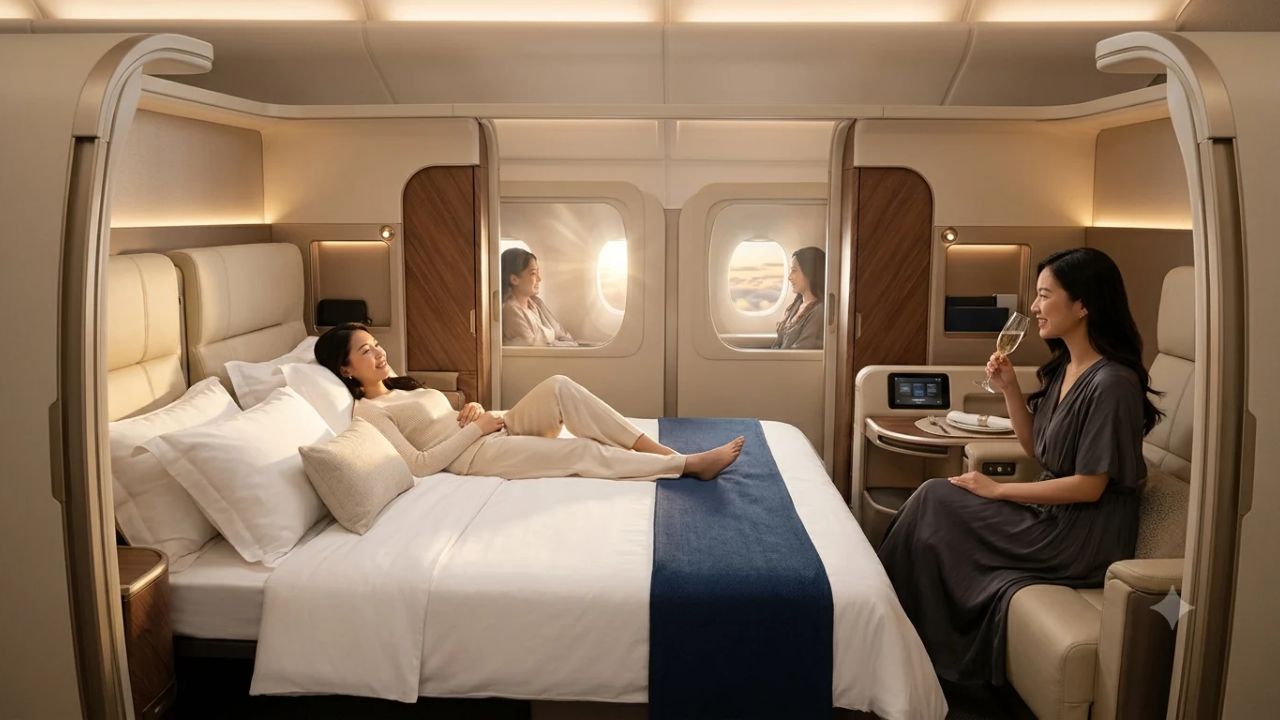
- SkyBoss Business (Airbus A330 Fleet): Vietjet's flagship product on widebody aircraft operating to Prague, Australia, and Kazakhstan. Features private lie-flat or angled-flat seating, plush bedding, fine dining culinary selections, dedicated cabin attendants, and maximum baggage allowances (up to 50 kg checked).
                      VIETJET FARE SELECTION MATRIX

  FARE TIER        CHECKED BAGS   LOUNGE ACCESS   SEAT SELECTION   ONBOARD DINING
+----------------+--------------+---------------+----------------+----------------+
| Eco            | Add-on Fee   | None          | Add-on Fee     | Buy-on-Board   |
| Deluxe         | 20 kg Inc.   | None          | Standard Rows  | Add-on Fee     |
| SkyBoss        | 30 - 40 kg   | Yes (VIP)     | Priority Rows  | Premium Meals  |
| SkyBoss Business| Up to 50 kg  | Yes (VIP)     | Lie-Flat Seats | Multi-Course   |
+----------------+--------------+---------------+----------------+----------------+
Essential Booking and Connection Strategies
- Self-Transfer vs. Through-Checked Itineraries: When booking itineraries involving connections in Almaty (for Prague flights) or in Hanoi/Ho Chi Minh City, ensure that tickets are booked as a single contiguous reservation. Single-ticket reservations protect passengers in the event of schedule delays and ensure that checked baggage is transferred automatically to the final destination.
- Pre-Booking Baggage and Add-Ons: Vietjet enforces strict carry-on baggage weight checks at departure gates. To avoid punitive airport gate baggage fees, purchase checked baggage allowances online during initial booking, where rates are up to 60 percent lower than airport desk charges.
- Transit Visas in Vietnam: Travelers connecting between international flights at Hanoi (HAN) or Ho Chi Minh City (SGN) who do not leave the transit area generally do not require a Vietnamese transit visa, provided their connecting flight departs within 24 hours. However, if transferring between domestic and international terminals (such as arriving in SGN from Phu Quoc before connecting to Prague), passengers must possess an appropriate Vietnamese e-visa to clear immigration and collect baggage.
- Leveraging Starlink In-Flight Connectivity: Once Starlink systems are certified and active across the long-haul fleet, passengers should carry their personal digital devices (smartphones, tablets, noise-canceling headphones) charged and equipped with updated streaming applications, as Vietjet utilizes a Bring-Your-Own-Device (BYOD) entertainment model rather than embedded seatback screens on narrowbody aircraft.
Related Travel Guides
This article is for informational purposes. Flight routes, passenger regulations, visa rules, and transit advisories are subject to change by airlines and aviation authorities. Readers are advised to verify schedules and travel documentation with relevant carriers and border agencies before departure.