Southwestern Uganda Pioneers Ethical Wilderness Tourism Across Mgahinga's Volcanic Cloud Forests

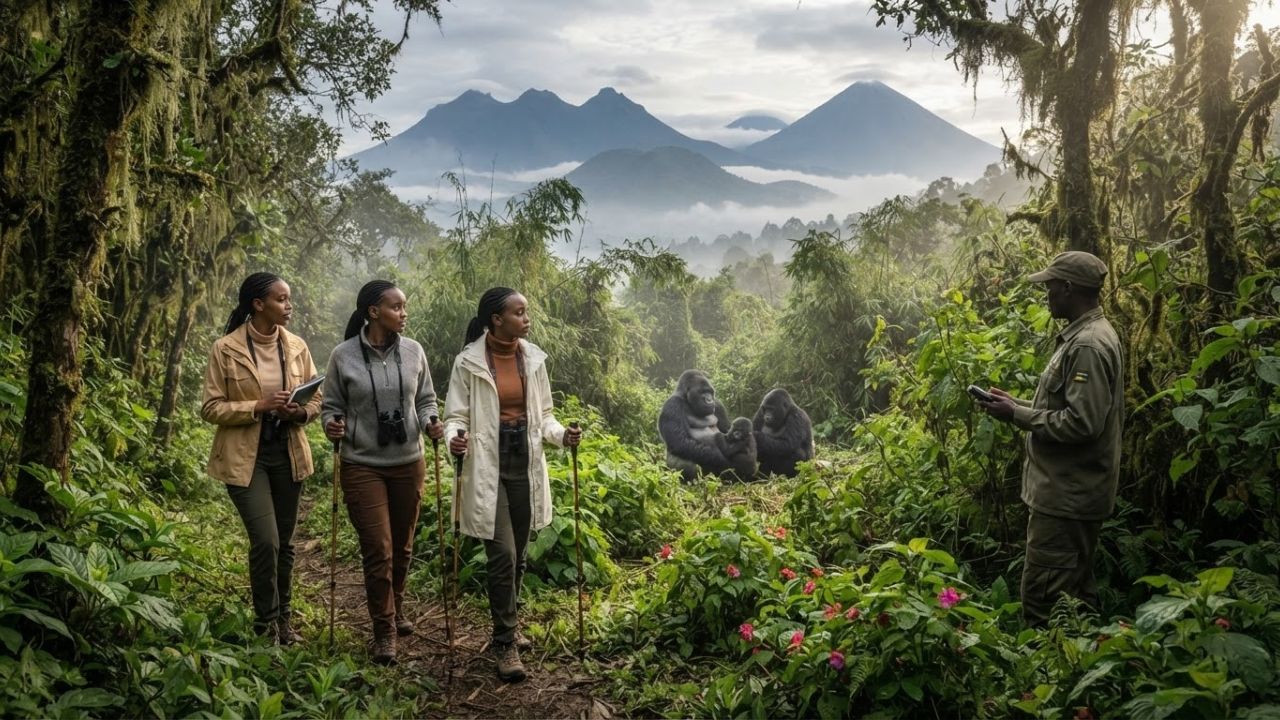
Southwestern Uganda is establishing a global model for ethical wilderness travel, combining high-value gorilla tracking permits with strict biosafety rules, community revenue redistribution, and solar-powered eco-lodges. Anchored by the 33.7-square-kilometer Mgahinga Gorilla National Park, the region demonstrates how high-end conservation tourism protects endangered species while funding rural infrastructure.
[KISORO, Uganda] — In the volcanic highlands of Southwestern Uganda, wildlife authorities, local communities, and luxury lodge operators are pioneering a low-impact, high-value conservation model. Encompassing three dormant volcanic peaks—Mount Gahinga, Mount Sabinyo, and Mount Muhavura—Mgahinga Gorilla National Park protects critical cloud forest habitats within the tri-national Virunga Mountain Range shared with Rwanda and the Democratic Republic of Congo.
The regional framework relies on a legally mandated community revenue-sharing system, allocating 20 per cent of official park entry fees directly to border parishes in the Kisoro District. With Uganda gorilla tracking permits priced at $800 USD—offering a competitive alternative to Rwanda's $1,500 USD fee—the system has redistributed over $2.5 million USD over the past decade to finance primary schools, maternity wards, gravity-flow water systems, and feeder roads.
Volcanic Topography and Four-Tiered Elevation Zoning
Covering a compact area of 33.7 square kilometers (13 square miles), Mgahinga Gorilla National Park features a steep vertical gradient that ascends from 2,227 meters (7,306 feet) along the valley floor to 4,127 meters (13,540 feet) at the summit of Mount Muhavura. Receiving annual precipitation between 1,400 mm and 2,000 mm, the mountain slopes act as a regional water tower, filtering heavy monsoonal rain and feeding surrounding agricultural valleys.
The rapid rise in elevation creates four distinct vegetative zones across the dormant volcanic slopes:
- Montane Forest Zone (2,200m–2,500m): Dense secondary growth and evergreen trees forming the lower canopy.
- Bamboo Belt (2,500m–3,000m): Thick bamboo forests supporting seasonal foraging for mountain gorillas and golden monkeys.
- Hagenia-Hypericum Woodland (3,000m–3,300m): Open woodland dominated by lichen-draped Hagenia abyssinica trees.
- Afro-Alpine Moorland (>3,300m): High-altitude moorland featuring giant lobelias and groundsel plants near volcanic peaks.
These micro-habitats support diverse fauna, allowing mountain gorillas to adjust their feeding routes according to seasonal bamboo shoot growth while protecting over 2,000 endemic golden monkeys.
Biosafety Protocols and Primate Population Recovery Metrics
To protect endangered mountain gorillas—which share approximately 98 per cent of their DNA with humans—wildlife managers enforce strict biosafety protocols during all tracking encounters. Daily visitation is restricted to a cap of 8 visitors per gorilla family, with total human interaction limited to 60 minutes (1 hour).
Additional biosafety standards include:
- Mandatory Physical Distance: Visitors must maintain a distance of 7 to 10 meters (23 to 33 feet) from gorilla groups.
- Health Screenings and Masks: All tourists and park rangers undergo pre-entry temperature checks and must wear medical-grade N95 or FFP2 face masks during forest treks.
- Conservation Outcomes: Global mountain gorilla numbers have recovered from under 250 individuals in the 1980s to over 1,063 across the Virunga Massif and Bwindi Impenetrable Forest, prompting the IUCN to update the species' status from "Critically Endangered" to "Endangered."
Revenue generated by high-end tracking permits directly funds daily anti-poaching patrols, snare removals, and field interventions by veterinary organizations like the Gorilla Doctors.
Indigenous Batwa Cultural Integration and Off-Grid Eco-Lodge Standards
Integrating indigenous heritage into the tourism framework provides sustainable economic inclusion for the Batwa people. Initiatives like the Batwa Cultural Trail employ over 30 indigenous Batwa guides who lead educational heritage walks along historic forest paths, showcasing ethnobotanical knowledge encompassing more than 100 traditional medicinal plant species. One hundred per cent of cultural tour revenues are community-managed.
Concurrently, luxury eco-lodges surrounding Mgahinga enforce strict environmental standards:
- Off-Grid Solar Infrastructure: Operations achieve 100 per cent off-grid solar power generation paired with battery storage systems.
- Water Sourcing and Plastic Reduction: Properties utilize rainwater harvesting systems exceeding 50,000 liters in capacity while reducing single-use plastics by over 90 per cent across supply chains.
- Local Material Sourcing: Lodges use timber, volcanic stone, and thatch sourced within a 50-kilometer radius, building on non-permanent foundation piers to prevent landscape disruption.
- Agricultural Sourcing: Hospitality providers source over 85 per cent of fresh produce from local smallholder cooperatives, generating stable income for regional farming families.
Mgahinga Gorilla National Park Conservation Profile
| Environmental & Operational Indicator | Recorded Site Benchmark / Technical Metric |
|---|---|
| Total Protected Area | 33.7 square kilometers (13 square miles) |
| Elevation Range | 2,227 meters (7,306 ft) to 4,127 meters (13,540 ft at Mount Muhavura) |
| Dormant Volcanic Peaks | Mount Gahinga, Mount Sabinyo, Mount Muhavura |
| Annual Rainfall Range | 1,400 mm to 2,000 mm (55 to 78 inches) |
| Vegetation Zoning Belts | Montane forest, Bamboo belt, Hagenia woodland, Afro-alpine moorland |
| Uganda Gorilla Tracking Permit Price | $800 USD per permit (vs Rwanda at $1,500 USD) |
| Community Revenue Redistribution | 20% of park entry fees ($2.5M+ USD distributed to Kisoro District over 10 years) |
| Primate Biosafety Rules | 7–10m physical distance, 8 visitors/family daily cap, 60-min limit, N95 masks |
| Gorilla Population Recovery | Recovered from <250 in 1980s to 1,063+ across Virunga Massif & Bwindi |
| Golden Monkey Population | 2,000+ protected individuals across Albertine Rift bamboo belts |
| Avian Biodiversity | 180+ bird species (12–14 Albertine Rift endemics; $400–$700/day specialized birding spend) |
| Batwa Cultural Integration | Batwa Cultural Trail employs 30+ guides; 100% revenue community-managed |
| Eco-Lodge Sustainability Standards | 100% solar power, >90% plastic reduction, 50kL+ rainwater storage, 85% local produce |
| Transport Infrastructure Transit | 1-hour domestic flight from Entebbe/Kampala (vs >10 hours by road) |
Economic Analysis: High-Value Low-Density Tourism Drives Regional Growth
The high-value, low-density tourism model implemented in Southwestern Uganda demonstrates that luxury travel can fund habitat conservation without causing environmental degradation. By placing strict ecological caps on tracking permits, authorities preserve the exclusivity of wildlife encounters while maximizing economic yield per visitor.
The regional economic benefits include:
- Direct Regional Employment: Over 1,500 direct and indirect jobs created across hospitality, logistics, park operations, and agriculture.
- Specialized Niche Markets: Avian tourism targeting endemic species like the Rwenzori Turaco and Golden-winged Sunbird attracts high-spending birdwatchers who spend $400 to $700 USD daily and extend stays by 3 to 5 days.
- Infrastructure Connectivity: Expanded domestic flight options reduce travel times between Entebbe or Kampala and Kisoro from over 10 hours by road to a 1-hour flight.
This holistic approach secures long-term funding for anti-poaching operations while establishing sustainable economic alternatives to agricultural forest encroachment.
Why This Matters (Information Gain & Experience)
For international travelers, visiting Mgahinga Gorilla National Park offers an ethical wildlife experience where entry tariffs directly fund species recovery and community infrastructure. Observing habituated mountain gorilla families in their natural cloud forest habitat provides a profound connection to nature, reinforced by strict biosafety rules that protect animal welfare.
From a planning perspective, travelers should book tracking permits several months in advance due to strict daily caps. Combining gorilla tracking with the Batwa Cultural Trail and high-altitude birdwatching extends the overall travel experience, while choosing certified off-grid eco-lodges ensures your stay directly supports local farming cooperatives.
Frequently Asked Questions
How much does a mountain gorilla tracking permit cost in Uganda?
Uganda gorilla tracking permits cost $800 USD per person, providing a high-value alternative to neighboring Rwanda, where permits are priced at $1,500 USD.
How does the community revenue-sharing program work?
By Ugandan national mandate, 20 per cent of all official park entry fees are allocated directly to neighboring border parishes in the Kisoro District to fund primary schools, health clinics, water systems, and roads.
What biosafety rules must visitors follow during gorilla encounters?
Visitors must maintain a 7 to 10 meter distance from gorillas, submit to pre-entry temperature checks, wear medical-grade N95 or FFP2 face masks, and limit interaction time to a maximum of 60 minutes.
How do luxury eco-lodges in Southwestern Uganda support environmental sustainability?
Eco-lodges operate on 100 per cent off-grid solar power, harvest over 50,000 liters of rainwater, reduce single-use plastics by over 90 per cent, and source over 85 per cent of fresh produce from local agricultural cooperatives.
Related Travel Guides
- Greenland, US, Canada and Australia Implement Licensed Fishing Permits to Boost Sustainable Adventure Tourism in 2026
- Global Rescue Mission: US and International Coalition Launch Emergency Evacuations from Blockaded Strait of Hormuz
- China Underground Tourism: Tianquan Cave Chute Slide Blends 3-Million-Year-Old Geology with Adventure 2026
This article is for informational purposes. Flight routes, passenger regulations, visa rules, and transit advisories are subject to change by airlines and aviation authorities. Readers are advised to verify schedules and travel documentation with relevant carriers and border agencies before departure.
Related Stories


Angola Courts Gulf Capital to Power Tourism Expansion as Portuguese Hospitality Enrolments Surge by 106%