
Uganda Boosts Ishasha Lion Recovery as Tourism Routes via Mbarara and Fort Portal Support Safari Access
Uganda Boosts Ishasha Lion Recovery as Tourism Routes via Mbarara and Fort Portal Support Safari Access

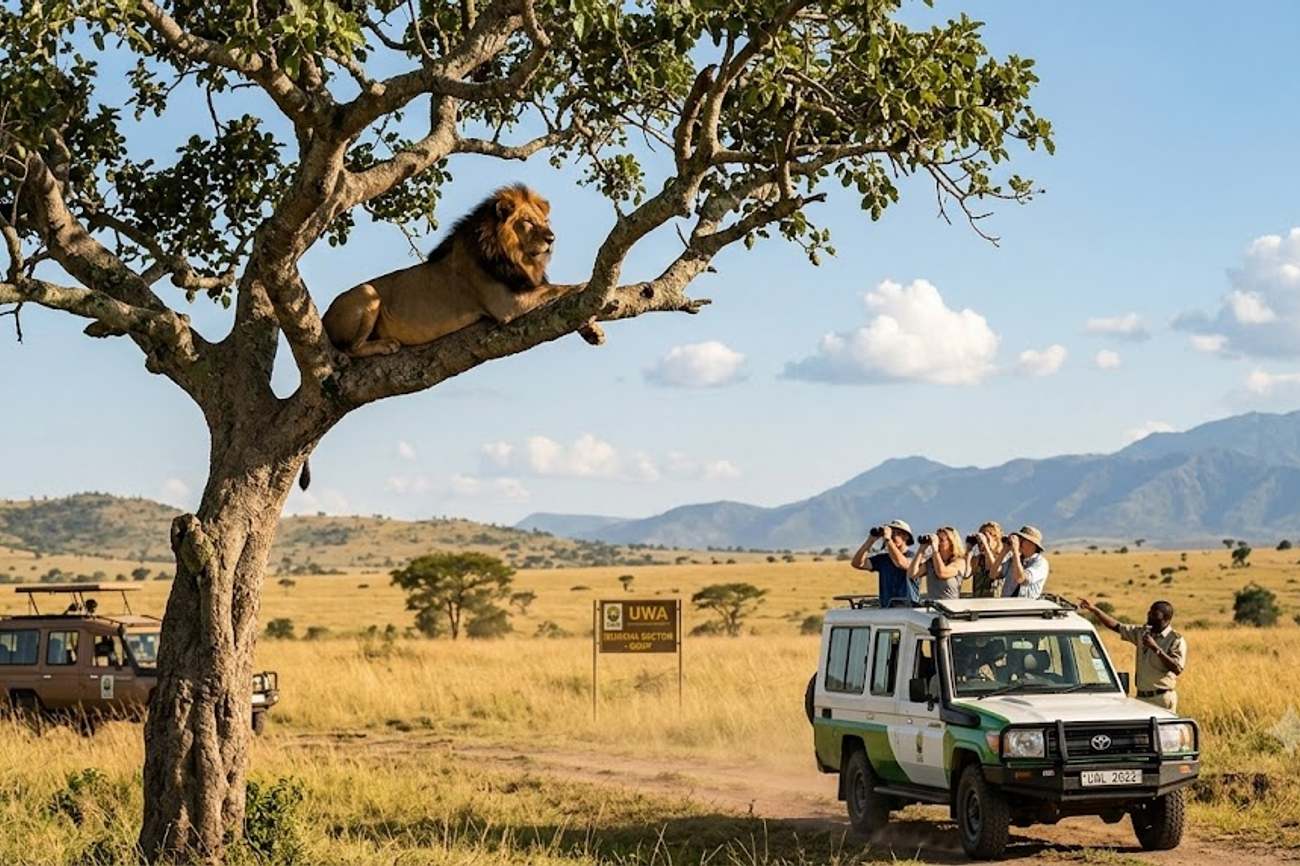
Image generated by AI
Three known adult lions are all that remain of the once-famous tree-climbing population in Ishasha, a collapse that threatens the commercial viability of one of Uganda's most critical safari corridors. This staggering decline, reported by the Uganda Wildlife Authority (UWA) on 11 September 2026, has triggered the launch of a ten-year conservation management partnership designed to prevent the total extinction of this signature wildlife experience. For the high-end travel market, this is no longer a niche ecological concern; it is a structural risk to the primary overland route connecting the savannahs of Queen Elizabeth National Park to the gorilla sanctuaries of Bwindi.
The Decade-Long Strategic Pivot for Ishasha
The formalization of the Ishasha Collaborative Management Partnership on 11 September 2026 marks a shift from short-term crisis management to a long-term institutional framework. Unlike a temporary wildlife campaign, this ten-year agreement—supported by the Wildlife Conservation Society (WCS)—integrates habitat restoration and human-wildlife conflict mitigation with an explicit mandate for tourism development.
The scale of the collapse is historic. While the 1970s saw an estimated 80 lions roaming the Ishasha sector, the current count of three adults renders the population non-viable without aggressive intervention. By framing this as a "Conservation Management Partnership," the UWA and WCS are signaling to international tour operators that Ishasha is being repositioned as a long-term asset. The goal is to diversify tourism offerings and increase the long-term economic value of the sector, ensuring it remains a dependable stop for travelers moving through western Uganda.
The Geography of the Safari Corridor
The commercial urgency of the Ishasha recovery is rooted in its precise location. Ishasha does not function as a destination in isolation; it is the geographic bridge between two of the country's most lucrative wildlife products.
According to official UWA destination planning materials, the southern Ishasha sector sits directly on the principal transit route to Buhoma, the primary northern gateway for mountain gorilla tracking in Bwindi Impenetrable National Park. The distance between Ishasha and Buhoma is cited between 62 and 64 kilometres. When a traveler moves from the Mweya hub of Queen Elizabeth National Park toward Bwindi via Kihihi, Ishasha is the natural stopping point.
The logistics of accessing this region further emphasize its role as a transit hub. Travelers arriving from Kampala typically choose between two main arteries:
- The Fort Portal Route: A scenic journey covering approximately 410 kilometres to Mweya.
- The Mbarara–Bushenyi Route: A southern approach covering roughly 420 kilometres, which often incorporates the Lake Mburo corridor.
Because Ishasha sits at the nexus of these routes and the Bwindi frontier, the disappearance of its lions would remove a primary differentiator from the overland journey, reducing a high-value wildlife encounter to a mere transit drive.
| Route Component | Verified Metric (Sept 2026) | Strategic Travel Impact |
|---|---|---|
| Ishasha Lion Population | 3 Known Adults | High fragility; sightings are no longer guaranteed. |
| Ishasha to Buhoma | 62–64 Kilometres | Direct link between savannah and gorilla trekking. |
| Kampala to Mweya (via Fort Portal) | ~410 Kilometres | Primary western entry point for multi-park tours. |
| Kampala to Mweya (via Mbarara) | ~420 Kilometres | Alternative southern access via Lake Mburo. |
| Queen Elizabeth NP Size | 1,978 sq km | Broad mammal/bird diversity offsets lion scarcity. |
| Transit Infrastructure | Predominantly dirt roads | 4WD is mandatory for the Mweya–Kihihi–Buhoma leg. |
| Aviation Access | Kihihi Airstrip | Enables premium fly-in/fly-out hybrid itineraries. |
Expert Analysis: The Economic Pressure of Recovery
For safari planners and luxury travelers, the direct consequence of the Ishasha crisis is a temporary decline in the "predictability" of the itinerary. In the luxury travel sector, the "Big Five" or specific signature experiences (like tree-climbing lions) are sold as deliverables. With only three adult lions remaining, the UWA can no longer market Ishasha as a guaranteed sighting, which forces a shift in how the Uganda Tourism Board and private operators package the western circuit.
However, the timing of this ten-year partnership coincides with a massive surge in inbound volume. Data from the Ministry of Tourism, Wildlife and Antiquities Statistical Abstract 2025 (published in 2026) reveals that Uganda received 1,642,215 international arrivals in 2025. This represents a 19.7 per cent increase over the 1,371,895 arrivals recorded in 2024, bringing visitor numbers to 106 per cent of pre-pandemic (2019) levels.
The pricing pressure created by this growth is significant. With tourism receipts reaching UGX 5,829.2 billion (approximately US$ 1.62 billion)—a 21.3 per cent increase—the Ugandan government has a powerful financial incentive to stabilize Ishasha. If the "bridge" between Queen Elizabeth and Bwindi loses its appeal, the average visitor length of stay (currently 8.8 nights) could contract, as travelers may opt for shorter, more efficient flights between parks rather than overland journeys.
Enhanced infrastructure along the Mbarara and Fort Portal corridors is streamlining access to the Ishasha sector, where tree-climbing lions are a primary draw. Travelers can coordinate their itineraries and secure necessary permits through the Uganda Wildlife Authority, ensuring sustainable visitation to these critical conservation areas.
The move to incorporate "tourism development" into a conservation partnership is a calculated business decision. By improving infrastructure and diversifying the Ishasha experience, the UWA is attempting to decouple the sector's value from a single species. If the lions do not recover quickly, the sector must offer other high-value draws to justify the 62–64 km detour to Buhoma.
Key Takeaways
- Critical Population Collapse: Only three adult lions remain in Ishasha, down from an estimated 80 in the 1970s, making the population non-viable without the new 10-year partnership.
- Strategic Transit Link: Ishasha is the primary stop on the 62–64 km route between Queen Elizabeth National Park and the Buhoma gorilla trekking trailhead.
- Strong Market Growth: The initiative launches during a period of rapid expansion, with 2025 arrivals (1,642,215) exceeding 2019 pre-pandemic levels.
- Logistical Requirements: The Mweya–Kihihi–Buhoma route remains heavily dependent on 4WD vehicles due to dirt road conditions, though Kihihi airstrip offers a premium alternative.
- Financial Stakes: With tourism receipts growing by 21.3 per cent to US$ 1.62 billion, the recovery of Ishasha is essential for maintaining the length of stay for international visitors.
FAQ: Ishasha Safari Planning 2026
Are tree-climbing lions still guaranteed in Ishasha? No. With only three known adult lions reported as of September 2026, sightings are currently rare and unpredictable. Travelers should view Ishasha as part of a broader wildlife circuit rather than a guaranteed lion encounter.
What is the best way to get from Ishasha to Bwindi? The most common route is the 62–64 km drive to Buhoma. Because much of the road between Mweya, Kihihi, and Buhoma is dirt, a 4WD vehicle is highly recommended for safety and reliability.
Can I fly into the Ishasha area? Yes. The Kihihi airstrip serves as a gateway for those accessing Ishasha and the northern frontier of Bwindi, making it a viable option for time-sensitive or luxury itineraries.
How long is the typical drive from Kampala to the western parks? Depending on the route, it is approximately 410 km via Fort Portal or 420 km via Mbarara and Bushenyi to reach the Mweya hub in Queen Elizabeth National Park.
The survival of the Ishasha lion is now a litmus test for whether Uganda can balance aggressive tourism growth with the fragility of its most iconic species.
Tags: Ishasha Lion Recovery, Queen Elizabeth National Park, Bwindi Impenetrable National Park, Uganda Wildlife Authority 2026, Uganda Tourism Statistics 2025, Buhoma Gorilla Trekking
Related Travel Guides
- Puerto Rico Follows Aruba And More Caribbean Destinations As Tourism Demand Rises With Cruise Arrivals And Wellness Experiences
- Japan Teams Up With Malaysia and More as Phu Quoc Targets More Visitors With New Flight Connections
- Australia’s Sydney Airport Opens Wider Coastal Tourism Pathways with Rising Global Connectivity
Disclaimer
This article is for informational and educational purposes only. It does not constitute legal, financial, or professional advice. While we strive to provide accurate and up-to-date information, travel policies, regulations, and conditions change rapidly. Always verify information with official sources before making travel decisions. Nomad Lawyer makes no representations about the accuracy, reliability, completeness, or suitability of the information provided. Readers should consult qualified professionals for advice specific to their circumstances. The views expressed in this article are those of the author and do not necessarily reflect the views of Nomad Lawyer.
Naina Thakur
Contributor & Travel Specialist
Travel enthusiast and legal writer covering visa regulations, responsible tourism, and cultural journeys across global destinations.
Learn more about our team →