
Australia’s Sydney Airport Opens Wider Coastal Tourism Pathways with Rising Global Connectivity
Australia’s Sydney Airport Opens Wider Coastal Tourism Pathways with Rising Global Connectivity

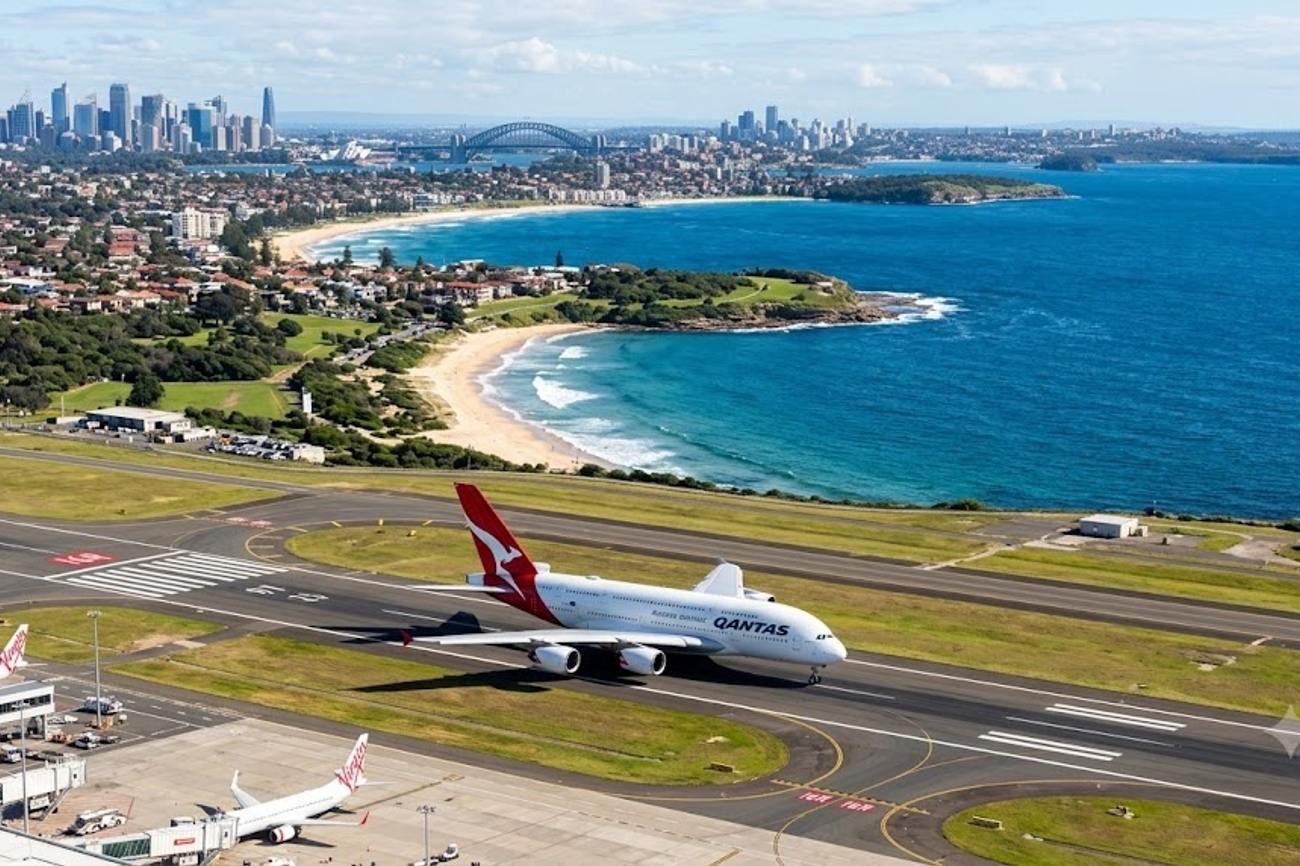
Image generated by AI
[Sydney, September 16, 2026] — Sydney Kingsford Smith Airport has secured its position as Australia’s premier aviation hub, ranking 35th globally in the 2026 OAG Megahubs connectivity index. The airport stands as the sole Australian entry in the world's top 50 most connected airports, cementing its role as the primary gateway for international travelers entering the continent.
The rankings, released on September 16, 2026, analyze the efficiency of airports as transfer hubs rather than simple passenger volume centers. By evaluating flight schedules from September 2025 through August 2026, OAG identified Sydney as the most effective Australian point for passengers transitioning between international and domestic flights. The study specifically highlighted August 2, 2026, as the peak aviation day for the measurement period.
The Mechanics of the Connectivity Index
The designation of "most connected" is a technical metric based on the viability of flight transfers. Unlike passenger traffic counts, this index measures the number of ways a traveler can arrive on one flight and depart on another within a maximum six-hour window, provided at least one leg of the journey is international.
Sydney recorded a connectivity index score of 116.9, facilitating 11,807 possible connections across a network of 101 destinations. It is important to note that these 101 destinations comprise a blend of both international and domestic routes. Qantas remains the dominant force at the hub, controlling approximately 39% of all flight operations.
While Sydney's global standing slipped five places—dropping from 30th in 2025 to 35th in 2026—its domestic lead remains absolute. The decline is attributed to the aggressive expansion of global hubs in Europe and Asia. Currently, Istanbul holds the top global spot, followed by London Heathrow, Amsterdam Schiphol, Kuala Lumpur, and Chicago O’Hare.
Market Dominance and Traffic Volume
Beyond connectivity scores, raw traffic data confirms Sydney's status as the epicenter of Australian aviation. In June 2026, the airport processed 1,262,659 international passenger movements, accounting for 37.2% of the entire nation's international traffic.
The gap between Sydney and its nearest domestic competitors is substantial:
| Airport | June 2026 International Movements | Share of National Traffic |
|---|---|---|
| Sydney | 1,262,659 | 37.2% |
| Melbourne | 913,395 | 26.9% |
| Brisbane | 540,431 | 15.9% |
| Perth | 423,097 | 12.5% |
Sydney's lead over Melbourne is stark, with 349,264 more international movements recorded in a single month. This dominance extends to logistics; the airport handled 48.3% of all Australian international air freight in June 2026, proving its criticality to the national supply chain and trade.
Practical Traveler Advisory and Strategic Insights
For the average passenger, these statistics translate into practical advantages regarding itinerary flexibility and destination access.
Increased Itinerary Options Because Sydney is the most connected hub, travelers arriving from Asia or Europe have the highest probability of finding a seamless connection to regional Australian cities. The high number of "possible connections" means fewer overnight stays and shorter layovers when transitioning from an international flight to a domestic one.
Coastal Tourism Access The airport serves as the primary launchpad for Australia's coastal tourism sector. With thousands of flight options, travelers can more easily reach renowned ocean destinations, benefiting from a network that prioritizes the flow of visitors from global capitals to regional shores.
Reliability vs. Speed Travelers should be aware that a high connectivity ranking does not inherently mean shorter security lines or cheaper fares. It indicates a high volume of available flight pairings. While the Sydney Airport infrastructure supports these movements, the passenger experience regarding queues remains separate from the network's connectivity score.
The Global Competitive Landscape
The shift in Sydney's global ranking highlights a broader trend: the rapid ascent of Asian and European megahubs. The presence of Kuala Lumpur at number four and the strong performance of Seoul Incheon, Tokyo Haneda, and Singapore Changi Airport indicate a shift in aviation gravity toward the Asia-Pacific region.
Sydney is competing against hubs situated in higher-density populations with more centralized geographic advantages. While Sydney's internal growth remains steady—evidenced by over 20.7 million passengers traveling through the hub in the first half of 2026—the relative growth of other global airports has pushed Sydney slightly down the list.
The airport's ability to maintain its domestic lead despite this global slide suggests a resilient infrastructure. The synergy between international arrivals and domestic departures continues to fuel the local visitor economy, benefiting hotels, tour operators, and transport services that rely on a steady stream of transit passengers.
FAQ: Sydney Airport Connectivity 2026
Does being the "most connected" airport mean it has the most flights? Not necessarily. Connectivity measures the possibility of transfers within a specific timeframe (six hours). An airport could have more total flights but poor scheduling that makes transfers difficult, resulting in a lower connectivity score.
Why did Sydney drop from 30th to 35th globally? The drop is relative. Other international hubs, particularly in Asia and Europe, expanded their routes and improved their scheduling more aggressively than Sydney did between 2025 and 2026.
How many international destinations can I fly to from Sydney? The 2026 report lists 101 total destinations, but this figure includes both domestic and international routes. It represents the total network available, not exclusively non-stop international flights.
What percentage of Australia's international air freight goes through Sydney? As of June 2026, Sydney handles 48.3% of all international air freight moving in and out of Australia.
Sydney remains the undisputed anchor of Australian aviation, even as the global map shifts.
#SYD-Connectivity-2026 #OAG-Megahubs #Qantas-Sydney #Australian-Aviation-Stats #International-Transit-SYD #Sydney-Kingsford-Smith
Related Travel Guides
Disclaimer
This article is for informational and educational purposes only. It does not constitute legal, financial, or professional advice. While we strive to provide accurate and up-to-date information, travel policies, regulations, and conditions change rapidly. Always verify information with official sources before making travel decisions. Nomad Lawyer makes no representations about the accuracy, reliability, completeness, or suitability of the information provided. Readers should consult qualified professionals for advice specific to their circumstances. The views expressed in this article are those of the author and do not necessarily reflect the views of Nomad Lawyer.
Kunal K Choudhary
Co-Founder & Contributor
A passionate traveller and tech enthusiast. Kunal contributes to the vision and growth of Nomad Lawyer, bringing fresh perspectives and driving the community forward.
Learn more about our team →