Warsaw Modlin Airport Bomb Hoax 2026: Analyzing EU Passenger Rights and Hidden Disruption Costs


Image generated by AI
Operational recovery at Warsaw Modlin Airport on 3 November 2026 was achieved within hours, yet the financial recovery for affected passengers remains an open-ended liability. While the airport issued official notices restoring normal functioning after a bomb alert involving a Boeing 737 MAX, the transition from "operational" to "resolved" is rarely instantaneous for the traveler. This incident serves as a data point for a growing trend: the decoupling of airline operational efficiency from passenger financial protection.
The Security Disruption in Numbers: Warsaw Modlin 2026
The disruption on 3 November 2026 centered on a specific aircraft model—the Boeing 737 MAX—triggering a full-scale security protocol at Port Lotniczy Warszawa-Modlin. From a data perspective, the event followed a precise operational sequence: the issuance of a bomb alert, the suspension of flight operations, and the eventual restoration of airport services.
However, the data gap emerges post-clearance. While airport authorities can quantify the duration of a shutdown, they do not track the aggregate financial losses of the passengers. These "hidden costs" include missed onward connections, forfeited hotel nights, and expired excursion bookings. For the individual traveler, the restoration of a runway does not equate to the restoration of a travel budget.
Comparative Context: Extraordinary Circumstances vs. Duty of Care
Under the regulatory framework of the European Commission, a critical distinction is made between "compensation" and "assistance." Security threats, such as bomb hoaxes, are typically categorized as "extraordinary circumstances." This classification allows airlines to bypass the mandatory cash compensation usually required for delays.
Yet, the duty of care is non-negotiable. Even when a security alert exempts a carrier from paying a penalty, the obligation to provide meals, communication, and accommodation remains. The following table breaks down the divergence in liability based on the type of travel booking.
Liability Matrix: Disruption Recovery by Booking Type
| Expense Type | Package Holiday (EU Protected) | Independent Booking (DIY) | Travel Insurance (Policy Dependent) |
|---|---|---|---|
| Immediate Meals/Hotel | Organiser/Airline Responsibility | Airline Duty of Care | Secondary Reimbursement |
| Missed Hotel Night | Organiser must resolve/refund | Subject to Hotel Terms | Covered if "Trip Interruption" exists |
| Onward Transport | Organiser provides alternatives | Passenger's responsibility | Covered via "Missed Connection" |
| Diversion Transfer | Covered by Airline/Organiser | Airline bears cost to original city | Not typically covered |
What This Means for Travelers
The Warsaw Modlin incident proves that relying on a "general" insurance policy is a high-risk strategy. According to guidance updated on 18 August 2026 by the Financial Ombudsman Service, there is a sharp legal distinction between a "missed departure" and a "travel delay."
If you are traveling through European hubs in late 2026, apply these data-driven tactics to protect your budget:
- Prioritize the "Duty of Care" Request: Before paying for your own hotel during a security lockdown, demand written confirmation from the airline regarding their assistance obligations. If they refuse, document the refusal in writing.
- Audit Your Booking Structure: If you booked a package, your primary point of contact is the tour operator, not the airline. The operator is legally responsible for the cohesion of the trip.
- Trigger "Alternative Airport" Clauses: EU guidance specifies that if you are diverted to a different airport serving the same region, the airline must cover the transfer costs to your original destination. Do not purchase a taxi or train ticket independently without first requesting the airline's arrangement.
- Evidence Collection: Retain every boarding pass and itemized receipt. In security-related disruptions, the burden of proof for "reasonable expense" rests entirely on the passenger.
Forward Projection: The Rise of Security-Induced Volatility
As security protocols evolve, we expect a rise in "micro-disruptions"—short-term shutdowns that don't trigger massive compensation payouts but cause significant ripple effects in secondary bookings. The trend is shifting toward a more fragmented liability model where travelers must manage three separate claims processes: the airline for care, the hotel for waivers, and the insurer for lost time.
The reliance on the "extraordinary circumstances" clause will likely increase, making comprehensive travel insurance with specific "missed connection" riders more essential than basic medical or theft cover.
FAQ: Europe Security Disruptions 2026
Does a bomb hoax entitle me to EU261 cash compensation? Generally, no. Security alerts are viewed as extraordinary circumstances beyond the airline's control. However, this does not exempt the airline from providing food, water, and hotel accommodation (Duty of Care).
Should I book my own hotel if the airline is slow to respond? Only as a last resort. Request airline assistance first. If you must book independently, keep all receipts and document why the airline failed to provide the required care to ensure a higher chance of reimbursement.
Will my travel insurance cover a missed connection due to a security alert? It depends on your policy's specific wording. Some cover "any delay," while others require a specific list of insured causes. Check if your policy distinguishes between "travel delay" and "missed departure."
Who is responsible for my hotel if my flight is diverted? If you bought a package, the organizer is responsible. If you booked independently, you must check the hotel's cancellation policy or claim through your travel insurance.
Operational clearance is a logistical victory, but financial recovery is a legal battle.
Related Travel Guides
This article is for informational purposes. Flight routes, passenger regulations, visa rules, and transit advisories are subject to change by airlines and aviation authorities. Readers are advised to verify schedules and travel documentation with relevant carriers and border agencies before departure.
Related Stories
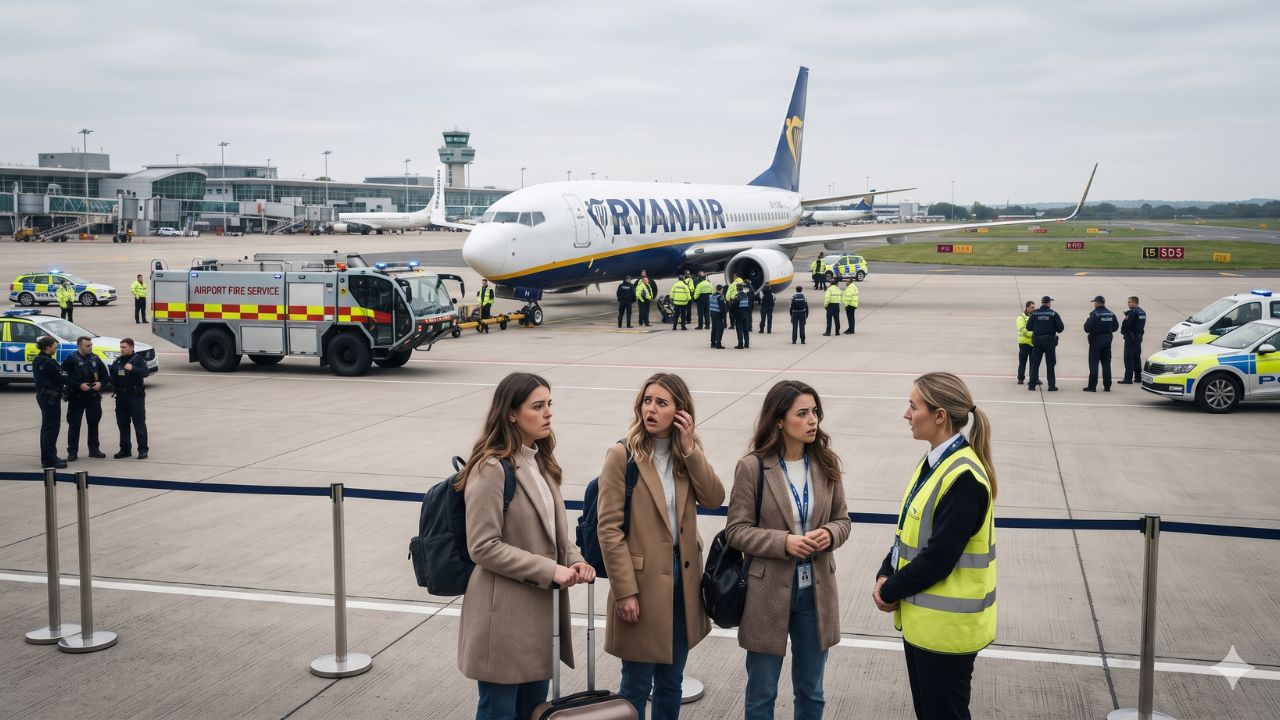
European Flight Bomb Threats Trigger Seven Emergency Landings and Diversions: Ryanair, LOT, and Wizz Air Security Guide 2026
US Airport Construction Alert 2026: Road Access and Pickup Changes at LAX, JFK, DEN, and IAH