
Kazakhstan Transforms Rail Travel as Astana Builds Central Asia’s First Aluminium Train Factory in 2026
Kazakhstan Transforms Rail Travel as Astana Builds Central Asia’s First Aluminium Train Factory in 2026

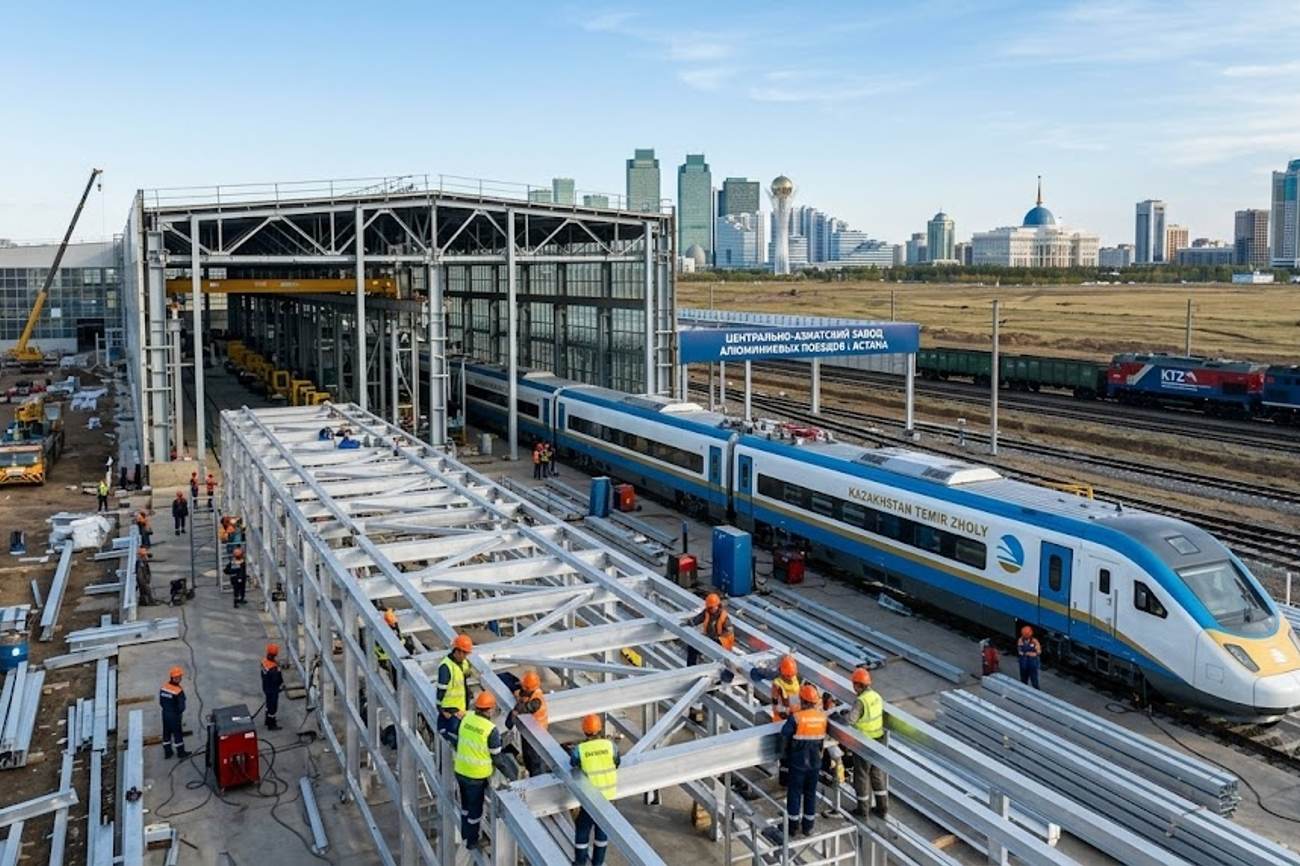
Image generated by AI
Kazakhstan's rail investment is shifting from basic assembly to high-value engineering, with the 14 billion KZT commitment to aluminum railcar production signaling a move toward industrial autonomy. This pivot mirrors a broader Central Asian trend where nations are transitioning from importing turnkey infrastructure to developing domestic manufacturing hubs to secure supply chains and reduce long-term operational costs.
The Aluminum Pivot in Numbers
The expansion of the Stadler Kazakhstan facility in Astana is anchored by a 14 billion KZT investment (approximately CHF 25 million). While the financial figure is significant, the data reveals a deeper shift in industrial capability. The facility is transitioning from a center of assembly to a center of advanced manufacturing.
Currently, the Astana site manages a diverse portfolio of railway operations, including the production of electrical equipment, underfloor systems, bogies, and the assembly and commissioning of complete railcars. It also handles steel car body welding and painting. The 2026 expansion introduces Central Asia’s first large-scale production facility for aluminum railcar bodies, including the region's first dedicated welding and painting workshops specifically for aluminum.
From a labor perspective, the facility currently employs over 650 personnel. The aluminum expansion is projected to add approximately 100 new positions. This 15% increase in workforce is not merely a headcount growth but a skill-set upgrade. To support this, Stadler has implemented a cross-border training regime, sending local specialists to Poland and Switzerland to master the production of electrical cabinets and railway bogies. This movement toward "localization" is a strategic hedge against the volatility of international supply chains, a trend monitored closely by organizations like the World Trade Organization as emerging economies seek to move up the value chain.
Central Asian Industrial Benchmarks
The transition in Astana represents a departure from the traditional "Assembly Model" prevalent in the region over the last decade. Historically, Central Asian rail projects relied on importing finished shells and performing final assembly locally. The shift toward aluminum manufacturing changes the economic multiplier of these projects.
Aluminum is the global gold standard for modern rail due to its weight-to-strength ratio. According to data trends often highlighted by IATA regarding lightweight materials in transport, reducing vehicle weight directly correlates to lower energy consumption and reduced wear on track infrastructure. By mastering aluminum welding locally, Kazakhstan moves from being a regional consumer to a potential international supplier.
| Development Metric | Traditional Assembly Model | New Astana Manufacturing Direction |
|---|---|---|
| Primary Material | Conventional Steel Structures | Advanced Aluminum Body Technology |
| Production Focus | Component Assembly | End-to-End Vehicle Manufacturing |
| Labor Requirement | General Assembly Expertise | Specialized Aluminum Welding & Engineering |
| Supply Chain Role | Regional Importer/Consumer | Potential International Exporter |
| Value Addition | Low-to-Medium Industrial Value | High-Value Engineering Capability |
This evolution is part of a broader geopolitical strategy. Kazakhstan sits at the intersection of China, Russia, and Europe. By upgrading its rolling stock production, the country is not just improving domestic transit but positioning itself as a critical node in the Middle Corridor trade route. This aligns with the World Tourism Organization's observations on how improved regional connectivity acts as a catalyst for tourism growth in landlocked nations.
What This Means for Travelers
While the 14 billion KZT investment is an industrial metric, the downstream effects will be felt by passengers and tourists visiting Kazakhstan in the coming years. The adoption of aluminum rail technology typically leads to three specific traveler benefits:
- Increased Frequency and Speed: Lighter trains allow for better acceleration and higher energy efficiency. Travelers can expect more reliable scheduling and potentially faster transit times between major urban centers and emerging tourism hubs.
- Enhanced Passenger Comfort: Aluminum bodies allow for more flexible interior designs and better climate control integration compared to legacy steel cars. This will be particularly evident in long-haul journeys across the Kazakh steppe.
- Expanded Regional Reach: As domestic production costs drop and reliability increases, the government is more likely to expand rail services into secondary cities and remote landscapes, opening up previously inaccessible destinations for international visitors.
For those planning travel to Kazakhstan in 2026 and beyond, the "rail-first" strategy suggests that the most efficient way to navigate the country will shift away from domestic flights toward a modernized rail network. Travelers should monitor the rollout of new aluminum-body fleets, as these will likely be deployed on the highest-traffic corridors first.
Projection: The 2031 Horizon
The current expansion is not an isolated event but part of a long-term strategic roadmap. The agreement signed during the Kazakhstan-Switzerland Business Council meeting in November 2025 outlines a sustained investment trajectory from 2023 through 2031.
Based on the current trajectory, Kazakhstan is moving toward a "Closed-Loop" rail ecosystem. By 2031, the goal is to reduce dependence on imported railway technologies almost entirely for standard rolling stock. We can project that the Astana facility will evolve into a regional export hub, providing aluminum railcars to neighboring Central Asian states that lack the specialized welding infrastructure.
Furthermore, as the global rail industry shifts toward hydrogen and battery-electric propulsion, the lightweight nature of aluminum bodies will make Kazakhstan’s fleet more adaptable to these green technologies. This positions the country as a leader in sustainable transport within the region, potentially attracting a new demographic of eco-conscious international travelers.
FAQ: Kazakhstan Rail Expansion 2026
Will ticket prices increase with the new aluminum trains? Unlikely. While the initial investment is 14 billion KZT, aluminum trains have lower operating costs due to energy efficiency and reduced track wear. These savings are typically passed to the operator, allowing for stable or more competitive pricing.
Is this a good time to invest in Kazakhstan tourism? Yes. The shift from assembly to advanced manufacturing signals long-term economic stability and a commitment to infrastructure. Improved rail connectivity historically correlates with a rise in domestic and international tourist arrivals.
Which carriers are benefiting from this technology? The primary beneficiary is the national rail infrastructure. The partnership with Stadler ensures that the rolling stock meets Swiss engineering standards, which will likely be deployed across the main corridors linking Astana and Almaty.
How does aluminum affect the travel experience? Aluminum railcars are generally quieter and offer better thermal insulation than older steel models. For the traveler, this means a significant reduction in noise pollution and more consistent cabin temperatures during extreme seasonal shifts.
The transition from steel assembly to aluminum engineering is the quiet signal that Kazakhstan is no longer just a transit corridor, but a manufacturing powerhouse.
#KazakhstanIndustrialGrowth2026 #StadlerRailExpansion #CentralAsiaMobilityData #AluminumRailManufacturing #AstanaInfrastructureShift #RailSupplyChainLocalization
Related Travel Guides
- Poland Gains Siemens Rail Powerhouse as New Poznań Hub Targets Europe’s Next Mobility Era in 2026
- France-Based Moment Says the Next Great European Rail Connectivity Opportunity Is to Unlock Better Wi-Fi and Much More
- United States Unveils Colorado Mountain Travel Revolution With Proposed High Speed Train Reaching 90 Miles Per Hour
Disclaimer
This article is for informational and educational purposes only. It does not constitute legal, financial, or professional advice. While we strive to provide accurate and up-to-date information, travel policies, regulations, and conditions change rapidly. Always verify information with official sources before making travel decisions. Nomad Lawyer makes no representations about the accuracy, reliability, completeness, or suitability of the information provided. Readers should consult qualified professionals for advice specific to their circumstances. The views expressed in this article are those of the author and do not necessarily reflect the views of Nomad Lawyer.
Raushan Kumar
Founder & Lead Developer
Full-stack developer with 11+ years of experience and a passionate traveller. Raushan built Nomad Lawyer from the ground up with a vision to create the best travel and law experience on the web.
Learn more about our team →