
Poland Gains Siemens Rail Powerhouse as New Poznań Hub Targets Europe’s Next Mobility Era in 2026
Poland Gains Siemens Rail Powerhouse as New Poznań Hub Targets Europe’s Next Mobility Era in 2026
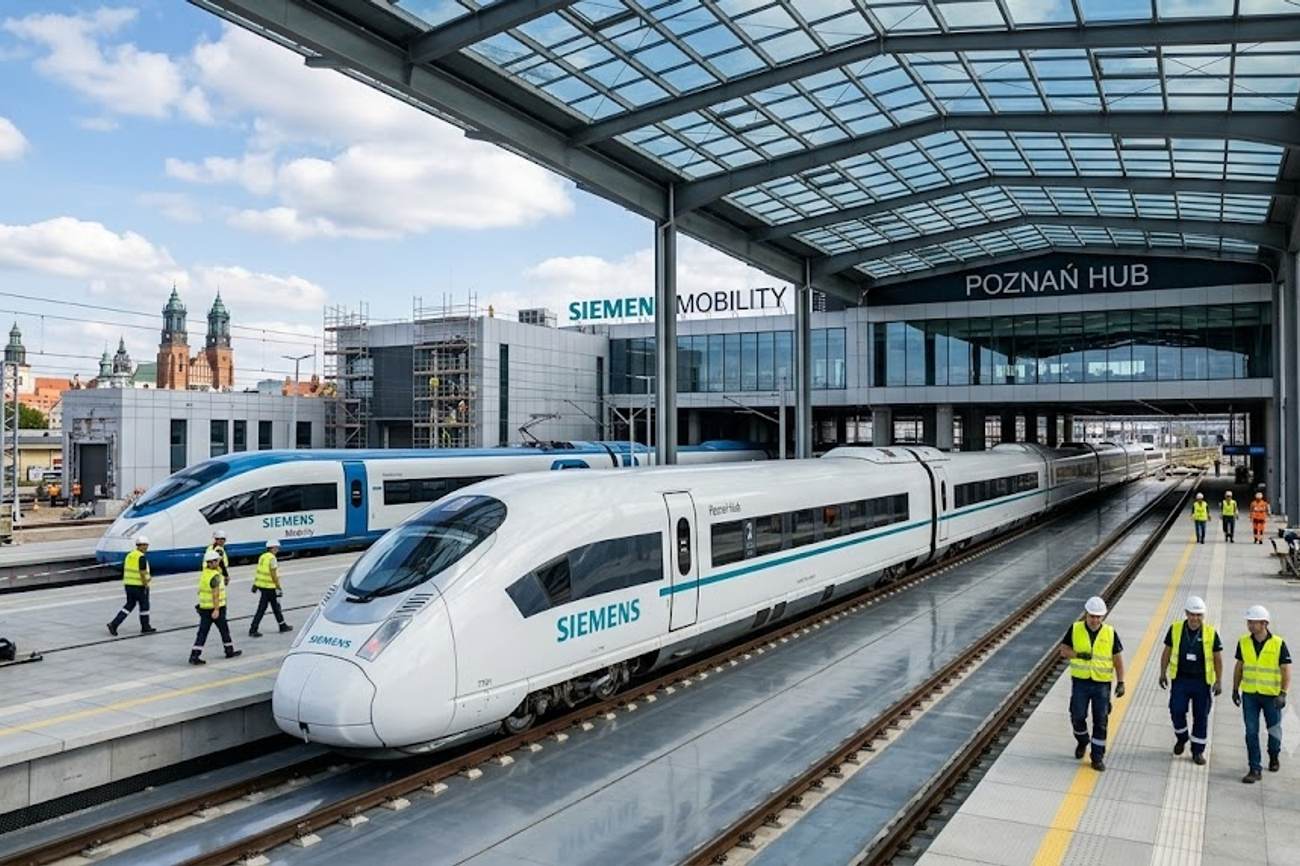
Image generated by AI
4,300 square meters of specialized industrial space will define the new frontier of rail logistics in Central and Eastern Europe. This figure represents the footprint of Siemens Mobility’s first dedicated maintenance plant in the region, a facility designed to shift the paradigm of locomotive upkeep from reactive repair to predictive intelligence. By establishing this hub in Gądki, near Poznań, the company is not merely building a garage for trains but is installing a strategic operational node intended to synchronize the fragmented rail corridors connecting Western Europe to the Baltic states and beyond.
The Strategic Pivot to Gądki
The selection of the Wielkopolska Voivodeship for this investment is a calculated geopolitical and logistical move. Poland serves as the primary transit artery for the European continent, acting as the indispensable bridge between the industrial heartlands of Germany and the emerging markets of the Czech Republic, Slovakia, and the Baltic region. For years, the lack of localized, high-tech maintenance centers in this corridor created a bottleneck; locomotives often had to travel vast distances for specialized overhauls, leading to "dead mileage" and reduced fleet availability.
By placing the facility in Gądki, Siemens Mobility is aligning its infrastructure with the physical flow of trade. The plant is designed to support a diverse fleet, specifically targeting the Vectron, Taurus, and BR189-F4 models. These locomotives are the workhorses of European cross-border transit, and their uptime directly correlates to the efficiency of the International Union of Railways (UIC) standards for interoperability across borders. The facility's completion in 2027 coincides with a broader European mandate to shift freight from road to rail to meet aggressive decarbonization targets.
Technical Specifications and Operational Capacity
The Gądki plant is engineered to handle the high-stress demands of international freight and passenger operators. Unlike traditional depots, this center integrates heavy industrial hardware with cloud-based diagnostics. The physical capacity is designed for high throughput, ensuring that the "availability" metric—the gold standard for rail operators—remains maximized.
The following table outlines the specific technical assets being deployed at the Gądki site:
| Asset/Feature | Specification/Capability | Operational Purpose |
|---|---|---|
| Simultaneous Capacity | Up to 7 locomotives | Maximizing concurrent maintenance throughput |
| Electrified Trackage | Approximately 5 kilometers | Allowing movement and testing of electric fleets |
| Wheel Maintenance | Underfloor wheel lathe | Correcting wheel profiles without removing bogies |
| Component Logistics | Dropping table | Facilitating the removal of heavy internal components |
| Digital Backbone | Railigent X Platform | Predictive analytics and fleet health monitoring |
| Testing Infrastructure | Dedicated testing area | Validating repairs before returning to active service |
Beyond the hardware, the service menu is comprehensive. The center will manage everything from routine scheduled inspections and safety system calibrations to catastrophic accident repairs and major technical modifications. This "one-stop-shop" model reduces the need for operators to outsource different stages of maintenance to multiple vendors across different countries.
Expert Analysis: The Death of the Scheduled Overhaul
For the seasoned traveler or logistics professional, the most significant aspect of this announcement is not the building itself, but the integration of the Railigent X digital platform. We are witnessing the transition from "Interval-Based Maintenance" to "Condition-Based Maintenance."
Traditionally, a locomotive was pulled from service every X thousand kilometers, regardless of whether it actually needed repair. This created artificial scarcity in fleet availability. The implementation of predictive maintenance means that sensors on a Vectron locomotive can signal a potential bearing failure or electrical glitch to the Gądki center before the driver even notices a symptom.
For travelers booking cross-border rail journeys, the direct consequence is a measurable reduction in "technical failure" delays. When maintenance is predictive, the likelihood of a locomotive breaking down in the middle of a transit corridor drops precipitously. For freight shippers, this means a tightening of the supply chain; the reliability of the rail link between Germany and Poland becomes a competitive advantage against trucking.
Furthermore, the presence of 60+ specialists already on the ground in Poland indicates that Siemens is scaling its human capital alongside its physical assets. This creates a localized ecosystem of expertise that reduces the reliance on flying in technicians from Germany or Austria, further slashing downtime for regional operators.
Key Takeaways
- Regional Hub Status: The 4,300 m2 Gądki facility will be the first of its kind in Central and Eastern Europe, opening in 2027 to serve Poland and neighboring markets.
- Digital Integration: The use of the Railigent X platform shifts the region toward predictive maintenance, reducing unexpected downtime and increasing locomotive availability.
- Infrastructure Scale: The site will feature 5km of electrified tracks and the capacity to service 7 locomotives simultaneously, including specialized tools like underfloor wheel lathes.
- Fleet Focus: Primary support will be provided for the Vectron, Taurus, and BR189-F4 locomotive models, which are critical for European cross-border connectivity.
- Economic Impact: By reducing maintenance lead times, the center strengthens the rail corridor linking Western Europe to the Baltics, Czech Republic, and Slovakia.
FAQ: European Rail Maintenance 2027
How will the Gądki plant affect train delays for passengers? By utilizing predictive maintenance via Railigent X, Siemens can fix components before they fail. This reduces the frequency of mid-journey technical breakdowns, leading to more reliable schedules and fewer unexpected cancellations on routes passing through Poland.
What is an underfloor wheel lathe and why does it matter? It is a machine that reshapes locomotive wheels without needing to dismantle the entire train. This significantly speeds up the maintenance process, meaning locomotives return to the tracks faster, increasing overall fleet capacity.
Why is Poland the chosen location for this specific plant? Poland is the geographic linchpin connecting Western Europe to the East. Placing a hub in the Poznań region allows Siemens to service locomotives operating across multiple borders without requiring them to travel back to Western European depots.
Which locomotive models will be serviced at this facility? The center is specifically equipped to handle the Siemens Vectron, Taurus, and BR189-F4 models, which are among the most common high-performance locomotives used in European freight and passenger transit.
The shift toward data-driven rail infrastructure proves that the future of travel isn't just about faster trains, but about the invisible intelligence keeping them on the tracks.
Tags: Siemens Mobility, Gądki Rail Service Centre, Railigent X, Polish Railway Infrastructure, Vectron Locomotive, European Rail Corridors 2027
Related Travel Guides
- France-Based Moment Says the Next Great European Rail Connectivity Opportunity Is to Unlock Better Wi-Fi and Much More
- United States Unveils Colorado Mountain Travel Revolution With Proposed High Speed Train Reaching 90 Miles Per Hour
- Spain High-Speed Rail Passenger Numbers Plunge 21% in 2026 as Travel Disruptions Shake Key Tourism Routes
Disclaimer
This article is for informational and educational purposes only. It does not constitute legal, financial, or professional advice. While we strive to provide accurate and up-to-date information, travel policies, regulations, and conditions change rapidly. Always verify information with official sources before making travel decisions. Nomad Lawyer makes no representations about the accuracy, reliability, completeness, or suitability of the information provided. Readers should consult qualified professionals for advice specific to their circumstances. The views expressed in this article are those of the author and do not necessarily reflect the views of Nomad Lawyer.
Naina Thakur
Contributor & Travel Specialist
Travel enthusiast and legal writer covering visa regulations, responsible tourism, and cultural journeys across global destinations.
Learn more about our team →