Typhoon Dujuan Triggers Over 890 Flight Cancellations Across Asia: Japan Hubs Face Historic Weather Gridlock

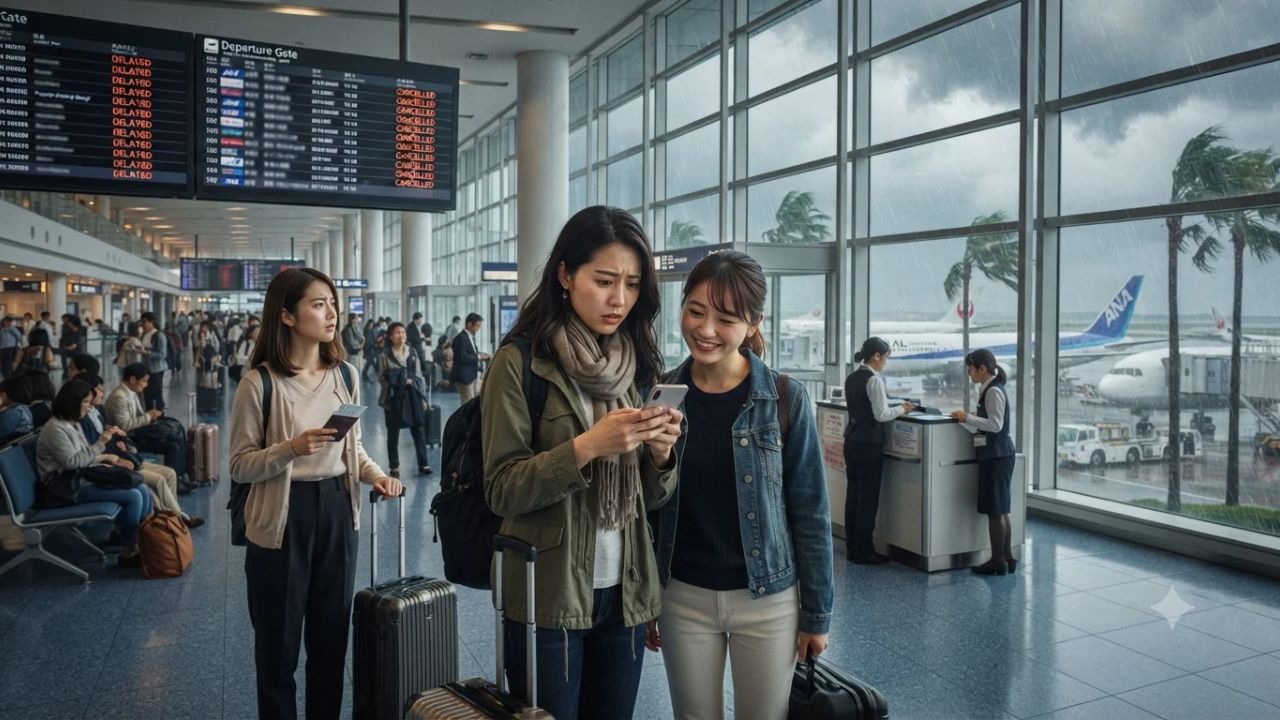
While autumn in Japan typically heralds crisp weather and peak foliage touring, Typhoon Dujuan has slammed eastern Honshu with violent gale-force winds and torrential rain, triggering an astonishing 890 flight cancellations and 4,632 delays across major Asian aviation corridors. The storm’s severe outer rainbands directly paralyzed Tokyo’s dual-airport network, forcing Japan Airlines, All Nippon Airways, and international carriers to ground domestic commuter links and halt regional transfer banks connecting North America, Europe, and Southeast Asia.
The epicentre of the aviation breakdown struck Tokyo Haneda Airport (HND), which absorbed 516 flight delays and 287 cancellations—the highest single-airport disruption total recorded across the Asia-Pacific region. As atmospheric alerts escalated, Tokyo Narita International Airport (NRT) recorded 144 delays and 67 cancellations. According to official meteorological trackers at the Japan Meteorological Agency, dangerous crosswinds and flash flood advisories forced aviation authorities to throttle runway arrival slots, stranding tens of thousands of transit passengers in terminal lounges across the Kanto plain.
Regional Cascades: How Typhoon Dujuan Stalled Airfields from Hokkaido to Kyushu
The destructive trajectory of Typhoon Dujuan rippled across the entire Japanese archipelago before spreading rotational delays throughout mainland China, Southeast Asia, and India. In northern Japan, Sapporo New Chitose Airport (CTS) recorded 183 delays and 46 cancellations as domestic feeder aircraft were grounded in Tokyo. In Kyushu, Fukuoka Airport (FUK) logged 131 delays and 41 cancellations, while the Kansai region suffered significant bottlenecks, with Osaka Itami (ITM) logging 142 delays and 21 cancellations, and Kansai International (KIX) absorbing 74 delays and 11 cancellations.
Because East Asian aviation relies on tightly scheduled international aircraft rotations, groundings in Japan generated immediate schedule friction across major Chinese and Southeast Asian hubs:
- Guangzhou Baiyun (CAN): Recorded 334 delays and 11 cancellations, bearing the heaviest delay volume in southern China.
- Shanghai Pudong (PVG) and Hongqiao (SHA): Combined for 296 delays and 32 cancellations across international and domestic routes.
- Beijing Capital (PEK) and Daxing (PKX): Logged a combined 186 delays and 20 cancellations on northeast Asian corridors.
- Hangzhou Xiaoshan (HGH): Reported 100 delays and 5 cancellations.
- Bangkok Suvarnabhumi (BKK): Registered 175 delays and 5 cancellations on connecting routes.
- Jakarta Soekarno-Hatta (CGK): Absorbed 191 delays and 16 cancellations.
- Da Nang (DAD): Recorded 58 delays and 8 cancellations along the central Vietnamese coast.
- Delhi (DEL) and Mumbai (BOM): Logged 147 delays (12 cancellations) and 106 delays (6 cancellations) respectively on Asian transfer flights.
Airline Operations Under Pressure: Japanese Carriers Face Severe Groundings
Japanese flag carriers shouldered the steepest operational losses. Japan Airlines (JAL) suffered 116 cancellations (14 percent of its schedule) alongside 295 delays (36 percent of flights). All Nippon Airways (ANA) registered 86 cancellations (15 percent) and 192 delays (34 percent). Regional and low-cost carriers experienced even sharper proportional impacts: Jetstar Japan posted 26 cancellations (25 percent) and 19 delays (18 percent), while Skymark Airlines logged 34 cancellations (17 percent) and 54 delays (27 percent).
Specialized regional operators faced widespread grounding: ANA Wings recorded 36 cancellations (9 percent) and 115 delays (31 percent), Hokkaido specialist Air Do logged 7 cancellations (10 percent) and a staggering 41 delays (61 percent), while StarFlyer registered 5 cancellations (7 percent) and 29 delays (44 percent).
International carriers operating across the storm corridor also faced schedule strain:
- China Eastern: 30 cancellations and 275 delays (12 percent).
- China Southern: 2 cancellations and 224 delays (10 percent).
- Air China: 36 cancellations and 111 delays (6 percent).
- Vietnam Airlines: 8 cancellations and 79 delays (22 percent).
- Korean Air: 8 cancellations and 73 delays (18 percent).
- VietJet Air: 1 cancellation and 124 delays (30 percent).
- IndiGo: 3 cancellations and 161 delays (8 percent).
- Air India: 7 cancellations and 44 delays (7 percent).
- SpiceJet: 8 cancellations (10 percent) and 28 delays (37 percent).
What Makes Typhoon Season in Japan Different: Infrastructure Resiliency
Japan possesses some of the most sophisticated disaster mitigation infrastructure on earth, yet autumn typhoons present unique geographic challenges. The country’s volcanic topography channels extreme precipitation into narrow mountain valleys, producing swift river rises and localized landslides.
When typhoon warnings take effect, Japanese transportation networks follow pre-emptive protocol adjustments. Bullet trains (Shinkansen) operated by East Japan Railway Company initiate controlled speed reductions or sectional suspensions along coastal tracks to prevent derailment risks from flying debris and high winds.
For international travelers, experiencing a major weather event in Tokyo or Osaka reveals the disciplined order of Japanese society. Convenience stores remain stocked through advanced logistics, station staff provide multi-lingual evacuation notices, and hotel concierges coordinate emergency shelter arrangements with exceptional efficiency.
Visitor Insider Tips: Navigating Typhoon Travel Disruptions in Japan
When severe storms paralyze air traffic across Japan, proactive planning and local navigation strategies are essential for staying safe and preserving travel plans.
- Transfer to the Shinkansen for Domestic Travel: If your domestic flight between Tokyo, Nagoya, Kyoto, or Osaka is cancelled, head directly to Tokyo Station or Shinagawa Station. Tokaido Shinkansen trains frequently resume operations hours before regional turboprops and commuter jets are cleared for takeoff.
- Download the Safety Tips App: Install the official disaster information app developed by the Japan National Tourism Organization. It provides real-time multi-lingual emergency weather bulletins, evacuation advisories, and transit status updates directly from national meteorological authorities.
- Utilize Airline Smart Rebooking Portals: Avoid waiting in three-hour terminal customer service queues at Haneda or Narita. JAL and ANA open free online self-rebooking portals during major typhoon declarations, allowing passengers to switch to flights within a seven-day window without paying fare differences.
- Stay Indoors During Peak Eye Passage: When gale-force wind warnings are active, stay inside modern reinforced concrete buildings or hotel lounges. Avoid walking near elevated construction sites, coastal seawalls, or narrow alleyways with hanging tile roofs.
Cultural and Environmental Context: Climate Adaptation and Travel Preparedness
Typhoon Dujuan serves as a stark reminder of the intensifying meteorological volatility affecting the western Pacific rim. Warmer sea surface temperatures across the Philippine Sea and East China Sea allow tropical cyclonic systems to retain high intensity further north, creating compound flood risks across Japan's coastal plains.
Municipal authorities across Tokyo have engineered world-renowned flood management works, such as the Metropolitan Area Outer Underground Discharge Channel (the "G-Cans" underground water cistern system in Saitama), which diverts billions of gallons of storm overflow away from low-lying Tokyo neighborhoods.
For the international tourism sector, adaptation centers on transparent communication and multi-lingual transit support. As Japan welcomes millions of global travelers, integrating smart weather alerts into regional hotel platforms and rail apps ensures that foreign visitors navigate severe seasonal weather with safety and confidence.
FAQ: Visiting Japan During Typhoon Season 2026
When is peak typhoon season in Japan? Peak typhoon activity across Japan occurs between August and October, with September typically recording the highest frequency of storms making landfall on the main islands.
Do Japanese airlines provide refunds for weather-cancelled flights? Yes, when flights are cancelled or significantly delayed due to typhoons, airlines like JAL and ANA provide full refunds or free rebooking without cancellation fees.
Are trains and subways in Tokyo safe during typhoons? Underground subway lines generally continue running during heavy rain, though above-ground commuter rail lines and elevated monorails may face precautionary suspensions during high wind gusts.
Where can I find English-language emergency storm updates in Japan? The Japan Meteorological Agency (JMA) website and the Japan National Tourism Organization's Safety Tips app provide real-time weather alerts and emergency advisories in English.
[Amid sweeping Pacific rains and grounded runways, Japan's legendary resilience keeps travelers safe and prepared for the clear skies ahead.]
Related Travel Guides
The Complete Guide to Shinkansen Bullet Train Travel in Japan: Routes, Passes, and Luggage Rules
Tokyo Neighborhood Guide: Exploring Asakusa, Shibuya, and Quiet Traditional Districts
How to Handle Weather Flight Cancellations and Airline Rebooking Delays Like a Pro
This article is for informational purposes. Flight routes, passenger regulations, visa rules, and transit advisories are subject to change by airlines and aviation authorities. Readers are advised to verify schedules and travel documentation with relevant carriers and border agencies before departure.
Related Stories

Odyssey Residential Cruise Strands 203 Passengers in Sihanoukville Cambodia as Fourfold Fuel Inflation Triggers Vessel Lay-Up

US Embassy Issues Dominican Republic Travel Security Alert Over Dating App Drugging and Robbery Risks