
Türkiye Enhances Istanbul Tourism Strategy to Prioritize Local Quarters and Cultural Heritage in 2026
Türkiye is shifting its tourism focus toward Istanbul's historic neighborhoods and immersive local experiences to drive year-round visitor growth through 2027.

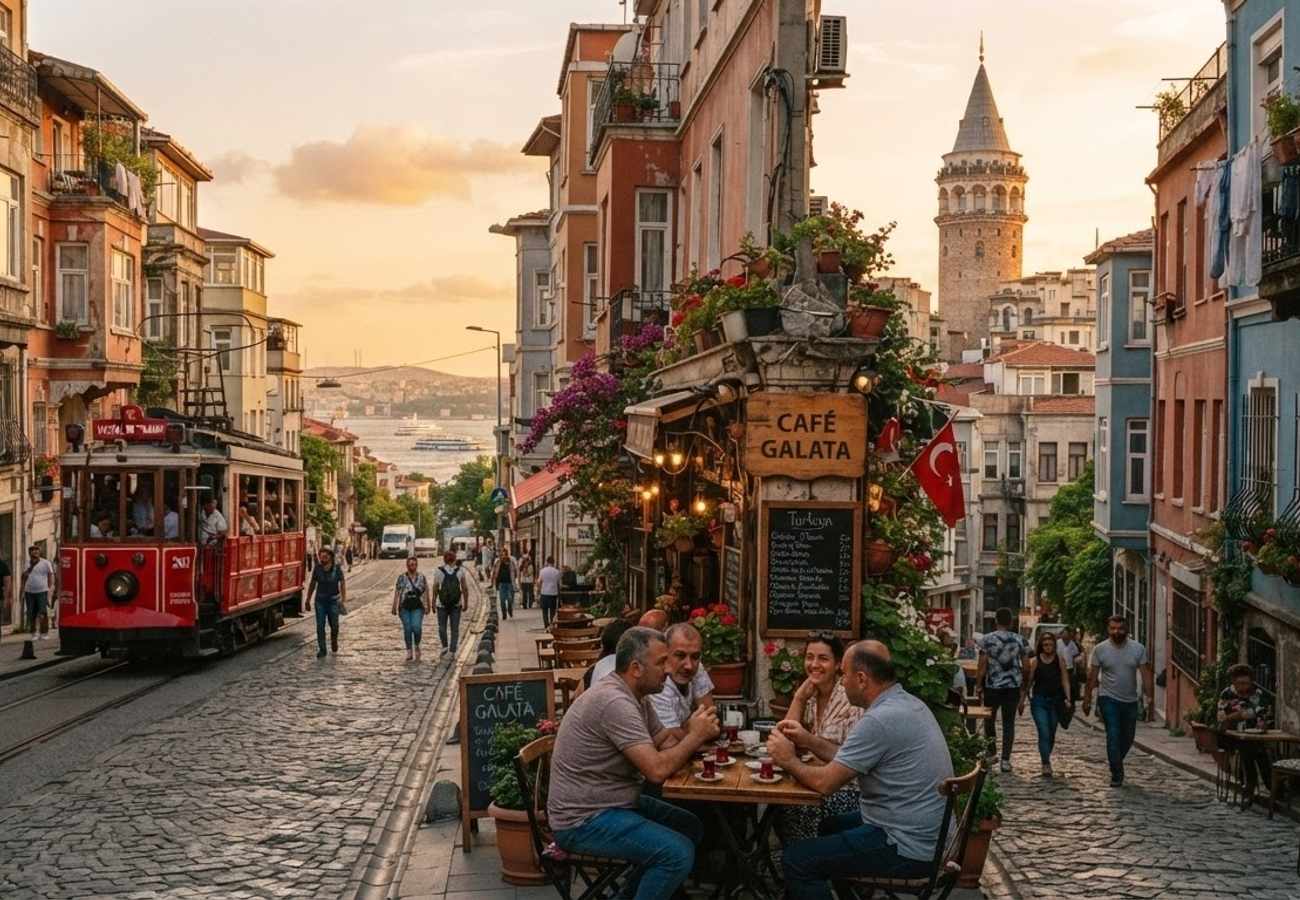
Image generated by AI
Istanbul is pivoting from a "monument-only" destination to a living urban experience, with new government initiatives focusing on the city's residential quarters and cultural corridors to sustain tourism growth through 2027.
Türkiye is currently refining its international tourism appeal by shifting the spotlight from isolated landmarks to the vibrant, everyday life of Istanbul’s diverse neighborhoods. This strategic move aims to position the metropolis as a hub for immersive travel, encouraging visitors to explore the intersection of Ottoman history, Republican-era architecture, and contemporary urban culture.
National Tourism Strategy Prioritizes Heritage Preservation
According to official policy and planning documents for the 2025–2027 period, Türkiye is integrating cultural heritage and community engagement into the core of its national tourism framework. The government's objective is to balance aggressive economic growth with the rigorous protection of environmental values and historical assets. A key component of this strategy is ensuring that local communities have a voice in tourism decision-making to prevent the erosion of neighborhood identities.
While the Aegean and Mediterranean coastlines continue to drive summer beach tourism, Istanbul is being branded as a year-round destination. Industry reports indicate that by investing in museum infrastructure and neighborhood regeneration, the city can maintain high visitor numbers outside the peak summer months. The historic peninsula remains the primary entry point, with the Sultanahmet district—home to the Hagia Sophia, Topkapi Palace, the Blue Mosque, and the Basilica Cistern—serving as a foundational anchor for first-time travelers.
Transforming Monuments into Integrated Urban Routes
Rather than treating landmarks as standalone stops, tourism planners are now developing curated "urban routes" that encourage pedestrian exploration. A prime example is the Beyoglu Culture Road, a strategic corridor that connects the Bosphorus waterfront at Galataport to Tophane, the Galata Tower, and the Galata Mevlevi Lodge, eventually leading toward the arts venues of Taksim Square.
This approach uses festival programming and cultural events to weave a narrative that blends different eras of the city's history. The redevelopment of the Karakoy waterfront and the launch of Galataport exemplify this shift. Galataport is marketed as more than a cruise terminal; it is a lifestyle precinct where international arrivals can immediately access restored heritage buildings, pedestrian promenades, and maritime museums.
In the Galata district, the focus has expanded beyond the medieval tower. Official destination platforms now highlight the area's religious and architectural diversity, pointing visitors toward synagogues and contemporary art spaces like Salt Galata to showcase Istanbul’s multi-layered identity.
Rising Visibility of Residential Quarters and "Slow Travel"
There is a noticeable trend in both official marketing and traveler behavior toward "slow travel" in residential neighborhoods. Districts on both the European and Asian sides of the Bosphorus are gaining traction as alternatives to the crowded tourist center.
On the European side, Balat—located on the Golden Horn—is being promoted for its colorful residential facades and vintage shops. On the Asian side, Kuzguncuk is increasingly framed as a model for quiet, residential exploration, characterized by tree-lined streets and historic wooden houses.
Meanwhile, the Kadikoy and Moda districts are drawing crowds through a mixture of street art, dense networks of cafes, and local markets. To facilitate this movement, public messaging encourages the use of the city's ferry system, linking Eminonu, Karakoy, Besiktas, and Kadikoy into a cohesive, multi-stop itinerary. Industry observers note that there is a growing push to direct visitors toward "esnaf lokantasi" (tradesmen restaurants), supporting small businesses that serve the local population year-round.
Gastronomy and Contemporary Arts Redefining the City Image
Istanbul's brand is evolving to include a sophisticated culinary and artistic identity. Recent promotional efforts emphasize that the city is a stage for film, music, and design, utilizing the Beyoglu Culture Road Festival to attract a younger, culture-focused demographic.
The city's dining scene is now a primary tourism asset. National promotion bodies are highlighting "new Anatolian cuisine," where traditional regional ingredients are paired with modern international techniques. This culinary landscape is bifurcated between high-end signature restaurants in luxury Bosphorus hotels and the authentic, budget-friendly experience of local meyhanes and lokantas. By positioning Istanbul as "the new cool" for food and design, Türkiye is attempting to supplement the traditional imagery of minarets and domes with a modern, urban energy.
Managing Growth through Sustainable Urban Restoration
As the push for immersive neighborhood travel increases, the Turkish government is addressing concerns regarding carrying capacity and the displacement of residents. National economic reform programs now explicitly mention the need to protect the social fabric of historic districts to ensure that tourism does not overwhelm local life.
This commitment is reflected in large-scale restoration projects managed by local administrations. Multi-year programs are currently underway to restore hundreds of historic buildings, transforming them into cultural centers and public spaces. These efforts, combined with upgraded lighting for key landmarks, aim to modernize the city's infrastructure without sacrificing its historical soul.
Why This Matters (Information Gain & Experience)
For the modern traveler, this shift signifies a move away from "checklist tourism." Instead of spending 48 hours rushing between three major mosques, the new infrastructure supports a "neighborhood-first" approach. From a logistical standpoint, the emphasis on ferry routes and walkable corridors like the Beyoglu Culture Road makes the city more navigable and less reliant on congested road traffic.
For the digital nomad or long-term visitor, the promotion of districts like Moda and Cihangir suggests a more sustainable way to experience Istanbul—integrating into the local economy via small cafes and community gardens rather than staying confined to hotel zones. This strategy effectively transforms the city from a museum into a living laboratory of culture, where the value lies in the interaction between the visitor and the resident.
Istanbul is no longer just a bridge between two continents, but a bridge between its imperial past and a curated, contemporary future.
Related Travel Guides
Disclaimer
This article is for informational and educational purposes only. It does not constitute legal, financial, or professional advice. While we strive to provide accurate and up-to-date information, travel policies, regulations, and conditions change rapidly. Always verify information with official sources before making travel decisions. Nomad Lawyer makes no representations about the accuracy, reliability, completeness, or suitability of the information provided. Readers should consult qualified professionals for advice specific to their circumstances. The views expressed in this article are those of the author and do not necessarily reflect the views of Nomad Lawyer.
Raushan Kumar
Founder & Lead Developer
Full-stack developer with 11+ years of experience and a passionate traveller. Raushan built Nomad Lawyer from the ground up with a vision to create the best travel and law experience on the web.
Learn more about our team →