
Turkish Technic Expands Istanbul MRO Capacity with New Hangars and Rolls-Royce Engine Facility in 2026
Turkish Technic is scaling its maintenance, repair, and overhaul (MRO) operations across Istanbul, integrating a new Rolls-Royce engine shop and expanded hangar capacity to serve global airlines.

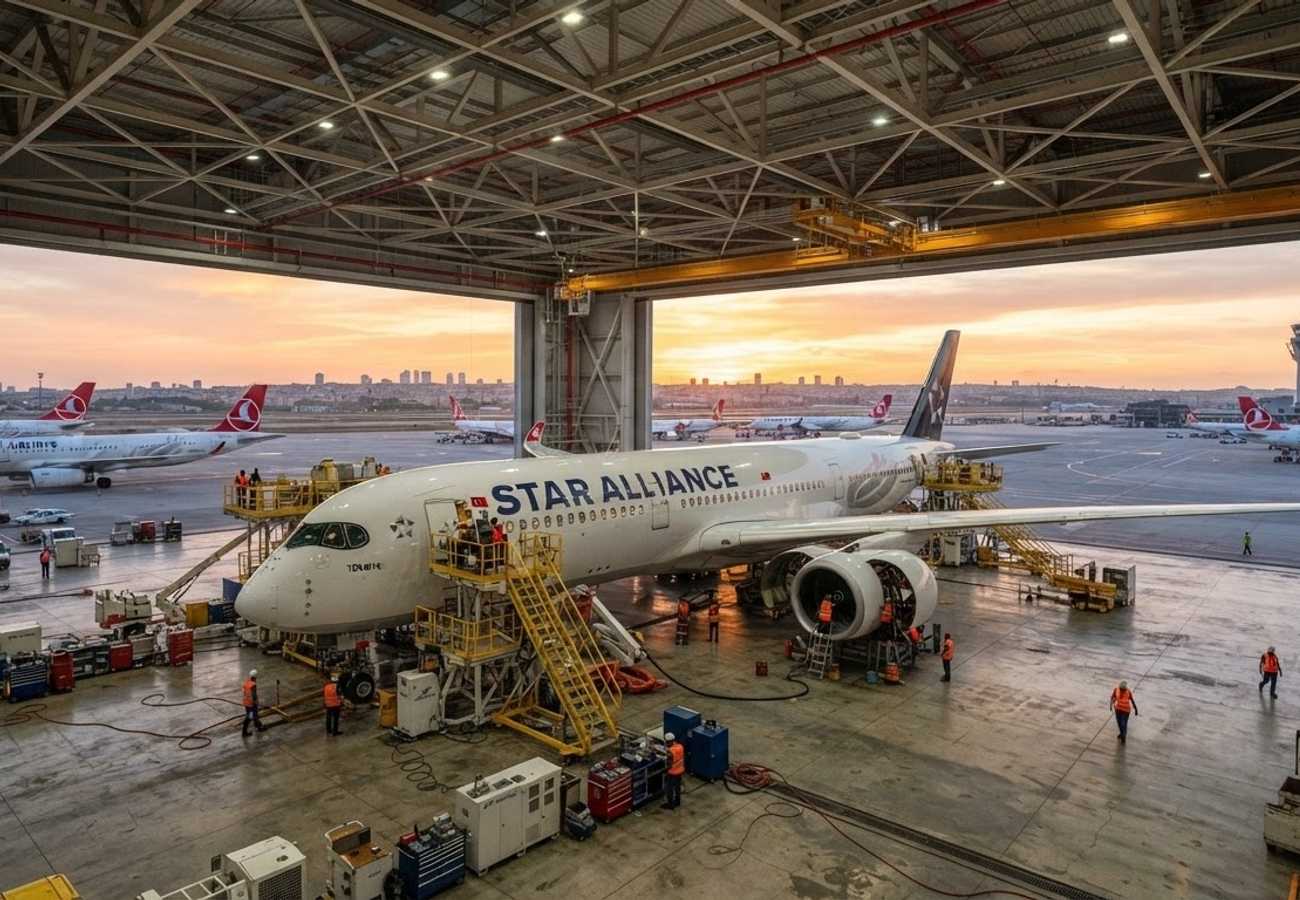
Image generated by AI
Turkiye is aggressively scaling its aviation infrastructure as Turkish Technic expands its maintenance, repair, and overhaul (MRO) footprint across Istanbul to capture a larger share of the global aircraft service market. By integrating new hangar spaces and a high-tech engine facility, the provider is positioning Istanbul as a primary technical hub for carriers operating across Europe, Africa, and Asia.
The strategic push comes as Turkiye seeks to solidify its role as a global transit bridge. By increasing the volume of aircraft that can be serviced simultaneously, Turkish Technic is moving beyond supporting its primary partner, Turkish Airlines, to become a critical third-party service provider for international fleets.
Strategic Distribution Across Istanbul’s Aviation Network
Turkish Technic has established a comprehensive operational footprint that leverages the unique geography of Turkiye’s largest city. Current operations are distributed across Istanbul Airport, Sabiha Gokcen, and Ataturk Airport, with additional supporting facilities located in Aydin and Ankara. This multi-site approach allows the provider to service both narrowbody and widebody aircraft on both the European and Asian sides of the city.
According to available company data, the MRO provider currently manages 11 hangars. These facilities encompass approximately 647,000 square meters of covered workspace, providing the capacity to perform maintenance on 56 aircraft at any given time. This scale places the organization among the most significant MRO clusters globally.
Recent reports indicate that the capacity has further increased with the opening of a seventh hangar at Istanbul Ataturk Airport. This addition is specifically designed to improve throughput for heavy-check maintenance, allowing the company to accommodate a higher volume of aircraft without increasing turnaround times.
Industry data suggests that Istanbul’s location is a primary competitive advantage. With more than 60 countries located within a five-hour flight radius, Turkish Technic is ideally positioned to attract third-party maintenance contracts from airlines that would otherwise have to ferry aircraft to distant service centers.
Scaling Throughput at the New Istanbul Airport
The centerpiece of this expansion is the new Istanbul Airport, which has rapidly ascended to become one of Europe's two busiest aviation hubs. In 2024, the airport handled over 80 million passengers. The long-term masterplan for the site envisions a capacity of 200 million passengers and thousands of daily aircraft movements, creating a massive inherent demand for on-site technical services.
Turkish Technic is aligning its growth with this trajectory. The company is currently executing a phased development plan at Istanbul Airport, including the construction of new bays specifically designed for large, long-haul aircraft. This initiative aims to transform the airport into a "new center of aviation," where heavy checks, line maintenance, and complex modifications are available immediately adjacent to the terminal.
Reports indicate that across all its combined locations, Turkish Technic can now service more than 60 aircraft simultaneously. This number is expected to rise as the remaining construction projects at Istanbul Airport are finalized.
For airline operators, this clustering of services near active runways minimizes "deadhead" or positioning flights. Carriers using Istanbul as a transfer point can now schedule critical maintenance during off-peak rotations, significantly reducing operational costs and aircraft downtime.
High-Value Engine Maintenance Partnership with Rolls-Royce
A pivotal shift in Turkiye's aviation value chain is the development of a specialized engine maintenance facility at Istanbul Airport, created in partnership with Rolls-Royce. In August 2026, construction began on a shop dedicated to the most advanced powerplants in the industry.
The facility will specialize in the maintenance of:
- Trent XWB 97
- Trent XWB 84
- Trent 7000
These engines power the Airbus A350 and A330neo, the current gold standard for long-haul efficiency. Once fully operational, the facility is projected to handle approximately 200 engine shop visits per year. This volume would establish it as one of the largest Rolls-Royce capable centers in the region.
This project represents a transition for Turkish Technic from basic airframe and component work toward high-margin, capital-intensive engine overhauls. While the company already possesses significant experience with CFM56 and V2500 engines, the addition of Trent capability aligns it with the latest generation of widebody fleets.
Turkiye's Broader Aviation Growth Metrics
The expansion of MRO capacity is a direct response to the explosive growth of the Turkish aviation market. National air navigation statistics show that Turkiye's airports served more than 214 million passengers in 2023, confirming a robust recovery and growth trend following the pandemic.
The country utilizes a dual-hub system in Istanbul to manage this volume. The distribution of traffic is roughly split between the primary mega-hub and the secondary hub on the Asian side.
| Airport | Approximate Annual Passenger Volume (2024) | Primary Role |
|---|---|---|
| Istanbul Airport | 80 Million+ | Global Mega-Hub / Primary Transit |
| Sabiha Gokcen | 40 Million+ | Regional Hub / Low-Cost Carrier Base |
By maintaining a technical presence at both sites, as well as legacy capacity at Ataturk, Turkish Technic provides the necessary infrastructure to sustain this traffic. The company has successfully evolved from a captive service provider for a single airline into a diversified global MRO entity.
Why This Matters: The Impact on Global Aviation
For the global aviation industry, the expansion of MRO capacity in Istanbul reduces the systemic bottleneck of aircraft maintenance. When major hubs in Europe or North America face capacity constraints, the availability of a high-capacity, certified center in Turkiye provides a critical safety valve for airline schedules.
From a logistical standpoint, this creates a "maintenance sanctuary" for airlines operating between the West and the East. Instead of routing an aircraft to a distant facility for a heavy check—which costs thousands of dollars in fuel and lost revenue—operators can slot maintenance into their existing Istanbul rotations.
Furthermore, the Rolls-Royce partnership signals a shift in technical expertise. By anchoring high-value engine work in Istanbul, Turkiye is not just providing labor, but is integrating itself into the highest tiers of aerospace engineering. This increases the resilience of the global supply chain for engine parts and specialized technical labor.
Istanbul is no longer just a stopover for passengers; it is becoming a mandatory stop for the aircraft themselves.
Related Travel Guides
Disclaimer
This article is for informational and educational purposes only. It does not constitute legal, financial, or professional advice. While we strive to provide accurate and up-to-date information, travel policies, regulations, and conditions change rapidly. Always verify information with official sources before making travel decisions. Nomad Lawyer makes no representations about the accuracy, reliability, completeness, or suitability of the information provided. Readers should consult qualified professionals for advice specific to their circumstances. The views expressed in this article are those of the author and do not necessarily reflect the views of Nomad Lawyer.
Raushan Kumar
Founder & Lead Developer
Full-stack developer with 11+ years of experience and a passionate traveller. Raushan built Nomad Lawyer from the ground up with a vision to create the best travel and law experience on the web.
Learn more about our team →