
Turkish Airlines TK407 Airspace Turnaround: Moscow Drone Alert, 35 Flight Disruptions, and Passenger Guide

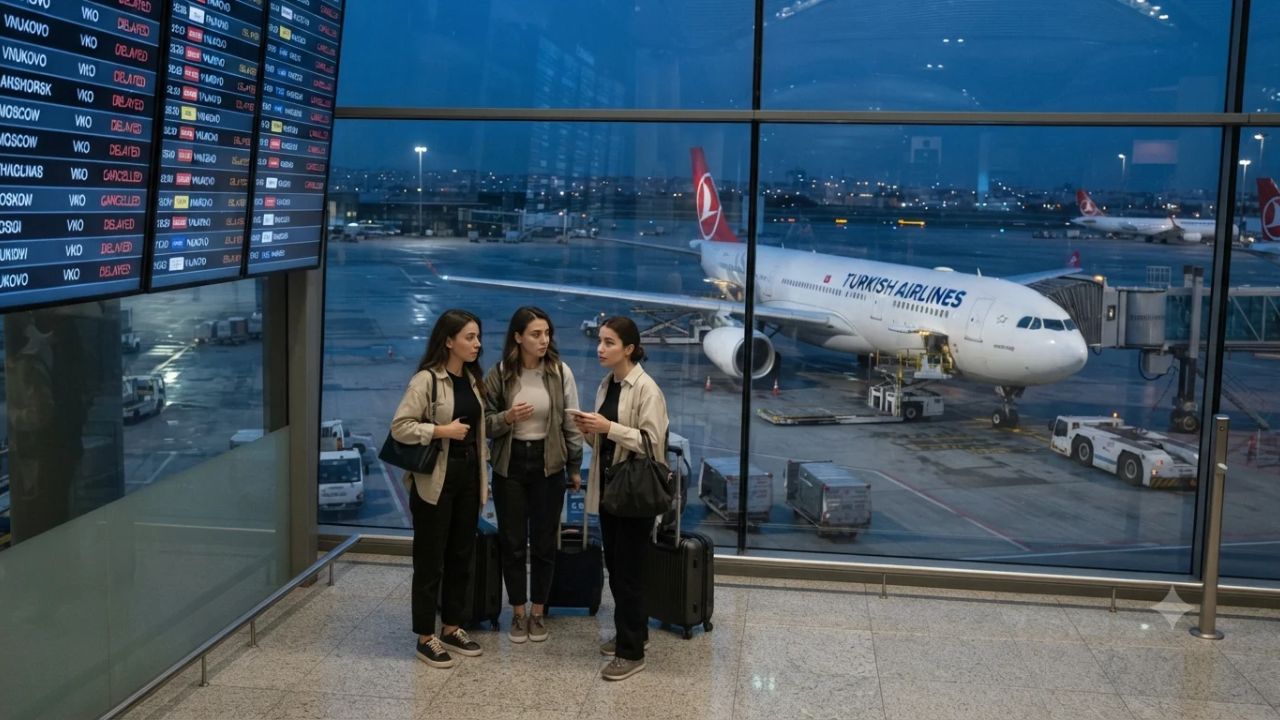
Cruising inside Russian airspace on its final descent toward Vnukovo International Airport, Turkish Airlines flight TK407 executed an abrupt 180-degree turnaround back to Istanbul as massive overnight drone attacks triggered airspace shutdowns across Moscow. The wide-body Airbus A330-300, which departed Istanbul at 2:22 AM local time on Sunday, September 20, 2026, flew hundreds of miles back to Turkey rather than risk landing amid active anti-aircraft interceptions.
The incident sparked sweeping operational disruptions throughout transcontinental flight corridors. At least 35 Turkish-operated flights linking Istanbul, Antalya, and Moscow experienced extended ground holds, diversions, or cancellations. With Russian officials reporting that air defense units intercepted over 1,600 drones nationwide—including approximately 450 in the immediate Moscow region—the sudden airspace closure highlights the complex security calculations facing international airlines operating along Eurasian air bridges.
Middle-of-the-Night Turnaround: The Anatomy of TK407
Flight TK407 represents one of the highest-frequency passenger links connecting Europe and Russia. Departing Istanbul Airport in the early hours of September 20, the Airbus A330-300 was tracking northeast over the Black Sea and western Russia when military drone alerts closed terminal arrival sectors around Moscow's Vnukovo International Airport.
Rather than entering holding patterns with dwindling fuel reserves or diverting to secondary domestic Russian airfields facing similar ground-stop orders, dispatchers and the flight captain opted for a complete return to origin. Flight tracking logs confirmed the wide-body aircraft safely touched down back at Istanbul Airport several hours later, where ground teams debarked passengers and initiated emergency rebooking protocols.
The defensive maneuvers extended well beyond this single airframe. Regional aviation authorities instituted temporary ground stops across the Moscow aerodrome network, stranding travelers and disrupting tightly coordinated crew rotations. Over 35 flights operated by Turkish carriers faced cascading delays, leaving thousands of connecting passengers waiting at gate lounges in both capitals. Travelers can monitor carrier updates directly through Turkish Airlines.
What Makes Turkey-Russia Flight Corridors Different
Since 2022, Istanbul has served as the single most important international aviation gateway connecting Russia with the rest of the world. With European Union, British, and North American airspaces completely closed to Russian carriers and reciprocal bans blocking Western airlines from Siberian routes, Turkey remains the primary commercial transit bridge for business travelers, diplomatic personnel, and families moving between East and West.
This unique status means that Istanbul Airport handles massive connecting passenger volumes bound for Russian business hubs. When airspace anomalies occur around Moscow, the operational ripple effect hits Istanbul instantly. Unlike regional point-to-point routes, a ground stop in Moscow creates immediate bottlenecks across international transit lounges in Turkey, affecting travelers holding onward tickets to London, New York, Dubai, and Tokyo.
Returning an aircraft to its origin—known in aviation as a "turnback"—is among the most conservative safety decisions an airline can execute. While diverting to a nearby alternate airport is standard for localized weather issues, security-driven airspace closures over conflict-adjacent zones require flight crews to adhere to global safety guidelines set by the International Civil Aviation Organization. Returning to Istanbul ensures that aircraft, crew, and passengers remain under Turkish civil aviation jurisdiction with full maintenance support and hotel accommodations.
Visitor Insider Tips
For international travelers navigating flights across the Black Sea and Eastern European air corridors in 2026, proactive planning minimizes stress during unexpected airspace alerts:
- Build Generous Connecting Buffers: When booking itineraries through Istanbul with legs into Russia or Central Asia, avoid tight 60-to-90-minute layovers. Select connection windows of at least 4 to 6 hours to absorb air-traffic holding delays without missing onward long-haul flights.
- Utilize Official Airline Mobile Notifications: Enable real-time SMS and push alerts on your airline’s mobile application. Turnarounds and diversions are logged in carrier dispatch systems before gate display boards reflect status changes.
- Understand Passenger Rights and Duty of Care: If your flight returns to its departure airport due to airspace security closures, the operating airline is obligated to provide meal vouchers, hotel accommodation for extended delays, and free rebooking onto the next available flight.
- Carry Essential Medications and Electronics in Hand Luggage: Never place vital prescription medicines, laptop chargers, or travel documents in checked baggage. If your plane returns to its departure hub, checked baggage often remains secured in the cargo hold until a replacement flight is organized.
- Review Alternative Rail and Transit Hubs: For journeys within the region, keep track of regional overland transport options and consular travel advisories issued by foreign ministries.
Cultural and Environmental Context
The reliance on Istanbul as an intercontinental transit hub reflects deep historical and commercial ties across the Black Sea basin. Turkey’s position as a geographic crossroads has allowed its aviation sector to expand rapidly, turning Istanbul Airport into one of the largest mega-hubs on the planet.
However, operating high-capacity air bridges adjacent to active geopolitical flashpoints requires continuous risk management. Commercial airlines must constantly evaluate threat intelligence, adjust flight corridors, and maintain flexible fuel planning to bypass sensitive airspace without exposing passengers to operational danger.
From an environmental standpoint, long-range diversions and turnarounds generate significant additional carbon emissions and fuel burn. An Airbus A330 forced to fly a round trip back to its origin consumes thousands of gallons of aviation fuel without delivering passengers to their destination. To mitigate these environmental and operational costs, aviation dispatch teams utilize real-time satellite telemetry and collaborative decision-making frameworks to identify route closures before takeoff whenever possible.
FAQ: Turkey-Russia Flight Disruptions 2026
Why did Turkish Airlines flight TK407 return to Istanbul on September 20?
The flight turned around after entering Russian airspace because overnight drone attacks closed terminal airspace around Moscow's Vnukovo Airport.
What type of aircraft operated flight TK407?
The scheduled service was operated using a wide-body Airbus A330-300 passenger aircraft.
How many flights were affected by the Moscow airspace closures?
At least 35 Turkish-operated flights to and from Moscow experienced cancellations, diversions, or significant schedule delays during the incident.
What should passengers do if their flight is turned back to the departure city?
Passengers should proceed to the airline transfer desk, collect accommodation and meal vouchers, and request rebooking on the earliest safe departure.
High above quiet midnight clouds, the split-second decision of a flight crew reminds us that in modern aviation, safety always charts the course.
Related Travel Guides
- Iraq's Game-Changing Nasiriyah Airport Opens This Year
- United Airlines' Polaris 2.0 Studio Suites Give Singapore to San Francisco Travelers 25% More Space and 1,792 Weekly Business Class Seats — Surpassing Singapore Airlines for the First Time
- Alaska Airlines Flight AS442 Boeing 737-800 from Seattle to Philadelphia Diverts to Charleston International Airport on July 21
Disclaimer
This article is for informational and educational purposes only. It does not constitute legal, financial, or professional advice. While we strive to provide accurate and up-to-date information, travel policies, regulations, and conditions change rapidly. Always verify information with official sources before making travel decisions. Nomad Lawyer makes no representations about the accuracy, reliability, completeness, or suitability of the information provided. Readers should consult qualified professionals for advice specific to their circumstances. The views expressed in this article are those of the author and do not necessarily reflect the views of Nomad Lawyer.
Preeti Gunjan
Contributor & Community Manager
A passionate traveller and community builder. Preeti helps grow the Nomad Lawyer community, fostering engagement and bringing the reader experience to life.
Learn more about our team →