UK Government Warns Air Passengers: Uncharged Electronics May Be Barred From Flights in 2026

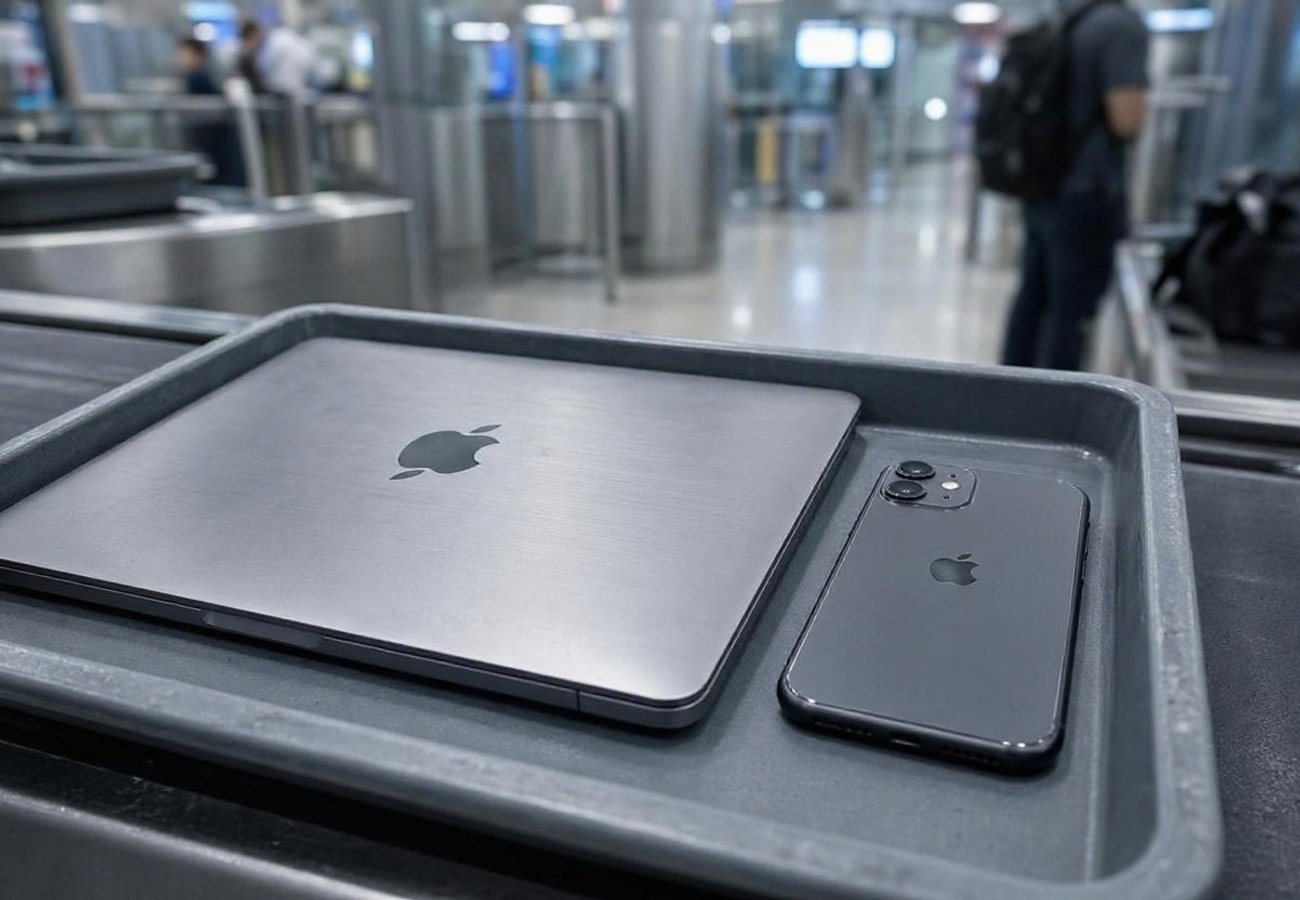
Image generated by AI
[London, November 17, 2026] — The UK government is issuing a stern warning to air travelers that mobile phones, laptops, and tablets must be sufficiently charged to power on during security screenings or they may be barred from boarding. Under updated 2026 guidance, any electronic device that fails to switch on when requested by security personnel may be refused carriage on flights departing the United Kingdom.
This directive, issued by the Department for Transport (DfT), targets all passengers carrying personal electronics in hand luggage. While the rule is not new, authorities are intensifying enforcement to ensure that devices are legitimate consumer electronics and not modified to conceal prohibited items. Crucially, while the device itself may be confiscated or left behind, the passenger is typically still permitted to fly, provided they do not have other security violations.
Security Protocols Triggering Device Checks
The renewed emphasis on powered devices coincides with the UK's ongoing transition to next-generation security checkpoints. Major hubs are currently integrating computed tomography (CT) scanners, which change how baggage is screened but do not eliminate the need for functional electronics.
Security agencies maintain that the ability to power on a device provides an essential layer of verification. If a device appears suspicious on a scanner or if a security officer requires confirmation of its identity, the "power-on" test is the primary method of validation. This is particularly critical on specific routes subject to enhanced security risk assessments, where checks are more frequent and stringent.
Affected Airports and Carriers
The mandate is being reinforced across all UK aviation touchpoints, from government regulators to individual airport operators and commercial airlines.
| Entity | Specific Requirement/Guidance | Potential Consequence |
|---|---|---|
| Department for Transport | Devices must be charged before travel | Refusal of carriage for the device |
| Heathrow Airport | Must switch on during screening | Item removal from cabin baggage |
| London City Airport | Enhanced checks on specific routes | Device not accepted in the cabin |
| British Airways | Devices must be fully charged | Security intervention/denial of item |
Travelers are cautioned that these checks are discretionary. Security staff at any UK checkpoint have the legal authority to impose more stringent inspections than the published minimums if they deem it necessary for aviation safety.
What This Means for Travelers
For the modern nomad, the impact of this rule extends beyond the mere loss of hardware. Because smartphones now serve as the primary repository for boarding passes, hotel vouchers, and digital payment systems, a confiscated device can derail an entire itinerary.
Passenger Impact Assessment:
- Immediate Loss: If a device cannot be powered on, security may retain it, require it to be placed in hold luggage (if airline rules permit), or simply ban it from the flight.
- Digital Displacement: Passengers relying on digital tickets via a dead phone may find themselves unable to board or navigate their destination.
- Device Scope: The rule applies to more than just phones and laptops; e-readers, handheld gaming consoles, and certain medical devices are also subject to these checks.
- International Variance: While a UK airport with new scanners might not require a laptop to be removed from a bag, a return flight from an airport using older X-ray technology will likely require separate trays and a higher probability of a power-on request.
To mitigate these risks, the Civil Aviation Authority (CAA) and airport operators suggest fully charging all electronics before leaving for the terminal and limiting device usage while queuing for security to preserve battery life.
Future Enforcement and Screening Evolution
The UK's multi-year security upgrade program is designed to simplify the passenger experience, but it is not reducing the scrutiny applied to electronics. The European Union Aviation Safety Agency (EASA) and other global bodies continue to evolve threat assessments, meaning "power-on" requirements may become more common on multi-segment international trips.
Travelers should assume that every checkpoint in their itinerary—not just the initial UK departure—may require functional electronics. Relying on previous experiences where devices were not checked is a high-risk strategy, as selection for these checks is often random or based on real-time intelligence.
FAQ: UK Electronics Security 2026
What happens if my phone is dead at the security checkpoint? If you cannot power on the device when requested, security staff may refuse to let the item on the aircraft. You will likely still be allowed to fly, but you will have to leave the device behind or attempt to check it into hold baggage.
Is there a minimum battery percentage required? No specific percentage is mandated. The only requirement is that the device must have enough power to be switched on and remain active for the duration of the security inspection.
Do these rules apply to all UK airports? Yes. Whether an airport uses traditional X-ray machines or the new CT scanners, security personnel at any UK airport have the discretion to request that a device be powered on.
Can I charge my device at the airport before the security line? While some airports provide charging stations, these are often located after the security checkpoint. You should not rely on finding a power outlet before you reach the screening area.
Carry a power bank, but ensure the device itself can boot up independently.
Related Travel Guides
This article is for informational purposes. Flight routes, passenger regulations, visa rules, and transit advisories are subject to change by airlines and aviation authorities. Readers are advised to verify schedules and travel documentation with relevant carriers and border agencies before departure.
Related Stories

British Airways Revives Long-Haul Meal Pre-Orders on Las Vegas Flights: Inside the World Traveller Plus Dining Trial

EU Court Case Against Spain: How Rail Market Rules Impact Cross-Border Travel in 2026