
Travel Alert: Riyadh Aviation Disruption and Passenger Rights Advisory
Travel Alert: Riyadh Aviation Disruption and Passenger Rights Advisory

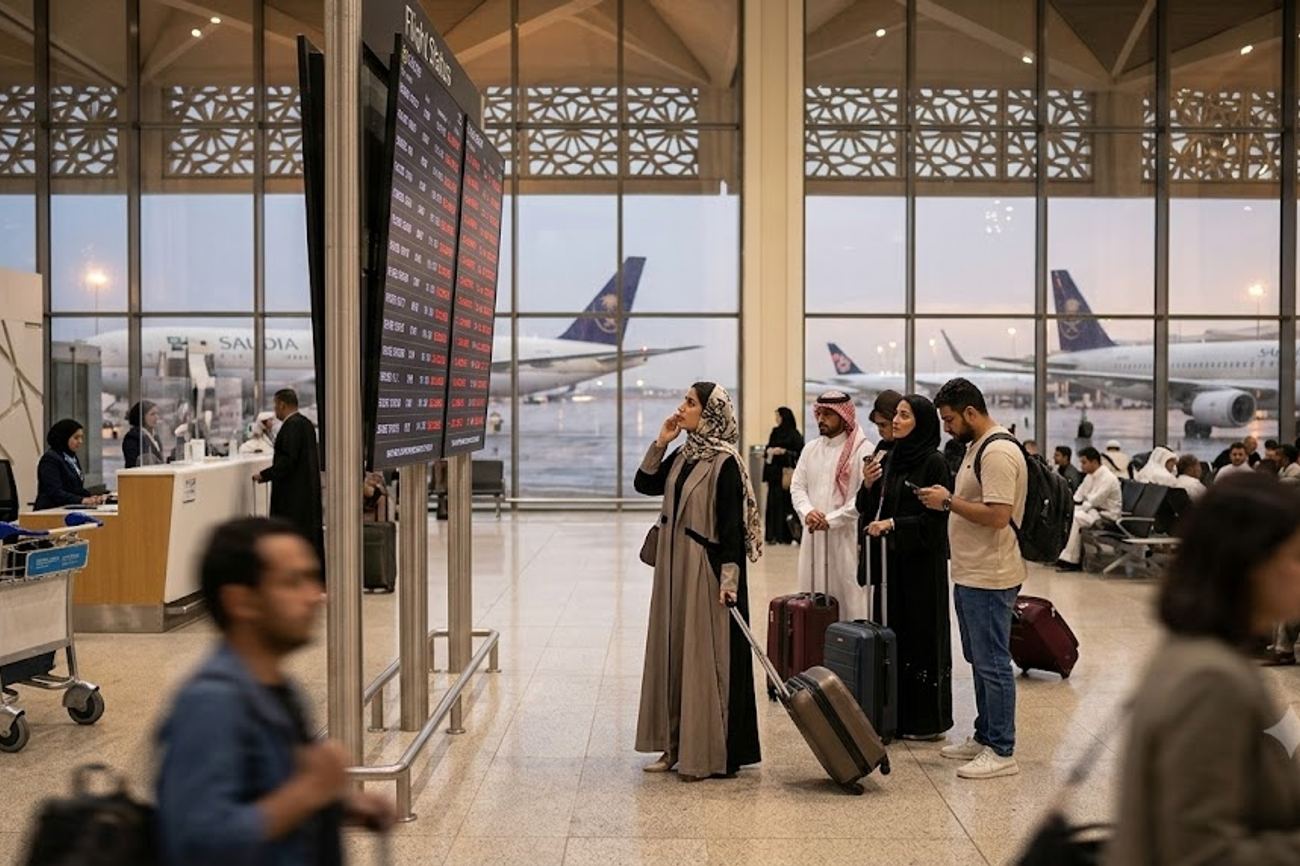
Image generated by AI
Passengers arriving at or departing from King Khalid International Airport on 19 September 2026 faced sudden chaos as security alerts triggered a wave of flight cancellations and delays. For many, a routine business trip or leisure visit to the Saudi capital turned into a stressful ordeal of missed connections and airport idling following reports of missile and drone activity targeting the region.
Security Incident at King Khalid International Airport (RUH)
On 19 September 2026, aviation operations in Riyadh were severely compromised following a reported security breach. The Houthis in Yemen claimed responsibility for launching missiles and drones toward sensitive locations within the capital. In response, Saudi authorities issued an urgent aerial threat warning, and the Saudi air defense systems reportedly intercepted a missile aimed at the city.
While the Saudi Civil Defence eventually confirmed that the immediate danger had passed, the operational fallout was immediate. King Khalid International Airport (RUH) became the epicenter of the disruption, with numerous flights cancelled or delayed as airlines paused operations to assess safety risks and airspace restrictions. Although the airport did not suffer a total, prolonged closure, the incident highlighted the fragility of regional aviation when confronted with geopolitical volatility.
The disruption was not limited to the tarmac. The ripple effects extended across the Middle Eastern aviation network, impacting major hubs such as Dubai, Abu Dhabi, and Doha. Because these cities serve as interconnected gateways for international transit, a disruption in Riyadh often triggers a domino effect, leading to missed connections and scheduling conflicts for passengers traveling from Europe, Asia, and North America.
Affected Routes and Flights
While specific flight numbers were not listed in the primary alert, the following categories of travel were most heavily impacted:
- Direct International Arrivals/Departures: All flights scheduled to land at or depart from King Khalid International Airport (RUH) on 19 September 2026.
- Regional Shuttles: High-frequency routes between Riyadh and neighboring hubs (DXB, AUH, DOH).
- Connecting Itineraries: Passengers utilizing RUH as a transit point for onward travel into the GCC region.
- Business Delegations: Travelers attending conferences and exhibitions in Riyadh, who faced last-minute itinerary changes.
For real-time updates on current flight statuses, passengers should monitor FlightRadar24 or check their specific carrier's status page, such as the British Airways flight status tool for those on international connections.
Your Rights as a Passenger
Navigating compensation in the wake of a security incident is complex because "extraordinary circumstances" often exempt airlines from paying cash compensation. However, your rights depend entirely on the jurisdiction of your flight and the airline's nationality.
EU261/2004 and UK CAA Guidelines If your flight was departing from an EU or UK airport, or arriving in the EU/UK on an EU/UK-based carrier, you are protected by EU261/2004 or the equivalent UK regulations.
- Right to Care: Regardless of the reason for the delay (even security threats), the airline must provide "duty of care." This includes vouchers for food and drinks, two phone calls or emails, and hotel accommodation if an overnight stay is required.
- Rebooking or Refund: You have the right to choose between a full refund of the ticket or re-routing to your final destination at the earliest opportunity.
- Compensation: Typically, security incidents like missile interceptions are classified as "extraordinary circumstances," meaning the airline is not required to pay the standard €250 to €600 compensation. However, if the airline cannot prove that the specific cancellation was caused solely by the security event (e.g., if they lacked a backup plan), a claim may still be viable via platforms like AirHelp.
US DOT Regulations For passengers on flights to or from the United States, the US Department of Transportation (DOT) mandates that if a flight is cancelled for any reason and the passenger chooses not to travel on the alternative offered, a full refund must be issued to the original form of payment. This includes "non-refundable" tickets.
DGCA India and Other Regulations Passengers on flights operated by Indian carriers are covered by DGCA CAR (Civil Aviation Requirements). While security threats are often viewed as "force majeure," airlines are still required to provide basic amenities and assistance with rebooking.
Rebooking Strategy and Alternatives
When a regional hub like Riyadh experiences a security-related shutdown, the fastest way home is rarely the first option offered by the airline. Use these strategies to regain control of your itinerary:
1. The "Hub-Hop" Alternative If RUH is congested or experiencing intermittent closures, look for flights into neighboring cities. For example, if you are heading to the US or Europe, check for availability into Dubai (DXB) or Doha (DOH) and arrange a short regional flight or overland transport into Saudi Arabia once the alert is cleared.
2. Competitor Cross-Checking Do not wait for your airline to offer a solution. Check if other carriers serving the same city pair have available seats. If you are on a codeshare flight, contact both the operating carrier and the marketing carrier to see who can rebook you faster.
3. Refund vs. Rebooking Trade-off If the airline offers a flight that departs 48+ hours later, it is often more economical to request a full refund (under DOT or EU rules) and book a new ticket on a different airline. Compare the cost of the new ticket against the lost time and potential hotel costs of waiting for the original carrier.
4. Documentation for Insurance Security incidents are often covered under "Trip Interruption" or "Cancel for Any Reason" (CFAR) insurance policies. Ensure you save screenshots of the aerial threat warnings, the official cancellation email from the airline, and any receipts for unplanned hotel stays.
FAQ: Riyadh Aviation Disruption 2026
Am I entitled to financial compensation for the 19 September delays? Likely not. Most regulators view security threats and missile interceptions as "extraordinary circumstances" beyond the airline's control. However, you are still entitled to "duty of care" (meals and hotels) and a full refund if you choose not to fly.
Can I get a full refund if my flight was cancelled? Yes. Under US DOT and EU261 rules, if your flight is cancelled, you are entitled to a full refund of the unused portion of your ticket if you opt not to be rebooked.
What should I do if the airline is not providing hotel vouchers? Document everything. Keep all itemized receipts for food and lodging. If the airline refuses to pay on-site, you can file a claim with the UK CAA or the relevant national aviation authority upon your return.
Are flights to Riyadh currently safe? Saudi authorities announced the immediate danger had passed following the interception. However, the US State Department has advised heightened vigilance. Always check your government's official travel advisory before departing.
Stay vigilant, document every interaction with airline staff, and prioritize your safety over your schedule.
Related Travel Guides
Disclaimer
This article is for informational and educational purposes only. It does not constitute legal, financial, or professional advice. While we strive to provide accurate and up-to-date information, travel policies, regulations, and conditions change rapidly. Always verify information with official sources before making travel decisions. Nomad Lawyer makes no representations about the accuracy, reliability, completeness, or suitability of the information provided. Readers should consult qualified professionals for advice specific to their circumstances. The views expressed in this article are those of the author and do not necessarily reflect the views of Nomad Lawyer.
Preeti Gunjan
Contributor & Community Manager
A passionate traveller and community builder. Preeti helps grow the Nomad Lawyer community, fostering engagement and bringing the reader experience to life.
Learn more about our team →