Gambia Surpasses Suriname and More as Global Tourism Spending Rises 157% in H1 2026 Driving Travel Growth

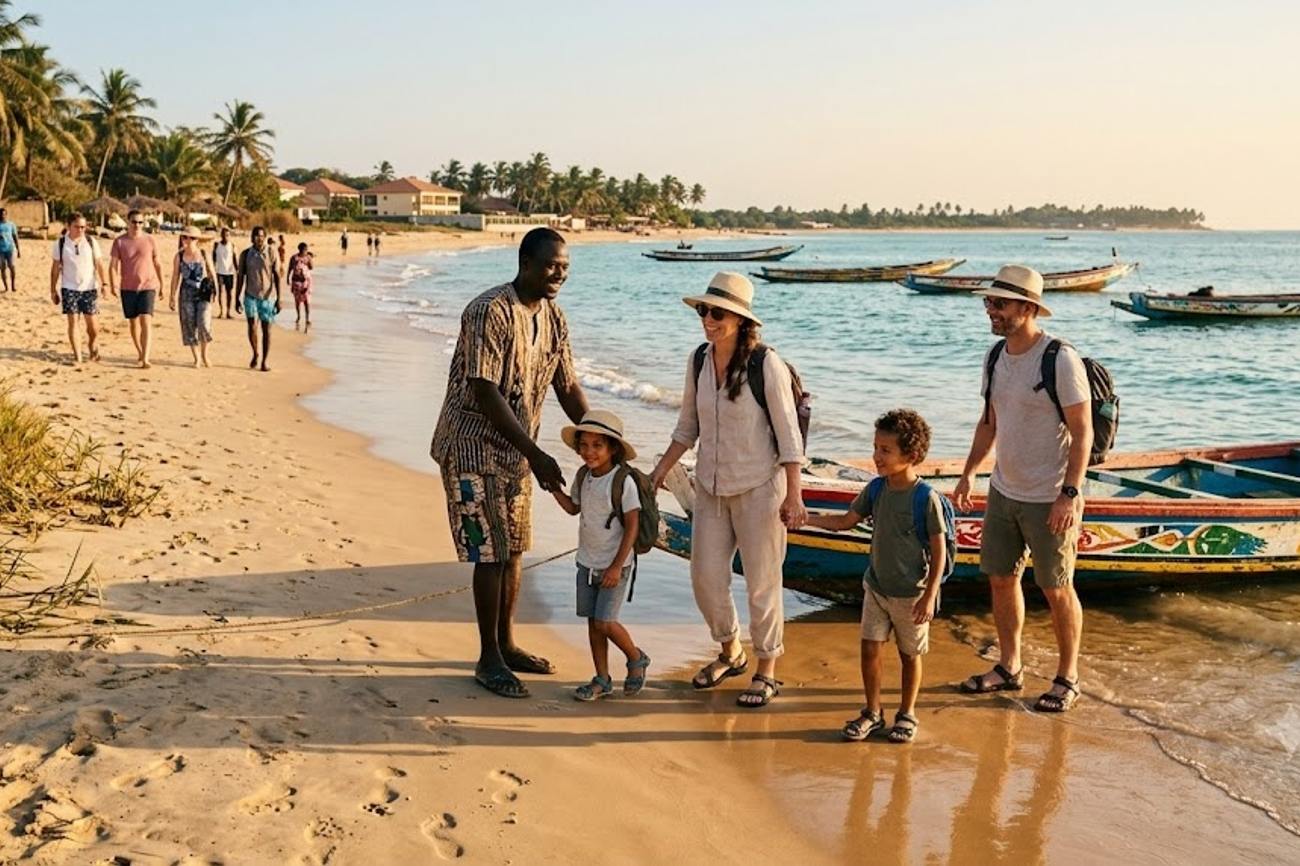
Image generated by AI
A 157% surge in international tourism expenditure within The Gambia marks the most aggressive spending spike of any global destination in the first half of 2026. This figure represents a fundamental shift in how capital is flowing through the global travel economy, signaling a transition away from traditional tourism hubs toward emerging markets that prioritize authenticity and nature-based experiences. According to data from UN Tourism, this growth is not an isolated incident but part of a broader redistribution of traveler wealth across Africa, South America, and the Asia-Pacific region.
The Decentralization of Global Travel Capital
The first half (H1) of 2026 has witnessed a structural realignment in where international travelers allocate their budgets. For decades, tourism spending was concentrated in a handful of "super-destinations" in Western Europe and North America. However, the H1 2026 data reveals that smaller, previously overlooked markets are now capturing a disproportionate share of growth.
The Gambia's massive 157% increase in expenditure compared to H1 2025 suggests a "perfect storm" of improved accessibility and a shift in consumer preference toward coastal and community-based tourism. This is not merely about an increase in the number of arrivals, but a rise in the average spend per visitor. When a destination experiences growth of this magnitude, it typically indicates a transition from budget-centric backpacking to higher-yield tourism, where visitors spend more on premium hospitality and localized cultural experiences.
Similarly, Suriname's 88% growth indicates a burgeoning interest in the "last frontiers" of South America. By leveraging its rainforest biodiversity and cultural diversity, Suriname is successfully positioning itself as a primary destination rather than a secondary stop on a regional tour. This pattern is echoed in the Asia-Pacific region, where Taiwan has emerged as a powerhouse of spending growth, recording a 72% increase. Taiwan’s success is rooted in a diversified product offering—blending high-density urbanism with nature—which allows it to capture multiple traveler segments simultaneously.
Expenditure Breakdown: H1 2026 Growth Leaders
The following data illustrates the disparity between emerging markets and established tourism economies. While large markets like Brazil and Japan continue to grow, their percentage increases are modest compared to the explosive growth seen in smaller nations.
| Market | Region | Int. Tourism Expenditure Growth (H1 2026) | Primary Growth Driver |
|---|---|---|---|
| Gambia | Africa | +157% | Coastal & Cultural Tourism |
| Suriname | Americas | +88% | Biodiversity & Nature |
| Taiwan | Asia Pacific | +72% | Urban/Nature Hybrid & Food |
| Brazil | Americas | +23% | Diversified Long-haul Appeal |
| Mexico | Americas | +22% | Established Market Expansion |
| Malaysia | Asia Pacific | +20% | Regional Connectivity |
| Japan | Asia Pacific | +18% | Sustained International Demand |
The inclusion of Romania, Mongolia, and Mexico in the double-digit growth category further confirms that the "emerging destination" trend is a global phenomenon, not limited to a specific continent.
Expert Analysis: The "Authenticity Premium" and Market Volatility
From a journalistic and logistical perspective, the H1 2026 data suggests the emergence of an "Authenticity Premium." Modern travelers are increasingly willing to pay a premium to visit destinations that offer perceived purity—unspoiled rainforests in Suriname or heritage sites in The Gambia. For the travel industry, this represents a shift in value proposition: the "luxury" of the future is not a five-star hotel in a known city, but exclusive access to an emerging culture.
For travelers booking these routes, the direct consequence is a looming increase in costs. When a destination like The Gambia sees a 157% jump in spending, it triggers rapid inflation in local hospitality sectors. We can expect to see a surge in new hotel developments and a corresponding rise in average daily rates (ADRs) as investors rush to capitalize on the trend.
The Gambia's tourism industry has experienced a significant surge in the first half of 2026, with global tourism spending rising by 157% compared to the same period last year. According to the Gambia Tourism Board, this growth can be attributed to the country's rich cultural heritage and natural beauty, making it an attractive destination for travelers. As a result, the country is expected to welcome a record number of visitors in 2026.
The pricing pressure created by this growth means that the "early adopter" window for these destinations is closing. As Taiwan and Brazil strengthen their positions, the infrastructure—such as transport networks and accommodation—will likely modernize, but the cost of entry will rise. Furthermore, the reliance of The Gambia's economy on this international spending makes it highly susceptible to geopolitical shifts or changes in aviation capacity. If a major carrier reduces flights to Banjul, the economic impact will be felt more acutely here than in a diversified market like Japan.
From a regulatory standpoint, this growth puts immense pressure on local governments to manage "overtourism" before it begins. The International Air Transport Association (IATA) often notes that capacity must grow in tandem with demand to prevent systemic failures in airport logistics. For Suriname and The Gambia, the challenge will be scaling their hospitality services without destroying the very natural beauty that is driving the 88% and 157% growth rates.
Key Takeaways
- Explosive Emerging Growth: The Gambia is the global leader in spending growth for H1 2026, with a 157% increase in international visitor expenditure.
- South American Momentum: Suriname has established itself as a high-growth market with an 88% rise in spending, driven by nature and biodiversity tourism.
- Asia-Pacific Dominance: Taiwan leads the region with 72% growth, utilizing a mix of urban attractions and food tourism to attract high-spending visitors.
- Stabilized Growth in Large Markets: Established destinations like Brazil (+23%), Mexico (+22%), and Japan (+18%) continue to grow, but at a slower pace than emerging markets.
- Economic Shift: Tourism spending is diversifying away from traditional hubs, creating new opportunities for local hospitality and transport services in West Africa and South America.
FAQ: Emerging Destinations 2026
Which country had the highest tourism spending growth in early 2026? The Gambia recorded the highest growth globally, with a 157% increase in international tourism expenditure during the first half of 2026 compared to the previous year.
Why is tourism spending increasing in Taiwan? Taiwan's 72% growth is attributed to its ability to combine efficient transport networks and urban attractions with food tourism and natural landscapes, appealing to a wide range of international travelers.
What is driving the growth in Suriname's tourism market? Suriname's 88% increase in spending is primarily driven by international demand for authentic, nature-based experiences, specifically its rainforests and unique biodiversity.
Are traditional tourism markets like Japan and Brazil still growing? Yes, both recorded double-digit growth in H1 2026, with Brazil increasing by 23% and Japan by 18%, though their growth rates are lower than those of emerging destinations.
The map of global wealth is being redrawn, one boarding pass at a time.
Tags: Gambia Tourism 2026, Suriname Travel Growth, Taiwan Tourism Spending, H1 2026 Travel Trends, UN Tourism Data, Emerging Destination Economics
Related Travel Guides
This article is for informational purposes. Flight routes, passenger regulations, visa rules, and transit advisories are subject to change by airlines and aviation authorities. Readers are advised to verify schedules and travel documentation with relevant carriers and border agencies before departure.
Related Stories

European Mass Protests Disrupt Travel Across France, Italy, Belgium, and Turkey in 2026
CAPRÍSONO Festival 2026 Mexico City: Logistics, Ticket Rights, and Milpa Alta Travel Guide