
Tokyo and Delhi Rail Congestion: How 180% Peak Loads Trigger Regional Tourism Collapses in 2026
Analysis of how extreme rail density in Tokyo and Delhi creates systemic vulnerabilities, where minor technical failures lead to total economic paralysis for peripheral tourism zones.

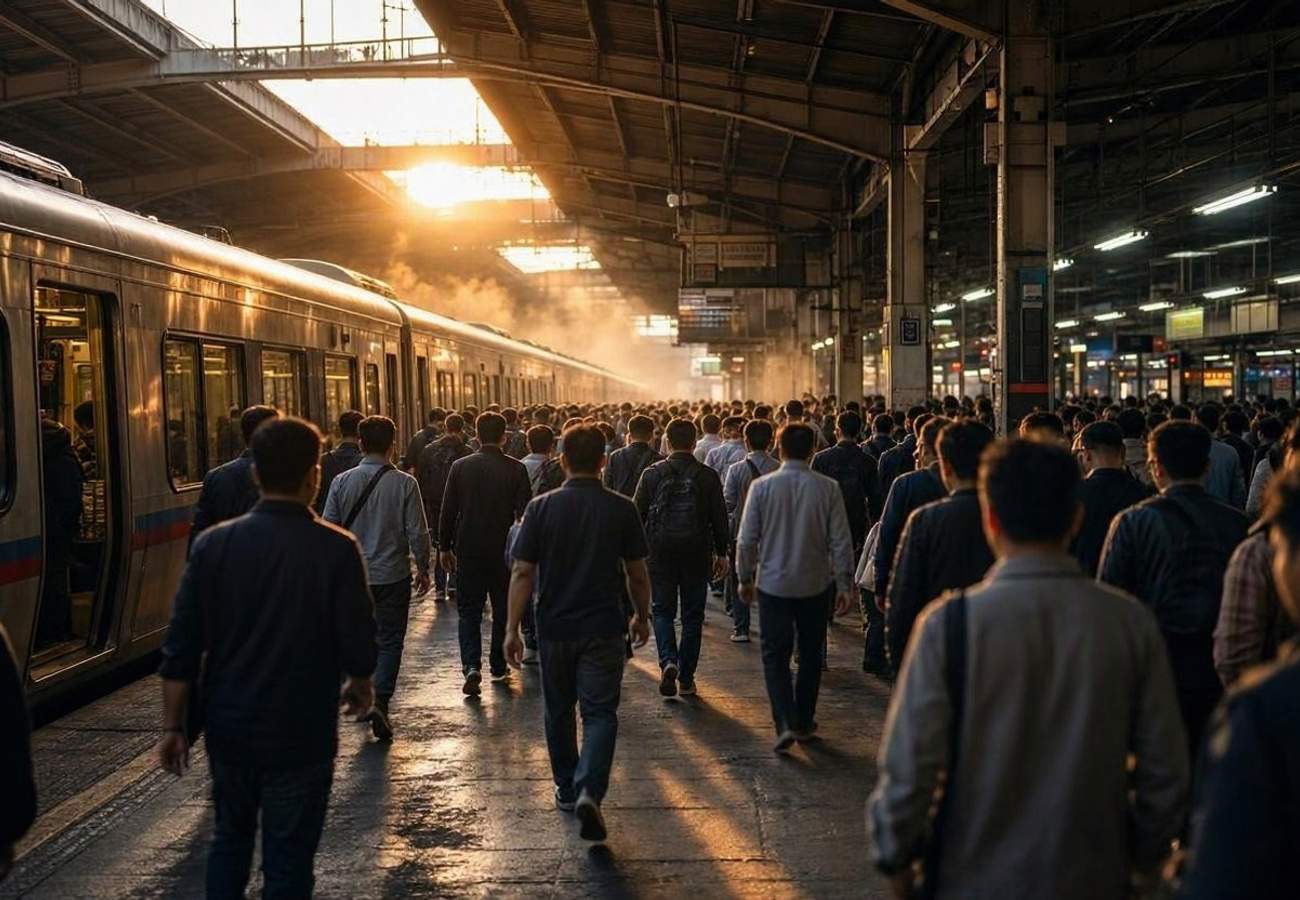
Image generated by AI
Peak-period congestion rates across major Tokyo metropolitan railway lines regularly hit between 139% and 143% of rated design capacity, with specific bottleneck routes historically surging past 180%. This extreme density transforms the railway from a reliable utility into a systemic liability; when a network operates with zero buffer, a single electrical malfunction or passenger intrusion does not merely cause a delay—it triggers a regional economic shutdown.
The Fragility of the Urban-Regional Transit Nexus
In the megacities of Asia, the rail network is not just a commuter tool but the primary financial artery for regional tourism. In hubs like Greater Tokyo, Delhi, Seoul, and Mumbai, high-capacity lines blend daily workforce movement with massive weekend leisure flows. Unlike Western models where private vehicles often dominate intercity travel, these Asian corridors funnel millions of travelers directly from central terminals into the hinterlands.
This creates a dangerous dependency. The commercial survival of destinations located 50 to 250 kilometers from the city center is tied entirely to the operational stability of a few urban terminals. When a structural fracture occurs at a hub like Tokyo Station or New Delhi Railway Station, the impact radiates outward, turning a local commute issue into a multi-provincial paralysis.
Systemic Failure Data: Tokyo and Delhi
The vulnerability of these networks is rooted in their sheer volume. In Japan, the Ministry of Land, Infrastructure, Transport and Tourism (MLIT) tracks operational variances that reveal a precarious reality: arterial lines connecting central hubs to leisure corridors—including the Tokaido Main Line and the Chuo Rapid Line—record delays on 10 to 15 business days every month.
Similarly, in India, the corridors linking New Delhi to heritage sites like Agra and Jaipur suffer from "cascading delay propagation." While the Indian Railways has seen success with the Kavach automatic train protection system—helping reduce annual accidents from 135 in FY 2014–15 to just 16 in recent counts—the sheer volume of mixed freight and passenger traffic continues to create acute bottlenecks.
Comparative Rail Vulnerability Matrix
| Regional Corridor | Governing Authorities | Peak Operational Load | Disruption Profile | Exposed Tourism Economies |
|---|---|---|---|---|
| Greater Tokyo $\rightarrow$ Kanto/Shinshu | JR East, Private Operators | 139%–143% (Avg); 180%+ (Peaks) | Delays 10–15 days/month; through-running stoppages | Hakone, Karuizawa, Izu, Nagano |
| Delhi NCR $\rightarrow$ Heritage Belt | Northern & North Central Railway | Exceeds 100% track capacity | Mixed traffic friction; seasonal visibility issues | Agra, Jaipur, Chandigarh |
Expert Analysis: The "Trip Abandonment" Threshold
For the traveler, a three-hour delay is an inconvenience. For the regional economy, it is a catastrophe. Because weekend tourists typically operate within a strict 48-to-72-hour window, there is a psychological and logistical "trip abandonment" threshold. When delays exceed three or four hours, travelers frequently cancel their entire journey rather than accept a truncated visit.
The direct consequence is a phenomenon known as "leakage tourism" in reverse. Instead of metropolitan wealth flowing into peripheral hospitality clusters, the capital remains trapped within the city. This disproportionately affects small-scale operators—such as family-run ryokans in Japan or heritage guesthouses in India—who lack the financial reserves of global hotel chains.
The pricing pressure created by this instability means regional operators must either lower prices to entice risky travelers or invest in expensive alternative transport partnerships. For the nomad or frequent traveler, this means that booking a "weekend getaway" via rail in these corridors requires a secondary contingency plan (such as pre-arranged private shuttles) to avoid total itinerary collapse.
Key Takeaways
- Zero Buffer Capacity: Tokyo's rail lines operating at 180% capacity mean any minor incident causes immediate, wide-scale network failure.
- Economic Fragility: Regional tourism hubs (e.g., Hakone, Agra) are entirely dependent on urban rail stability for their weekly revenue.
- Abandonment Risk: Delays over 3–4 hours typically lead to total trip cancellations due to the compressed nature of weekend travel.
- Infrastructure Gains: India's Kavach system has significantly reduced accidents, but track capacity remains the primary bottleneck for punctuality.
- Systemic Volatility: Rail disruptions in Asia are no longer just transit issues; they are economic shocks to peripheral provinces.
FAQ: Asia Rail Disruptions 2026
What happens to my booking if a Tokyo rail disruption cancels my trip? Most regional ryokans and boutique hotels have strict cancellation policies. Unless you have travel insurance covering "transportation failure," you may be liable for the full cost if the delay exceeds a few hours.
Are Indian Railways' heritage routes more reliable now? While safety has improved via the PM GatiShakti plan and Kavach system, punctuality remains volatile due to mixed freight traffic. Always allow a 4-6 hour buffer when connecting to international flights.
Which lines in Tokyo are most prone to weekend delays? The Chuo Rapid, Tokaido Main, Takasaki, and Yokosuka-Sobu Rapid lines are high-risk corridors due to their role in connecting the center to regional leisure zones.
When the tracks stop in the megacity, the village economy starves.
Related Travel Guides
Disclaimer
This article is for informational and educational purposes only. It does not constitute legal, financial, or professional advice. While we strive to provide accurate and up-to-date information, travel policies, regulations, and conditions change rapidly. Always verify information with official sources before making travel decisions. Nomad Lawyer makes no representations about the accuracy, reliability, completeness, or suitability of the information provided. Readers should consult qualified professionals for advice specific to their circumstances. The views expressed in this article are those of the author and do not necessarily reflect the views of Nomad Lawyer.
Preeti Gunjan
Contributor & Community Manager
A passionate traveller and community builder. Preeti helps grow the Nomad Lawyer community, fostering engagement and bringing the reader experience to life.
Learn more about our team →