
FAA Launches Probe into Multiple Commercial Jet Tire Failures at Chicago O’Hare Airport in 2026
A cluster of tire failures involving American and United Airlines at Chicago O'Hare has triggered an FAA safety review and runway inspections to determine the cause of the incidents.

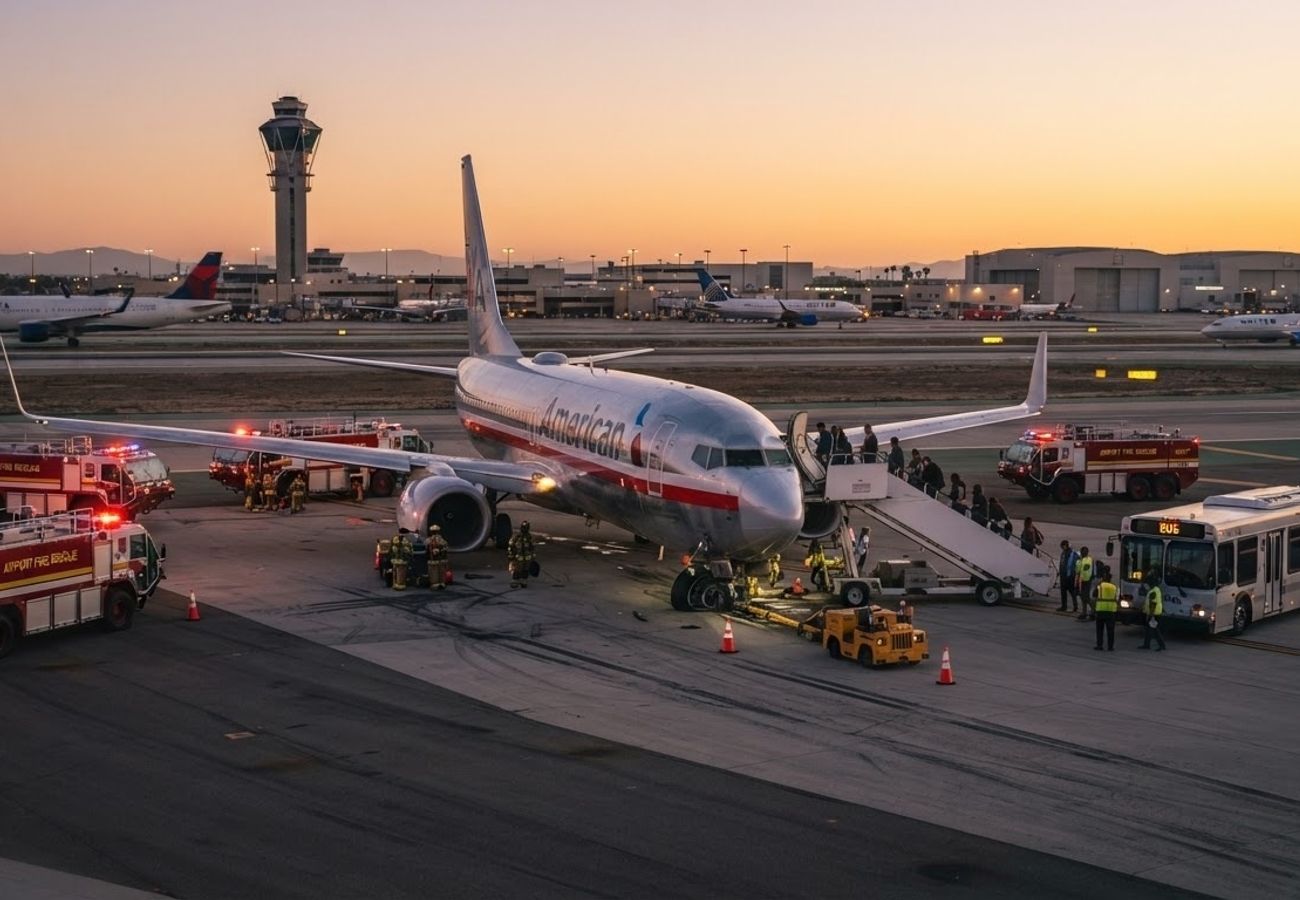
Image generated by AI
A series of high-profile tire failures on commercial jets at Chicago O’Hare International Airport has prompted an official Federal Aviation Administration (FAA) investigation into runway conditions and aircraft maintenance.
Cluster of Tire Failures Triggers FAA Investigation
Flight operations at one of the world’s busiest aviation hubs are under scrutiny following a spike in landing gear incidents. Within a matter of days, at least three commercial aircraft experienced blown or severely damaged tires during critical phases of takeoff and landing, resulting in emergency stops, runway evacuations, and temporary traffic delays.
The incidents involved two of the airport's primary carriers:
- American Airlines: A Boeing 737 suffered two blown tires upon touchdown. The aircraft remained on the runway, necessitating the transport of passengers back to the terminal via bus.
- United Airlines (Incident 1): A flight arriving from Omaha reported a tire failure while exiting the runway.
- United Airlines (Incident 2): A departing jet aborted its takeoff at high speed after multiple tires blew, scattering rubber fragments across the pavement and forcing a runway deplaning process.
Public flight-tracking and delay data indicate that these events temporarily constrained runway capacity. Ground teams were required to perform comprehensive "foreign object debris" (FOD) inspections to ensure no metal or rubber fragments remained on the surface before reopening the runways.
Incident Summary and Operational Impact
The following table outlines the specific events and their immediate effects on airport operations.
| Airline | Aircraft/Route | Event Phase | Primary Impact | Outcome |
|---|---|---|---|---|
| American Airlines | Boeing 737 | Landing | 2 Blown Tires | Runway blockage; bus transfer |
| United Airlines | Omaha Arrival | Runway Exit | Tire Failure | Temporary taxiway delay |
| United Airlines | Departure | Takeoff Roll | Multiple Blown Tires | Aborted takeoff; runway deplaning |
| American Airlines | Miami Arrival | Landing | Flat Main-Gear Tires | Prolonged runway-side response |
Traveler Logistics Guide: Navigating O'Hare During Disruptions
From a ground-level perspective, the best way to navigate O'Hare during mechanical clusters is to prioritize digital agility and buffer time. When runway closures occur, the ripple effect often hits connecting flights first.
Managing Connections and Delays If your flight is diverted or delayed due to runway inspections, avoid the main customer service queues. Use the airline's mobile app to rebook immediately; these systems typically update faster than ground staff can process manual changes. For those with tight connections, a minimum layover of 2.5 to 3 hours is recommended at O'Hare to account for potential airfield bottlenecks.
Digital Transit Policies Travelers should ensure their digital credentials are up to date to expedite movement through the terminal during chaos. While not directly related to tire failures, utilizing biometric boarding and streamlined security checkpoints helps recover time lost during tarmac delays.
On-Board Safety Protocols In the event of a tire failure or aborted takeoff, follow crew instructions for "runway deplaning" precisely. This process involves mobile stairs and bus transfers, which can be disorienting. Keep essential medications and travel documents in a carry-on bag within reach, as you may be asked to leave the aircraft quickly without returning to the overhead bins.
Infrastructure Impact Assessment
The FAA is currently reviewing maintenance records, runway inspection logs, and air traffic control data to determine if these events are a statistical anomaly or a systemic failure. Investigators are examining several variables:
- Thermal Stress: High summer temperatures can increase the heat of the asphalt, placing additional mechanical stress on rubber compounds.
- Braking Loads: The high volume of heavy jet movements at O'Hare increases the wear and tear on both the pavement and the aircraft gear.
- Surface Integrity: The presence of stray debris can cause punctures at high speeds, which is a primary focus of the current FOD inspections.
Historically, the National Transportation Safety Board (NTSB) has monitored O'Hare's high-density movements and extreme seasonal weather shifts. The transition from icy winter pavements to scorching summer asphalt creates a volatile environment for landing gear. While the airport remained operational with delays measured in minutes, the visual impact of emergency vehicles and disabled jets has highlighted the vulnerability of mega-hub infrastructure to single-point failures.
Safety buffers remain the primary defense against catastrophic failure in high-traffic aviation nodes.
Related Travel Guides
Disclaimer
This article is for informational and educational purposes only. It does not constitute legal, financial, or professional advice. While we strive to provide accurate and up-to-date information, travel policies, regulations, and conditions change rapidly. Always verify information with official sources before making travel decisions. Nomad Lawyer makes no representations about the accuracy, reliability, completeness, or suitability of the information provided. Readers should consult qualified professionals for advice specific to their circumstances. The views expressed in this article are those of the author and do not necessarily reflect the views of Nomad Lawyer.
Kunal K Choudhary
Co-Founder & Contributor
A passionate traveller and tech enthusiast. Kunal contributes to the vision and growth of Nomad Lawyer, bringing fresh perspectives and driving the community forward.
Learn more about our team →