
Texas Alongwith California and More US States Spark Fresh Debate with Growing Scrutiny Over Foreign Childbirth Travel
Texas Alongwith California and More US States Spark Fresh Debate with Growing Scrutiny Over Foreign Childbirth Travel

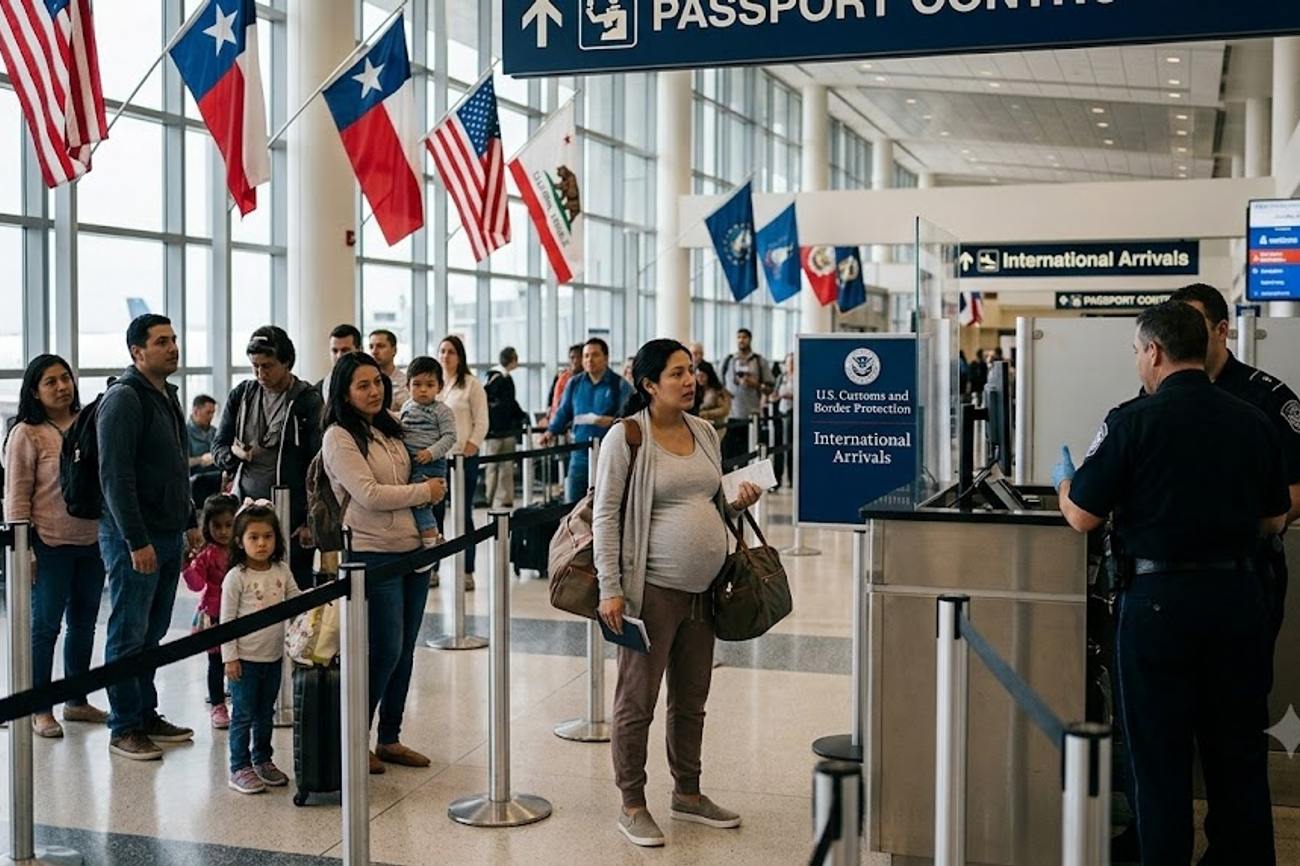
Image generated by AI
9,600 annual births involving mothers with foreign addresses represents the conservative end of government-linked estimates regarding birth tourism, though independent researchers suggest the actual figure may be as high as 26,000. This discrepancy highlights a systemic blind spot in U.S. federal data collection, where childbirth travel is not tracked as a distinct category of international movement. While leisure and business travel are meticulously logged, the movement of expectant mothers exists in a regulatory gray zone, blending legal medical tourism with organized schemes designed to secure birthright citizenship.
The Texas Litigation and the Commercialization of Maternity
The current escalation in regulatory scrutiny is centered on Texas, specifically following a lawsuit filed by Attorney General Ken Paxton. The legal action targets the De’Ai Postpartum Care Center, an organization accused of facilitating the entry of more than 1,000 foreign nationals—predominantly from China—to give birth within the state. According to the allegations, this operation was not merely a healthcare provider but a logistical hub operating across several Houston-area jurisdictions, including Richmond, Rosenberg, Sugar Land, and Houston.
The lawsuit alleges that De’Ai provided a comprehensive "package" that extended far beyond medical care, encompassing accommodation, translation services, transportation, and specific guidance on navigating visa applications and immigration procedures. This shift from individual medical choice to organized commercial networks is what has triggered the current legal crackdown. Texas has become a primary target for these networks due to the presence of the Texas Medical Center in Houston, one of the largest medical complexes globally, and the accessibility provided by George Bush Intercontinental Airport. Furthermore, the state's diverse Asian and Latin American populations, combined with healthcare costs that are often more competitive than those in coastal hubs, create an ideal environment for these services to scale.
Geographic Distribution and Infrastructure Drivers
While Texas is the current flashpoint, the phenomenon is distributed across specific U.S. corridors that possess a unique combination of international connectivity and private healthcare infrastructure.
| State | Primary Hub | Key Drivers | Primary Source Regions |
|---|---|---|---|
| California | Los Angeles | LAX connectivity, Chinese-speaking communities, private clinics | East Asia (China) |
| Florida | Miami | Miami Intl Airport, Spanish-speaking networks, short-term rentals | Latin America, Caribbean |
| New York/NJ | NYC Metro | Financial hubs, major hospitals, diverse immigrant clusters | Global |
| Nevada | Las Vegas | High-volume hotel infrastructure, international tourism flow | Various |
California, particularly Southern California, has historically served as the epicenter for this activity. In 2019, federal authorities conducted raids and arrests targeting operators of "maternity hotels" that catered almost exclusively to Chinese clients. These operations mirrored the current allegations in Texas, offering all-inclusive living arrangements to ensure that foreign nationals could remain in the U.S. until delivery and the subsequent processing of the child's citizenship papers.
Florida operates on a different geopolitical axis. Miami serves as the primary gateway for travelers from Brazil, Colombia, Argentina, and Mexico. The synergy between Miami International Airport and a robust private healthcare sector allows for a seamless transition for Latin American families seeking the legal advantages of a U.S. birth. Similarly, the New York and New Jersey corridor leverages its status as a global financial center to attract a diverse array of international clients who can blend medical travel with business or financial interests.
Expert Analysis: The Legal Friction of Birthright Citizenship
The tension surrounding birth tourism is not actually about healthcare, but about the exploitation of the 14th Amendment of the U.S. Constitution. For travelers and foreign nationals, the direct consequence of this increased scrutiny is a heightened risk of visa denial or questioning at the border. When the U.S. Department of State or Customs and Border Protection (CBP) identifies a pattern of travel consistent with "birth tourism"—such as a pregnant woman traveling to a city with known maternity networks without a clear business or leisure itinerary—it can lead to accusations of visa fraud.
The pricing pressure created by these organized networks also distorts the local healthcare market. When commercial entities like De’Ai Postpartum Care Center bundle medical services with luxury housing, they create a "shadow economy" of maternity care. This often leads to inflated costs for short-term rentals and puts pressure on private clinics to prioritize high-paying international clients over local patients.
From a regulatory perspective, the difficulty in measuring this trend stems from the fact that a foreign national giving birth in the U.S. is not illegal. Thousands of students, expatriate workers, and legitimate tourists give birth in the U.S. annually. The legal line is crossed when "organized services" are used to circumvent the intent of visa laws. For the traveler, the risk is no longer just the cost of the delivery, but the potential for a permanent mark on their immigration record if their trip is classified as part of a commercial birth scheme.
Key Takeaways
- Data Gap: There is no official federal database for birth tourism; estimates vary wildly from 9,600 to 26,000 annual cases.
- Texas Crackdown: A lawsuit against De’Ai Postpartum Care Center alleges the facilitation of over 1,000 foreign births, primarily for Chinese nationals.
- Regional Hubs: California (East Asia), Florida (Latin America), and Texas (Global/Asia) are the primary destinations due to airport connectivity and specialized healthcare.
- Visa Risks: Increased scrutiny by authorities means that travel patterns resembling "birth tourism" can lead to visa complications or fraud investigations.
- Infrastructure Role: The growth of these networks is directly tied to the availability of short-term luxury rentals and private medical centers in major metropolitan areas.
FAQ: Birth Tourism Regulations 2024
Is it illegal for a foreign national to give birth in the U.S.? No, it is not illegal. However, using a visa fraudulently to enter the U.S. specifically for the purpose of giving birth—especially when utilizing organized commercial "packages"—can be viewed as visa fraud by immigration authorities.
Which U.S. states are most common for birth tourism? California, Texas, and Florida are the most prominent. These states offer a combination of world-class medical facilities, large international airports, and established immigrant communities that provide linguistic and cultural support.
What are the risks of using a "maternity hotel" or postpartum center? Beyond the high cost, these facilities are currently under intense legal scrutiny. If a center is flagged as part of an illegal birth tourism network, the individuals staying there may face questioning or future visa restrictions.
Do all children born in the U.S. to foreign parents get citizenship? Under the principle of jus soli (right of the soil), almost all children born on U.S. soil are granted U.S. citizenship, regardless of the parents' immigration status.
The intersection of medical luxury and immigration law has turned the delivery room into a geopolitical battleground.
Tags: De’Ai Postpartum Care Center, Ken Paxton, Birthright Citizenship, Houston Medical Center, U.S. Visa Fraud, Maternity Tourism 2024
Related Travel Guides
Disclaimer
This article is for informational and educational purposes only. It does not constitute legal, financial, or professional advice. While we strive to provide accurate and up-to-date information, travel policies, regulations, and conditions change rapidly. Always verify information with official sources before making travel decisions. Nomad Lawyer makes no representations about the accuracy, reliability, completeness, or suitability of the information provided. Readers should consult qualified professionals for advice specific to their circumstances. The views expressed in this article are those of the author and do not necessarily reflect the views of Nomad Lawyer.
Kunal K Choudhary
Co-Founder & Contributor
A passionate traveller and tech enthusiast. Kunal contributes to the vision and growth of Nomad Lawyer, bringing fresh perspectives and driving the community forward.
Learn more about our team →