
Taiwan Expands Blue Highway Maritime Routes to Penghu Archipelago with New Anping and Kaohsiung Links in 2026
Taiwan is transforming the Penghu archipelago into a primary tourism hub by expanding 'blue highway' ferry routes from Kaohsiung and Anping to Magong.

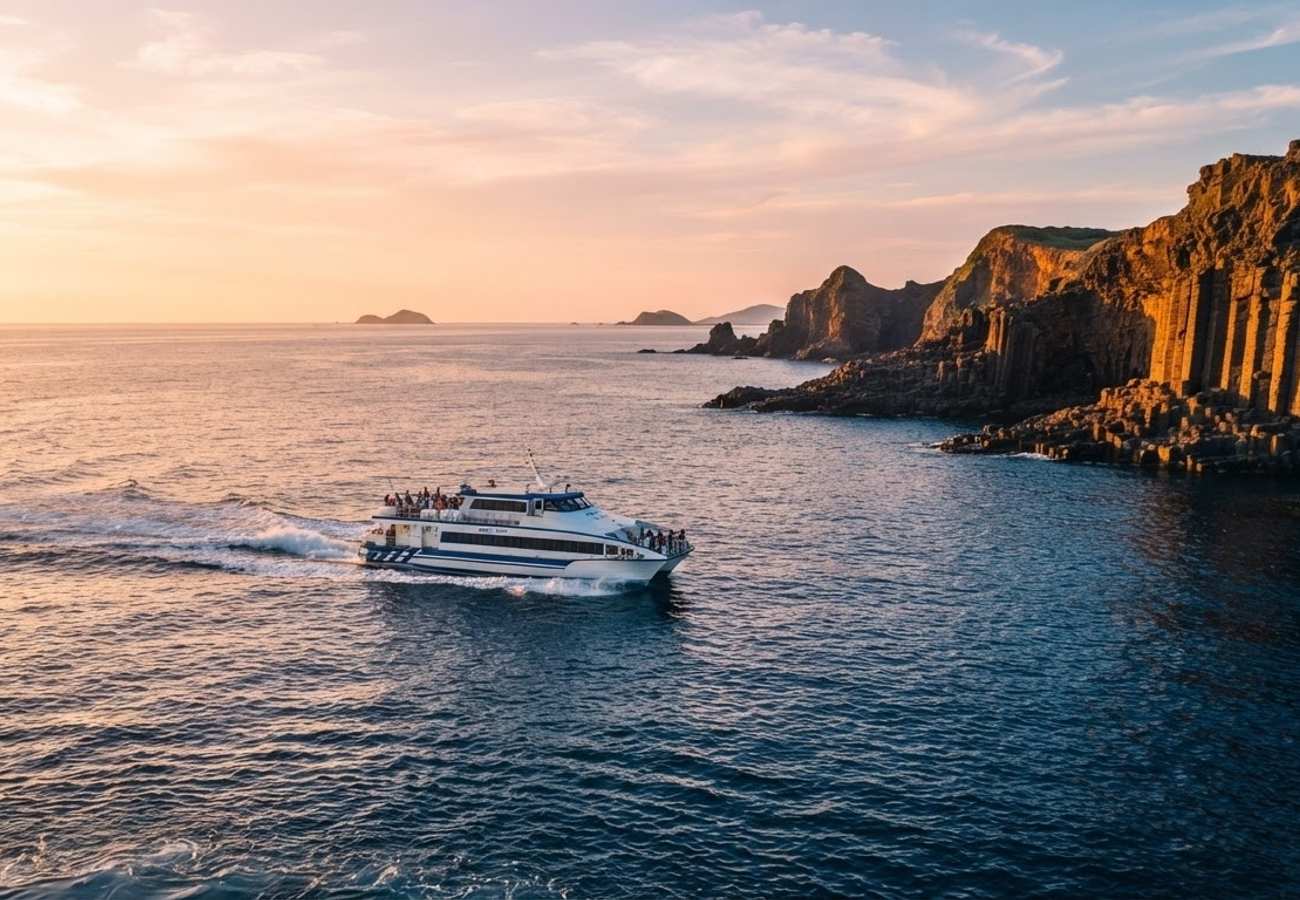
Image generated by AI
Taiwan is aggressively repositioning the Penghu archipelago as a central pillar of its national tourism strategy, utilizing a "blue highway" initiative to link Magong with major western ports like Kaohsiung and Tainan.
The strategic shift transforms marine transport from a simple transit method into a primary travel attraction. By integrating ferry networks with urban centers, tourism planners are encouraging visitors to move beyond the traditional Taipei-centric itineraries and explore the basalt cliffs and coral coasts of the outlying islands.
Maritime Strategy Prioritizes Penghu Archipelago
Data from Taiwan’s Maritime and Port Bureau indicates that the "blue highway" drive is designed to decentralize tourism and stimulate economic growth across the western seaboard. The 2025 Blue Highway Maritime Tourism Carnival served as the catalyst for this expansion, introducing several trial routes that cast Penghu as the premier destination for marine sightseeing and island-hopping.
Magong, the primary urban center of Penghu, has been designated as the operational heart of this network. Rather than acting as a remote outpost, Magong is now marketed as a versatile hub where domestic flights, cruise services, and traditional ferries converge. This policy shift reflects a broader effort to diversify Taiwan's tourism portfolio, moving the focus toward the archipelago's unique geological formations and historic architecture.
Kaohsiung and Magong Establish Primary Transit Corridor
The maritime link between Kaohsiung and Magong remains the fundamental artery of the blue highway system. Operated by the Penghu Ferry and various other carriers, these voyages typically span between four and four and a half hours. Industry reports highlight that the onboard facilities of these vessels are being upgraded to offer a premium experience, ensuring the journey itself contributes to the overall vacation value.
In current itinerary planning, the Kaohsiung-Magong route serves a dual purpose. It acts as a feeder for travelers arriving in the southern port city and as a "finale" for those concluding their trip in the islands. Many visitors now utilize Kaohsiung as a starting point to explore urban attractions before sailing to Magong for a concluding stay focused on water sports and local island culture.
Magong’s harbor infrastructure has been scaled to accommodate this increase in traffic. It now functions as a critical consolidation point where regional public ferries intersect with national tourism routes, effectively bridging the gap between the main island and the outlying islets.
New Anping-Magong Tourism Ferry Launches for Summer 2026
A significant addition to the maritime network is the introduction of a dedicated tourism ferry connecting Tainan’s Anping district with Magong. This seasonal service officially launched on June 30, 2026, with a schedule consisting of round-trip sailings every Tuesday and Friday throughout the peak summer vacation window.
This new route provides a substantial efficiency gain, reducing the sea crossing to approximately two and a half hours. By linking the historic fortresses and culinary landmarks of Anping directly to the harborside promenades of Magong, the service creates a seamless corridor for both domestic and international tourists.
Rather than competing with the established Kaohsiung route, the Anping-Magong ferry complements it by distributing passenger flows across multiple west coast cities. This allows for more flexible "pivot" itineraries, where a traveler might arrive in Tainan, sail to Penghu, and depart via air or sea to another region of Taiwan.
Magong Serves as Launchpad for Archipelago Exploration
Once passengers arrive in Magong, the city functions as the primary gateway to the deeper archipelago. The Penghu National Scenic Area administration has streamlined services departing from Magong’s Third Fishing Port to reach more remote destinations.
| Destination Island | Route Type | Primary Focus |
|---|---|---|
| Wangan | Public Ferry | Local Culture & Sightseeing |
| Qimei | Public Ferry | Basalt Formations & Landscapes |
| Tongpan | Public Ferry | Nature & Coastal Views |
| Hujing | Public Ferry | Remote Island Exploration |
| South Sea Circuit | Chartered/Package | Diving & Turtle-Watching |
The "South Sea" itineraries are particularly popular, blending fixed public schedules with chartered vessels for specialized activities like lighthouse visits and diving. To maintain accessibility, updated fare tables have been implemented to ensure that point-to-point tickets from Magong to the southern islands remain affordable.
To further integrate the experience, harbor visitor centers now coordinate ferry tickets with the "Penghu Fun Easy" and Taiwan Tourist Shuttle programs. This integration allows travelers to bundle sea crossings with ground transportation, making the exploration of multiple island clusters a modular and manageable process.
Seasonal Volatility and Capacity Management
Despite the expanded infrastructure, the maritime tourism sector in Penghu faces significant seasonal challenges. Official advisories warn that ferry schedules are highly susceptible to weather disruptions, particularly during the northeast monsoon months when winter winds frequently cancel crossings.
During these off-peak periods, capacity is severely limited. Only a few vessels, such as the Penghu Boat on the Kaohsiung-Magong line, maintain consistent operations. This volatility forces winter travelers to rely more heavily on Penghu Airport for reliable access.
Furthermore, the surge in demand during summer festivals and school holidays has created bottlenecks at Magong's ports. In response, tourism managers are implementing advanced digital booking systems and combined ticketing options to smooth out demand and prevent overcrowding in local communities.
Why This Matters: The Impact on Modern Travel
For the traveler, the evolution of the "blue highway" means that Taiwan is no longer just a destination for city-hopping between Taipei and Kaohsiung. The integration of the Anping and Kaohsiung routes transforms the Penghu archipelago from a "side trip" into a viable, multi-day destination that can be reached without the necessity of flying.
From a logistical standpoint, the shift toward maritime "finales" in Magong reduces the pressure on domestic airports and encourages a slower, more immersive form of tourism. The ability to move from the heritage sites of Tainan to the coral reefs of Penghu in under three hours creates a new travel product that appeals to the "slow travel" movement and high-value tourists seeking authentic regional experiences.
The transition of Magong from a simple port to a strategic maritime hub signals a new era of coastal connectivity for Taiwan.
Related Travel Guides
Disclaimer
This article is for informational and educational purposes only. It does not constitute legal, financial, or professional advice. While we strive to provide accurate and up-to-date information, travel policies, regulations, and conditions change rapidly. Always verify information with official sources before making travel decisions. Nomad Lawyer makes no representations about the accuracy, reliability, completeness, or suitability of the information provided. Readers should consult qualified professionals for advice specific to their circumstances. The views expressed in this article are those of the author and do not necessarily reflect the views of Nomad Lawyer.
Kunal K Choudhary
Co-Founder & Contributor
A passionate traveller and tech enthusiast. Kunal contributes to the vision and growth of Nomad Lawyer, bringing fresh perspectives and driving the community forward.
Learn more about our team →