
Switzerland Autumn Harvest Tourism Showcases Decorated Cattle Descents
The seasonal return of cattle from Alpine pastures (Alpabzug) marks a key cultural attraction, spreading tourism demand into rural Swiss cantons during autumn 2026.

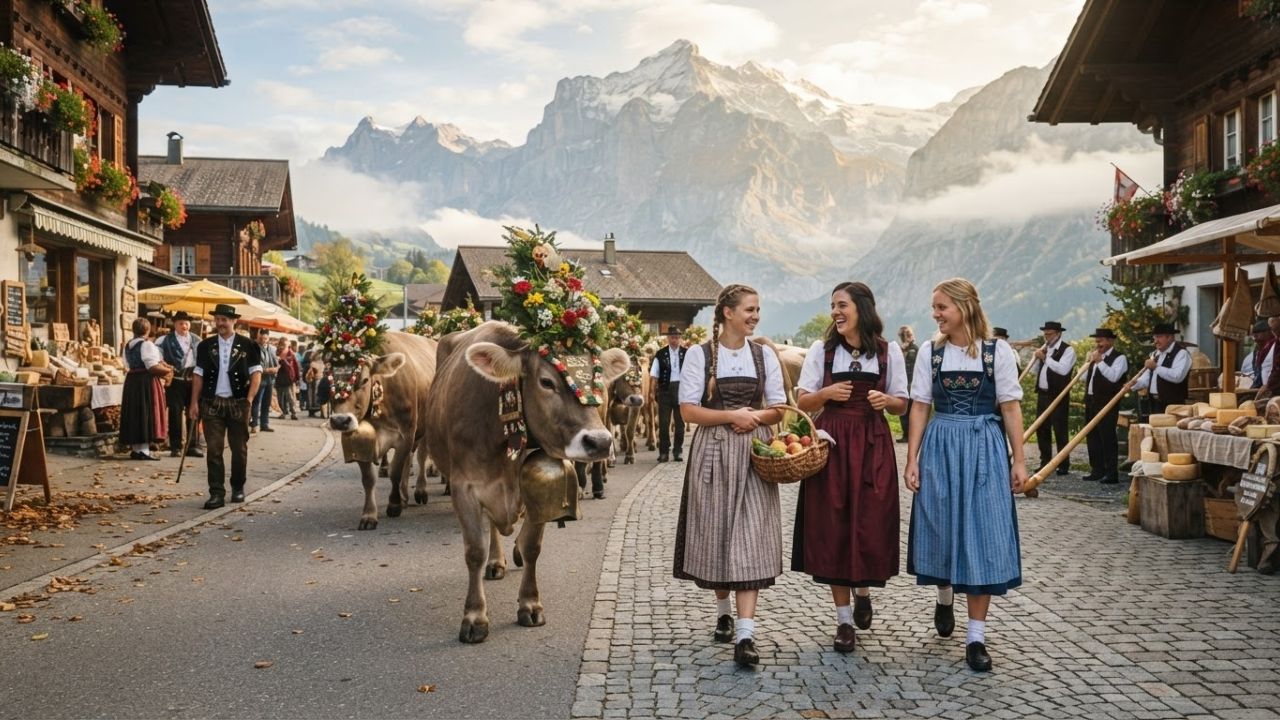
Image generated by AI
Switzerland's traditional autumn cattle descents, known as Alpabzug or désalpe, are emerging as key drivers of seasonal tourism, channeling travel demand and spending directly into rural mountain communities across multiple cantons.
The Local Trend Revealed: The Return of the Alpine Herds
The seasonal movement of livestock from high Alpine pastures to lower farms, known as the Alpabzug or Alpabfahrt in German-speaking regions, and the désalpe in French-speaking communities, is a long-standing agricultural practice that has transformed into a significant cultural tourism driver. Around 400,000 cattle and 200,000 sheep and goats spend the summer grazing on Swiss Alpine pastures. When the temperature begins to drop, herders decorate the leading cattle with floral crowns, fir branches, ribbons, and historic cowbells, leading them down to valley settlements.
These homecomings provide a network of regional Swiss autumn festivals that spread tourism demand throughout the fall season. By drawing visitors to cantons like Bern, Fribourg, Lucerne, Valais, and Appenzell, these events help protect heritage customs and distribute spending to family-run hotels, guest houses, and village artisans during the traditionally quiet shoulder period before the winter ski season starts.
Swiss Autumn Descents Calendar (September 2026)
| Destination | Canton / Region | 2026 Date | Main Tourism Experience |
|---|---|---|---|
| Tschiertschen | Graubünden | September 5 | Herd arrival, tasting of regional Alpine products, folk music |
| Brigels/Breil | Graubünden | September 12 | Traditional cattle descent, regional market, and village celebration |
| Sumiswald and Wasen | Bern | September 18 | Emmental cattle drives passing through local villages |
| Blatten-Belalp | Valais | September 19 | Decorated cattle procession, local music, and Alpine Queen tradition |
| Urnäsch | Appenzell Ausserrhoden | September 19 | Large farmers' market with more than 50 stalls, local music, and drives |
| Schüpfheim | Lucerne region | September listing | Large Entlebuch cattle drive (200 cattle and oxen) from Sörenberg |
| Charmey | Fribourg | Last Saturday in September | Major French-speaking désalpe, local cheese markets, and folk culture |
Cultural & Environmental Value: Supporting Regional Heritage
For the traveler, the real impact of attending an Alpabzug is the opportunity to engage directly with a living agricultural tradition that supports regional heritage preservation. By traveling to these rural festivals via the country's integrated rail network, visitors reduce carbon emissions and support eco-friendly tourism practices.
This travel model directly benefits local economies, with tourist spending going directly to village artisans, bakers, and regional dairy farmers. Supported by the State Secretariat for Economic Affairs (SECO) and the Swiss Federal Statistical Office, these initiatives ensure that the financial dividends of Switzerland's record 43.9 million overnight stays in 2025 are shared with the mountain communities that preserve these landscapes. Tourism's broader economic weight is substantial: foreign visitor revenue reached CHF20.5 billion in 2025 (a 1.6% growth year-on-year), while the sector's total gross value added reached CHF24 billion in 2024, supporting 186,876 full-time-equivalent jobs.
To support these regional initiatives, federal tourism policies allocate substantial funding for local development. SECO's tourism strategy has up to CHF45 million available for the Innotour program during the 2024–2027 funding period, alongside CHF233 million allocated to Switzerland Tourism. The New Regional Policy provides up to CHF200 million in loans and another CHF200 million in non-repayable grants, while the Swiss Association for Hotel Credit operates with a federal loan of CHF236 million.
Destination Specialist Local Insider Tips
To help you enjoy the Swiss cattle descents safely and comfortably, travel specialists suggest the following tips:
- Verify Event Schedules Locally: Recheck official listings shortly before travel. Descents are dependent on grass conditions and weather, and dates can change to ensure animal welfare.
- Keep a Respectful Distance: Stand clear of the procession path. The cattle wear heavy bells and can be startled by sudden movements, flash photography, or close contact.
- Avoid Drones and Flashes: Do not fly drones near the herds, as the noise can panic the animals. Turn off camera flashes to keep the livestock calm.
- Use Integrated Public Transport: Take the train or regional bus. Roads are closed during descents, and parking in small villages like Urnäsch or Charmey is extremely limited.
- Savor Älplermagronen: Experience authentic Alpine dining. Try traditional Älplermagronen (macaroni with potatoes, onions, and melted cheese, served with warm apple sauce) at village market stalls.
Long-Term Outlook: Climate Adaptation and Rural Resilience
The long-term outlook for Swiss rural tourism is highly positive as climate change forces a strategic diversification away from winter snow dependence. By expanding non-winter cultural products like autumn harvest markets and food trails, rural communities can build year-round economic resilience. The continuation of federal support programs and the Swisstainable framework will ensure that these events remain grounded in local community values, protecting animal welfare and heritage landscapes for generations to come.
As tourist interest in seasonal and regional travel grows, maintaining a balance between visitor management and agricultural realities will be essential to preserve the authenticity of Swiss Alpine culture.
Related Travel Guides
Disclaimer
This article is for informational and educational purposes only. It does not constitute legal, financial, or professional advice. While we strive to provide accurate and up-to-date information, travel policies, regulations, and conditions change rapidly. Always verify information with official sources before making travel decisions. Nomad Lawyer makes no representations about the accuracy, reliability, completeness, or suitability of the information provided. Readers should consult qualified professionals for advice specific to their circumstances. The views expressed in this article are those of the author and do not necessarily reflect the views of Nomad Lawyer.
Preeti Gunjan
Contributor & Community Manager
A passionate traveller and community builder. Preeti helps grow the Nomad Lawyer community, fostering engagement and bringing the reader experience to life.
Learn more about our team →