
Sweden Celebrates SAS at 80 as Scandinavian Airlines Marks 80 Years of Aviation Innovation and Global Reach
Sweden Celebrates SAS at 80 as Scandinavian Airlines Marks 80 Years of Aviation Innovation and Global Reach

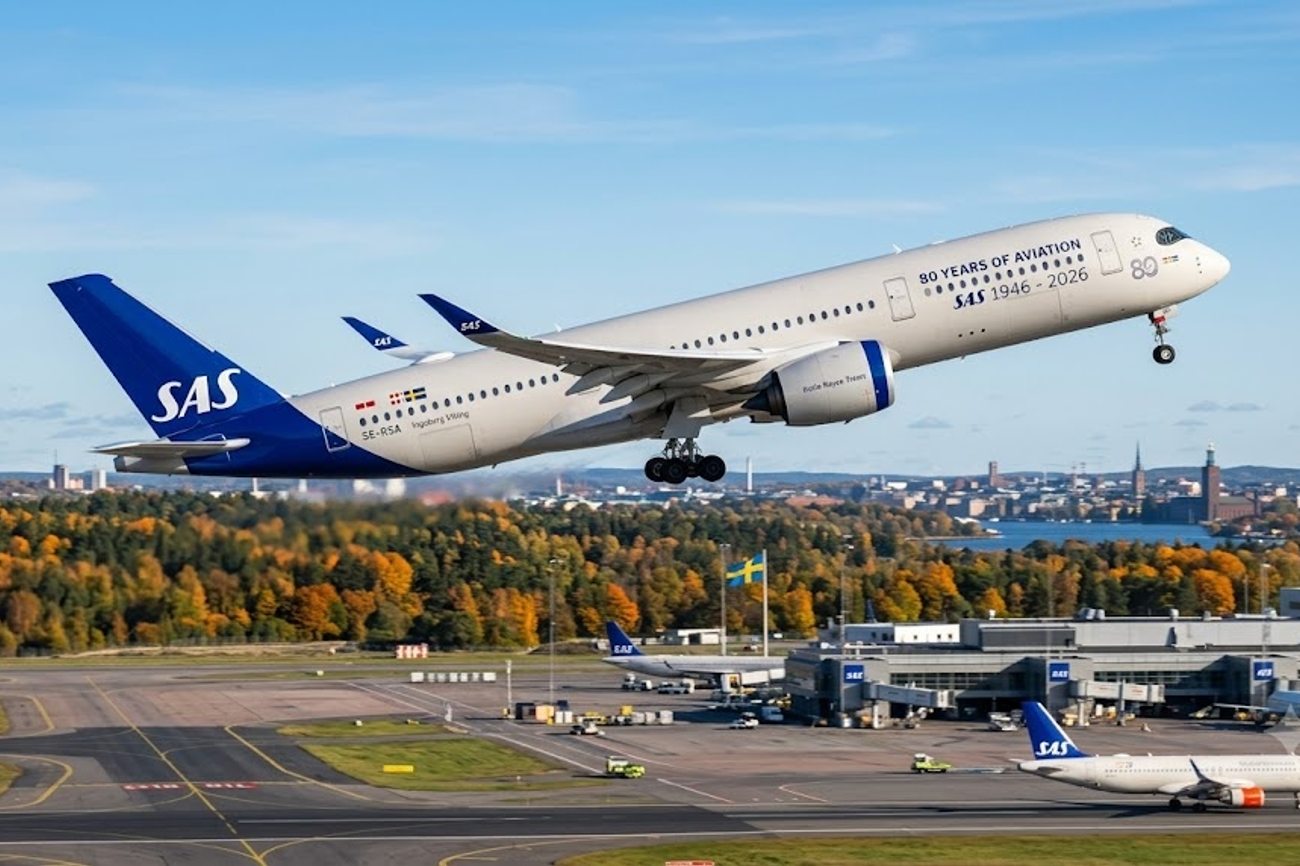
Image generated by AI
[Stockholm, September 12, 2026] — Scandinavian Airlines (SAS) has officially marked 80 years of operation, cementing its legacy as a primary architect of polar aviation and Nordic international connectivity. Founded in 1946, the carrier has evolved from a tripartite regional cooperation into a global aviation entity known for pioneering high-latitude flight paths and integrating the Scandinavian peninsula into the worldwide economy.
The milestone celebrates eight decades of strategic adaptation, beginning with the unification of three national carriers: Denmark’s Det Danske Luftfartselskab A/S (DDL), Norway’s Det Norske Luftfartselskap A/S (DNL), and Sweden’s Svensk Intercontinental Lufttrafik AB (SILA). This consortium was designed to pool resources, aircraft capacity, and technical expertise to compete in the post-WWII aviation surge, transforming the region's fragmented air services into a singular, competitive international platform.
The Catalyst for Nordic Integration
The establishment of SAS was a direct response to the resource-heavy demands of post-war long-haul travel. Recognizing that individual national efforts were insufficient for intercontinental competition, Denmark, Norway, and Sweden opted for a collaborative model. This strategic alignment allowed the airline to launch its first major intercontinental service connecting Stockholm and New York shortly after its 1946 inception.
This cooperative framework served as more than a business arrangement; it was a geopolitical statement on Nordic synergy. By centralizing operations, SAS could invest in the advanced aircraft and navigational technology required to bridge the gap between Northern Europe and the burgeoning markets of North America and Asia.
Global Reach and Route Milestones
SAS distinguished itself through a willingness to operate in the world's most hostile environments, effectively shrinking the globe through Arctic navigation.
- 1954 Polar Breakthrough: SAS became the first commercial carrier to implement a scheduled polar route between Copenhagen and Los Angeles. This required the development of new navigational protocols and specialized crew training to handle the unique challenges of the Arctic.
- 1957 Global Circuit: The airline expanded its reach by launching the first scheduled round-the-world service via the North Pole, linking Copenhagen and Tokyo with a stop in Anchorage.
- Intercontinental Hubs: The carrier prioritized the connection of Scandinavian capitals to major global financial and cultural centers, moving beyond regional transit to become a primary gateway for international tourism and business.
The technical data from these early flights provided a blueprint for the International Civil Aviation Organization (ICAO) and other regulatory bodies regarding the safety and viability of high-latitude flight corridors.
What This Means for Travelers
While the 80th anniversary is a retrospective celebration, the legacy of SAS's innovation directly impacts the modern passenger experience in several tangible ways:
1. Route Efficiency The polar routes pioneered by SAS in the 1950s are the ancestors of today's "Great Circle" routes. For passengers flying from Europe to Asia or North America, this means shorter flight durations, lower fuel consumption, and reduced ticket costs compared to traditional longitudinal paths.
2. Nordic Service Standards The airline’s integration of Nordic design and hospitality—established during its early expansion—continues to influence the cabin experience. Travelers can expect a service model that prioritizes minimalism, efficiency, and Scandinavian sustainability standards.
3. Connectivity Options The historical focus on connecting the three Scandinavian capitals ensures that travelers visiting the region have a highly integrated network. This makes multi-city itineraries across Denmark, Norway, and Sweden more seamless than in regions with fragmented national carriers.
The Shift Toward Sustainable Aviation
As SAS enters its ninth decade, the focus has shifted from expanding geographic reach to reducing environmental impact. The airline is currently navigating a transition toward sustainable aviation fuels (SAF) and modernized fleet compositions to meet stringent European Union Aviation Safety Agency (EASA) emissions targets.
The carrier is leveraging its historical expertise in challenging environments to lead in the "green" transition of Arctic aviation. This involves optimizing flight paths to minimize carbon footprints and investing in next-generation aircraft that offer higher fuel efficiency. The transition is a necessity in a competitive landscape where passenger expectations have shifted from mere speed to environmental responsibility.
FAQ: SAS 80th Anniversary 2026
How did SAS start? SAS was formed in 1946 through a partnership between the national aviation companies of Denmark (DDL), Norway (DNL), and Sweden (SILA) to create a unified, competitive international airline.
What was the "Polar Route" achievement? In 1954, SAS became the first airline to fly scheduled commercial flights over the North Pole, specifically connecting Copenhagen to Los Angeles, significantly shortening travel times between Europe and the US.
Which cities were the first major intercontinental links? The airline's first major intercontinental push connected Stockholm and New York, establishing the carrier as a global player rather than a regional operator.
How does SAS's history affect today's flights? SAS's early Arctic navigation research helped establish the efficient "Great Circle" routes used by almost all modern airlines to reduce travel time between the Northern Hemisphere's major hubs.
Eight decades of Arctic defiance and Nordic cooperation have turned a regional experiment into a global aviation benchmark.
#SAS80 #ScandinavianAirlines #PolarAviation #CopenhagenAirport #StockholmArlanda #AviationHistory2026
Related Travel Guides
Disclaimer
This article is for informational and educational purposes only. It does not constitute legal, financial, or professional advice. While we strive to provide accurate and up-to-date information, travel policies, regulations, and conditions change rapidly. Always verify information with official sources before making travel decisions. Nomad Lawyer makes no representations about the accuracy, reliability, completeness, or suitability of the information provided. Readers should consult qualified professionals for advice specific to their circumstances. The views expressed in this article are those of the author and do not necessarily reflect the views of Nomad Lawyer.
Naina Thakur
Contributor & Travel Specialist
Travel enthusiast and legal writer covering visa regulations, responsible tourism, and cultural journeys across global destinations.
Learn more about our team →