
Middle East Flight Disruption: 836 Delays and 28 Cancellations Impact Regional Hubs

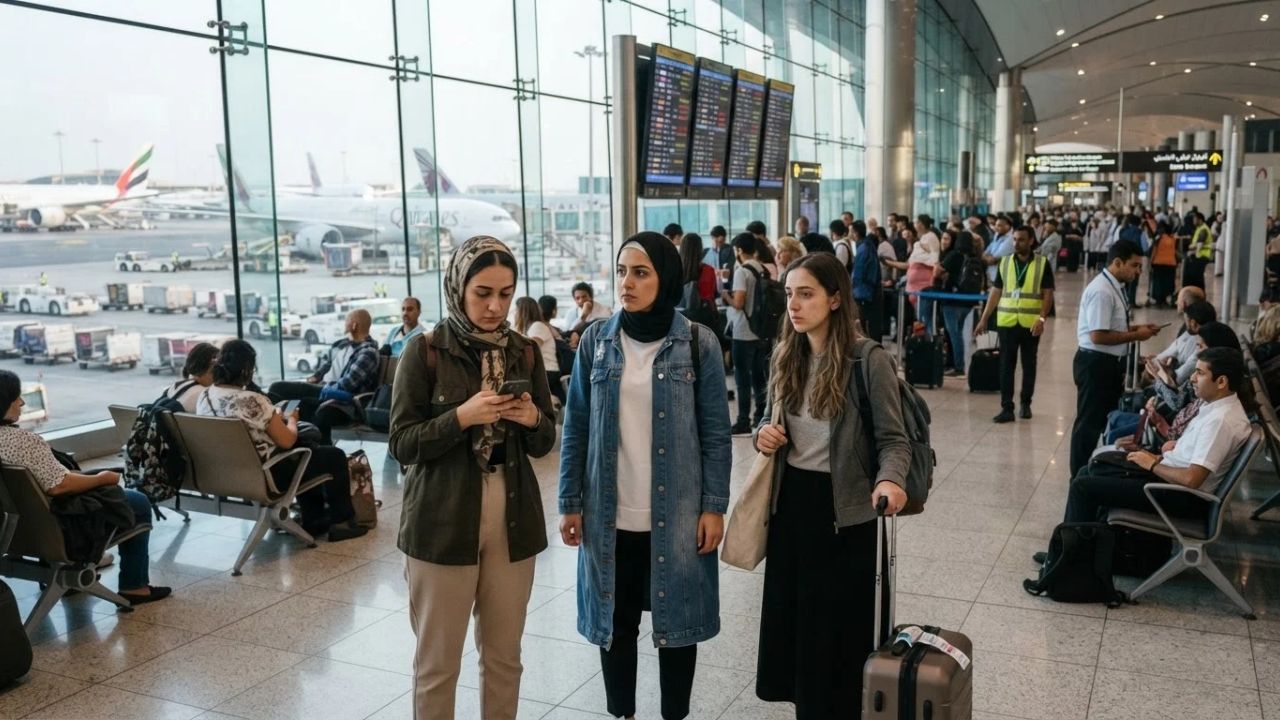
Widespread operational friction grounded international transit across the Middle East as 12 primary hub airports recorded 836 delays and 28 cancellations, following 890 delays and 58 cancellations just 24 hours prior. From Istanbul to Dubai and Jeddah, cascading schedule realignments are reshaping transit strategies across the intercontinental crossroads connecting Europe, Asia, and Africa.
The Local Trend Revealed: Regional Network Pressures Across Middle Eastern Hubs
Aviation operations across the Middle East and surrounding regional airspace experienced widespread disruption, accumulating 836 delays and 28 cancellations across 12 vital hub facilities. According to real-time tracking compiled from FlightAware as of 12 September 2026 at 3:03 pm ET USA (12 September 2026, 11:04 pm GST), the regional network absorbed 864 total flight irregularities in a single operational window. This follows elevated friction from the previous day, when regional gateways documented 58 cancellations and 890 delayed departures.
Rather than stemming from an isolated localized bottleneck, the disruptions reflect systemic network-wide pressures. Carriers navigating regional corridors face evolving route adjustments, enhanced airspace caution, and aircraft rotation imbalances. Because super-connector hubs such as Istanbul Airport, Dubai International Airport (DXB), and Hamad International Airport in Doha operate on precision transit banks connecting travelers between Western Europe, North America, the Indian Subcontinent, and Southeast Asia, a delay on an inbound feeder sector quickly ripples across subsequent long-haul rotations.
MIDDLE EAST AIRPORT DISRUPTION SUMMARY (12 SEPTEMBER 2026)
| Airport Facility | Sovereign State | Flight Delays | Flight Cancellations |
|---|---|---|---|
| Istanbul Airport (IST) | Türkiye | 225 | 3 |
| King Abdulaziz Int'l (JED) | Saudi Arabia | 114 | 1 |
| Dubai International (DXB) | UAE | 105 | 10 |
| King Khalid Int'l (RUH) | Saudi Arabia | 94 | 1 |
| Hamad International (DOH) | Qatar | 67 | 1 |
| Ben Gurion International (TLV) | Israel | 56 | 2 |
| Sharjah International (SHJ) | UAE | 49 | 1 |
| King Fahd Int'l (DMM) | Saudi Arabia | 36 | 1 |
| Kuwait International (KWI) | Kuwait | 34 | 1 |
| Seeb International (MCT) | Oman | 22 | 1 |
| Queen Alia International (AMM) | Jordan | 19 | 2 |
| Bahrain International (BAH) | Bahrain | 15 | 4 |
| TOTAL REGIONAL IMPACT | 12 Hub Airports | 836 Delays | 28 Cancellations |
Anatomy of the Hub Impacts: Türkiye, the Gulf, and the Levant
The geographic breadth of the delays illustrates how operational strain is shared across distinct aviation zones:
- Türkiye's Mega-Hub: Istanbul Airport recorded the highest cumulative flight delays across all evaluated facilities, logging 225 delayed flights alongside 3 cancellations. As one of the world's highest-volume transfer hubs, transfer passenger congestion built rapidly throughout international departure piers. Both origin and destination cancellation rates remained below 1%.
- United Arab Emirates: Dubai International Airport (DXB) logged 105 delays and 10 cancellations—representing the highest cancellation tally among all airports in the dataset, though both origin and destination cancellation percentages held below 1%. Neighboring Sharjah International Airport (SHJ), the primary base for low-cost operations in the northern Emirates, logged 49 delays and 1 cancellation.
- Kingdom of Saudi Arabia: Saudi aviation gateways absorbed heavy operational volume. King Abdulaziz International Airport in Jeddah recorded 114 delays and 1 cancellation, with an origin cancellation rate under 1%. Capital hub King Khalid International Airport in Riyadh posted 94 delays and 1 cancellation (origin cancellation under 1%), while King Fahd International Airport in Dammam logged 36 delays and 1 cancellation.
- Qatar and the Wider Gulf: Doha's Hamad International Airport documented 67 delays and 1 cancellation. Kuwait International Airport registered 34 delays and 1 cancellation, Oman's Seeb International Airport in Muscat recorded 22 delays and 1 cancellation, and Bahrain International Airport registered 15 delays alongside 4 cancellations (posting a 1% origin and 1% destination cancellation rate).
- The Levant and Eastern Mediterranean: Queen Alia International Airport in Amman, Jordan, recorded 19 delays and 2 cancellations, while Tel Aviv's Ben Gurion International Airport logged 56 delays and 2 cancellations.
AIRLINE OPERATIONAL PERFORMANCE BREAKDOWN
| Operating Carrier | Home Base | Cancelled | Cancel Rate | Delayed | Delay Rate |
|---|---|---|---|---|---|
| Saudia | Saudi Arabia | 1 | 0% | 64 | 11% |
| Qatar Airways | Qatar | 1 | 0% | 60 | 9% |
| Air Arabia | UAE | 1 | 0% | 43 | 18% |
| FlyDubai | UAE | 6 | 1% | 30 | 9% |
| Oman Air | Oman | 1 | 0% | 18 | 15% |
| Royal Jordanian | Jordan | 2 | 1% | 6 | 4% |
| Syrian Arab Airlines | Syria | 1 | 8% | 0 | 0% |
| El Al | Israel | 2 | 50% | 0 | 0% |
Among operating carriers, Saudia registered the highest raw number of flight delays at 64 flights (an 11% delay rate), followed closely by Qatar Airways with 60 delayed sectors (a 9% delay rate). Air Arabia recorded the highest delay percentage among listed regional airlines at 18% (43 delays and 1 cancellation), while Oman Air registered a 15% delay rate (18 delays and 1 cancellation). Regional narrowbody carrier FlyDubai absorbed 30 delays (9% rate) and 6 cancellations (1% rate). El Al logged 2 cancellations yielding a 50% cancellation rate, with zero delays reported in the dataset.
Cultural and Environmental Value: Minimizing the Carbon Footprint of Disruption
For the visitor, the real impact of widespread flight delays extends beyond gate frustration to environmental and physical well-being. Extended tarmac ground holds, aircraft holding patterns over busy Gulf skies, and rerouted flight paths across alternative airspace corridors inflate aviation fuel burn, creating unintended carbon emissions.
To mitigate environmental waste during irregular operations (IROPs), civil aviation authorities—including the UAE General Civil Aviation Authority (GCAA), Saudi Arabia's General Authority of Civil Aviation (GACA), and the Qatar Civil Aviation Authority (QCAA)—are implementing advanced collaborative decision-making (A-CDM) frameworks. These systems regulate gate pushbacks and engine run-ups, ensuring aircraft hold at terminals with auxiliary power units connected to airport electric grids rather than idling jet engines on active taxiways.
In addition, passengers undergoing unscheduled transit delays in hub cities are encouraged to practice responsible local engagement. Rather than remaining isolated in departure gates, travelers utilizing stopover transit visas support local cultural institutions, artisanal heritage markets, and local hospitality vendors in municipal centers like Old Jeddah (Al-Balad) or the historic Deira gold and spice souks in Dubai.
SUSTAINABLE PASSENGER TRANSIT INFRASTRUCTURE
| Entity / Route | Metrics | Operational Status |
|---|---|---|
| Transit Gateway | Eco-Transit Alternative | Traveler Benefit During Layovers |
| Dubai Int'l (DXB) | Direct Dubai Metro Red Line | Low-emission access to Old Dubai |
| Istanbul Airport (IST) | Direct M11 Airport Metro Line | 30-min electric rail to city center |
| Hamad Int'l (DOH) | Doha Metro Red Line connection | Direct rapid transit to Souq Waqif |
| King Abdulaziz (JED) | Haramain High-Speed Railway | Electric bullet train to Medina/Makk |
Visitor Insider Tips: Navigating Middle East Air Layovers
-
Strategic Connection Buffers: When booking transcontinental itineraries connecting via Dubai, Istanbul, or Doha during periods of heightened operational sensitivity, avoid tight 60- to 75-minute connection windows. Choose connection buffers of at least 3.5 to 4 hours. A missed transfer in a mega-hub can result in a 24-hour wait for the next scheduled long-haul flight.
-
In-Terminal Wellness Sanctuaries:
- Dubai (DXB): Take advantage of sleep 'n fly sleep pods in Terminals 1 and 3 for private resting blocks, or retreat to the tranquil open-air Zen Gardens tucked between Gates B7 and B27 in Terminal 3.
- Doha (DOH): Visit The Orchard—an indoor tropical garden featuring 300 trees and 25,000 plants under a glass canopy in the terminal expansion—or book a swim in the Vitality Wellbeing & Fitness Centre's 25-meter temperature-controlled indoor pool.
- Istanbul (IST): Head toward the rest zones located near Gates B and F, equipped with ergonomic semi-reclined loungers, or access the IGA sleep pods on the international departures level.
-
Regional Cultural Etiquette: Middle Eastern airport terminals feature dedicated prayer rooms (Musalla) with adjacent ablution facilities. During the call to prayer (Adhan), public terminal music and retail announcements are paused; speak in hushed tones and maintain respectful decorum near prayer spaces. Dress modestly in Saudi and Gulf airports, ensuring shoulders and knees are covered.
-
Authentic Stopover Gastronomy: Pass by Western fast-food franchises in favor of authentic regional culinary counters. In Dubai and Doha, enjoy traditional cardamom-spiced Arabic coffee (gahwa) served from ornate brass dallah pots with sweet Medjool dates, or order fresh lamb shawarma wrapped in freshly baked saj bread. In Istanbul, stop at traditional tea kiosks for steaming tulip glasses of black tea (çay) paired with warm sesame-crusted simit rings.
Tourism Outlook: Strengthening Cross-Border Network Resilience
The recurrence of substantial schedule adjustments across Middle Eastern hubs highlights the operational sensitivity of global aviation crossroads. While individual carrier schedule changes and proactive airspace caution present short-term hurdles for travelers, the long-term fundamentals of the Gulf and Turkish aviation corridors remain robust.
Airport authorities and legacy airlines continue investing billions into smart terminal automation, biometric boarding, and enhanced baggage tracking to mitigate transit friction. As travelers adapt by building generous transit buffers, maintaining active airline notification feeds, and exploring stopover cultural programs, Middle Eastern gateways will continue to serve as the indispensable bridge uniting global travel.
Related Travel Guides
Disclaimer
This article is for informational and educational purposes only. It does not constitute legal, financial, or professional advice. While we strive to provide accurate and up-to-date information, travel policies, regulations, and conditions change rapidly. Always verify information with official sources before making travel decisions. Nomad Lawyer makes no representations about the accuracy, reliability, completeness, or suitability of the information provided. Readers should consult qualified professionals for advice specific to their circumstances. The views expressed in this article are those of the author and do not necessarily reflect the views of Nomad Lawyer.
Preeti Gunjan
Contributor & Community Manager
A passionate traveller and community builder. Preeti helps grow the Nomad Lawyer community, fostering engagement and bringing the reader experience to life.
Learn more about our team →