
U.S. Aviation Network Gridlock: 2,919 Delays and 118 Cancellations Hit Major Hubs

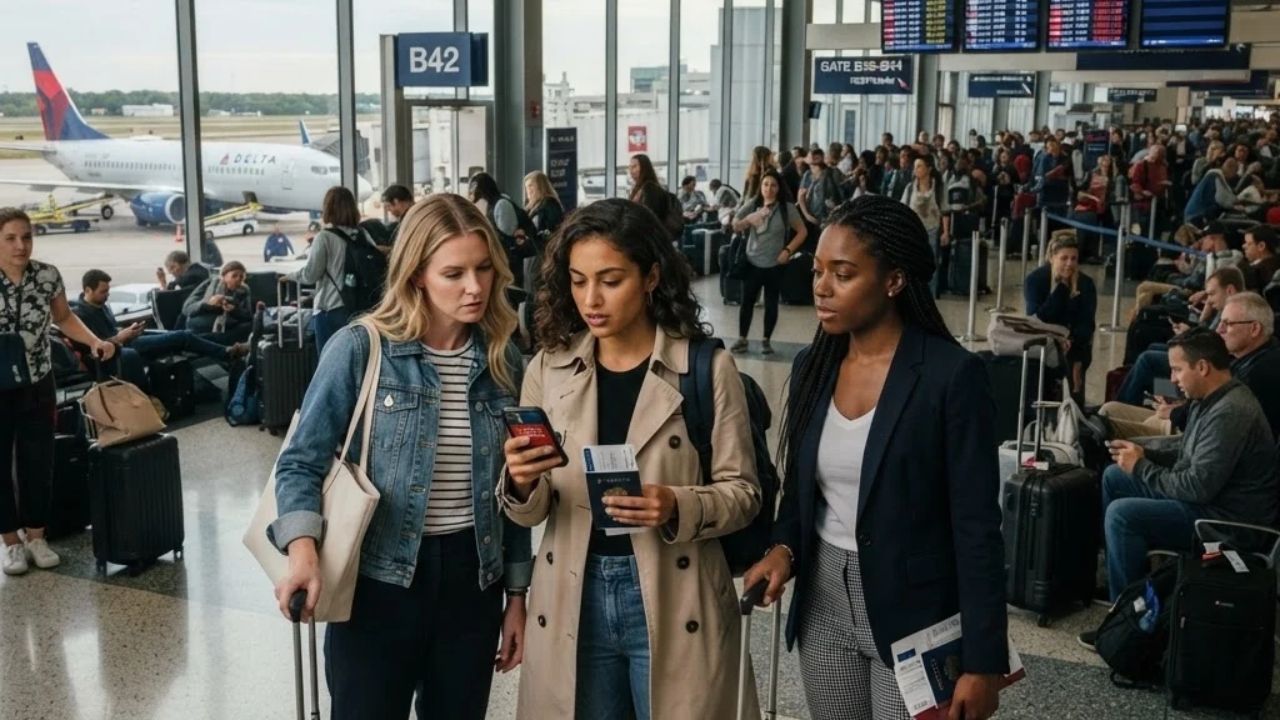
More than 2,919 flight delays and 118 cancellations swept across the United States as severe weather traffic management programs, runway obstructions, and network congestion battered 25 major airports from Atlanta to Miami and Orlando. With Delta Air Lines absorbing 560 delays and Hartsfield-Jackson Atlanta logging over 500 delayed flights alone, travelers face cascading connection breakdowns across the national airspace.
The Local Trend Revealed: Multi-Hub Friction Paralyzes Transcontinental Travel
The United States commercial aviation network experienced acute operational volatility, accumulating 2,919 flight delays and 118 cancellations in a single afternoon operating cycle. According to real-time airspace tracking data verified by FlightAware as of 12 September 2026 at 5:56 pm ET USA, schedule degradation rippled across East Coast corridors, Midwest hubs, southern vacation gateways, and Pacific island routes.
Rather than being confined to a single weather cell, the gridlock stemmed from compounding operational hurdles. Federal Aviation Administration (FAA) Air Traffic Control System Command Center initiatives restricted arrival rates into Florida due to convective storm fronts, while mechanical bottlenecks—including a disabled aircraft blocking an active runway in Miami—severely constrained airfield movements. Because legacy carriers operate tightly sequenced hub-and-spoke schedules, delays at anchor hubs like Atlanta, Chicago O'Hare, and Dallas/Fort Worth quickly contaminated transcontinental aircraft rotations.
U.S. AIRPORT FLIGHT DISRUPTION SUMMARY (12 SEPTEMBER 2026)
| Primary Aviation Hub | State / Region | Flight Delays | Flight Cancellations |
|---|---|---|---|
| Hartsfield-Jackson Atlanta (ATL) | Georgia | 502 | 30 |
| Chicago O'Hare (ORD) | Illinois | 239 | 2 |
| Boston Logan International (BOS) | Massachusetts | 228 | 3 |
| Dallas/Fort Worth (DFW) | Texas | 217 | 4 |
| Miami International (MIA) | Florida | 200 | 2 |
| Denver International (DEN) | Colorado | 159 | 4 |
| Orlando International (MCO) | Florida | 136 | 3 |
| Los Angeles International (LAX) | California | 125 | 8 |
| LaGuardia Airport (LGA) | New York | 113 | 4 |
| San Francisco International (SFO) | California | 112 | 3 |
| Detroit Metro Wayne County (DTW) | Michigan | 79 | 3 |
| Seattle-Tacoma (SEA) | Washington | 79 | 3 |
| Houston George Bush (IAH) | Texas | 78 | 5 |
| Newark Liberty (EWR) | New Jersey | 70 | 6 |
| Luis Muñoz Marín (SJU) | Puerto Rico | 38 | 6 |
| Daniel K. Inouye (HNL) | Hawaii | 31 | 16 |
| Anchorage International (ANC) | Alaska | 29 | 6 |
| Cleveland-Hopkins (CLE) | Ohio | 20 | 4 |
| Lihue Airport (LIH) | Hawaii | 11 | 5 |
| Bethel Airport (BET) | Alaska | 9 | 4 |
| Westchester County (HPN) | New York | 6 | 7 |
| Ellison Onizuka Kona (KOA) | Hawaii | 4 | 4 |
| Regional Outliers (ACK, BED, MVY) | MA / Regional | 0 | 0 |
| NATIONAL COMBINED TOTAL | 25 Key Facilities | 2,919 Delays | 118 Cancellations |
Anatomy of the Chokepoints: Atlanta, Florida Hubs, and Island Corridors
The geographic distribution of the disruptions reveals severe operational bottlenecks across distinct regional sectors:
- The Atlanta Epicenter (Hartsfield-Jackson Atlanta - ATL): Serving as the world's highest-volume passenger facility and the primary global fortress hub for Delta Air Lines, Atlanta recorded 502 delays and 30 cancellations. Inbound flights experienced a 2% destination cancellation rate, while origin cancellations held at 0%. Ground holds in Georgia triggered nationwide crew-rest timeouts.
- The Florida Squeeze (Miami and Orlando): In South Florida, Miami International Airport (MIA) posted 200 delays and 2 cancellations as ground operations ground to a crawl, suffering ground delays averaging 86 minutes after a disabled aircraft obstructed an active runway. Meanwhile, Orlando International Airport (MCO) logged 136 delays and 3 cancellations, with departing flights absorbing rolling 30-minute delays that expanded as the FAA enforced convective weather ground-delay programs.
- Northeast Corridors (Boston, New York, and Newark): Boston Logan (BOS) accumulated 228 delays and 3 cancellations, logging average ground delays of 61 minutes due to congested approach gates. New York LaGuardia (LGA) registered 113 delays and 4 cancellations (1% origin cancellation rate), while Newark Liberty (EWR) added 70 delays and 6 cancellations.
- Midwest and Western Trunk Lines: Chicago O’Hare (ORD) documented 239 delays and 2 cancellations, Dallas/Fort Worth (DFW) recorded 217 delays and 4 cancellations, Denver (DEN) posted 159 delays and 4 cancellations, and Los Angeles (LAX) logged 125 delays and 8 cancellations.
- Offshore and Island Gateways: Travel across non-contiguous U.S. destinations suffered acute friction. In Hawaii, Honolulu’s Daniel K. Inouye International Airport (HNL) recorded 31 delays and 16 cancellations (2% destination / 2% origin cancellation rate), Lihue (LIH) on Kauai logged 11 delays and 5 cancellations (5% destination cancellation rate), and Kona (KOA) registered 4 delays and 4 cancellations. In Alaska, Anchorage (ANC) absorbed 29 delays and 6 cancellations, while Bethel (BET) recorded 9 delays and 4 cancellations. Puerto Rico’s Luis Muñoz Marín International Airport (SJU) in San Juan posted 38 delays and 6 cancellations.
AIRLINE IRREGULAR OPERATIONS BREAKDOWN
| Operating Carrier | Fleet Profile | Cancelled | Cancel Rate | Delayed | Delay Rate |
|---|---|---|---|---|---|
| Delta Air Lines | Legacy Network | 32 | 1% | 560 | 18% |
| American Airlines | Legacy Network | 3 | — | 379 | — |
| Southwest Airlines | Low-Cost Network | 4 | — | 373 | — |
| United Airlines | Legacy Network | 9 | — | 279 | — |
| SkyWest Airlines | Regional Network | 3 | — | 170 | — |
| Frontier Airlines | Ultra-Low Cost | 1 | — | 96 | — |
| Republic Airways | Regional Feeder | 1 | — | 87 | — |
| Endeavor Air | Delta Connection | 2 | — | 74 | — |
| Alaska Airlines | West Coast Hub | 25 | — | 63 | — |
| Tradewind Aviation | Regional Luxury | 25 | 17% | 0 | 0% |
| Horizon Air | Regional Feeder | 2 | — | 11 | — |
Among operating carriers, Delta Air Lines absorbed the heaviest disruption volume, posting 560 delays and 32 cancellations (an 18% delay rate and 1% cancellation rate) tied directly to the gridlock at its Atlanta fortress. American Airlines recorded 379 delays and 3 cancellations, while Southwest Airlines logged 373 delays and 4 cancellations. United Airlines recorded 279 delays and 9 cancellations. Regional carrier Alaska Airlines logged 63 delays and 25 cancellations, while luxury northeastern operator Tradewind Aviation posted 25 cancellations with an acute 17% cancellation rate.
Cultural and Environmental Value: Responsible Transit and Sustainable Alternatives
For the visitor, the real impact of pervasive nationwide air delays lies in re-evaluating transportation dependency. Extended ground delay programs cause hundreds of jet engines to idle on active taxiways, burning thousands of gallons of aviation fuel while waiting for departure slots.
To reduce carbon waste and traveler exhaustion, eco-conscious passengers are turning to integrated regional surface rail networks. In Florida, the Brightline intercity rail system links Orlando International Airport’s Terminal C directly with West Palm Beach, Boca Raton, Fort Lauderdale, and Downtown Miami on eco-friendly, biodiesel-electric trainsets. When summer and autumn weather stalls intra-state air routes, rail provides a dependable, low-emission escape route that bypasses congested highways.
Simultaneously, unexpected airport layovers present opportunities to support independent local food artisans and cultural initiatives within terminal concourses rather than defaulting to multinational corporate chains.
SUSTAINABLE GROUND TRANSIT ALTERNATIVES AT AFFECTED HUBS
| Disrupted Airport | High-Efficiency Ground Transit | Passenger Travel Advantage |
|---|---|---|
| Orlando Int'l (MCO) | Brightline Higher-Speed Rail (T-C) | Direct 3-hr train to Miami & FLL |
| Atlanta Int'l (ATL) | MARTA Red & Gold Rail Lines | 20-min zero-traffic link to downtown |
| Boston Logan (BOS) | MBTA Silver Line SL1 & Water Taxi | Free transit connection to rail hubs |
| Miami Int'l (MIA) | MIA Mover & Metrorail Orange Line | Fast electric link to Brickell/DT |
Visitor Insider Tips: Surviving U.S. Airport Delays
-
Bypassing Intra-Florida Air Bottlenecks: If stranded at Orlando International Airport (MCO) due to regional ground stop delays heading to South Florida, do not wait for delayed regional feeder flights. Walk over to the Train Station at Terminal C and board a Brightline train directly to Fort Lauderdale or Miami. Trains depart hourly, offer complimentary high-speed Wi-Fi, and deliver you to downtown Miami in three hours regardless of cloud cover.
-
Runway Obstruction Protocols in Miami (MIA): When disabled aircraft block primary runways at MIA, departure queues quickly exceed 80 minutes. If your flight is canceled, check flight availability out of Fort Lauderdale-Hollywood International Airport (FLL), situated just 30 miles north. While waiting at MIA, retreat to Concourse D for authentic Cuban cortaditos and warm pastelitos de guayaba from Versailles Restaurant to experience local Miami culinary heritage.
-
Mastering the Atlanta Plane Train: At Hartsfield-Jackson (ATL), gate changes during irregular operations occur frequently. If moving between domestic concourses (T through E), use the underground automated Plane Train rather than walking the mile-long pedestrian tunnels, unless you need quiet rest zones between Concourses D and E. Book an hourly room at Minute Suites in Concourse B or T for private workspace and sleep.
-
Boston Logan Water Taxi: When facing extended ground stops at Boston Logan (BOS), step outside Terminal A or B and take the airport shuttle to the Logan Water Taxi dock. An open-air ferry ride across Boston Harbor delivers you directly to the New England Aquarium or Seaport District in ten minutes, offering fresh ocean air while you await evening flight updates.
-
Rebooking and Consumer Rights: Use your smartphone to initiate rebookings through the airline's mobile app or text customer service while standing in airport customer service lines. Save all itemized meal, hotel, and rideshare receipts; under U.S. Department of Transportation guidelines, major carriers have committed to providing meal vouchers and complimentary hotel accommodations when delays or cancellations stem from controllable operational factors.
Tourism Outlook: Strengthening American Air Travel Infrastructure
The widespread flight delays across 25 American airports underscore the razor-thin margins under which modern commercial aviation operates. With terminal passenger volumes reaching historic highs, unexpected runway closures and convective weather patterns quickly expose systemic capacity constraints.
Aviation authorities are responding with massive capital upgrades, including next-generation terminal air traffic management software, expanded runway infrastructure, and enhanced rail-to-air multimodal transit hubs. By monitoring comprehensive flight alerts, embracing regional rail connections, and maintaining generous transit buffers, travelers can navigate seasonal operational disruptions with calm and control.
Related Travel Guides
Disclaimer
This article is for informational and educational purposes only. It does not constitute legal, financial, or professional advice. While we strive to provide accurate and up-to-date information, travel policies, regulations, and conditions change rapidly. Always verify information with official sources before making travel decisions. Nomad Lawyer makes no representations about the accuracy, reliability, completeness, or suitability of the information provided. Readers should consult qualified professionals for advice specific to their circumstances. The views expressed in this article are those of the author and do not necessarily reflect the views of Nomad Lawyer.
Preeti Gunjan
Contributor & Community Manager
A passionate traveller and community builder. Preeti helps grow the Nomad Lawyer community, fostering engagement and bringing the reader experience to life.
Learn more about our team →