
Super Typhoon Choi-Wan Ravages Guam and Northern Mariana Islands: 155 MPH Winds Disrupt Global Transit 2026
Super Typhoon Choi-Wan, featuring 155 mph winds and 47-foot waves, has paralyzed transit across the Northern Mariana Islands, Guam, Japan, and Alaska, triggering mass flight cancellations and maritime shutdowns.

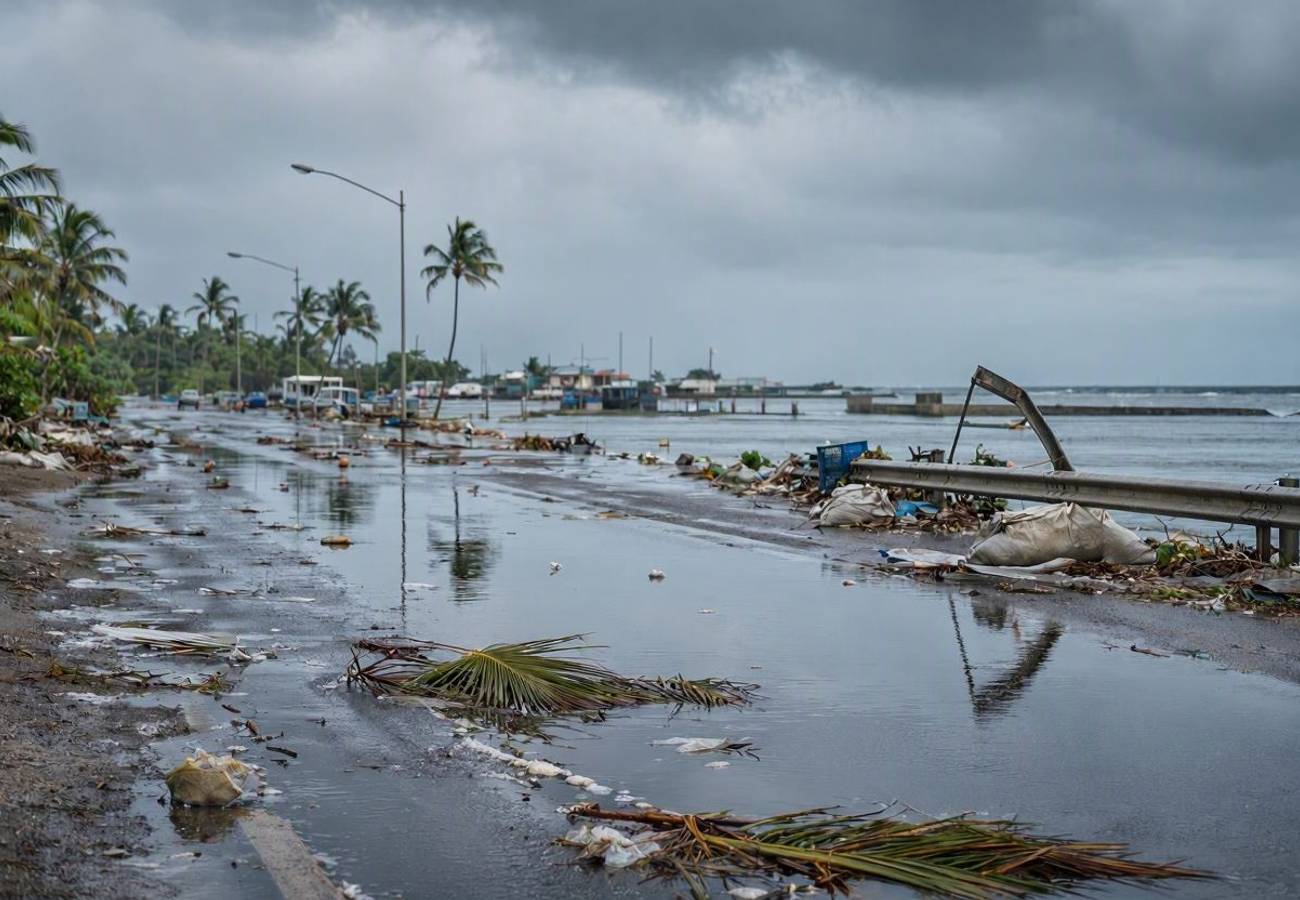
Image generated by AI
Maximum sustained winds of 155 mph and a plummeting central pressure of 912 hPa define the catastrophic scale of Super Typhoon Choi-Wan. This Category 5 equivalent system has generated wave heights exceeding 47 feet, effectively paralyzing aviation and maritime networks across the Northern Mariana Islands, Guam, Japan, the Philippines, and Alaska. While the storm's eye bypassed major population centers, its massive radius has compromised regional transit, forcing a total cessation of outdoor tourism and the activation of emergency shelter-in-place protocols.
Regional Infrastructure Collapse and Emergency Mandates
In the Northern Mariana Islands and Guam, the National Weather Service (NWS) and CNMI Homeland Security have implemented strict emergency measures. The crisis is most acute in the northern islands of Alamagan, Agrihan, and Pagan, where full Typhoon Warnings are in effect. In Saipan and Tinian, Tropical Storm Warnings remain active as the region struggles with significant shoreline erosion and the inundation of critical coastal infrastructure.
A primary logistical failure occurred on Saipan’s Beach Road, where overnight surface flooding has severed a vital transit artery. Consequently, the Visit Guam bureau and local authorities have mandated that all visitors and residents shelter in place. All maritime activities, including reef diving and coastal tours, are cancelled indefinitely due to high rip current risks and coastal flood watches.
Transit Disruption Data: Pacific and Asian Sectors
The systemic impact of Choi-Wan extends far beyond the immediate landfall zones. In Japan, the Japan Meteorological Agency (JMA) classified the system as a "Very Strong Typhoon" as it tracked parallel to the Ogasawara Islands and Iwo To. This resulted in a total halt of maritime transit across the southern archipelagos and the cancellation of regional flights to avoid severe turbulence.
In the Philippines, although the storm remained outside the official Philippine Area of Responsibility, the Philippine Atmospheric, Geophysical and Astronomical Services Administration (PAGASA) reported that the storm's expansive trough triggered torrential rains across Visayas, Mindanao, and Leyte. This atmospheric instability led to widespread landslides and flash floods, forcing the Coast Guard to prohibit small vessel departures and suspend inter-island ferry services.
Summary of Infrastructure Impacts and Official Advisories
| Location | Primary Infrastructure Impact | Official Regulatory Advisory |
|---|---|---|
| Guam | Severe beachfront erosion | Shelter in Place |
| Saipan | Beach Road surface flooding | Tropical Storm Warning |
| Tinian | Total transit halt | Tropical Storm Warning |
| Alamagan | Emergency evacuation protocols | Typhoon Warning |
| Japan (South) | Southern archipelago ferry suspension | Marine Storm Warning |
| Philippines | Port closures / Mountain route landslides | Gale Warning / Transit Advisory |
| Alaska | Bering Sea marine cessation | High Wind Warning |
Expert Analysis: The Domino Effect of Extratropical Transition
For travelers currently in the Pacific or planning transit through East Asia, the most critical development is Choi-Wan's transition into a powerful extratropical system as it moves toward Alaska. This transition does not signal a decrease in danger; rather, it expands the area of disruption.
The Federal Aviation Administration (FAA) is currently monitoring severe airport crosswinds in the Aleutians, meaning flight cancellations in Alaska are inevitable. For the global traveler, the direct consequence is a "cascading delay" effect. Because aviation networks are interconnected, a grounding in Guam disrupts crew rotations and aircraft availability in Japan and beyond.
Furthermore, the pricing pressure created by these disruptions often leads to a surge in last-minute rebooking fees. Travelers should leverage the International Air Transport Association (IATA) guidelines regarding force majeure events to negotiate waivers for rebooking. The current situation proves that a Category 5 event in the Pacific creates a logistical vacuum that affects cargo and passenger transit as far north as the Bering Strait.
Key Takeaways
- Immediate Safety: All travelers in Saipan, Tinian, and Guam must adhere to shelter-in-place orders until official all-clear notices are issued.
- Maritime Shutdown: Inter-island ferries in the Philippines and southern Japanese archipelagos are suspended; do not attempt coastal transit.
- Aviation Alerts: Expect significant flight path deviations and cancellations for routes touching the Northern Mariana Islands, Japan, and the Aleutian Islands.
- Alaska Warning: High wind warnings and coastal flood warnings are active for the Kuskokwim Delta and Pribilof Islands.
- Documentation: Keep digital copies of all government advisories to facilitate insurance claims and airline refund requests.
FAQ: Super Typhoon Choi-Wan 2026
Can I still fly into Guam or Saipan? Most flights are currently cancelled or diverted due to 155 mph winds and infrastructure damage. Check your airline's app or the official airport status before heading to the terminal.
What happens to my ferry booking in the Philippines? PAGASA Gale Warnings have forced the Coast Guard to suspend small vessel operations. Contact your operator for rebooking or refund options based on government-mandated closures.
Is it safe to travel in Alaska this week? Coastal travel in Western Alaska is highly dangerous. The NWS has issued High Wind Warnings for the Pribilof Islands and flood warnings for the Kuskokwim Delta.
How do I get a refund for a cancelled hotel in the CNMI? Since official shelter-in-place orders were issued by CNMI Homeland Security, most hotels will honor refunds or rebookings under "emergency circumstances."
The resilience of global transit depends entirely on the speed of official communication during Category 5 events.
Related Travel Guides
Disclaimer
This article is for informational and educational purposes only. It does not constitute legal, financial, or professional advice. While we strive to provide accurate and up-to-date information, travel policies, regulations, and conditions change rapidly. Always verify information with official sources before making travel decisions. Nomad Lawyer makes no representations about the accuracy, reliability, completeness, or suitability of the information provided. Readers should consult qualified professionals for advice specific to their circumstances. The views expressed in this article are those of the author and do not necessarily reflect the views of Nomad Lawyer.
Naina Thakur
Contributor & Travel Specialist
Travel enthusiast and legal writer covering visa regulations, responsible tourism, and cultural journeys across global destinations.
Learn more about our team →