
Nepal Flash Floods 2026: 24 Canadians and Hundreds of Foreign Nationals Missing After Glacial Avalanche
A catastrophic glacial ice-rock avalanche in Nepal has triggered massive flash floods, leaving 160 dead and 403 missing, including 24 Canadians and 133 Indian pilgrims.

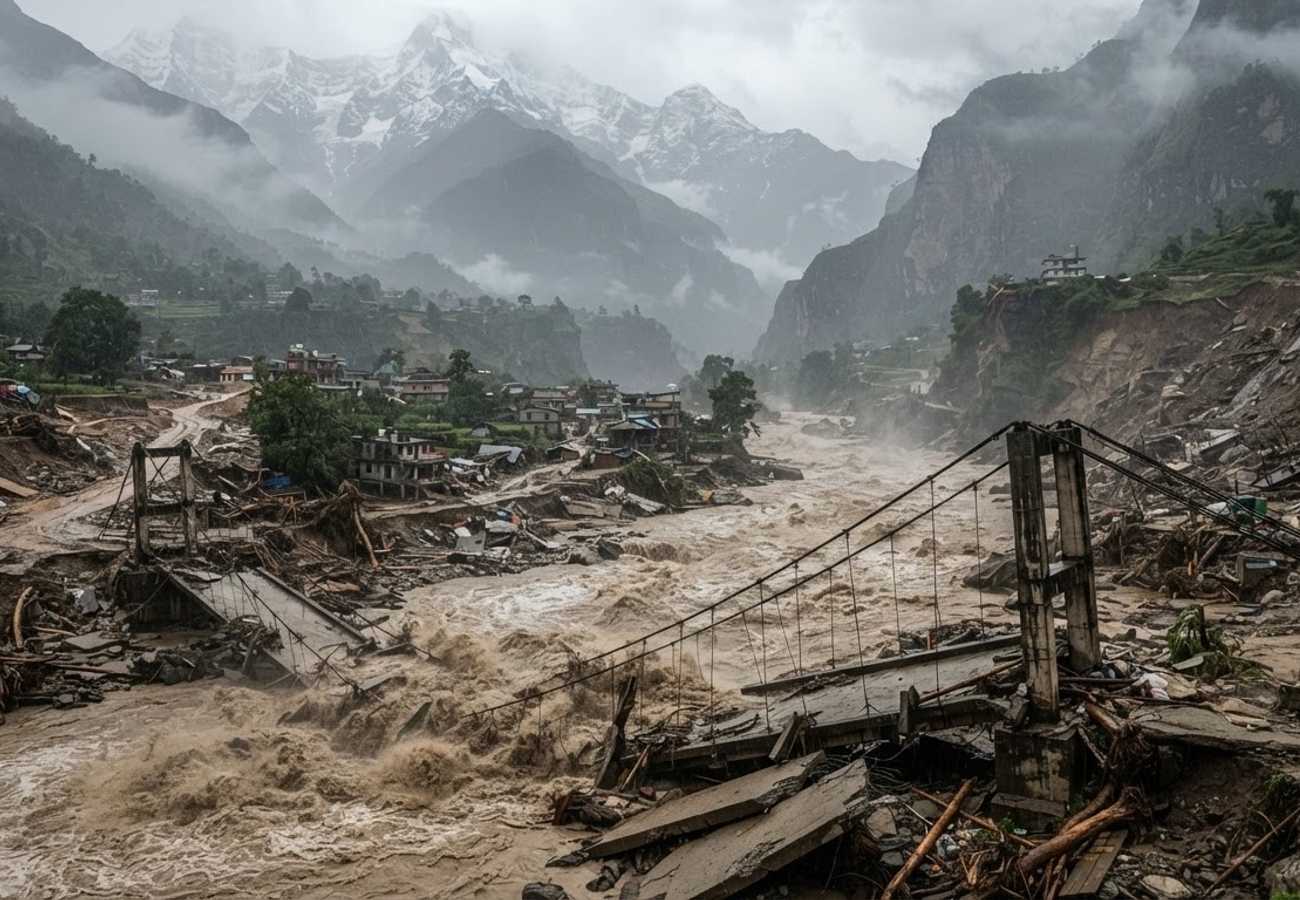
Image generated by AI
A massive ice-rock avalanche has triggered catastrophic flash floods across Nepal, leaving at least 160 people dead and 403 missing, including 24 Canadian citizens and hundreds of international tourists.
Geological Trigger and Immediate Impact
The disaster was initiated by a high-altitude glacial fracture. Data from the International Centre for Integrated Mountain Development (ICIMOD) indicates that a massive ice-rock avalanche created a temporary natural dam, trapping millions of gallons of glacial meltwater.
When this blockage burst under hydrostatic pressure, it released a surge of mud and debris. Flight tracking and ground reports confirm that water levels in the Trishuli River rose by 27 feet (approximately nine metres) within 30 minutes. The velocity of the surge destroyed multi-storey concrete buildings, snapped suspension bridges, and buried transport vehicles.
Flight and Regional Impact Breakdown
The disruption is concentrated in the high-altitude corridors and valley systems. Travel is currently restricted or impossible in the following areas:
- Affected Districts: Rasuwa and Nuwakot (Severe restrictions in place).
- Critical Waterways: Bhotekoshi, Trishuli, and Narayani rivers (High risk of secondary surges).
- Infrastructure Loss: 19 suspension bridges destroyed; 40 kilometres of paved roadway erased.
- Key Impact Zones: Gosaikunda Lake area and the primary travel corridor bordering Tibet’s Gyirong County.
Casualty and Missing Persons Data
Official reports from Nepalese police and tourism boards confirm a multinational crisis. Of the 403 missing persons, 341 are foreign nationals.
| Nationality | Status |
|---|---|
| Indian | 133 missing (primarily pilgrims) |
| American | 47 missing |
| Australian | 34 missing |
| British | 33 missing |
| Canadian | 24 missing |
| Nepali | 62 missing (Gosaikunda Lake area) |
Passenger Rights and Emergency Advisory
For travelers currently in Nepal or those with upcoming bookings to the Himalayan region, the following protocols are mandatory.
For the affected passenger, this means:
- Immediate Registration: If you are a Canadian citizen, ensure you are registered with the Registration of Canadians Abroad (ROCA) system. Global Affairs Canada (GAC) is currently using this data to coordinate with consular teams on the ground.
- Itinerary Re-evaluation: Any trekking or transit routes passing through the Rasuwa district must be canceled or rerouted. Infrastructure is nonexistent in several sectors, and emergency services are stretched thin.
- Consular Contact: Foreign nationals should immediately contact their respective embassies. The US Department of State, along with embassies from Australia, Britain, France, and Switzerland, have issued joint warnings.
- Safety Zones: Avoid all riverbanks. The saturated terrain makes the risk of secondary mudslides "astronomically high."
Our analysis of the current emergency suggests that travelers should not attempt to bypass police barricades, as the ground remains unstable and prone to further collapse.
This event underscores the increasing volatility of "adventure tourism" in the face of climate-driven glacial instability. The timing of the flood coincided with the Janai Purnima festival and the Mount Kailash pilgrimage, maximizing the human toll.
From a risk management perspective, the disparity between the 820 Canadians registered via ROCA and the estimated actual number of citizens in-country highlights a critical failure in voluntary registration systems during mass-casualty events. Aviation and tour operators should expect prolonged disruptions to regional logistics and a likely increase in "Force Majeure" declarations for travel insurance claims in the region.
Stay clear of all high-altitude river valleys until official clearance is issued by the Nepalese government.
Related Travel Guides
Disclaimer
This article is for informational and educational purposes only. It does not constitute legal, financial, or professional advice. While we strive to provide accurate and up-to-date information, travel policies, regulations, and conditions change rapidly. Always verify information with official sources before making travel decisions. Nomad Lawyer makes no representations about the accuracy, reliability, completeness, or suitability of the information provided. Readers should consult qualified professionals for advice specific to their circumstances. The views expressed in this article are those of the author and do not necessarily reflect the views of Nomad Lawyer.
Kunal K Choudhary
Co-Founder & Contributor
A passionate traveller and tech enthusiast. Kunal contributes to the vision and growth of Nomad Lawyer, bringing fresh perspectives and driving the community forward.
Learn more about our team →