
Grand Central Eyes Newcastle to Brighton Rail Link with 4 New Trains for 2026 Launch
Grand Central is seeking regulatory approval to launch a massive 20-stop corridor from Newcastle to Brighton by December 2026, leveraging four dormant Class 180 trains.

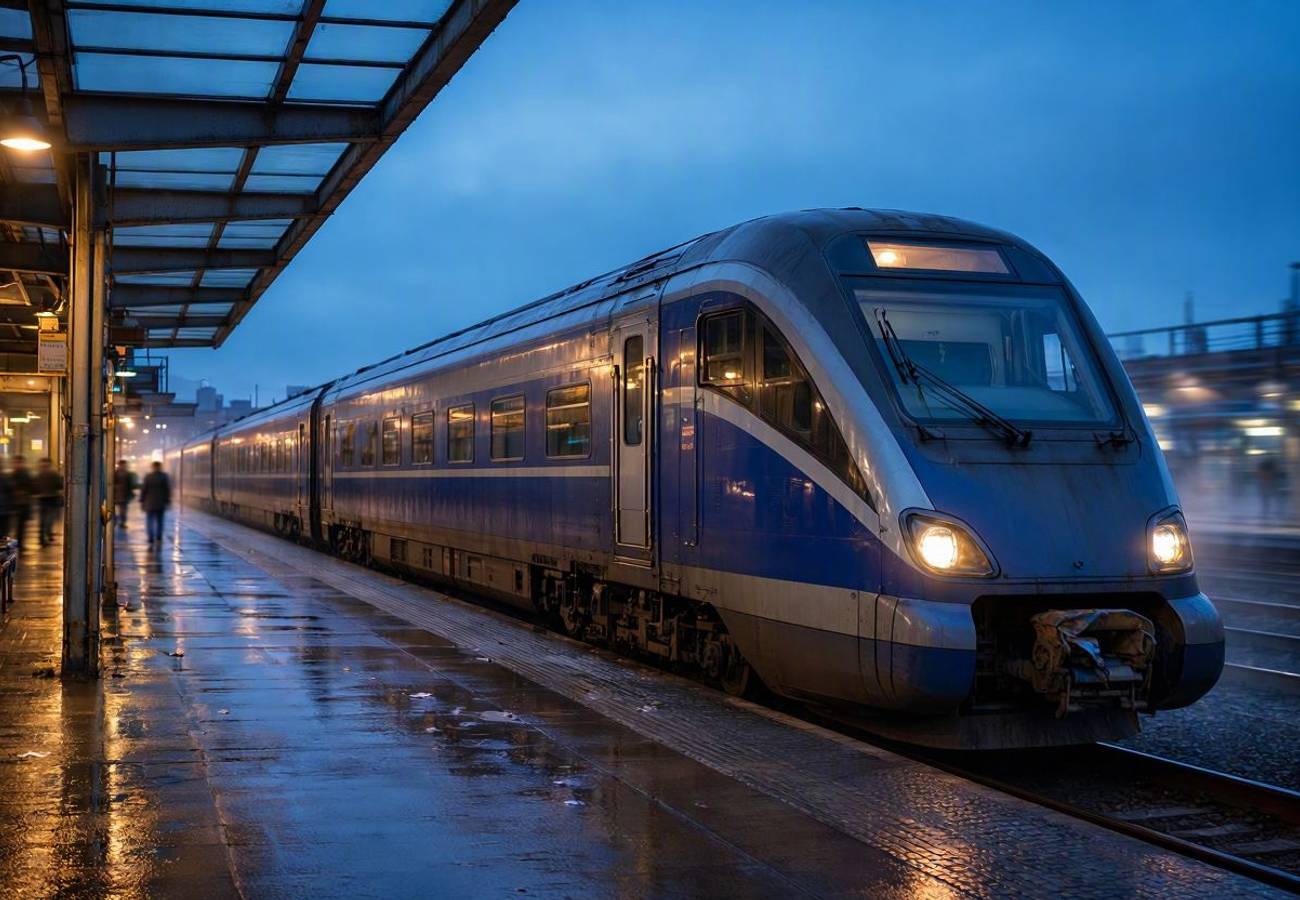
Image generated by AI
[London, October 5, 2026] — Grand Central is preparing to launch a direct rail service connecting Newcastle and Brighton starting in December 2026, provided it secures critical regulatory approval and operational clearance. While the operator has identified the necessary rolling stock to power the expansion, the proposal currently hinges on a Section 17 application pending review by the Office of Rail and Road (ORR).
The proposed service aims to establish a massive inter-regional corridor, bypassing the need for passengers to transit through central London. The plan involves deploying four five-car Class 180 trains, which have been identified as available in storage. However, the transition from securing trains to running services remains uncertain as the Department for Transport and network regulators weigh the impact on an already congested rail infrastructure.
The Rolling Stock Strategy
The viability of this route depends on the availability of high-speed trains capable of maintaining intercity schedules. According to June 2026 data from Angel Trains, four specific Class 180 units—180109, 180110, 180111, and 180113—have been held in storage since the second quarter of 2023. These five-car trains are capable of speeds up to 125mph, making them suitable for the long-distance haul across England.
Despite the availability of these trains, the "fleet ready, track not ready" dilemma persists. Grand Central submitted its formal application on December 19, 2025, requesting a seven-year agreement. While the operator hoped for a decision by February 2026, the ORR continues to list the application as "under consideration" as of October 4, 2026.
The 20-Stop Corridor Map
This is not a simple point-to-point shuttle but a comprehensive regional artery. If approved, the service will connect 20 major hubs across the North East, Midlands, and South Coast.
Proposed Route Stations
| Region | Key Stops |
|---|---|
| North East | Newcastle, Durham, Darlington, Northallerton |
| Yorkshire & Midlands | York, Doncaster, Sheffield, Derby, Burton-on-Trent, Birmingham New Street |
| Thames Valley & Home Counties | Warwick Parkway, Banbury, Oxford, Reading, Wokingham, Guildford |
| South Coast | Redhill, Gatwick Airport, Haywards Heath, Brighton |
What This Means for Travelers
For the average passenger, this route represents a significant shift in how to traverse England. The primary impact is the elimination of the "London bottleneck."
Direct Airport Access: The most significant gain is for travelers heading to London Gatwick Airport. Currently, passengers from cities like Sheffield, Derby, or Newcastle often must navigate through central London to reach Gatwick. This new service would provide a one-seat ride from the North and Midlands directly to the terminal, which is a massive advantage for those traveling with heavy luggage or families.
Reduced Interchanges: By linking the East Coast Main Line with the Thames Valley and the South Coast, Grand Central is creating new city-pair connections that currently require multiple changes. This reduces the risk of missed connections and simplifies long-distance ticketing.
Potential for Disruption: Travelers should be aware that because this train crosses so many different network segments, a delay in the North East could theoretically cascade down to the South Coast, affecting multiple regional operators.
The Infrastructure Obstacle
The ambition of the project is currently clashing with the reality of the UK's rail capacity. Network Rail has expressed significant caution regarding the proposal. In a January 2026 review, Network Rail noted that the proposed services did not comply with the May 2026 timetable.
Specific conflict points include:
- Congestion: 24 of the 33 proposed services would operate in highly congested areas between Northallerton Longlands Junction and Newcastle King Edward Bridge South.
- Conflicts: 16 of those services had at least one direct conflict with existing traffic.
- Inter-operator Friction: Potential scheduling clashes were identified with Govia Thameslink (south of Gatwick), South Western Railway (Reading/Guildford), and CrossCountry (Reading to York).
- Clearance Issues: Network Rail indicated that Class 180 trains are not currently cleared for operation between Brighton and Wokingham Junction, or between Leamington Spa Junction and London.
Strategic Alignment with Gatwick Expansion
The proposal arrives as Gatwick Airport moves toward its Northern Runway expansion. The UK government expects first flights from the extended runway by 2030, potentially adding 100,000 flights annually and increasing passenger throughput to 80.2 million.
Crucially, the expansion's consent framework requires that at least 54% of airport journeys be made via public transport. While Grand Central is a private operator, its proposed route directly supports this government mandate by expanding the rail catchment area to include the Midlands and the North East without adding more cars to the M25.
FAQ: Grand Central Newcastle-Brighton 2026
When will the Newcastle to Brighton service start? If the ORR grants approval and operational clearances are met, the service is slated to begin during the timetable period starting in December 2026.
Will I still need to change trains to get to Gatwick from the North? If this route is approved, passengers from Newcastle, York, Sheffield, and Birmingham will be able to reach Gatwick Airport directly on a single train.
Are the trains already secured? Grand Central has identified four Class 180 trains in storage via Angel Trains, but the ability to use them depends on "route clearance" from Network Rail.
Which cities benefit most from this new corridor? Major beneficiaries include Birmingham, Sheffield, and Newcastle, as they gain direct access to the Thames Valley (Oxford/Reading) and the South Coast (Brighton/Gatwick).
A bold plan for connectivity, but the tracks may not be ready for the trains.
Related Travel Guides
Disclaimer
This article is for informational and educational purposes only. It does not constitute legal, financial, or professional advice. While we strive to provide accurate and up-to-date information, travel policies, regulations, and conditions change rapidly. Always verify information with official sources before making travel decisions. Nomad Lawyer makes no representations about the accuracy, reliability, completeness, or suitability of the information provided. Readers should consult qualified professionals for advice specific to their circumstances. The views expressed in this article are those of the author and do not necessarily reflect the views of Nomad Lawyer.
Naina Thakur
Contributor & Travel Specialist
Travel enthusiast and legal writer covering visa regulations, responsible tourism, and cultural journeys across global destinations.
Learn more about our team →