
Denmark Launches 2030 Bornholm Ferry Tender to Slash Emissions and Restructure Rønne–Ystad Route
Denmark has initiated a strategic tender process for the Bornholm ferry contract starting in 2030, focusing on reducing vehicle dependency and emissions on the critical Rønne–Ystad route.

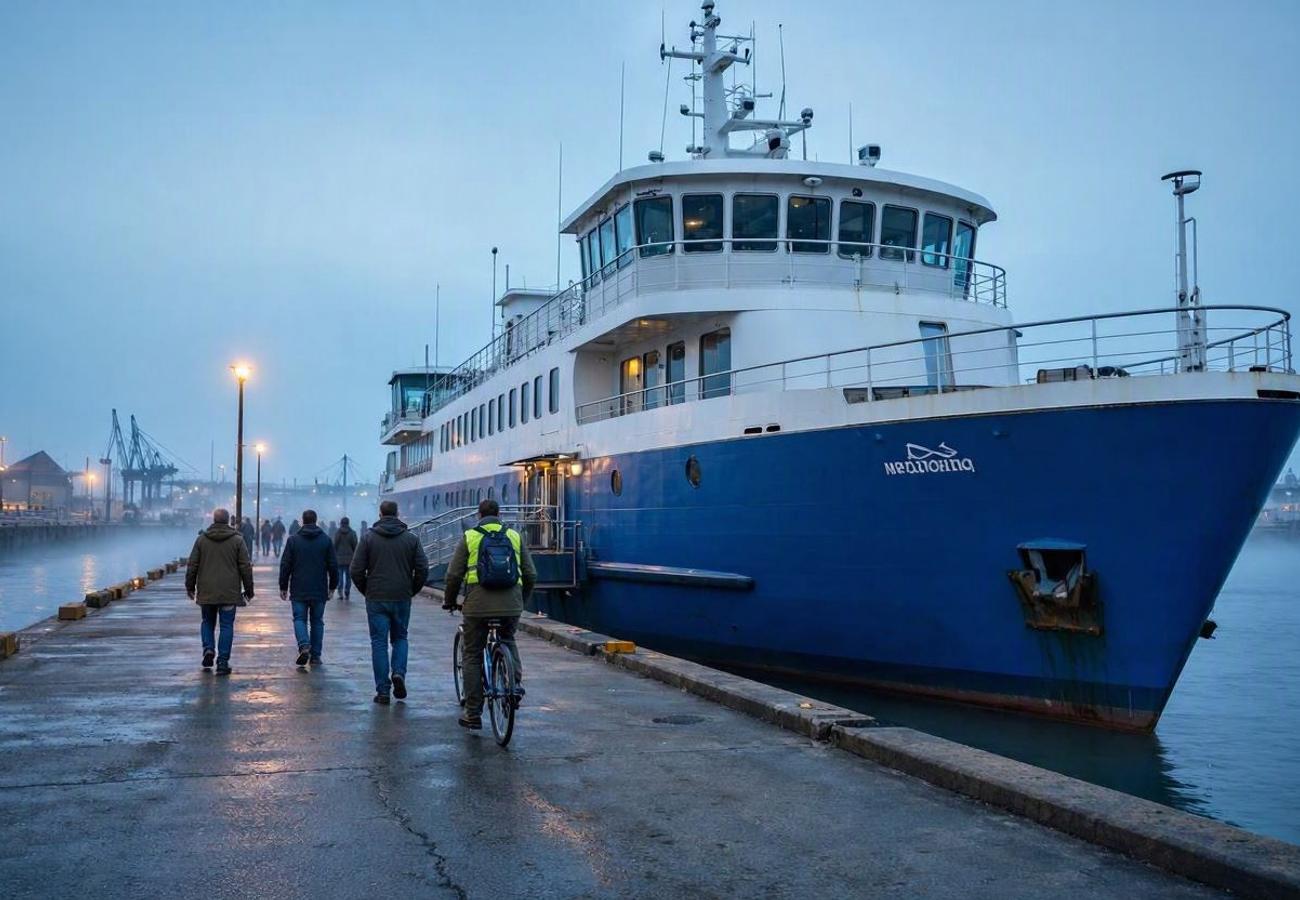
Image generated by AI
[Rønne, October 5, 2026] — Denmark has formally launched a comprehensive recommendation process for the 2030 Bornholm ferry contract, shifting the focus from simple vessel procurement to a broader strategy of tourism demand management and carbon reduction. The initiative aims to overhaul how visitors access the island, specifically targeting the high-traffic corridor between Rønne and Ystad.
The process, initiated by the Bornholms Regionskommune (Regional Municipality of Bornholm), involves the Transport Contact Council evaluating critical factors including sailing frequency, environmental benchmarks, fare reductions, and the seamless integration of ferry arrivals with the island's internal bus network. This strategic pivot is supported by a 2026 state agreement that has allocated DKK 62.3 million to cover additional ferry fuel costs, highlighting the immediate economic pressure to transition toward sustainable maritime operations.
The Catalyst for the 2030 Tender
The current state-backed ferry agreement, which began on September 1, 2018, was originally a ten-year contract. While it was slated to end in 2028, the Danish government exercised a two-year extension in 2019, pushing the expiration date to August 31, 2030.
The upcoming tender is not merely a replacement of ships but a policy tool. Authorities are examining whether fare structures can be used to discourage private vehicle transport in favor of foot passengers. This approach follows the precedent set by the previous tender winner, Molslinjen, which secured the contract by proposing a ticket-price reduction of 51.15 per cent.
Impacted Routes and Passenger Volume
The Rønne–Ystad route serves as the primary gateway for the island. Data indicates a significant imbalance between passenger growth and vehicle growth, creating a bottleneck on vessel decks during peak summer months.
Rønne–Ystad Traffic Growth Analysis (2017–2024)
| Measure | 2017 Volume | 2024 Volume | Official Change |
|---|---|---|---|
| Total Passengers | 1,448,000 | 1,780,000 | +23% |
| Passenger Cars | 348,371 | 513,975 | +47% |
| Buses | 2,153 | 4,069 | ~100% (Doubled) |
| Trucks | 4,905 | 5,163 | +5% |
Source: Bornholm Transport Contact Council 2030 Strategy / Statistics Denmark
What This Means for Travelers
For tourists and commuters, the 2030 contract will likely change the cost and logistics of visiting Bornholm. The Danish transport analysis explicitly recommends lower pricing for pedestrians and cyclists to alleviate pressure on vehicle decks.
Passenger Impact Assessment:
- Car-Free Travel: Travelers who leave their cars behind may see significantly lower ticket prices, making "car-free" holidays more financially attractive.
- Vehicle Constraints: Motorists may face tighter capacity limits or higher relative costs as the state pushes for a reduction in private car movements.
- Transit Connectivity: New mandates for bus integration mean that the transition from the ferry terminal in Rønne to hotels and attractions should become more efficient.
- Itinerary Planning: Tour operators and coach companies may need to adjust schedules to align with new sailing frequencies and environmental requirements.
The Carbon Equation and Modal Shifts
The Danish Ministry of Transport has utilized historical data to demonstrate that the method of travel to Bornholm drastically alters the carbon footprint per person. The "Bornholmeranalysen" report highlights a stark contrast in CO2 emissions based on traveler choices.
Modeled CO2 Emissions per Passenger (Baseline)
| Travel Configuration | CO2 per Passenger |
|---|---|
| Train to Ystad $\rightarrow$ Foot Passenger Ferry | 4 kg |
| Long-distance Bus to Ystad $\rightarrow$ Foot Passenger Ferry | 6 kg |
| Long-distance Bus driven onto Ferry | 23 kg |
| Private Car (5 occupants) | 24 kg |
| ATR-72 Flight (Rønne–Copenhagen) | 22 kg |
| Private Car (1 occupant) | 101 kg |
These figures suggest that the most effective way to reduce the island's carbon footprint is not just through "green ships," but by incentivizing passengers to travel without private vehicles. A 2021 pilot program offering free ferry travel to pedestrians and cyclists resulted in a measurable spike in public transport usage across the island, providing a proof-of-concept for the 2030 strategy.
FAQ: Bornholm Ferry Transition 2030
Will ferry prices increase after 2030? Not necessarily. The tender explicitly includes "low prices" as a recommendation. However, pricing may shift, with foot passengers seeing decreases while vehicle transport could become more expensive to discourage car use.
How will the new tender affect summer bookings? Travelers should expect more options for car-free travel. If the government successfully implements pedestrian incentives, there may be more available slots for essential vehicle transport, though overall vehicle capacity may be capped to meet emission goals.
Is the Rønne–Køge route also affected? While the primary focus of the current discussion is the Rønne–Ystad corridor due to its volume, the overall state-backed framework for Bornholm's maritime access is being reviewed for sustainability.
When will the new rules take effect? The current contract expires on August 31, 2030. The new operational standards, vessel types, and fare structures will be implemented starting September 1, 2030.
A strategic shift from carrying cars to carrying people.
Related Travel Guides
Disclaimer
This article is for informational and educational purposes only. It does not constitute legal, financial, or professional advice. While we strive to provide accurate and up-to-date information, travel policies, regulations, and conditions change rapidly. Always verify information with official sources before making travel decisions. Nomad Lawyer makes no representations about the accuracy, reliability, completeness, or suitability of the information provided. Readers should consult qualified professionals for advice specific to their circumstances. The views expressed in this article are those of the author and do not necessarily reflect the views of Nomad Lawyer.
Kunal K Choudhary
Co-Founder & Contributor
A passionate traveller and tech enthusiast. Kunal contributes to the vision and growth of Nomad Lawyer, bringing fresh perspectives and driving the community forward.
Learn more about our team →