
UK Issues Updated Greece Travel Alert for Summer 2026: Wildfire, Heatwave and Transport Strike Risks Explained
The UK Foreign Office updated travel guidance for Greece in July 2026, citing wildfire season, extreme heat, and ferry strikes affecting island connectivity and summer holidays.

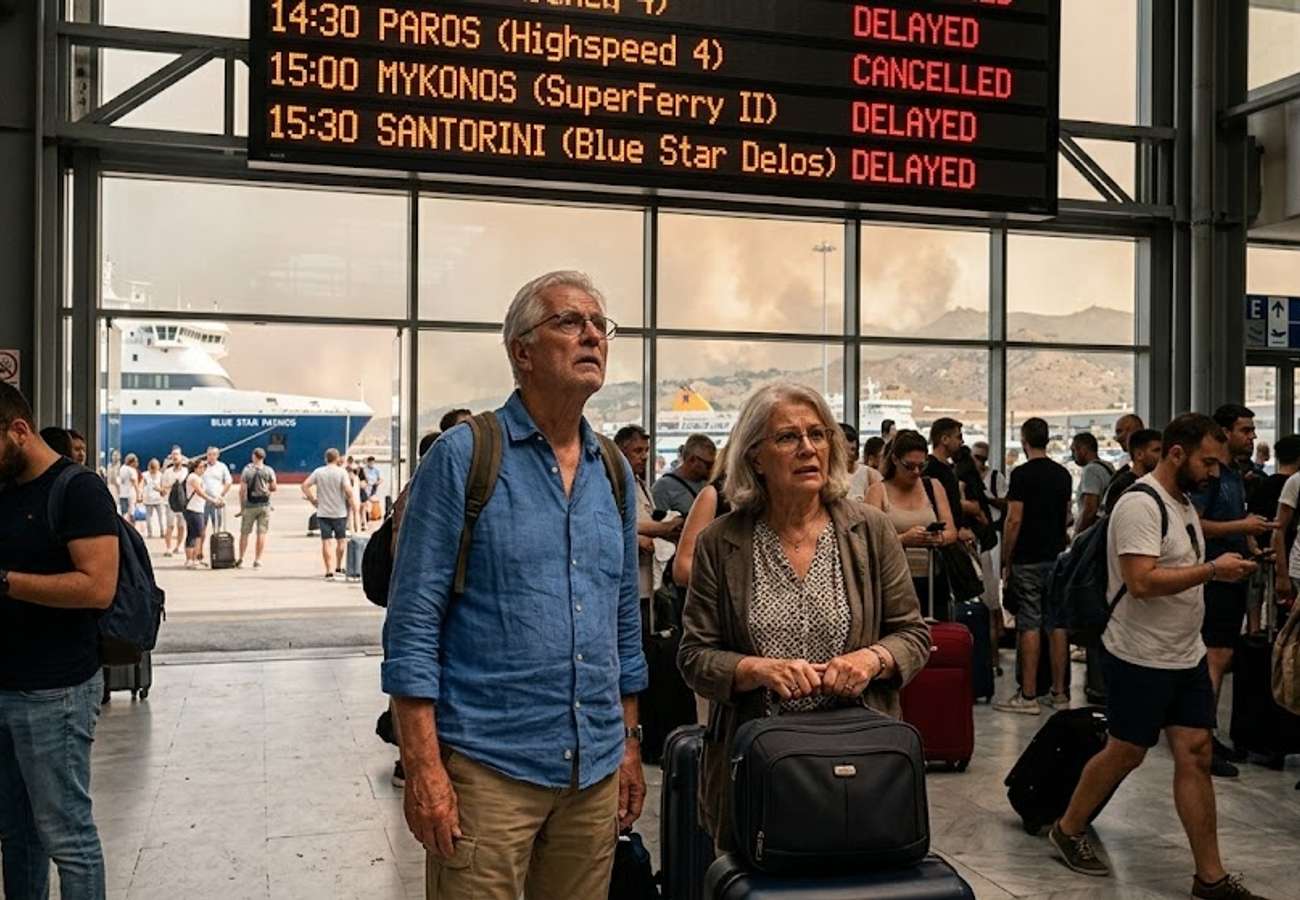
Image generated by AI
I've been tracking Greece's summer patterns for fifteen years, and this July's updated UK travel advisory reflects real, seasonal risks that affect island-hopping plans and city breaks alike. The alert isn't a "don't go" warning—it's a "go prepared" reminder.
Wildfire Season Is Peak Threat Right Now
Between July and September, Greece enters its most dangerous fire window. I've personally delayed ferry crossings twice because mainland transport corridors shut down during active fire suppression operations. The Peloponnese, western Crete, and mainland Thessaly regions see the highest risk.
The Greek Civil Protection Authority issues SMS alerts directly to phones registered in Greece (you can sign up via their emergency notification system). Last summer, a fire near Rafina closed the Athens-to-island ferry terminal for 36 hours. Check the Copernicus Emergency Management Service before booking ferries—they publish real-time fire maps with active incident locations.
Monitor local evacuation notices on the Hellenic Fire Service website before heading to rural areas. Even minor fires can trigger road closures that strand you in villages without functioning bus services.
"I got stuck in Naxos for two extra days because ferry schedules changed due to smoke near Mykonos. Nobody told me to check fire warnings beforehand. Download the Diktyo app—it sends actual Greek civil protection alerts in English." — u/IslandHopper_GR, r/greece
Heatwaves Peak in Early Afternoon—Plan Around It
July and August regularly hit 38-42°C (100-107°F) in Athens and many islands. I've watched tourists collapse at the Acropolis Museum entrance at 2 PM, then return at sunset completely fine. The heat isn't just uncomfortable; it genuinely kills.
Restructure your day: explore archaeological sites and museums before 11 AM, rest during 1-4 PM (when locals close shops entirely), then resume evening walks. In Plaka, the narrow streets provide natural shade—avoid open squares like Syntagma during midday. Island villages like Parikia (Paros) have covered arcades specifically designed for summer movement.
Pharmacies stock isotonic drinks cheaply (€1-2). Refill water bottles at public fountains—Greek tap water is safe throughout the country. The Vrellos Fountain in central Athens dispenses cold water 24/7.
Ferry Strikes Disrupt Island Connections Without Warning
Greece's ferry system runs on razor-thin labor margins. I've seen strikes announced 48 hours before departure, leaving travelers scrambling to switch islands. The major operators—Minoan Lines, ANEK, and Blue Star—each have their own labor agreements that expire at different times.
Check Gtp.gr daily if your itinerary involves ferries. They publish strike notices in English within hours of announcements. Taxi boats offer alternatives but cost 4-5 times ferry rates (€40-80 vs. €10-20). I've used them once when ferries closed between Mykonos and Delos—worth the premium for time-sensitive plans.
The Athens port (Piraeus) shuts completely during major strikes. If you're island-hopping from the capital, book return ferries for 2-3 days before departure, not the day-of.
Demonstrations in Athens Center—Avoid Government Districts
Protests happen monthly in central Athens, usually organized in advance. I've walked past three separate demonstrations without incident because they're confined to Syntagma Square and Monastiraki. The metro actually stops service during larger actions, which is your clearest warning.
Stay out of Vassilissis Sofias Avenue (government row) on known strike dates. Tourist zones like the Plaka, Psyrri, and Gazi neighborhoods stay open and unaffected. Use Google Maps real-time traffic to check for road closures before heading downtown. Hotels staff know march schedules well in advance—ask your accommodation.
Petty Theft Clusters in Specific Locations
I've never been robbed in Greece, but I've watched pickpockets work the Attiko Metro line between Omonia and Monastiraki. They target distracted tourists with open backpacks.
Keep phones in front pockets on crowded metro cars. Leave passports in hotel safes; a photocopy suffices for police checks. The No. 1 theft zone is Omonia Station (7 AM-9 AM commute rush). Avoid it. Use Monastiraki or Syntagma stations instead. The Piraeus ferry terminal sees bag theft on overnight boat days—lock luggage to benches using cable locks, or hire luggage storage (€5-8 per day).
Earthquake Risk Is Low But Present
Greece sits on seismic fault lines. Minor tremors (3.5-4.5 magnitude) occur monthly but barely register. The risk exists; it's not negligible. Familiarize yourself with "drop, cover, hold on" procedures before arrival.
High-risk zones for stronger activity: Rhodes, Crete's eastern end, and the Ionian Islands (Corfu, Kefalonia). Modern buildings code-compliant; older structures may be riskier. If you feel a tremor, move away from windows and doorways.
Entry Rules Haven't Changed Since 2020
UK travelers get 90 days visa-free under Schengen rules. Your passport needs three months validity beyond departure. That's firm. Bring proof of return travel (flight booking) and accommodation addresses—I've been asked for both at Athens airport.
The UK-EU travel registration system (to be implemented) may require ETIAS pre-approval in 2026. Check gov.uk/visit-eu for updates 2-3 months before travel.
Practical Visitor Guide
Best Times to Visit
Avoid: July 15-August 25 (peak heat, crowding, ferry chaos). Visit instead: Late May-early June or September 1-30. September combines warm water, manageable temperatures (28-32°C), and fewer ferry disruptions.
Local Safety Summary
Greece ranks in the top 5 safest European destinations. Violent crime against tourists is extremely rare. Standard big-city awareness (don't flash expensive gear, avoid unlit streets solo at night) covers 99% of scenarios. Police presence is strong in tourist areas; officers speak English in central zones.
Budget Expectations
Meals: €8-15 for taverna dinners in residential neighborhoods (€25-35 in Plaka). Ferries: €10-40 depending on island distance. Hotels: €40-80/night mid-range outside peak season, €100-200 peak. Public transport cards (7-day): €30. Museum entries: €12-16 standard, €8 reduced.
Cash remains necessary—many small shops and ferries don't accept cards.
Before You Depart
Register with your embassy (UK Foreign Office LOCATE service). Download offline maps (Maps.me works without data). Photograph your passport and travel insurance documents. Subscribe to civil protection SMS alerts for your destination regions. Save ferry operator phone numbers locally.
Greece in summer demands respect for heat and logistics, not fear—prepare for disruptions and you'll have the trip you planned.
Related Travel Guides
Disclaimer
This article is for informational and educational purposes only. It does not constitute legal, financial, or professional advice. While we strive to provide accurate and up-to-date information, travel policies, regulations, and conditions change rapidly. Always verify information with official sources before making travel decisions. Nomad Lawyer makes no representations about the accuracy, reliability, completeness, or suitability of the information provided. Readers should consult qualified professionals for advice specific to their circumstances. The views expressed in this article are those of the author and do not necessarily reflect the views of Nomad Lawyer.
Preeti Gunjan
Contributor & Community Manager
A passionate traveller and community builder. Preeti helps grow the Nomad Lawyer community, fostering engagement and bringing the reader experience to life.
Learn more about our team →