
Sunland Baobab Bar Collapse Shuts Limpopo Ecotourism Site
The legendary 1,700-year-old Sunland Baobab Bar near Modjadjiskloof, South Africa, remains permanently closed following its structural collapse.

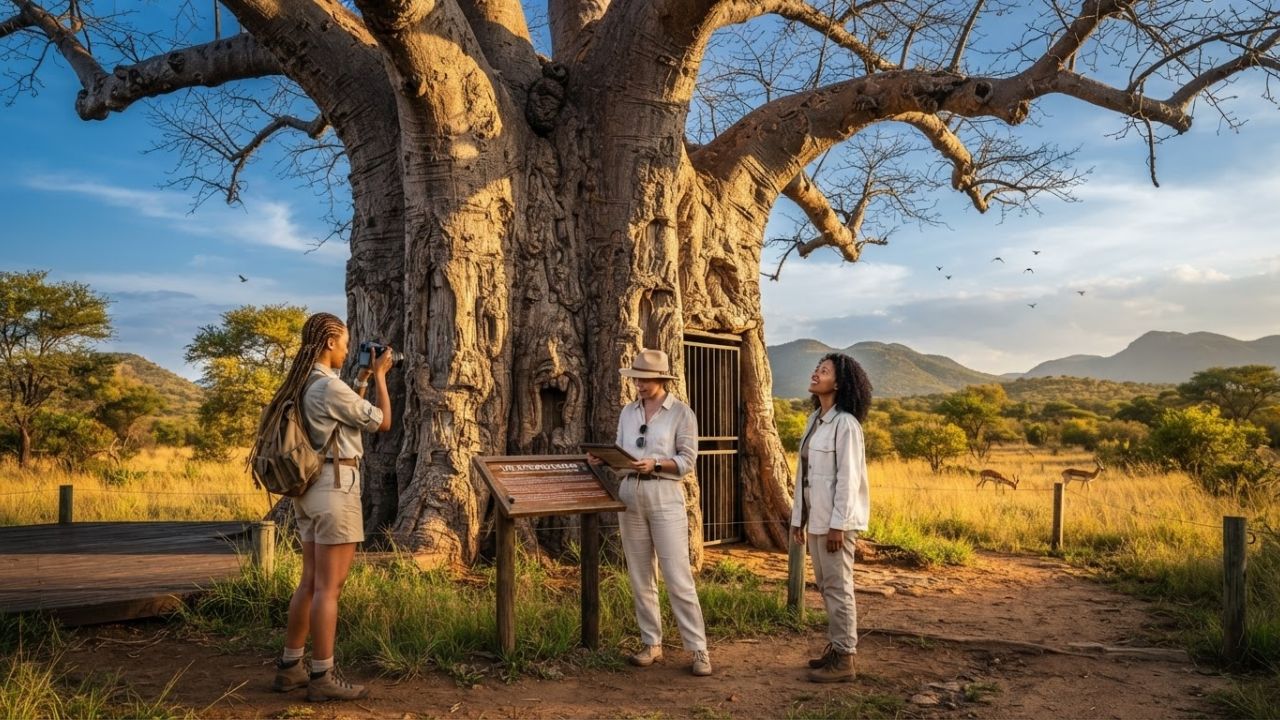
Image generated by AI
The legendary 1,700-year-old Sunland Baobab Bar near Modjadjiskloof, South Africa, remains permanently closed following its structural collapse under climate-induced drought stress.
A legendary natural landmark in South Africa remains permanently closed to the public following a complete structural failure. The Sunland Baobab, an ancient specimen of Adansonia digitata situated on Sunland Farm near Modjadjiskloof, gained global fame when its hollowed core was cleared in 1993 to establish the Big Baobab Tree Bar.
Between 2016 and 2017, the tree—which radiocarbon dating determined to be between 1,000 and 1,700 years old—suffered severe structural fractures and collapsed under its own weight. The collapse obliterated the interior pub space, which had historically accommodated 15 to 20 patrons under 13-foot ceilings and featured a draft beer system and a subterranean wine cellar.
Ecotourism Status and Transit Specifications
Since the structural collapse, local tourism ministries and farm operators have suspended all interior access. The following table provides the operational parameters and regional transit connections for visitors traveling through the Limpopo province.
| Parameter / Feature | Historical Specification (1993 - 2016) | Post-Collapse Status (2017 - 2026) | Transit Access Route / Mode | Ecotourism Preservation Policy |
|---|---|---|---|---|
| Big Baobab Tree Bar | 13-foot ceilings; draft beer lines | Permanently closed / Destroyed | R36 highway from Tzaneen to Modjadjiskloof | Restrictive entry; exterior observation only |
| Wine Cellar & Cavern | Subterranean ventilation; 15-20 patrons | Obliterated in structural collapse | Rental vehicle from Polokwane (PTG) | No entry allowed; structural hazard zone |
| Living Botanical Archive | 1,000 to 1,700 years old (dated) | Fallen trunk / Ecological monitoring | Long-distance bus to Tzaneen + local shuttle | Climate stress study; bio-indicator monitoring |
Transit connections and local guidelines updated in coordination with the Limpopo Tourism Agency.
Traveler Logistics and Regional Commuting Guide
From a ground-level perspective, the best way to navigate this is to rent a vehicle directly at Polokwane International Airport (PTG) rather than relying on regional public transit, which does not run schedules to rural sites in the Limpopo province. Traveling by road from Polokwane requires driving north toward Tzaneen via the R71 highway before connecting to the R36 road to Modjadjiskloof.
To organize your regional itinerary:
- Connections and Layovers: If flying into South Africa via O.R. Tambo International Airport (JNB) in Johannesburg, schedule a layover of at least four hours to complete international customs and baggage clearances before boarding domestic flights to Polokwane.
- Public Transportation: Visitors utilizing public transit must book a long-distance bus from Johannesburg or Pretoria to Tzaneen, where they must coordinate in advance with a local registered shuttle provider to reach the Sunland Farm gates.
- Site Restrictions: Under modern conservation guidelines, entry into the tree's remaining hollow segments is strictly prohibited. Ecotourists are restricted to exterior viewing corridors to ensure visitor safety.
- Limpopo Regional Activities: Re-route travel itineraries to nearby attractions, such as the Modjadji Cycad Nature Reserve or the organic farm stalls of the Magoebaskloof area, which support sustainable community initiatives.
Climate Pressures and Global Baobab Preservation
The demise of the Sunland Baobab is not an isolated event. Botanical researchers from the South African National Parks (SANParks) and global conservation ministries note that several ancient baobabs across Africa have experienced sudden structural collapses over the last two decades. Scientific consensus indicates that shifting climatic patterns, lower groundwater tables, and prolonged drought cycles are the primary environmental stressors.
These events highlight the vulnerability of millennial specimens to rapid environmental degradation. Ecotourism policies have shifted away from commercial modifications of natural monuments toward passive observation, habitat protection, and strict ecological monitoring to preserve surviving botanical archives.
Related Travel Guides
Where to Watch the 2026 Perseids Meteor Shower: The Ultimate Astrotourism and Commuter Guide
Bolivia Altiplano Night Excursions: Dark Sky Tourism
10 Best Ecotourism Destinations in South Africa, According to Reddit
Disclaimer
This article is for informational and educational purposes only. It does not constitute legal, financial, or professional advice. While we strive to provide accurate and up-to-date information, travel policies, regulations, and conditions change rapidly. Always verify information with official sources before making travel decisions. Nomad Lawyer makes no representations about the accuracy, reliability, completeness, or suitability of the information provided. Readers should consult qualified professionals for advice specific to their circumstances. The views expressed in this article are those of the author and do not necessarily reflect the views of Nomad Lawyer.
Kunal K Choudhary
Co-Founder & Contributor
A passionate traveller and tech enthusiast. Kunal contributes to the vision and growth of Nomad Lawyer, bringing fresh perspectives and driving the community forward.
Learn more about our team →