
Sri Lanka Tourism Gains Global Edge as Five of Skytrax Top Six Airlines Connect Colombo
Sri Lanka Tourism Gains Global Edge as Five of Skytrax Top Six Airlines Connect Colombo

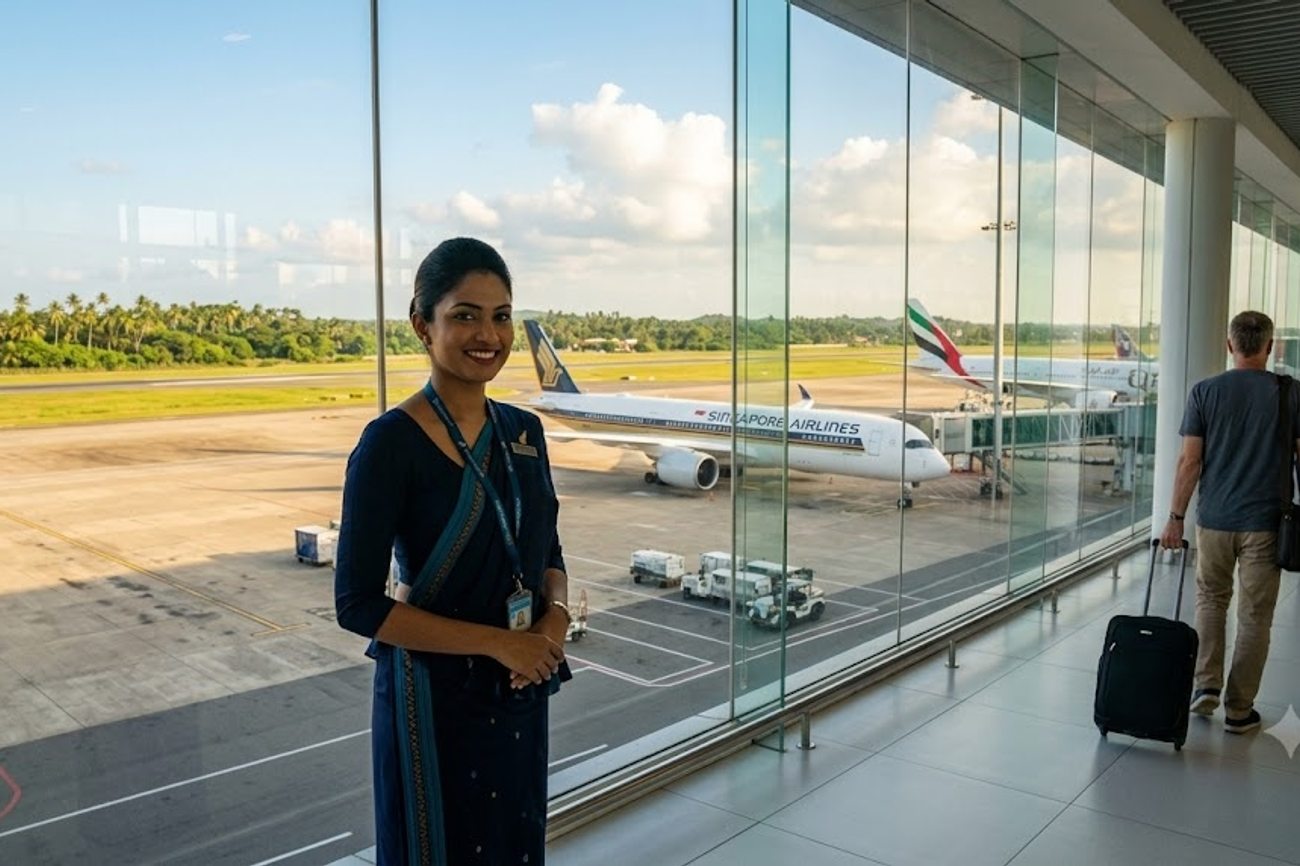
Image generated by AI
Five of the six highest-rated airlines on the planet now funnel travelers into Colombo, yet the island's true rhythm is found far from the tarmac of Bandaranaike International Airport. While the 2026 Skytrax Airline Awards highlight a massive surge in luxury connectivity, the real story for the modern nomad is how this accessibility is colliding with a volatile global climate and a shifting local economy.
The Colombo Connection: A New Era of Access
The aviation landscape for Sri Lanka has shifted into a high-gear phase of connectivity. In a rare industry alignment, five of the top six global carriers—Singapore Airlines, Qatar Airways, Cathay Pacific, Turkish Airlines, and Emirates—all maintain active operations in Colombo. Only ANA All Nippon Airways remains absent from this elite list. For the traveler, this means the island is no longer a "difficult" destination; it is a globally linked node.
The scale of this access is staggering. Emirates, celebrating 40 years of operations in 2026, has moved over 15 million passengers across 97,000 flights since April 1986. Their three daily flights link Colombo to more than 135 destinations via Dubai. Similarly, Cathay Pacific provides a gateway to over 100 destinations, while Turkish Airlines bridges the gap between Colombo and major Western hubs like New York, Paris, Milan, and London.
Perhaps most significant for those traversing Asia is the expansion of Singapore Airlines. Starting 1 May 2026, the carrier increased its weekly frequency from 10 to 14 services, offering twice-daily flights during the northern summer. This makes Colombo an increasingly viable stopover for those moving between Southeast Asia and the West.
The Friction Between Access and Reality
Despite the gold-standard airline connectivity, the ground reality of 2026 shows that air access is not a magic bullet. The Sri Lanka Tourism Development Authority (SLTDA) reports a fragmented year. Between January and August 2026, the country welcomed 1,535,122 international tourists. While January (277,327) and February (279,328) saw growth of 9.7% and 16.2% respectively, the momentum crashed in March and April, with arrivals dropping by 19.8% and 22.3% compared to 2025.
This volatility reveals the island's vulnerability to external shocks. The Central Bank of Sri Lanka noted a 9.9% year-on-year decline in June arrivals, citing conflict in the Middle East. Because so many travelers rely on Gulf hubs, a tremor in the Middle East manifests as a quiet hotel lobby in Kandy or a vacant beach in Mirissa.
The economic stakes are high. Cumulative tourism earnings from January through July 2026 reached approximately US$1.8 billion, but this was an 11.5% decrease from the same period in 2025. Interestingly, July 2026 showed a disconnect between volume and value: while arrivals dipped by 1.7% to 196,845, earnings increased sharply from June, suggesting a shift toward higher-spending, premium travelers.
What Makes Sri Lanka Different
Sri Lanka is not a destination for the rigid itinerary. It is a place of extreme geographic compression. Within a few hours of leaving the airport, you can move from the humid, colonial chaos of Colombo to the misty, tea-covered peaks of Nuwara Eliya.
The island's appeal lies in its refusal to be one thing. It is a sanctuary for wildlife—where leopards roam Yala and elephants congregate in Minneriya—and a bastion of ancient spirituality. The UNESCO World Heritage sites, from the fortress of Sigiriya to the sacred city of Kandy, offer a depth of history that dwarfs the modern luxury of the new airline lounges.
The experience here is defined by "island time." Despite the efficiency of a Singapore Airlines flight, once you land, the pace slows. The luxury is found in the sensory overload: the scent of cinnamon in the air, the rhythmic clatter of the blue trains winding through the highlands, and the genuine, unsolicited hospitality of the rural villages.
Visitor Insider Tips
To experience Sri Lanka through a local lens rather than a brochure, you must navigate the gaps between the major hubs.
Timing and Flow Avoid the "peak of the peak." While the aviation data shows heavy traffic in January and February, the mid-shoulder seasons offer a more authentic experience. If you visit in May, you can capitalize on the increased flight frequencies from Singapore while avoiding the crowds of the winter rush.
The strategic presence of world-leading carriers at Bandaranaike International Airport has significantly streamlined passenger logistics for high-net-worth travelers. This enhanced connectivity is a primary driver in the growth targets set by the Sri Lanka Tourism Development Authority, aiming to position the island as a premier global destination.
The Visa Hack As of 25 May 2026, the Department of Immigration and Emigration implemented a free-of-charge 30-day tourist visa under the ETA scheme for 40 countries. This includes the US, UK, Canada, Australia, Japan, South Korea, and several European nations. Ensure you apply via the official Sri Lanka ETA portal to avoid third-party processing fees.
Local Transport Nuances While luxury vans are the standard for tourists, the real soul of the country is on the trains. Book your tickets to Ella or Nuwara Eliya weeks in advance through official channels. For shorter hops, use ride-hailing apps in Colombo to avoid the "tourist tax" often applied to street tuk-tuks.
Regional Specialties Move beyond the standard curry. Seek out Kottu Roti from a street vendor at night—the rhythmic chopping of the metal blades is the soundtrack of Sri Lankan cities. In the south, try the fresh seafood in Galle, but venture into the smaller alleys away from the fort to find the authentic Lamprais (rice and meat baked in a banana leaf).
Cultural and Environmental Context
The influx of high-capacity air travel brings a complex set of challenges. The reliance on major hubs means the local economy is now tethered to global geopolitical stability. When the Middle East experiences unrest, the ripple effect hits the small-scale guest house owner in the Hill Country.
There is also a delicate balance between accessibility and preservation. The ease of entry—highlighted by the free visa scheme—increases the pressure on fragile ecosystems. The "over-tourism" of spots like Sigiriya is a constant concern for conservationists. Travelers are encouraged to distribute their footprint by visiting the less-trodden North and East, supporting communities that didn't benefit from the initial post-war tourism boom.
The interaction between the luxury "bubble" of the top-six airlines and the rural reality of the island creates a stark contrast. The challenge for Sri Lanka in 2026 is ensuring that the US$1.8 billion in earnings doesn't just stay in the boardrooms of Colombo hotels but filters down to the guides and artisans who preserve the island's heritage.
FAQ: Visiting Sri Lanka 2026
What is the best time to visit? For the west and south coasts, December to March is ideal. For the east coast and cultural triangle, May to September offers better weather. Avoid April if you dislike heavy monsoon rains.
Do I need a visa? Nationals of 40 countries (including US, UK, and EU) are eligible for a free 30-day double-entry tourist visa under the ETA scheme as of May 2026. Always verify your specific nationality on the official government site.
How do I get there from major hubs? Colombo is highly connected. You can fly direct or via major hubs like Dubai (Emirates), Doha (Qatar Airways), Singapore (Singapore Airlines), or Istanbul (Turkish Airlines).
Is it safe for solo travelers? Yes, Sri Lanka is generally very safe for solo travelers. Local communities are welcoming, though standard precautions regarding transport and nighttime travel in remote areas are advised.
The island is no longer a remote secret, but its magic still resides in the places where the paved roads end.
Related Travel Guides
- US-China Aviation Tensions Put New York Tourism Recovery in Spotlight as High-Value Chinese Travel Lags
- FlyOne Armenia Opens New Yerevan-Belgrade Route Creating Direct Travel Link Between Armenia and Serbia
- UK easyJet Launches London Southend Munich Route Boosting Germany Travel Connectivity Ahead of 2026 Season
Disclaimer
This article is for informational and educational purposes only. It does not constitute legal, financial, or professional advice. While we strive to provide accurate and up-to-date information, travel policies, regulations, and conditions change rapidly. Always verify information with official sources before making travel decisions. Nomad Lawyer makes no representations about the accuracy, reliability, completeness, or suitability of the information provided. Readers should consult qualified professionals for advice specific to their circumstances. The views expressed in this article are those of the author and do not necessarily reflect the views of Nomad Lawyer.
Preeti Gunjan
Contributor & Community Manager
A passionate traveller and community builder. Preeti helps grow the Nomad Lawyer community, fostering engagement and bringing the reader experience to life.
Learn more about our team →