Spirit Airlines Bankruptcy Triggers Massive Shift to Intercity Coach Travel

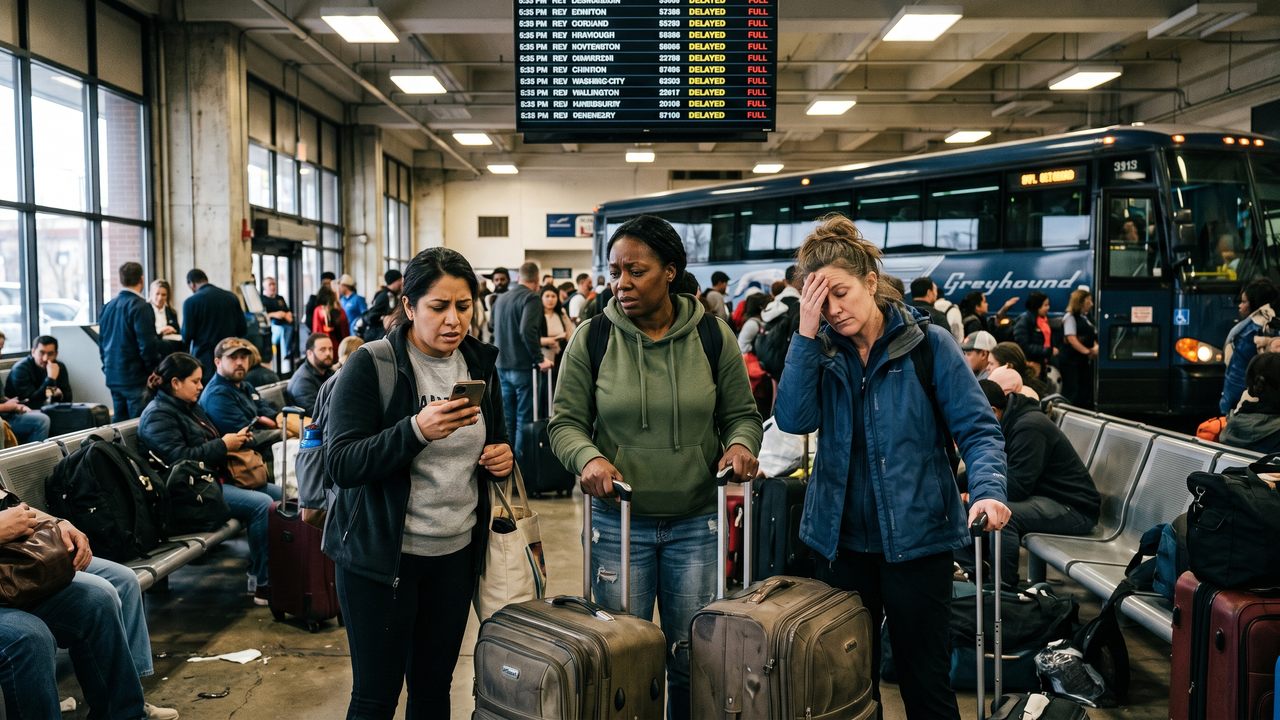
Image generated by AI
The total operational shutdown of Spirit Airlines in May 2026 has forced millions of budget-conscious passengers back onto the highway, resulting in a record-breaking surge for intercity bus operators.
The Core Development
The liquidation of Spirit Airlines has removed a primary low-cost aviation option for working-class Americans. This vacuum has led to a rapid migration toward interstate coach services, specifically benefitting Greyhound and its parent company, Flix North America.
Industry data indicates that passengers are no longer simply choosing buses over planes for specific trips; they are abandoning commercial aviation entirely due to a widening pricing gap and systemic instability in the airline sector.
Key Facts Breakdown
- Demand Spike: Online search queries for Greyhound increased by 20% year-over-year.
- Route Correlation: Passenger traffic on highway corridors overlapping defunct Spirit flight paths rose by 30%.
- Pricing Disparity: Domestic airfares have surged 27% year-to-date, while coach ticket prices remained stable with only a 4% increase.
- Demographic Shift: A 27% decline in licensed 16-year-old drivers since 2000 is creating a permanent "non-driving" consumer class.
- Fleet Upgrades: Operators are introducing "two-and-one" seating layouts, high-speed Wi-Fi, and personal power outlets to attract Gen Z and Millennial travelers.
- Infrastructure Response: Cities including Chicago, Boston, Atlanta, and Houston are initiating municipal projects to restore dilapidated transit hubs.
Price Comparison Analysis
| Travel Mode | Year-to-Date Price Change | Example Fare Point |
|---|---|---|
| Commercial Air | +27% | ~$500 |
| Intercity Coach | +4% | ~$53 |
Why This Matters
The collapse of Spirit Airlines is not merely a corporate failure; it is a catalyst for a structural realignment of US domestic transit. For decades, ultra-low-cost carriers (ULCCs) acted as a social safety net for low-income mobility. With that net gone, the "democratization of flight" has ended, reverting budget travel to the road.
Market trends suggest this is not a temporary spike. The intersection of rising aviation fuel costs, inflationary pressure on tickets, and a generational decline in car ownership is creating a sustainable, high-growth market for coach operators. The transition of bus travel from a "last resort" to a "calculated choice" is further evidenced by the aggressive capital investment in fleet modernization and the municipal urgency to rebuild urban terminals.
Industry Outlook
Expect a continued aggressive expansion of digital scheduling algorithms designed to link university towns directly with metropolitan hubs. As municipal governments in cities like Chicago move to purchase and restore central stations, the physical infrastructure will begin to catch up with the digital demand. The long-term trajectory indicates that intercity coaches will cease to be viewed as legacy transport and instead emerge as the primary utility for the non-driving, budget-dependent American demographic.
Related Travel Guides
This article is for informational purposes. Flight routes, passenger regulations, visa rules, and transit advisories are subject to change by airlines and aviation authorities. Readers are advised to verify schedules and travel documentation with relevant carriers and border agencies before departure.
Related Stories

Jamaica Welcomes a New Wave of Canadian Travel With Four Nonstop Flight Routes

American Airlines Flight AA1494 Diverts to Phoenix: Door Tampering Scare, Passenger Rights, and Holiday Air Security