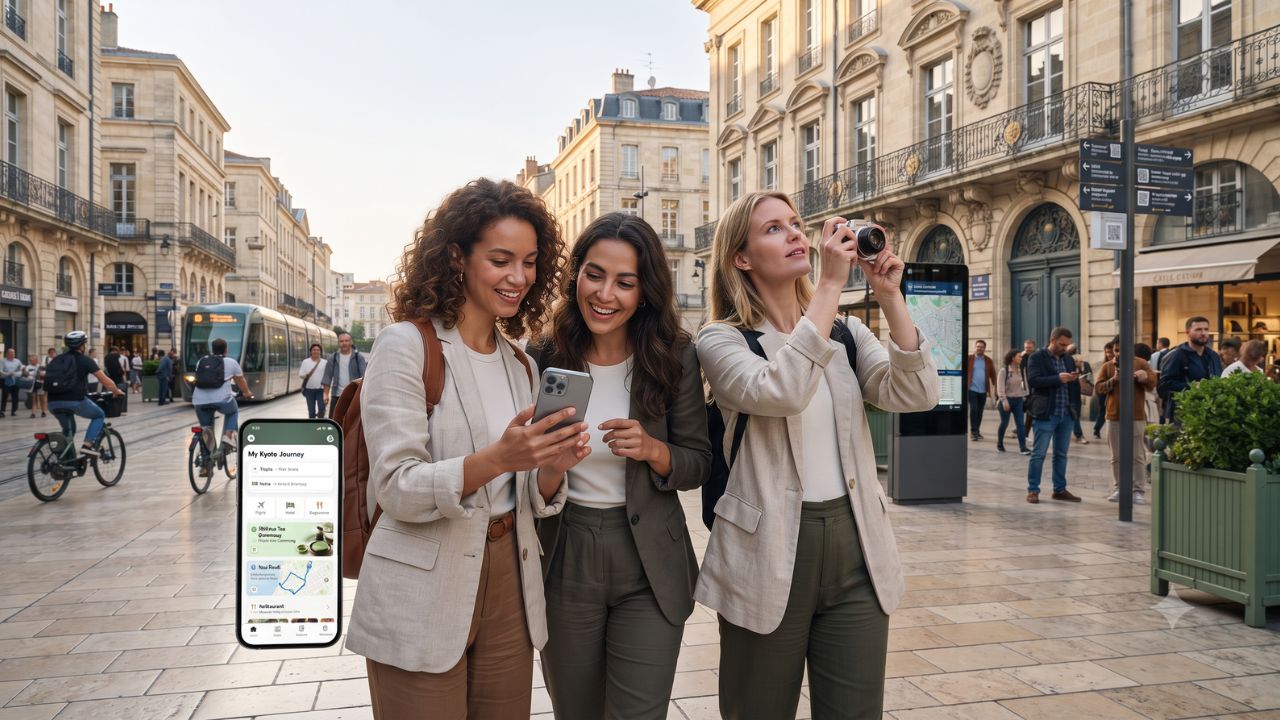
Finland Spotlights Digital Travel Tools Shaping European City Breaks


European city breaks are being fundamentally reshaped by municipal digital innovations, as destination authorities across Finland, Austria, and Croatia deploy contactless transit payments, integrated sports event ticketing, and predictive crowd-management algorithms. In Tampere, a single ice hockey ticket grants access to the city tram network; in Vienna, bank card taps unlock underground rail journeys while digital apps guide visitors beyond crowded royal palaces; and in Dubrovnik, real-time algorithms forecast pedestrian congestion across medieval limestone corridors. Yet, as urban tourism leaders examine the true influence of smart travel tech, evidence indicates that while digital tools significantly improve on-the-ground visitor satisfaction and accessibility, foundational factors—including safety, architectural heritage, and overall value—continue to drive initial destination selection.
Short-stay urban getaways have become one of the most dynamic segments of European tourism, accounting for approximately 19 percent of all intended personal journeys across the continent. With international travelers generating 48.9 percent of all tourist accommodation nights across the European Union in the first half of 2026—a cohort expanding at a rate of 2.5 percent year-on-year compared to 0.9 percent for domestic visitors—the pressure on municipal infrastructure has intensified. For visitors staying only 48 to 72 hours, friction during the initial journey from an arrival terminal or transit station can define the entire holiday experience.
In response, forward-thinking European municipalities are pioneering smart tourism infrastructure. However, the operational approaches in Tampere, Vienna, and Dubrovnik illustrate that technology is most potent when treated not as a marketing gimmick, but as an invisible, practical utility that harmonizes visitor flows, removes ticketing confusion, and preserves community livability.
SMART TOURISM ARCHITECTURE ACROSS THREE EUROPEAN HUBS
| Column 1 |
|---|
| +--------------------------+ +--------------------------+ |
| +--------------------------+ +--------------------------+ |
| +-------------------+--------------------+ |
| v |
| +--------------------------+ |
| +--------------------------+ |
The First Journey Dynamic: Why Initial Transit Shapes Visitor Perception
For international travelers visiting a foreign city for a weekend break, time represents the scarcest resource. Unlike local residents who intuitively understand zone boundaries, transfer windows, and transit card validations, overseas guests often encounter ticketing machines featuring unfamiliar languages, confusing fare tiers, and complex validation rules.
Data from Eurostat underscores why resolving transit friction is urgent: during the first six months of 2026, foreign guests accounted for nearly half of all nights spent in EU tourist accommodations. When an international visitor wastes an hour deciphering a ticket kiosk at an airport train platform, satisfaction declines immediately. Conversely, frictionless transit systems that accept universal contactless bank cards or combine event admissions with public mobility instill confidence, encouraging travelers to explore neighborhoods well outside traditional tourist cores.
EUROPEAN UNION TOURISM DEMAND INDICATORS (H1 2026)
| Indicator Metric | Recorded Performance & Growth Rate |
|---|---|
| Share of International Overnights | 48.9% of total EU tourist accommodation nights |
| Inbound International Growth Rate | +2.5% Year-on-Year Expansion |
| Domestic Inbound Growth Rate | +0.9% Year-on-Year Expansion |
| City Break Share of Intended Trips | 19.0% of total intended leisure journeys |
| AI Adoption for Trip Planning | 40.0% of travelers surveyed across 10 markets |
| Primary Destination Choice Driver | Personal Safety & Security (Ranked #1) |
Destination Selection vs. Destination Navigation
A vital insight emerging from recent pan-European travel surveys is the structural divergence between what persuades someone to book a trip versus what satisfies them once they arrive.
While 40 percent of prospective travelers across ten key European source markets reported utilizing artificial intelligence or digital platforms for travel inspiration, itinerary research, or booking assistance, digital sophistication alone rarely dictates destination choice. When travelers evaluate potential city-break destinations, personal safety consistently ranks as the paramount factor, followed by pleasant and predictable seasonal weather, appealing flight and lodging packages, and cultural attractions.
Digital utilities serve as operational enablers rather than primary motivators. An intuitive transit payment app or a digital walking guide will rarely persuade a traveler to pick Tampere over Paris or Dubrovnik over Rome; however, once the destination is selected, those digital tools determine whether the traveler experiences effortless mobility or frustrating administrative delays.
PAYMENT HABITS ACROSS THE EURO AREA: CASH VS DIGITAL
| Entity / Route | Metrics | Operational Status |
|---|---|---|
| Payment Modality | Overall Eurozone Share | National Variance Snapshot |
| Physical Bank Cards | 45.0% of POS purchases | Heavy dominance in Northern Europe |
| Physical Cash Currency | 44.0% of POS purchases | Strong in Central & Southern Europe |
| Mobile / Smart Device | 9.0% of POS purchases | Rapidly accelerating demographic |
| Cash Preference (FIN) | 10.0% of retail buyers | One of Europe's lowest cash ratios |
| Cash Preference (AUT) | 39.0% of retail buyers | Cultural commitment to paper money |
Payment Diversity: The Coexistence of Cards and Cash
The implementation of smart city tools must also navigate deep-seated cultural differences in consumer payment habits. While the euro provides a unified physical currency across twenty nations, payment behaviors diverge dramatically from one border to the next.
Across the euro area, bank cards account for 45 percent of retail shop transactions, closely matched by cash at 44 percent, while mobile payments represent 9 percent. In Finland, consumer preference for physical cash in shops has plummeted to just 10 percent, establishing the nation as one of the world's most cashless societies. Conversely, across Austria, 39 percent of retail buyers actively express a preference for cash transactions, citing financial privacy, budgetary control, and personal habit.
For municipal tourism authorities, this dichotomy proves that true smart tourism cannot be entirely digital. While 82 percent of surveyed European consumers place high value on having digital payment options, 62 percent equally value the preservation of cash alternatives. Cities that dismantle all cash avenues risk alienating significant visitor cohorts.
Tampere, Finland: Contactless Transit, Major Events, and Universal Accessibility
Recognized internationally for its forward-thinking urban infrastructure, Tampere—Finland's third-largest city and the self-proclaimed Sauna Capital of the World—has developed one of Northern Europe’s most streamlined smart transit ecosystems.
TAMPERE SMART MOBILITY & TRANSIT FRAMEWORK (NYSSE)
| Category / Entity | Details / Impact |
|---|---|
| Feature / Technology | Operational Policy & Passenger Guidelines |
| Transit Modes Covered | City Trams (Ratikka) and Municipal Buses (Nysse) |
| Excluded Transit Modes | National Railway Trains (VR) operating through city |
| Payment Hardware Supported | Visa, Mastercard, Apple Pay, Google Pay, Smartwatches |
| Automated Fare Capping | Best-price caps over 90 minutes and rolling 24 hours |
| Device Allocation Rule | Strictly ONE passenger per payment method |
| Event Ticketing Integration | Select match tickets include automated transit access |
| World Floorball Champs 2026 | Match ticket valid 1h before game to 4h after start |
| Digital Journey Planner | Open browser search with dedicated wheelchair filter |
| Accessible Nature Trails | 4 barrier-free trails; Lake Pyhäjärvi Braille beach |
Contactless Transit Capping on the Nysse Network
In Tampere, navigating municipal trams and buses operated by the regional transport authority, Nysse, requires no specialized transit card or pre-downloaded mobile software. Visitors simply tap a contactless debit card, credit card, or smart device against the onboard reader upon boarding.
The underlying digital architecture tracks passenger journeys across selected travel zones, automatically applying price capping:
- 90-Minute Window: Passengers can transfer between multiple buses and tram lines within a 90-minute window, with the system calculating single-ticket pricing based on the fare zones crossed.
- 24-Hour Rolling Cap: If a visitor takes multiple journeys throughout a day, the system automatically caps the total charge at the 24-hour day-ticket rate, ensuring visitors never overpay.
However, international travelers must understand strict operational boundaries:
- One Card, One Passenger: Unlike certain transit terminals that permit multiple ticket purchases against a single card, Tampere enforces a strict one-to-one rule. A bank card or smartphone covers exactly one traveler. Two companions cannot board a tram and tap the same payment card twice; each individual must present an independent card, phone, or wearable device.
- Train Exclusions: Contactless bank card taps do not apply to regional or intercity train services operated by national rail carrier VR, even when traveling between stations situated within the Tampere municipal boundary.
Match Tickets That Unlock Public Transit
Tampere bridges the gap between spectator sports and urban mobility by integrating public transport access directly into major event ticketing. At Nokia Arena—a state-of-the-art downtown multipurpose entertainment and sports venue—tickets for home ice hockey fixtures of local elite clubs Ilves and Tappara automatically double as valid transit passes on all Nysse buses and trams.
Spectators simply scan the barcode or QR code displayed on their physical or mobile match ticket against the transit scanner. This integrated model is scheduled for deployment during the men’s World Floorball Championships, hosted in Tampere from December 5 to 13, 2026:
- On tournament match days, the transit travel window activates exactly one hour before the day's first fixture commences.
- The validity window concludes four hours after the final match of the day begins, providing fans ample time to celebrate post-game dining downtown before boarding nighttime trams back to their accommodations.
Comprehensive Accessibility and Real-Time Environmental Inclusivity
True smart tourism extends beyond digital payments to encompass physical accessibility for travelers with disabilities. Tampere's online public journey planner operates without mandatory user registration, incorporating a dedicated wheelchair toggle that instantly filters out transit routes with inaccessible curbs, steep gradients, or non-low-floor vehicles.
In addition, municipal authorities have mapped barrier-free outdoor nature recreation:
- Four Barrier-Free Nature Trails: Located along the urban periphery, these trails feature level timber boardwalks, tactile guide paths, and accessible resting pavilions that allow wheelchair users and parents with strollers to experience Finnish wilderness.
- Lake Pyhäjärvi Accessible Beach: Situated within easy transit reach, this freshwater beach features dedicated concrete entry ramps extending into the water, sturdy supportive handrails, accessible changing cabins, and raised Braille orientation signage for visually impaired visitors.
Data Dashboards and Tourism Growth
Tampere’s focus on smart utility has paralleled remarkable tourism growth. In 2025, the city registered over 1.8 million accommodation nights across commercial hotels and short-term rentals, with international overnight stays climbing by more than 10 percent.
In 2026, the city unveiled an integrated municipal data dashboard consolidating hotel occupancy rates, real-time pedestrian mobility sensors along central commercial corridors, and transit ridership statistics. While this aggregated data empowers urban planners to schedule extra tram rotations during arena concerts, officials acknowledge that data dashboards alone do not create visitor desire; they simply ensure that when visitors arrive, municipal services operate smoothly.
Vienna, Austria: Tap+Ride Innovations and the ivie Digital Companion
Austria’s federal capital represents a global benchmark for cultural tourism, consistently ranking among the world's most livable metropolitan centers. Vienna’s strategy demonstrates how smart digital applications can complement, rather than replace, established cultural institutions and world-class public transport.
VIENNA SMART TOURISM UTILITY DIRECTORY
| Category / Entity | Details / Impact |
|---|---|
| Field / System | Operational Details & Scope |
| Tap+Ride Pilot Launch Date | 28 May 2026 (Structured One-Year Pilot Program) |
| Tap+Ride Purchase Stations | 9 High-Traffic U-Bahn Hubs (e.g., Stephansplatz, Hbf) |
| Multi-Ticket Transaction | Up to 5 tickets in same fare category in one payment |
| In-Transit Tap-Out Rule | No tap-out required; valid across central core zone |
| ivie Mobile App Reach | Over 2.0 Million Total Downloads by May 2026 |
| ivie Active User Base | Over 506,000 Verified Active Users in 2025 |
| Public Transport Rating | 1.54 out of 6 (where 1.0 represents highest score) |
| Primary Tourism Motivator | 80% of overnight guests cite arts, sights, & culture |
| Major Disruption Advisory | City Airport Train (CAT) suspended Aug 2026-Oct 2027 |
The Tap+Ride Transit Pilot
On May 28, 2026, Vienna’s public transit operator, Wiener Linien, inaugurated its one-year Tap+Ride pilot program, designed to simplify ticket acquisition for international visitors.
Under the pilot, passengers can purchase single-journey tickets using a contactless bank card, smartphone, or smartwatch at designated digital terminals situated across nine major underground (U-Bahn) hubs, including:
- Wien Hauptbahnhof (Central Railway Station)
- Wien Westbahnhof
- Stephansplatz (City Centre)
Once purchased at a pilot station, the digital ticket covers all interconnected subway trains, trams, and municipal buses throughout the central Vienna core zone (Kernzone Wien). Unlike distance-based systems in London or Tokyo, passengers do not tap out at the end of their journey.
Importantly, Vienna’s terminals solve a major family travel challenge observed in other cities: a single payment terminal in Vienna can issue up to five tickets in the same fare category in a single card tap, allowing a family or small group of friends to travel together under a single payment transaction.
Cultural Primacy: Why Visitors Choose Vienna
Comprehensive visitor surveys conducted by the Vienna Tourist Board (WienTourismus) demonstrate that digital technology plays an auxiliary role in destination appeal. Among surveyed international overnight guests staying in commercial accommodations:
- 80 Percent identified historic architecture, imperial monuments, classical music, and museum collections as their primary motivation for choosing Vienna.
- When evaluating their physical stay, visitors awarded Vienna’s public transport an exceptional rating of 1.54 on a six-point scale (where 1.0 represents the highest possible excellence), while the cityscape and architectural preservation scored 1.51.
These findings prove that visitors travel to Vienna for its cultural heritage and fall in love with its frictionless transit efficiency after arrival.
ivie: The City Guide That Disperses Crowds
To prevent tourism overcrowding at imperial landmarks such as Schönbrunn Palace, St. Stephen’s Cathedral, and the Hofburg, the Vienna Tourist Board developed ivie, a sophisticated digital city guide smartphone app. By May 2026, ivie had surpassed two million cumulative downloads, with official annual reports confirming more than 506,000 active users throughout 2025.
Beyond locating public drinking fountains and public restrooms, ivie curates themed walking routes that actively channel visitors into lesser-known residential districts:
- The Red Vienna Architecture Walk: Guides travelers through 1920s modernist social housing developments, including the massive Karl-Marx-Hof.
- The Werkbund Estate Route: Directs architectural enthusiasts to the 1932 Werkbundsiedlung in the 13th district, showcasing experimental homes designed by legendary modernists including Josef Frank, Adolf Loos, and Richard Neutra.
While active user metrics prove that travelers frequently open the application, municipal analysts recognize that tracking digital engagement does not automatically confirm physical dispersion; comprehensive neighborhood footfall studies are required to verify whether digital recommendations shift actual visitor spending into suburban boroughs.
Managing Severe Transit Disruptions Transparently
Smart tourism faces its truest test during major infrastructure closures. Travelers visiting Vienna between late 2026 and late 2027 must navigate significant transport adjustments:
- City Airport Train (CAT) Suspension: Due to extensive track and tunnel modernization, the dedicated non-stop City Airport Train connecting Vienna International Airport (VIE) with Wien Mitte is suspended from August 24, 2026, through October 31, 2027. Dedicated express replacement buses maintain passenger connections, though travelers must note that urban airline check-in at Wien Mitte is entirely unavailable during the works.
- Airport Tourist Info Office Closure: The physical tourist information counter inside the airport arrivals hall is scheduled to close on December 20, 2026. Visitors can seek in-person guidance at the central Tourist Info office on Albertinaplatz in downtown Vienna, or consult the city's 24/7 digital concierge, which provides real-time guidance in 90 languages.
Dubrovnik, Croatia: Predictive Crowd Algorithms and the Digital Dubrovnik Pass
Positioned along the Adriatic coast, the historic walled city of Dubrovnik represents an extraordinary case study in smart tourism intervention. Confronted by severe congestion driven by international cruise ship arrivals and summer holidaymakers, the UNESCO-listed city has turned to data science to safeguard its medieval core.
DUBROVNIK TOURISM & PASS ANALYTICS (2026)
| Performance Metric | Official Data / Recorded Statistic |
|---|---|
| Total Registered Arrivals (Jan-Oct) | 1,308,073 Total Inbound Travelers |
| Foreign Arrival Share (Jan-Oct) | 1,239,949 Foreign Visitors (94.8% Share) |
| Total Registered Overnight Stays | Exceeding 4.0 Million Foreign Overnight Nights |
| Dubrovnik Pass Sales (Jan - Sept) | 486,015 Passes Sold (389,752 Jan-Aug + 96,263) |
| September 2026 Pass Revenue | €4.14 Million (+19% Increase Year-on-Year) |
| Estimated Pass Utilization | Approximately 1 in 3 total visitors uses pass |
| Winter Pass 1-Day / 3-Day / 7-Day | €20.00 / €25.00 / €30.00 (Dec 2026 - Feb 2027) |
Navigating Overwhelming Inbound Foreign Reliance
Unlike larger European metropolitan areas supported by stable domestic travel, Dubrovnik operates in an environment of near-total foreign reliance. Official statistical records from January through October 2026 document 1,308,073 total visitor arrivals, of which an overwhelming 1,239,949—or 94.8 percent—originated from overseas markets, generating over four million overnight stays.
With hundreds of thousands of day-trippers and cruise passengers disembarking simultaneously at the Port of Gruž, pedestrian overcrowding along the historic Stradun thoroughfare historically threatened both visitor safety and resident quality of life.
The Predictive Crowd Forecasting Platform
To resolve this challenge, the City of Dubrovnik engineered an advanced, bilingual predictive crowd-forecasting platform. Accessible freely online, the algorithm integrates:
- Real-time cruise ship passenger docking manifests and port scheduling.
- Municipal hotel occupancy registrations and vacation rental check-ins.
- Historical airport international flight arrival numbers.
- Localized meteorological conditions and precipitation forecasts.
The platform categorizes projected congestion within the historic Old Town across four distinct visual levels. A family planning an excursion can consult the forecast 24 to 48 hours in advance, determining whether to explore the monumental City Walls in the early morning or defer their walk until late afternoon when cruise passenger excursions have returned to their ships. While the platform does not reserve a physical time-slot at specific monuments, it empowers travelers to avoid peak congestion windows independently.
The Dubrovnik Pass: Commercial Integration and Winter Incentives
The Dubrovnik Pass serves as the administrative cornerstone of the city’s visitor management strategy. Offered as an all-in-one digital ticket accessible via smartphone or printable voucher, the pass combines:
- Single-entry admission to the monumental City Walls.
- Free admission to all municipal museums, galleries, and cultural heritage sites.
- Unlimited rides aboard the Libertas municipal public bus network.
The commercial impact of the pass is immense. Over the first nine months of 2026, the city recorded 486,015 total pass sales, generating €4.14 million in revenue in September 2026 alone—a 19 percent revenue surge over the prior year. Revenue generated from pass sales is statutorily directed toward the preservation of Dubrovnik’s centuries-old stone monuments and local cultural foundations.
DUBROVNIK WINTER PASS STRUCTURE (DEC 2026 - FEB 2027)
| Entity / Route | Metrics | Operational Status |
|---|---|---|
| Pass Duration Tier | Consumer Price | Strategic Incentive / Traveler Value |
| 1-Day Winter Pass | €20.00 | Rapid access to City Walls and museums |
| 3-Day Winter Pass | €25.00 | Multi-day cultural exploration |
| 7-Day Winter Pass | €30.00 | Exceptional value (€5 over 3-day pass); |
| strongly incentivizes extended stays |
To address winter seasonality, Dubrovnik introduced its Winter Pass, valid from December 1, 2026, through February 28, 2027. Priced at €20 for one day, €25 for three days, and only €30 for a seven-day pass, the pricing architecture is strategically calibrated: a full seven-day pass costs merely €5 more than a three-day ticket. This nominal price difference encourages travelers to book longer winter vacations, pairing historical sightseeing with the city's festive holiday markets and seasonal gastronomy.
The Broader European Horizon: Cross-Border Mobility and Shared Data Spaces
The localized digital innovations operating in Tampere, Vienna, and Dubrovnik reflect a broader, pan-European policy ambition. While individual municipalities have developed exceptional local solutions, European travel remains fragmented by localized ticketing barriers and incompatible data formats.
EUROPEAN UNION DIGITAL TOURISM ROADMAP (2026 - 2029)
| Category / Entity | Details / Impact |
|---|---|
| Policy Initiative | Projected Regulatory Timeline & Scope |
| Pan-European Ticketing Feasibility | First Half 2028 (H1 2028 Exploration Phase) |
| Interoperability Mandate | Integrating cross-border rail and local transit |
| European Tourism Data Space (ETDS) | First Half 2029 (H1 2029 Deployment Horizon) |
| Shared Data Standards | Standardizing footfall, booking, & transit data |
| Accessibility Compliance Framework | Ongoing EU Web Accessibility & EAA Enforcement |
To resolve these cross-border bottlenecks, the European Union has outlined specific milestones within its European Tourism Agenda:
- First Half of 2028 (H1 2028): The European Commission is scheduled to complete feasibility studies examining cross-border multimodal ticket interoperability. The objective is to evaluate whether a single digital booking can link an international high-speed rail ticket with regional buses and municipal trams across multiple member states.
- First Half of 2029 (H1 2029): Deployment of the European Tourism Data Space (ETDS), an open data architecture designed to standardize real-time visitor footfall, lodging occupancy, and transport capacity across all 27 EU nations.
Travelers must recognize that these dates represent long-range legislative targets rather than immediate guarantees. Until pan-European systems are enacted, visitors traveling across multiple European destinations must continue verifying local transport regulations and ticketing mechanisms for each specific city.
Strategic Urban Travel Guide: Best Practices for Navigating European Smart Cities
To extract maximum value from smart city tools while avoiding common technical pitfalls, travelers embarking on European city breaks should adopt structured preparation habits:
SMART CITY TRAVEL ESSENTIAL CHECKLIST
| Category / Entity | Details / Impact |
|---|---|
| Strategic Action | Implementation Guideline & Pre-Travel Advice |
| Hardware Readiness | Carry an external power bank (10,000+ mAh); smartphone battery |
| drain accelerates with digital mapping and QR transit scans. | |
| Offline Redundancy | Download offline city maps (Google Maps, Maps.me); screenshot |
| digital QR passes and save PDFs in local device storage. | |
| Device Allocation | In contactless cities like Tampere, ensure every traveler |
| possesses an independent physical card or smart device. | |
| Cash Reserve | Maintain €30-€50 in small euro banknotes; indispensable in |
| cash-preferred hubs like Vienna, traditional bakeries, cafes. | |
| Station Screening | Verify whether arrival stations participate in digital pilots |
| (e.g., Vienna Tap+Ride is active at 9 designated stations). |
Maintaining Physical and Paper Alternatives
A hallmark of a truly resilient traveler is knowing when to rely on digital tools and when to hold physical backups. Smartphone batteries can drain rapidly during cold winter walks, cellular data roaming can experience connectivity dead zones, and digital terminals can suffer temporary system outages.
Smart travelers maintain redundancy:
- Carry printed paper vouchers for critical hotel reservations and museum passes.
- When visiting cities like Vienna, pick up printed neighborhood walking maps from central tourist centers (such as the tactile orientation maps provided for travelers with visual impairments).
- Always maintain a modest cash reserve in small euro banknotes and coins to cover traditional market stalls, coin-operated luggage lockers, and cafes that do not accept foreign credit cards.
Comprehensive Frequently Asked Questions
Do digital travel tools influence where travelers choose to book their holidays?
Evidence indicates that digital travel tools do not significantly influence initial destination selection. Comprehensive surveys across European markets reveal that prospective vacationers choose destinations primarily based on personal safety, stable seasonal weather, cultural attractions, and competitive travel costs. Digital services—such as contactless transit, smartphone guides, and crowd-prediction portals—serve as operational utilities that enhance visitor satisfaction after the destination has already been chosen.
How does contactless payment work on Tampere's public transport network?
In Tampere, passengers pay for Nysse municipal buses and trams by tapping a contactless bank card, smartphone, or smartwatch against the onboard scanner. The system automatically calculates travel zones and applies best-price caps over 90-minute transfer windows and rolling 24-hour periods. Importantly, each traveler must present an independent payment device; one bank card cannot be tapped twice to cover two people traveling together. Contactless taps do not apply to intercity railway trains.
What is Vienna's Tap+Ride pilot program and where can visitors use it?
Launched on May 28, 2026, for a one-year trial, Vienna’s Tap+Ride pilot allows passengers to purchase single-journey transit tickets using a contactless bank card or smart device at digital terminals located in nine major U-Bahn stations (including Stephansplatz, Westbahnhof, and Wien Hauptbahnhof). Once purchased, the ticket is valid across all public transport in the central Vienna zone without needing to tap out. A single terminal can issue up to five tickets in the same fare category in one transaction.
How does Dubrovnik's crowd forecasting platform help travelers avoid congestion?
Dubrovnik’s predictive crowd platform analyzes cruise ship passenger arrival manifests, hotel registrations, historical flight volumes, and weather forecasts to project pedestrian congestion levels in the historic Old Town across four distinct tiers. Travelers can view forecasts online in advance to schedule visits to the monumental City Walls and museums during quieter morning or late-afternoon windows.
What are the benefits of the Dubrovnik Pass, and how does the Winter Pass work?
The Dubrovnik Pass combines admission to the famous City Walls, all municipal museums, and local Libertas public bus lines into a single digital ticket. From December 1, 2026, to February 28, 2027, the city offers the Winter Pass priced at €20 for one day, €25 for three days, and €30 for seven days. The nominal €5 price increase between the three-day and seven-day pass strongly incentivizes visitors to extend their winter vacations.
What major airport transit disruption affects travelers visiting Vienna in 2026 and 2027?
The non-stop City Airport Train (CAT) connecting Vienna International Airport (VIE) with Wien Mitte is completely suspended for extensive engineering works from August 24, 2026, through October 31, 2027. Dedicated express replacement buses operate the connection, although city check-in facilities at Wien Mitte are closed during this period. In addition, the airport's physical tourist information counter is scheduled to close on December 20, 2026.
Related Travel Guides
- Salzburg Airport Turns Austria Travel Toward Belgrade Via Air Links
- US Tourism Taxes Rise Across Seven States as New Hotel Fees Threaten Travel in 2027
- United Kingdom and Several Nations Entice Travellers With Winter Solstice Wonders
- Vietnam December Travel: Ten Year-End Holiday Escapes Across Scenic Regions
This article is for informational purposes. Flight routes, passenger regulations, visa rules, and transit advisories are subject to change by airlines and aviation authorities. Readers are advised to verify schedules and travel documentation with relevant carriers and border agencies before departure.
Related Stories
Moscow Builds Sovereign AI Tourism Infrastructure to Connect Capital to 85 Regions
Australia, New Zealand, and Pacific Island Nations Accelerate Biometric SmartGates and Digital Border Transformation