US and More Global Markets Can Discover Tanzania's Luxury Festive Wildlife Tourism Escapes

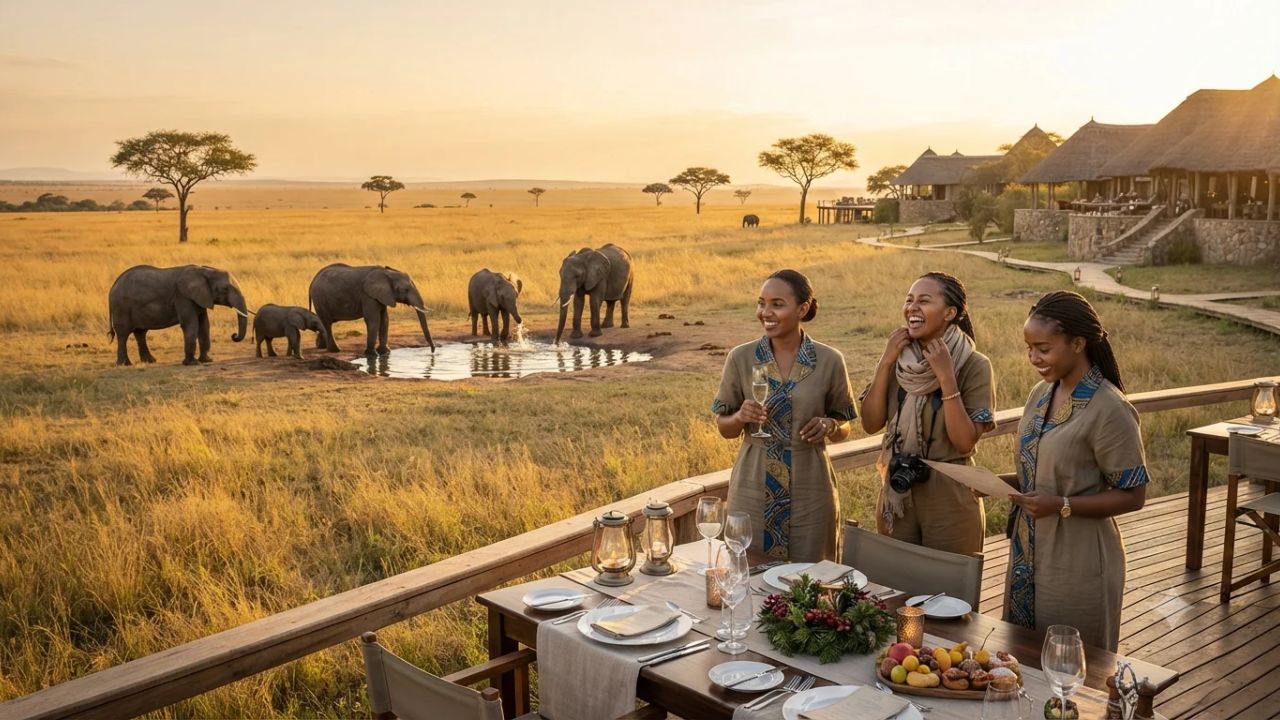
As year-end celebrations approach, discerning international holidaymakers from North America, Europe, and regional Africa are redirecting their festive travel plans toward East Africa's most storied wilderness. Four Seasons Safari Lodge Serengeti has unveiled its bespoke festive programming, "Unwrap the Wild" and "Into the Wild 2027," merging conservation education, five-star culinary events, and wellness retreats within the wildlife-dense heart of Serengeti National Park. With the United States driving unprecedented high-value leisure arrivals, complemented by sustained demand across Italy, France, and Kenya, Tanzania's luxury safari ecosystem is demonstrating how high-end, nature-focused hospitality can diversify national economies, elevate sustainable tourism standards, and deliver transformative multigenerational holiday escapes.
The evolution of holiday travel has prompted high-net-worth explorers to seek encounters that transcend traditional winter beach retreats or urban city breaks. Across the rolling savannas of central Serengeti, where endless plains meet dramatic acacia-dotted horizons, Tanzania's premier conservation-driven properties are capturing this structural shift. Combining festive galas, tailored children's programming, and intimate encounters with East Africa’s iconic biodiversity, luxury lodges provide a compelling alternative for travelers seeking meaning, seclusion, and family connection over the Christmas and New Year period.
Central to this seasonal resurgence is Four Seasons Safari Lodge Serengeti, strategically positioned in the central Seronera region. The lodge’s festive calendar harmonizes traditional seasonal cheer with the rhythms of the wild, creating an immersive sanctuary where game viewing continues uninterrupted from private villa plunge pools, elevated infinity decks, and open-air bomas overlooking an active wildlife watering hole.
Redefining Festive Travel in the East African Wilderness
The concept of luxury festive travel has undergone profound transformation over recent years. While conventional winter holidays often revolved around snowy alpine chalets or crowded tropical island resorts, modern luxury travelers increasingly prioritize experiential richness, ecological authenticity, and unhurried family moments. Tanzania's safari circuit offers an idyllic setting for this shift, providing vast open landscapes where holiday celebrations align with the pulse of the natural world.
Spending Christmas and the New Year in the Serengeti replaces commercial noise with the dawn chorus of tropical birds, the distant roar of black-maned lions, and the majestic sight of elephant herds wandering toward local water sources. The festive season coincides with Tanzania's emerald green season—a period characterized by brief, refreshing afternoon showers that transform the savanna into a verdant landscape. This atmospheric shift provides dramatic photographic lighting, dust-free skies, and rich grazing that attracts abundant herbivores and opportunistic predators.
For multigenerational families traveling together, the wild offers a shared sense of wonder that unites grandparents, parents, and children. Rather than exchanging boxed presents in a conventional living room, families witness wildebeest calves taking their first steps, observe pride dynamics along the Seronera River, and share fireside stories under a canopy of southern hemisphere constellations.
Inside Four Seasons Safari Lodge Serengeti: Sanctuary on the Savanna
Positioned within the central reaches of Serengeti National Park, Four Seasons Safari Lodge Serengeti represents one of the world's most sophisticated wilderness lodges. Engineered with elevated wooden walkways and sustainable local timber, the architecture ensures complete guest safety while maintaining an open, unrestricted corridor for migrating fauna below.
FOUR SEASONS SAFARI LODGE SERENGETI
| Column 1 | Column 2 | Column 3 | Column 4 | Column 5 | Column 6 | Column 7 |
|---|---|---|---|---|---|---|
| Private Villas | Elevated Walkways | Central Infinity | ||||
| - Plunge pools | ----> | - Safe wildlife | ----> | Pool | ||
| - Watering hole | movement below | - Direct watering | ||||
| panoramas | - Tree canopy level | hole observation | ||||
| Discovery Centre | Maji & Nuru Venues | Kani Spa Pavilions | ||||
| - On-site museum | - Al fresco dining | - Baobab therapies | ||||
| - Resident expert | - Local gastronomy | - Sunset yoga |
At the core of the property is an active, natural watering hole frequented day and night by resident elephant herds, buffalo, baboons, and occasional big cats. This extraordinary geographical feature allows guests to experience world-class game viewing without leaving the comfort of the lodge. Whether enjoying morning espresso on a private balcony, swimming in the rim-flow infinity pool, or dining al fresco, visitors remain perpetually connected to the wild drama unfolding below.
The accommodation portfolio is thoughtfully curated for discerning travelers. From spacious horizon rooms to sprawling two-bedroom and three-bedroom presidential villas, each residence features handcrafted African furnishings, deep soaking tubs, and private outdoor decks. For families celebrating the festive season, these multi-room villas provide private plunge pools, dedicated butler service, and private dining options that create an intimate home away from home amidst the African wilderness.
The Curated Festive Itinerary: Unwrap the Wild and Into the Wild 2027
To mark the 2026–2027 holiday season, Four Seasons Safari Lodge Serengeti has unveiled a curated calendar designed to blend European holiday elegance with indigenous African culture. Titled "Unwrap the Wild" for Christmas and culminate in the "Into the Wild 2027" New Year celebration, the program balances active game exploration with indulgent social and culinary gatherings.
Christmas Eve: Candlelight and Bush Gastronomy at Nuru
The festivities commence on December 24 with an elegant Christmas Eve gala dinner hosted at Nuru Restaurant. Surrounded by ambient lantern light and contemporary African artwork, guests are treated to an exquisite multi-course culinary journey. Master chefs blend classic European holiday staples—such as roast fowl and decadent puddings—with indigenous Tanzanian ingredients, including fresh seafood from the Swahili coast, highland vanilla, and rich spices sourced from the spice farms of Unguja. Local vocalists and acoustic musicians perform soft carols and traditional harmonies, establishing an atmosphere of quiet reverence and joyous celebration.
Christmas Day: Family Gatherings at Maji Restaurant
December 25 unfolds with a celebratory atmosphere tailored for travelers of all ages. Following an optional early morning game drive to catch predators on the prowl in the cool dawn air, guests return to the lodge for a lavish Christmas Day lunch at Maji Bar and Terrace. Positioned immediately adjacent to the elevated infinity pool and watering hole, this gathering features live cooking stations, carving boards, artisanal salads, and bespoke desserts. Santa Claus makes a memorable safari-style appearance, delighting younger guests with hand-carved wooden animals and handcrafted African keepsakes.
Boxing Day and Mid-Festive Gatherings: Boma Feasts and Bush Barbecues
The days between Christmas and New Year provide an unhurried cadence of exploratory drives and immersive dining. In the evenings, the lodge opens its traditional open-air Boma, where guests gather around a roaring central fire pit. Here, guests enjoy an authentic African barbecue feast accompanied by traditional Maasai warrior performances. The rhythmic chanting and athletic high jumps of the Maasai illuminate the evening, offering an inspiring introduction to East Africa’s living cultural heritage.
New Year’s Eve: "Into the Wild 2027" Under the Stars
The pinnacle of the holiday season arrives on December 31 with the "Into the Wild 2027" New Year’s Eve extravaganza. The evening begins with sunset champagne and bespoke cocktails served on the terrace as the sun dips below the western horizon, painting the savanna in rich crimson and amber hues.
Dinner transitions into an expansive outdoor gala showcasing gourmet tasting stations, fresh ocean delicacies, prime cuts, and artistic pastry creations. As midnight approaches, live international musicians and local drummers build energy beneath the southern sky. Guests welcome 2027 with celebratory toasts under the Milky Way, celebrating renewal in one of the most timeless landscapes on Earth.
New Year’s Day: Champagne Brunch and Sundowner Barbecue
January 1, 2027, welcomes guests with an indulgent New Year’s Day recovery brunch at Maji Restaurant. Flowing champagne, made-to-order omelets, tropical fruit platters, and rejuvenating wellness tonics prepare guests for a gentle afternoon of leisure. As evening falls, a celebratory sundowner barbecue is hosted overlooking the plains, allowing travelers to reflect on their holiday experiences as golden light blankets the endless savanna.
FESTIVE CALENDAR AT FOUR SEASONS SAFARI LODGE SERENGETI
| Entity / Route | Metrics | Operational Status |
|---|---|---|
| Date | Signature Event | Highlights & Experience |
| December 24, 2026 | Christmas Eve Gala Dinner | Fine dining at Nuru; |
| Swahili spices & live carols | ||
| December 25, 2026 | Christmas Day Family Lunch | Maji poolside barbecue; |
| Safari Santa & children gifts | ||
| Dec 26 - 30, 2026 | Traditional Boma Barbecues | Outdoor firepit dining; |
| & Bush Sundowners | Maasai warrior dances | |
| December 31, 2026 | "Into the Wild 2027" Gala | Sunset cocktails, gourmet |
| gala, midnight starlight toast | ||
| January 1, 2027 | New Year's Day Brunch & BBQ | Recovery brunch at Maji; |
| Sunset barbecue over savanna |
Multigenerational Engagement: The Discovery Centre and Kijana Klub
One of the defining strengths of Four Seasons Safari Lodge Serengeti is its dedication to multigenerational travel. While traditional safaris can sometimes prove challenging for younger children or less mobile seniors, the lodge provides an environment where every family member engages with the wilderness at their own pace.
The Discovery Centre: Education, Research, and Living Culture
The Discovery Centre stands as the intellectual and conservation anchor of the property. Operating as part interactive museum and part research station, the facility is helmed by a resident naturalist and dedicated wildlife experts. Guests can explore detailed exhibits on Serengeti ecology, human origins in the nearby Olduvai Gorge, and historical migration pathways.
During the festive season, the Discovery Centre organizes hands-on workshops tailored for curious minds:
- Interactive Conservation Classes: Guests examine real skull casts, animal spoor, and camera-trap footage, learning how researchers track lion prides and protect endangered black rhinos.
- Maasai Cultural Workshops: Elder Maasai artisans lead immersive beadwork and craft sessions, teaching children and adults the cultural symbolism behind traditional colors and patterns.
- Environmental Storytelling: Evening presentations showcase the history of Serengeti National Park and Tanzania’s conservation triumphs, inspiring young travelers to become lifelong ambassadors for wildlife protection.
Kijana Klub: Interactive Wilderness Activities for Young Explorers
For children aged four through twelve, the lodge operates the complimentary Kijana Klub. Supervised by trained staff, this dedicated facility offers a vibrant selection of educational and recreational activities:
- Junior Ranger Safaris: Children embark on guided walking explorations within the secure perimeter of the elevated lodge walkways, identifying indigenous trees, tracking bird species, and collecting insect specimens.
- Bush Craft and Clay Modeling: Kids recreate their favorite African animals using natural clay, make personalized safari scrapbooks, and paint traditional Tinga Tinga style art.
- Stargazing and Folklore: After dark, children gather for constellation spotting and traditional African folktales, learning the celestial navigation techniques used by nomadic tribes for centuries.
Holistic Wilderness Rejuvenation: The Kani Spa and Elevated Wellness
For adult travelers seeking mental clarity and physical restoration, the lodge’s Kani Spa offers an oasis of calm. Featuring six standalone treatment pavilions equipped with private outdoor bathtubs and steam rooms, the spa integrates ancient African healing traditions with modern restorative therapies.
The signature treatments utilize locally sourced organic botanicals, including baobab seed oil, wild marula extracts, and raw African honey. The baobab tree—frequently referred to as the "Tree of Life"—yields nutrient-dense oil rich in antioxidants and essential fatty acids, offering intensive hydration for skin exposed to the equatorial sun.
In addition to restorative body therapies, the wellness program features:
- Sunset Yoga Pavilions: Guided yoga and breathwork sessions conducted on elevated wooden decks, where guests practice mindfulness while looking out over the open savanna as the sun descends.
- Watering Hole Sound Healing: Meditative acoustic sound baths that harmonize Tibetan singing bowls with the authentic natural acoustics of elephant rumbles and evening birdsong.
- Private Plunge Pool Hydrotherapy: Contrast hydrotherapy experiences arranged within private villa decks to soothe muscles following extended morning game drives.
Key Source Market Analysis: The Driving Forces of Tanzanian Tourism
Tanzania's luxury safari industry draws strength from an increasingly diverse global customer base. The 2025 National Visitor Survey, combined with annual leisure travel statistics, underscores how North America, Western Europe, and regional African powerhouses sustain high-value tourism across the northern safari circuit.
TANZANIA TOURISM: KEY SOURCE MARKET PROFILES (2025)
| Column 1 | Column 2 | Column 3 | Column 4 | Column 5 |
|---|---|---|---|---|
| Source Market | Total Survey % | Leisure Share% | Visa Regime | Primary Travel |
| (2025 Survey) | (2025 Leisure) | & Entry Fees | Focus | |
| United States | 12.4% (#1) | 17.3% (#1) | Multiple Entry | High-end luxury, |
| ($100 USD) | conservation | |||
| Italy | 11.8% (#2) | 12.2% (#2) | Ordinary Visa | Bush-and-beach |
| ($50 USD) | (Serengeti+ZNZ) | |||
| France | 7.0% (#3) | 9.5% (#3) | Ordinary Visa | Wildlife photog, |
| ($50 USD) | slow travel | |||
| Kenya | 6.4% (#4) | 1.8% (Leisure) | Visa Exempt | Regional transit, |
| (Trade/Cross) | (EAC Partner) | cross-border biz |
The United States: Leading Market for High-Yield Safari Travel
The United States represents Tanzania's largest and most lucrative tourism market. Capturing a commanding 12.4% of total arrivals in the 2025 National Visitor Survey and an extraordinary 17.3% share among pure leisure travelers, American visitors form the financial backbone of the luxury lodge segment.
American travelers demonstrate a pronounced preference for premium experiential properties, private chartered bush flights, and extended itineraries that encompass both the Serengeti and Ngorongoro Crater. They travel extensively during Thanksgiving, Christmas, and the New Year holidays, often booking exclusive multi-bedroom villas up to a year in advance.
From an administrative perspective, US passport holders operate under distinct immigration regulations compared to European citizens. Under reciprocal bilateral agreements, American citizens entering Tanzania for tourism must obtain a multiple-entry visa valid for one year, which carries a statutory fee of $100 USD. This visa permits individual stays of up to 90 days per visit. Travelers are encouraged to utilize the official Tanzanian eVisa portal well ahead of their holiday departure, though expedited processing channels are available.
Italy: Sustained Demand for Bush-and-Beach Combinations
Italy holds the second position among Tanzania’s inbound tourism markets, accounting for 11.8% of surveyed visitors in 2025—an increase of 0.2% over 2024—and representing 12.2% of the leisure visitor cohort. Italian travelers possess an enduring cultural affinity for East Africa, historically driven by strong charter connections between Milan, Rome, and the spice island of Zanzibar.
Over recent years, Italian travel patterns have migrated steadily upmarket. While coastal all-inclusive resorts once absorbed the majority of Italian arrivals, affluent travelers from northern Italy increasingly pair a five-to-seven-day luxury Serengeti safari with a restorative oceanfront stay along Zanzibar’s pristine beaches or Mafia Island. Italian visitors require a standard single-entry tourist visa, which costs $50 USD and is easily obtained through the online eVisa platform.
France: Surging Interest in Slow Travel and Eco-Conservation
France ranks as Tanzania's third-largest international source market, commanding 7.0% of the overall survey share and 9.5% of leisure travelers. The French market is characterized by a strong appetite for ethical travel, authentic wildlife photography, and low-impact wilderness lodges.
French holidaymakers visiting Four Seasons Safari Lodge Serengeti frequently engage with the Discovery Centre’s research projects and prioritize extended walking safaris and conservation education. Like other European travelers, French passport holders pay $50 USD for an ordinary single-entry tourist visa valid for up to 90 days.
Kenya: Strategic Regional Anchor and Aviation Crossroads
Kenya stands as Tanzania’s fourth-largest overall visitor market, representing 6.4% of surveyed arrivals. Although pure leisure safari travel accounts for a modest 1.8% of Kenyan visits—as Kenya possesses its own world-renowned wildlife parks such as the Maasai Mara—Kenya plays an irreplaceable role as a regional transit and commercial hub.
As fellow member states of the East African Community (EAC), Kenyan citizens enjoy visa-free entry into Tanzania, facilitating vibrant commercial ties, cross-border corporate retreats, and regional hospitality exchanges. Jomo Kenyatta International Airport (NBO) in Nairobi serves as the premier aerial gateway channeling North American and European visitors into Tanzania's northern safari circuit.
Macroeconomic Impact: Tourism Fueling National Growth
The strength of luxury hospitality establishments like Four Seasons Safari Lodge Serengeti delivers substantial economic benefits that reverberate across Tanzania's broader macroeconomic landscape. Tourism remains one of the primary drivers of foreign exchange earnings, infrastructure development, and employment creation in the country.
TANZANIA TOURISM PERFORMANCE: 2024 - 2026
| Metric / Indicator | Historical / Prior | Latest Reported |
|---|---|---|
| Total International Visitor Arrivals | 2,141,895 (2024) | 2,294,495 (2025) |
| National Calendar Year Tourism Earnings | $3.9031 Billion | $4.4106 Billion |
| (2024) | (2025) | |
| 12-Month Travel Receipts (Bank of Tanzania) | $4.3850 Billion | $4.5658 Billion |
| (Sept 2025) | (Sept 2026) | |
| Year-on-Year Growth in Travel Receipts | Baseline | +4.1% Increase |
Official government figures highlight this remarkable trajectory. Total international tourist arrivals expanded from 2,141,895 in 2024 to 2,294,495 in 2025. Concurrently, national foreign exchange earnings generated by tourism increased from $3.9031 billion in 2024 to $4.4106 billion in 2025.
This momentum has continued unabated throughout 2026. According to the Bank of Tanzania's October 2026 Monthly Economic Review, national travel receipts reached an impressive $4.5658 billion for the year ending September 2026, marking a 4.1% increase over the $4.3850 billion recorded during the corresponding period in 2025. This foreign currency inflow provides essential stabilization for the Tanzanian Shilling (TZS) and finances vital public infrastructure projects across northern Tanzania.
In addition, a substantial portion of park concession fees and conservation levies paid by luxury lodge guests flows directly to the Tanzania National Parks Authority (TANAPA) and the Ngorongoro Conservation Area Authority (NCAA). These funds underwrite elite anti-poaching ranger units, veterinary interventions, and community outreach programs that ensure local indigenous communities directly share in the financial benefits of wildlife preservation.
Strategic Aviation Corridors and Safari Logistics
Reaching the secluded plains of central Serengeti requires coordinated regional and domestic air logistics. International travelers have several refined routing alternatives that connect global commercial centers to the bush.
SERENGETI HOLIDAY FLIGHT ROUTING PATHWAY
| Column 1 |
|---|
| Global Departure Hubs: |
| [New York / Chicago / London / Paris / Rome / Frankfurt / Dubai / Doha] |
| v |
| Primary International Gateways: |
| +----------------------------------+ +-------------------------------------+ |
| +----------------------------------+ +-------------------------------------+ |
| +--------------------+---------------------+ |
| v |
| Domestic Connection Hubs: |
| [Arusha Airport (ARK) / JRO / NBO Wilson (WIL)] |
| v (Scheduled Bush Flight) |
| Seronera Airstrip (SEU - Central Serengeti) |
| v (Scenic 45-Min Game Drive Transfer) |
| Four Seasons Safari Lodge Serengeti |
Primary International Air Gateways
- Kilimanjaro International Airport (JRO): Positioned between Arusha and Moshi, JRO functions as the premier international gateway for northern safari expeditions. Major global carriers—including KLM Royal Dutch Airlines, Qatar Airways, Ethiopian Airlines, and Turkish Airlines—operate scheduled long-haul services into JRO. Arriving travelers can connect directly to morning bush flights or transfer comfortably into Arusha for an overnight rest.
- Jomo Kenyatta International Airport (NBO - Nairobi): As East Africa's central aviation mega-hub, Nairobi receives daily non-stop flights from North America (via Kenya Airways from New York JFK) and numerous European capitals. Travelers can clear customs in Nairobi and take short cross-border flights directly into Kilimanjaro or transfer to Wilson Airport (WIL) for direct charter flights to Tanzania's safari airstrips.
- Julius Nyerere International Airport (DAR - Dar es Salaam): Tanzania's commercial capital handles extensive intercontinental traffic and serves as an ideal staging point for travelers undertaking combined southern safari and Zanzibar coastal itineraries.
Domestic Bush Hops to Seronera Airstrip (SEU)
The final leg into the wilderness is conducted aboard light bush aircraft operated by established domestic safari aviation carriers, including Coastal Aviation, Auric Air, and Precision Air. Flights depart regularly from Kilimanjaro (JRO) and Arusha Airport (ARK), landing at Seronera Airstrip (SEU) in the central Serengeti.
The flight duration from Arusha to Seronera is approximately 45 to 60 minutes, providing sweeping aerial vistas of the Great Rift Valley escarpment, volcanic calderas, and the expansive plains below. Upon landing at Seronera Airstrip, guests are greeted by professional Four Seasons safari guides and transported in custom four-wheel-drive safari vehicles on a scenic 45-minute transfer drive to the lodge, with wildlife viewing starting immediately along the route.
Essential Luggage Regulations for Bush Aircraft
Holiday travelers must note that domestic bush flights adhere to rigorous safety standards regarding luggage:
- Weight Restrictions: Passengers are strictly allocated a maximum baggage allowance of 15 kilograms (approximately 33 pounds) per person, which must include both main luggage and hand baggage.
- Luggage Construction: Bags must be soft-sided duffel bags without rigid internal or external frames or pull-out handles, allowing ground crews to pack them safely within the aircraft's compact luggage pods.
- Excess Luggage Options: Travelers requiring additional allowances can purchase freight seats in advance or arrange secure baggage storage at their arrival hotel in Arusha.
Practical Safari Planning Guide for Holiday Travelers
Planning a luxury festive safari in the Serengeti requires careful attention to climate conditions, health protocols, and wilderness etiquette.
FESTIVE SAFARI ESSENTIAL PLANNING CHECKLIST
| Category / Entity | Details / Impact |
|---|---|
| Category | Advisory & Recommendations |
| Climate & Weather | Warm daytime temperatures (27°C / 81°F); |
| Cool evenings (15°C / 59°F); brief, clearing afternoon showers | |
| Wardrobe & Attire | Neutral tones (khaki, olive, tan); light breathable layers; |
| Warm fleece or windbreaker for dawn game drives | |
| Health & Medicine | Malaria prophylaxis recommended; yellow fever vaccination card |
| required if arriving from endemic transit countries | |
| Financial Rules | US Dollar bills must be dated 2009 or newer; credit cards |
| widely accepted at lodge; cash needed for safari driver tips |
Climate and Seasonal Weather Dynamics
December and January represent the transition into Tanzania's short dry season following the brief November rains. Days are delightfully warm, with average afternoon temperatures hovering around 27°C (81°F), while nighttime temperatures dip to a crisp 15°C (59°F). Brief afternoon rain showers are common but typically pass quickly, clearing the atmosphere and leaving vibrant sunsets.
Recommended Attire and Gear
When packing for a festive safari, lightweight, breathable fabrics in neutral tones—such as khaki, olive, stone, and tan—are recommended. Bright colors can distract wildlife, while dark navy and black can attract tsetse flies in certain wooded regions. Essential items include:
- A wide-brimmed safari hat with chin strap for wind protection in open-roof vehicles.
- A high-grade windproof fleece or lightweight down jacket for chilly early morning game drives.
- High-SPF sunscreen, polarized sunglasses, and botanical insect repellent.
- High-quality binoculars (8x42 or 10x42 magnification) for optimal animal observation.
- High-resolution camera gear with telephoto lenses (100–400mm or equivalent) and extra memory cards.
Health Protocols and Documentation
Tanzania requires incoming travelers arriving from or transiting through yellow fever endemic countries (such as neighboring Kenya for stays over 12 hours) to present an International Certificate of Vaccination or Prophylaxis (ICVP). Malaria prophylaxis is strongly advised across all low-altitude and safari regions; travelers should consult a travel medicine specialist several weeks before departure to obtain recommended medications.
Comprehensive Frequently Asked Questions
What makes spending the festive season on a Serengeti safari unique compared to traditional winter destinations?
A festive safari in the Serengeti trades commercial holiday hustle and freezing temperatures for untamed natural beauty, warm sunny weather, and intimate wildlife encounters. Instead of crowded shopping districts, holidaymakers experience dawn game drives, witness wildebeest herds across verdant plains, and enjoy world-class culinary galas under the stars. The shared wonder of encountering lions, leopards, and elephants in their natural habitats creates deep, lasting memories for multigenerational families.
How do visa regulations differ between US travelers and European or African visitors entering Tanzania?
Under reciprocal bilateral agreements, United States passport holders traveling to Tanzania for tourism must obtain a multiple-entry visa costing $100 USD, which remains valid for one year and allows stays up to 90 days per visit. Conversely, European travelers from nations such as Italy, France, and the UK require an ordinary single-entry tourist visa costing $50 USD. Citizens of East African Community (EAC) member states, including Kenya, are exempt from visa requirements and enjoy free entry upon presenting a valid passport.
What is the optimal flight itinerary for reaching Four Seasons Safari Lodge Serengeti from North America or Europe?
The most convenient route involves flying into Kilimanjaro International Airport (JRO) aboard international carriers like KLM, Qatar Airways, or Ethiopian Airlines. From JRO or nearby Arusha Airport (ARK), guests board a scheduled 45-to-60-minute domestic bush flight to Seronera Airstrip (SEU) in the central Serengeti. Alternatively, travelers can transit through Nairobi's Jomo Kenyatta International Airport (NBO) and take regional connection flights into northern Tanzania.
What family-friendly amenities and educational activities are available for children during the festive period?
Four Seasons Safari Lodge Serengeti provides dedicated facilities for families, including the interactive Discovery Centre and the complimentary Kijana Klub. Children participate in Junior Ranger programs, guided bush walks within the secure lodge perimeter, animal track casting, and traditional Maasai craft workshops. The lodge's elevated design ensures complete security, while multi-bedroom villas with private plunge pools offer ideal family accommodations.
What wildlife viewing opportunities characterize the central Serengeti during December and January?
December and January coincide with the green season, characterized by lush grazing and dramatic predator activity. Resident prides of lions, leopards, and cheetahs remain exceptionally active across the Seronera Valley. Concurrently, the herds of the Great Migration begin gathering across the southern Serengeti plains and Ndutu region for the annual calving season, offering travelers incredible opportunities to witness dramatic predator-prey dynamics.
How does luxury tourism in Tanzania contribute directly to wildlife conservation and community empowerment?
Luxury safari tourism generates vital funding for conservation through park entry fees, concession levies, and direct lodge investments. These revenues finance anti-poaching ranger patrols, wildlife monitoring, and habitat restoration overseen by TANAPA. Additionally, premier lodges employ substantial numbers of local staff, source ingredients from regional farmers, and support educational and healthcare initiatives in surrounding rural villages.
Related Travel Guides
- Vietnam December Travel: Ten Year-End Holiday Escapes Across Scenic Regions
- Bahrain Grand Prix 2027: Ticket Savings, Historic Sprint Race, and Sakhir Travel Guide
- Sweden and Italy Propel Ireland Tourism Demand Toward 10 Billion Euro Vision
- Saudi Arabia Visa Requirements: Gambian Citizens, Tourist eVisa Pathways, and Consular Rules
This article is for informational purposes. Flight routes, passenger regulations, visa rules, and transit advisories are subject to change by airlines and aviation authorities. Readers are advised to verify schedules and travel documentation with relevant carriers and border agencies before departure.
Related Stories
South Africa Outshines Other Nations to Become the World’s Top Wildlife Destination
Sweden, Italy And Several Other Top Countries Propel Ireland Tourism With Rising Demand