Vietnam Beckons December Travel Enthusiasts With Ten Remarkable Year End Holiday Escapes


Vietnam offers a diverse spectrum of year-end holiday experiences in December, spanning misty northern mountain summits, flower-filled highland plateaus, cultural heritage sanctuaries, and sun-drenched southern island beaches.
The Geographic Contrast: Why December in Vietnam Delivers Unrivaled Travel Variety
Stretching more than 1,650 kilometers from the jagged limestone peaks along the Chinese frontier to the sun-soaked shores of the Gulf of Thailand, Vietnam possesses one of the most topographically varied landscapes in Southeast Asia. This geographical elongation creates dramatic climatic divergence across the country’s three primary macro-regions, making December an extraordinary month for international travelers. While many destinations present uniform winter weather, Vietnam allows vacationers to experience entirely different seasonal worlds within a single national journey.
In the northern highlands and mountain ranges, December brings a crisp, atmospheric winter chill. Mist blankets deep limestone valleys, morning frost coats high-altitude mountain ridges, and cloud inversions create breathtaking ocean-of-clouds phenomena that draw hikers, landscape photographers, and cultural explorers. Traveling south into the Central Highlands, the climate transitions into temperate mountain serenity, where crisp mornings give way to mild, sunlit afternoons framed by blooming wildflower plateaus, cascading waterfalls, and active coffee harvesting operations.
Along the south-central coast, the seasonal weather patterns shift as the late monsoon winds taper off, giving way to refreshing coastal breezes and dramatic seascapes. Further south, the southern plains and tropical islands enter their golden dry season. The Mekong Delta and the southwestern island of Phu Quoc enjoy calm turquoise waters, cloudless blue skies, and gentle tropical warmth, providing an idyllic winter refuge for travelers seeking relaxation and coastal rejuvenation.
Whether a traveler seeks the adrenaline of high-altitude mountain passes, the contemplative beauty of ancient spiritual temples, the authentic traditions of indigenous ethnic communities, or the simple pleasure of fresh seafood along white-sand beaches, Vietnam in December delivers ten distinct year-end holiday escapes.
Northern Alpine Frontiers: Chilly Peaks, Cloud Oceans, and Karst Canyons
Northern Vietnam in December is an atmospheric wonderland. Travelers trading tropical heat for crisp alpine air encounter rugged topography, traditional ethnic markets, and dramatic seasonal natural phenomena.
Sa Pa: Misty Mountain Summits and Indigenous Terraced Valleys
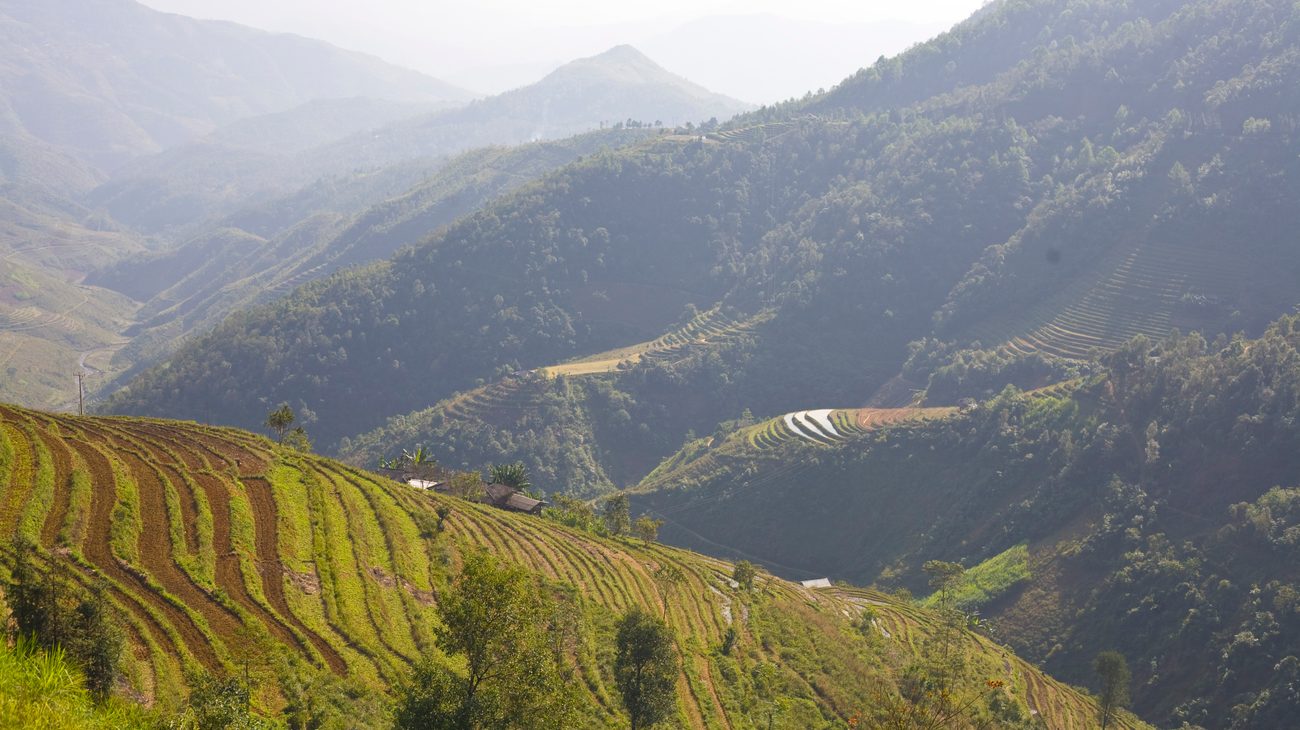
Situated high in Lao Cai Province beneath the shadow of the Hoang Lien Son mountain range, Sa Pa is renowned as Vietnam’s premier mountain retreat. In December, temperatures drop significantly, often hovering between 5°C and 12°C, with occasional cold snaps bringing overnight temperatures close to freezing, producing delicate morning frost across high elevations.
- Mount Fansipan ("The Roof of Indochina"): Rising to 3,143 meters above sea level, Fansipan is accessible via the modern Sun World Fansipan Legend cable car system or through multi-day guided mountaineering treks. In December, visitors ascending the summit often rise above dense low-level cloud cover to witness clear blue skies framing the monumental bronze Buddha statue and sacred mountain pagodas.
- Indigenous Ethnic Communities: Below the peaks, walking trails wind through the Muong Hoa Valley, connecting the traditional villages of Cat Cat, Ta Van, and Lao Chai. Here, travelers engage with Hmong, Red Dao, and Giay communities, observing traditional hemp weaving, batik wax printing, and natural indigo dyeing.
- Winter Comforts and Mountain Dining: After a day of mountain exploration, visitors warm up in wood-paneled cafes overlooking misty valleys, sample traditional salmon and sturgeon hotpot, or experience a therapeutic hot herbal bath prepared with medicinal forest herbs by Red Dao practitioners.
Ta Xua: Cloud Hunting Above the Ocean of Valleys
Situated in Bac Yen District within Son La Province, roughly 200 kilometers northwest of Hanoi, Ta Xua has earned widespread acclaim as Vietnam’s ultimate "cloud hunting" (bien may) destination. During December, unique meteorological dynamics—combining high valley humidity, cool night temperatures, and daytime thermal inversions—trap thick sea-of-clouds formations beneath mountain ridges, creating the visual sensation of standing above a rolling white ocean.
- The Dinosaur Spine (Song Lung Khung Long): This narrow, windswept ridge trail descends between two steep ravines, leading hikers toward a dramatic viewing promontory that feels suspended directly above the clouds.
- Dolphin Rock (Mo Heo): A distinctive natural stone formation jutting out over the precipice, providing an iconic photography spot for catching morning sunrises as golden light strikes the undulating cloud canopy.
- Practical Preparation: Reaching Ta Xua involves traversing winding mountain roads. Accommodations consist primarily of rustic wooden homestays operated by local Hmong families. Travelers must pack thermal windbreakers, sturdy hiking boots, and warm layers, as nighttime mountain temperatures can drop sharply.
Moc Chau: White Blossom Plains and Sculpted Tea Estates
Also situated within Son La Province on an expansive highland plateau averaging 1,050 meters above sea level, Moc Chau provides a tranquil, unhurried contrast to busier northern tourist circuits. In December, the cool, temperate highland air sets the stage for a dramatic floral awakening across the plateau’s limestone valleys.
- Blooms of White Mustard (Hoa Cai Trang): Vast agricultural fields across valleys like Pa Phach and Ban Ang transform into expansive carpets of delicate white mustard blossoms, creating ethereal landscapes framed by dark limestone karst hills.
- Heart-Shaped Tea Hills (Doi Che Trai Tim): Moc Chau is famous for its meticulously manicured green tea plantations. The heart-shaped tea plots at Dai Loan provide picturesque walking routes where visitors sample freshly brewed Shan Tuyet and Oolong teas.
- Natural Waterfalls and Village Hospitality: Travelers can explore Dai Yem Waterfall, cross the glass-bottomed Bach Long bridge suspended over a scenic canyon, and visit traditional Thai stilt-house villages to savor roasted mountain pork, sticky rice steamed in bamboo tubes, and fresh dairy specialties produced by the plateau’s celebrated dairy cooperatives.
Dong Van Karst Plateau: Limestone Peaks and the Legendary Nho Que River
Located along the northernmost frontier of Vietnam in the rugged territory encompassing Ha Giang and neighboring Tuyen Quang, the Dong Van Karst Plateau is recognized by UNESCO as a Global Geopark. Composed of towering conical limestone peaks, deep chasms, and dramatic geologic fault lines dating back hundreds of millions of years, the plateau delivers some of the most breathtaking motorcycling and touring routes in Asia.
- The Legendary Ma Pi Leng Pass: Known as the "King of Mountain Passes," this winding roadway carved into the vertical cliffs of the Happiness Road offers heart-pounding vistas looking down 1,000 meters into the Tu San Canyon.
- Boating on the Nho Que River: From the base of the pass, visitors descend to the emerald-green waters of the Nho Que River, boarding small boats to navigate through the towering vertical rock walls of Tu San Canyon—the deepest canyon in Southeast Asia.
- Dong Van Old Quarter: The historic market town features traditional clay-walled houses with yin-yang tiled roofs built in the 19th and early 20th centuries. In December, late-season pink buckwheat blossoms (hoa tam giac mach) linger across terraced fields, while colorful Sunday markets bring together members of seventeen distinct ethnic minorities in a vibrant display of traditional attire and local commerce.
Central Highlands Serenity: Pine Mists, Heritage Coffees, and Ancient Rhythms
Ascending into the Central Highlands (Tay Nguyen) reveals a landscape defined by rolling basalt hills, dense pine forests, ancient volcanic crater lakes, and deep indigenous musical heritage.
Da Lat: French Colonial Heritage, Pine Forests, and Flower Gardens
Situated on the Lang Biang Plateau in Lam Dong Province at an elevation of 1,500 meters, Da Lat was originally developed by French colonial administrators in the late 19th century as a temperate climatic sanitarium. Known colloquially as the "City of Eternal Spring," Da Lat in December offers crisp, dry mountain air, morning mists drifting across pine-covered valleys, and an enchanting European atmosphere.
- Colonial Architecture and Cultural Landmarks: Visitors stroll among well-preserved French Art Deco villas, visit the iconic 1930s Da Lat Railway Station with its cogwheel steam engine heritage, and admire the pink stone architecture of the Domaine de Marie convent.
- Floral Landscapes and Scenic Waters: The shores of Xuan Huong Lake in the city center provide peaceful walking paths, while the Cau Dat tea plantations, established in 1927, feature rolling green hills that catch the early morning golden light. Greenhouse flower farms throughout the valley showcase vibrant hydrangeas, roses, and orchids.
- Cafe Culture and Evening Gastronomy: Da Lat’s cool December evenings are ideal for discovering its legendary specialty cafe culture. Visitors gather around outdoor braziers at the vibrant night market to enjoy hot soy milk, grilled Vietnamese rice paper pizza (banh trang nuong), and avocado ice cream.
Buon Ma Thuot: Coffee Culture, Volcanic Waterfalls, and Gong Heritage
Situated in Dak Lak Province, Buon Ma Thuot is the undisputed coffee capital of Vietnam, anchoring a nation that stands as the world's second-largest coffee producer. December falls directly within the prime robusta coffee harvesting season, when the surrounding basalt plateaus are filled with red coffee cherries and the rich aroma of roasting beans perfumes the air.
- The World Coffee Museum (Bao Tang The Gioi Ca Phe): An architectural landmark designed in the curved, sweeping aesthetic of traditional Ede ethnic longhouses, the museum houses extensive exhibits detailing global coffee history alongside specialized coffee tasting laboratories.
- Lak Lake and Indigenous M'nong Traditions: Located roughly 50 kilometers south of the city, Lak Lake is the largest natural freshwater lake in the Central Highlands. Visitors glide across the serene waters in hand-carved wooden dugout canoes (thuyen doc moc), explore Jun and M'Lieng stilt villages, and tour the historic lakeside hilltop villa once owned by Emperor Bao Dai.
- Majestic Waterfalls and Gong Culture: The surrounding river systems feature dramatic volcanic waterfalls, including the thunderous cascades of Dray Nur and Dray Sap. In the evening, travelers can witness performances of the Space of Gong Culture—a musical tradition recognized by UNESCO as an Intangible Cultural Heritage of Humanity, where bronze gongs communicate ancient spiritual narratives.
Coastal & Marine Escapes: Cham Citadel Ruins and Dry-Season Island Bliss
For travelers drawn to marine vistas, maritime history, and tropical relaxation, coastal Vietnam in December offers two contrasting yet equally captivating possibilities.
Quy Nhon: Wild Coastal Cliffs and Historic Cham Dynasties
Situated along the South Central Coast in the historical heartland of the former Champa Kingdom, Quy Nhon combines dramatic coastal cliffs, curved sandy bays, and ancient stone temple towers. December marks the transition out of the central coastal rainy season, bringing cooler temperatures and powerful oceanic swells that showcase nature’s untamed beauty.
- Dramatic Coastal Formations: Eo Gio ("The Strait of the Wind") features a rocky coastal walking path carved directly into vertical headlands overlooking crashing ocean waves. Nearby Ky Co Beach offers secluded white sands framed by turquoise water and dramatic sea caves.
- Ghenh Rang–Tien Sa: A scenic coastal headland celebrated for its unique "Queen’s Beach," where smooth, egg-shaped basalt stones carpet the shoreline, and the hillside resting place of celebrated modern Vietnamese poet Han Mac Tu.
- Medieval Cham Heritage: Quy Nhon is surrounded by extraordinary red-brick Cham towers dating from the 11th to 13th centuries, including the twin towers of Thap Doi in the city center and the monumental hilltop complex of Thap Banh It, offering sweeping views across surrounding rice paddies.
- Travel Advisory: Because December coincides with the tail end of the regional monsoon, travelers should verify maritime conditions and surf forecasts before organizing offshore boat charters or snorkeling excursions.
Phu Quoc: Peak Dry-Season Sunshine and Island Archipelagos
Positioned in the tranquil, sheltered waters of the Gulf of Thailand off the southwestern coast of Vietnam, Phu Quoc represents the pinnacle of tropical winter escapes. In December, the island firmly enters its peak dry season, delivering consistent daily sunshine, calm sea conditions, low humidity, and comfortable daytime temperatures averaging 28°C.
- World-Class White-Sand Beaches: The southern coast boasts Bai Sao (Star Beach) and Bai Khem (Emerald Beach), famous for their powdery white sands, gently swaying coconut palms, and calm, shallow turquoise waters that are ideal for swimming and family recreation.
- The An Thoi Archipelago and Coral Diving: The cluster of fifteen islets off the southern tip provides premier snorkeling and scuba diving sites, teeming with hard coral gardens, sea anemones, and colorful reef fish. Travelers can access the islands via speedboats or take the record-breaking Hon Thom cable car—the world’s longest three-rope sea-crossing cable car, spanning nearly eight kilometers.
- Sunset Town and Night Markets: On the southwestern coast, the Mediterranean-inspired architectural complex of Sunset Town provides prime vantage points for viewing evening sunsets across the ocean, complete with nightly multimedia firework shows. After dark, the Phu Quoc Night Market in Duong Dong tempts visitors with fresh grilled sea urchins, butterflied lobsters, and local black pepper specialties.
Southern Riverways and Sacred Peaks: Floating Markets and Holy Mountains
The southern delta and inland plains provide a gentle, sunlit winter environment where travelers immerse themselves in riverine agriculture, floating commerce, and unique spiritual traditions.
Can Tho: The Vibrant Rhythm of the Mekong Delta
Serving as the cultural and economic heart of the Mekong Delta (known historically as Tay Do, the "Western Capital"), Can Tho in December enjoys dry, sunny weather accompanied by refreshing breezes from the Hau River, a major distributary of the mighty Mekong.
- Cai Rang Floating Market: Departing the riverfront pier before sunrise, motorized wooden sampans navigate out to Cai Rang, the largest floating wholesale market in the delta. Dozens of wooden barges gather on the broad river, displaying their agricultural produce on tall bamboo poles (cay beo) suspended above the decks—from watermelons and pineapples to sweet potatoes. Travelers pull alongside floating food vendors to enjoy steaming bowls of hu tieu noodle soup and sweet Vietnamese iced coffee served directly on the water.
- Lush Fruit Orchards and Canal Waterways: Narrow canal networks lead visitors into quiet fruit orchards, where pomelos, durians, and milk apples hang heavy on the branches. Travelers cycle along peaceful village footpaths, passing family-run rice noodle workshops and shaded coconut groves.
- Binh Thuy Ancient House: This beautifully preserved 1870 French-colonial and traditional Vietnamese manor house showcases ornate ironwork, antique mother-of-pearl inlaid furniture, and traditional ancestral altars, famously featured in the cinematic adaptation of Marguerite Duras's novel The Lover.
Tay Ninh: Sacred Summits and the Architectural Splendor of Caodaism
Situated approximately 90 kilometers northwest of Ho Chi Minh City, Tay Ninh offers a convenient, culturally rich day-trip or weekend escape. December provides dry, clear skies that are ideal for outdoor hiking and exploring spiritual landmarks.
- Ba Den Mountain ("Black Virgin Mountain"): Rising dramatically from the surrounding flat plains to an elevation of 986 meters, Ba Den is the highest mountain in southern Vietnam. Modern cable car networks transport visitors to the cloud-shrouded summit, which features landscaped gardens, spiritual pagodas, and the towering bronze statue of the Tay Bo Da Son Bodhisattva, which stands over 72 meters tall.
- The Cao Dai Holy See (Toa Thanh Tay Ninh): This spectacular cathedral serves as the global headquarters of Caodaism—a unique syncretic religion founded in Vietnam in the 1920s that unites principles from Buddhism, Taoism, Confucianism, Christianity, and Islam. The cathedral’s architecture is a mesmerizing riot of pastel colors, dragon-wrapped pillars, and celestial vaults. Visitors can quietly observe the formal noon prayer service, where devotees dressed in pristine white robes chant to the accompaniment of traditional instruments beneath the all-seeing Divine Eye.
- Dau Tieng Lake and Rural Orchards: Nearby Dau Tieng Lake, the largest man-made water reservoir in Vietnam, offers tranquil lakeside camping spots, kayaking, and views of Ba Den Mountain reflected across the placid water.
| Destination | Geographic Region | December Climate Character | Signature Landscapes & Attractions | Ideal Traveler Profile |
|---|---|---|---|---|
| Sa Pa | Lao Cai (Northwest) | Cold & crisp (5°C–12°C); mist, morning frost | Mount Fansipan, Muong Hoa Valley, Cat Cat & Ta Van | Trekkers, mountain lovers, cultural explorers |
| Ta Xua | Son La (Northwest) | Cold & brisk (8°C–15°C); cloud inversions | Dinosaur Spine ridge, Dolphin Rock, rolling cloud seas | Hikers, photographers, adventure travelers |
| Moc Chau | Son La (Northwest) | Temperate & cool (10°C–18°C); dry | White mustard fields, Heart Tea Hills, Dai Yem Fall | Nature lovers, slow travelers, couples |
| Dong Van | Ha Giang (Far North) | Cold & clear (8°C–16°C); mountain winds | Ma Pi Leng Pass, Tu San Canyon, Nho Que River | Motorcyclists, geology enthusiasts, adventurers |
| Da Lat | Lam Dong (Highlands) | Cool & dry (12°C–22°C); morning mist | Xuan Huong Lake, French villas, Cau Dat tea hills | Romantic getaways, cafe enthusiasts, walkers |
| Buon Ma Thuot | Dak Lak (Highlands) | Pleasant & mild (18°C–26°C); dry season | World Coffee Museum, Lak Lake, Dray Nur waterfall | Coffee aficionados, cultural heritage seekers |
| Quy Nhon | Binh Dinh (Coast) | Breezy & oceanic (21°C–26°C); end of rain | Eo Gio cliffs, Ky Co Beach, medieval Cham towers | Coastal explorers, history and seafood lovers |
| Phu Quoc | Kien Giang (Southwest) | Warm & sunny (24°C–30°C); peak dry season | Bai Sao Beach, An Thoi islets, Sunset Town | Beach vacationers, divers, luxury leisure seekers |
| Can Tho | Mekong Delta (South) | Warm & gentle (23°C–31°C); sunny riverways | Cai Rang Floating Market, canal orchards, Binh Thuy | Slow-travel enthusiasts, culinary travelers |
| Tay Ninh | Southeast (Near HCMC) | Sunny & dry (22°C–31°C); clear skies | Ba Den Mountain summit, Cao Dai Holy See, Dau Tieng | Day-trippers, spiritual travelers, outdoor hikers |
Strategic Travel Planning: Weather Preparation, Regional Logistics, and Booking Guidelines
Because December showcases such intense climatic variance across Vietnam, executing a smooth, multi-destination journey requires thoughtful preparation, balanced packing, and strategic route sequencing.
Smart Packing Strategies for Multi-Region Travel
Travelers planning an itinerary that links the northern mountains with the southern islands must pack for two entirely different climatic environments:
- For Northern Highlands (Sa Pa, Ta Xua, Dong Van): Pack lightweight thermal base layers, a fleece mid-layer, a windproof and water-resistant outer jacket, warm gloves, a woolen beanie, and broken-in hiking boots with aggressive tread for damp mountain trails.
- For Central Highlands (Da Lat, Buon Ma Thuot): Light sweaters or denim jackets are ideal for cool mornings and evenings, paired with breathable daytime walking apparel.
- For the South and Islands (Phu Quoc, Can Tho, Tay Ninh): High-SPF sun protection, wide-brimmed hats, polarized sunglasses, lightweight linen or quick-dry cotton garments, and suitable swimwear.
- Temple Etiquette: Modest attire covering shoulders and knees is strictly mandatory when entering spiritual complexes such as the Cao Dai Holy See, Buddhist pagodas on Fansipan and Ba Den Mountain, and ancestral village shrines.
Domestic Transport and Route Sequencing
Vietnam’s modernizing transportation infrastructure makes linking these diverse destinations increasingly efficient:
- Domestic Aviation: Major hubs in Hanoi (HAN), Da Nang (DAD), and Ho Chi Minh City (SGN) connect directly to regional airports in Pleiku, Buon Ma Thuot (BMV), Can Tho (VCA), and Phu Quoc (PQC) via carriers like Vietnam Airlines, Vietjet Air, and Bamboo Airways.
- Express Highways and Sleeper Coaches: The modern highway network linking Hanoi with Lao Cai (for Sa Pa) and Son La (for Moc Chau) enables fast overland travel via premium limousine vans and modern sleeper buses.
- The Reunification Railway: For slow-travel enthusiasts, overnight sleeper trains connecting Hanoi, Da Nang, Dieu Tri (for Quy Nhon), and Ho Chi Minh City provide scenic, relaxing overland journeys that showcase the changing rural landscapes.
Managing Peak Holiday Demand
December marks the beginning of the international winter holiday rush, with high inbound arrivals from Europe, North America, and Northeast Asia. To secure preferred accommodations, internal flight connections, and premium train berths:
- Reserve boutique hotels in popular hubs like Da Lat, Sa Pa, and Phu Quoc at least four to six weeks in advance, particularly for the Christmas and New Year festive period.
- Book domestic train tickets and specialized cable car passes through official operators or licensed local travel agencies to avoid inflated third-party reseller charges.
- Practice responsible environmental tourism: minimize single-use plastic bottles by utilizing refillable filtration containers, respect ethnic community privacy during photography, and support local family-run eateries and community cooperatives.
Frequently Asked Questions Regarding Traveling to Vietnam in December
What makes December such a unique month to visit Vietnam?
December is unique because Vietnam’s long, narrow geography creates three distinct climate zones simultaneously. Travelers can experience crisp mountain weather and cloud-hunting phenomena in the northern mountains (Sa Pa, Ta Xua, Ha Giang), mild spring-like temperatures in the Central Highlands (Da Lat, Buon Ma Thuot), and warm, sun-drenched dry-season conditions on southern beaches and riverways (Phu Quoc, Can Tho). This diversity allows visitors to enjoy mountain trekking, cultural heritage, and coastal relaxation in a single trip.
Does it snow in Sa Pa or the northern mountains during December?
While actual snowfall is relatively rare, temperatures in Sa Pa and high-altitude areas like Mount Fansipan can drop close to or below 0°C during severe winter cold snaps. Frost (bang gia) frequently forms across high-altitude vegetation, and light, brief snow flurries occasionally dust the highest peaks of the Hoang Lien Son range in late December and January. Travelers should always prepare for cold, damp mountain conditions.
What is cloud hunting in Ta Xua and how do travelers prepare for it?
Cloud hunting refers to traveling to high mountain ridges like the Dinosaur Spine in Ta Xua to view vast, unbroken sea-of-clouds formations filling the valleys below. The phenomenon occurs most reliably between November and March, when cold night air and valley humidity cause morning temperature inversions. To prepare, travelers should pack warm thermal clothing, reliable hiking footwear, windbreakers, and arrange homestays in advance, as local infrastructure is rustic and mountain roads are winding.
Is December a good time for a beach vacation on Phu Quoc Island?
Yes, December is one of the absolute best months to visit Phu Quoc. The island enters its official dry season, bringing calm, crystalline turquoise waters, sunny skies, minimal rainfall, and comfortable temperatures averaging 28°C. It is an optimal window for scuba diving, snorkeling around the An Thoi archipelago, kayaking, and enjoying famous white-sand beaches like Bai Sao and Bai Khem.
How should travelers pack for an itinerary covering both northern and southern Vietnam?
A multi-region December trip requires a layered packing strategy. For the north, bring thermal base layers, a fleece sweater, a windproof down jacket, a warm hat, and sturdy walking shoes. For the south, pack lightweight, breathable cotton or linen clothing, swimwear, and sun protection. Having versatile layers that can be added or shed ensures comfort when transitioning between cold northern mountains and warm southern coastlines.
What cultural etiquette should visitors observe when visiting ethnic minority villages in the highlands?
When visiting ethnic minority communities in areas like Sa Pa, Ha Giang, or Dak Lak, always dress modestly (covering shoulders and knees) and ask for permission before photographing local residents, particularly children and elders. Avoid touching sacred objects, family altars, or village totems. Support the local economy directly by purchasing authentic handmade handicrafts from local artisans rather than imported commercial souvenirs, and hire local indigenous guides who can provide respectful cultural interpretation.
Related Travel Guides
This article is for informational purposes. Flight routes, passenger regulations, visa rules, and transit advisories are subject to change by airlines and aviation authorities. Readers are advised to verify schedules and travel documentation with relevant carriers and border agencies before departure.
Related Stories

Vietnam Introduces New Visa Rules in 2027 for Tourists, Remote Workers, and Medical Travelers
12 Underrated Destinations in Vietnam Beyond Hanoi and Ho Chi Minh City