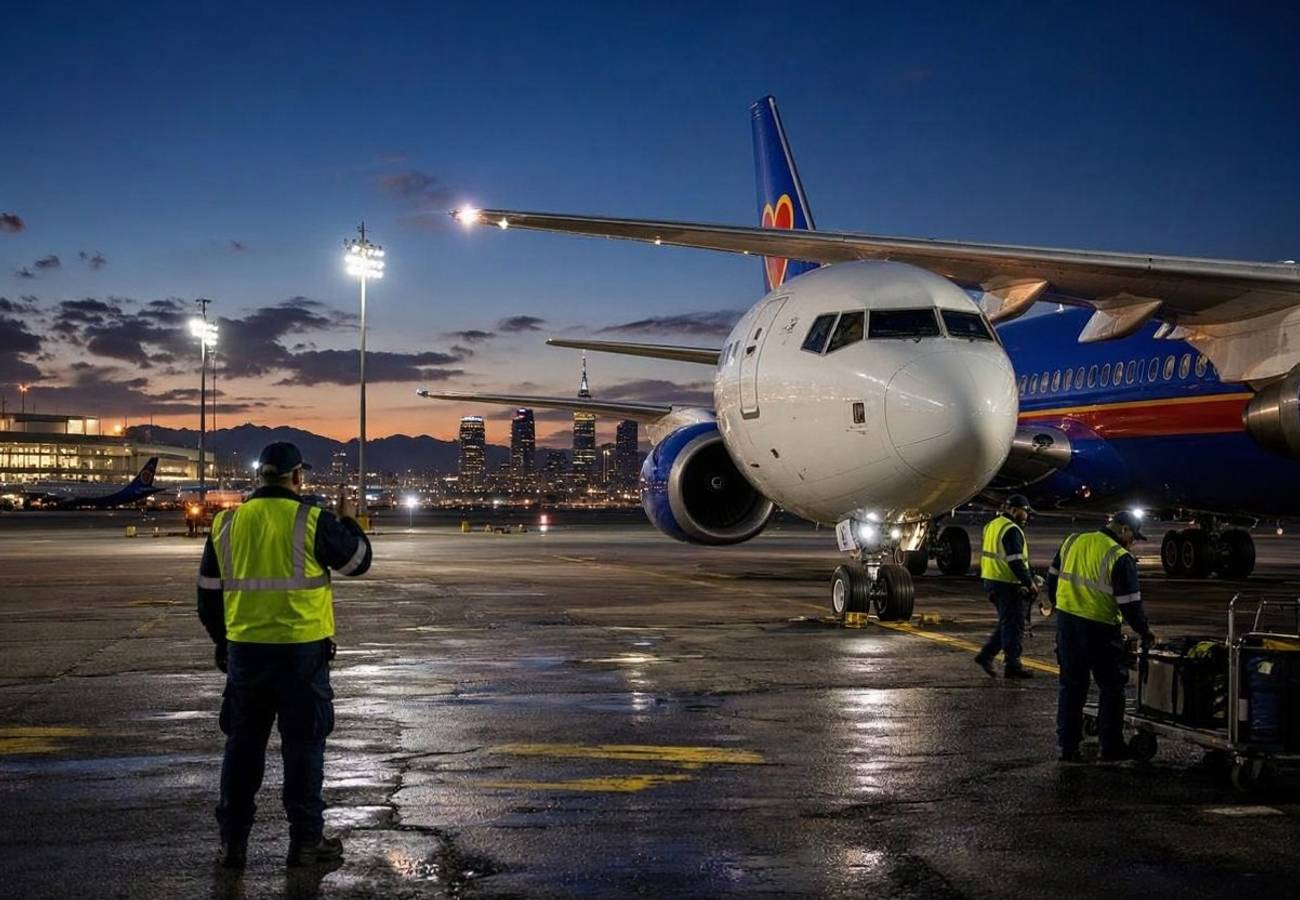
American Airlines Flight AA1494 Diverts to Phoenix: Door Tampering Scare, Passenger Rights, and Holiday Air Security

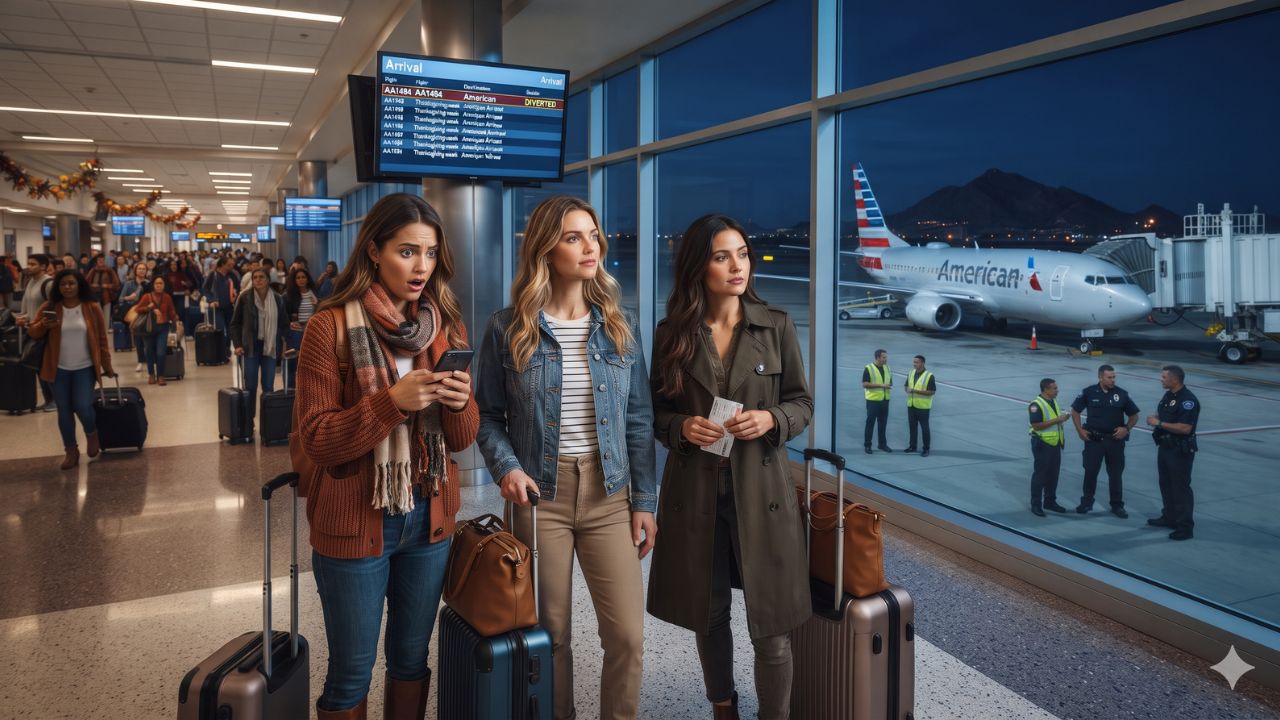
Although cabin pressure mechanics make opening an aircraft door impossible at cruising altitude, an inflight tampering attempt aboard American Airlines Flight AA1494 forced an emergency midnight diversion to Phoenix Sky Harbor. On Wednesday, 25 November 2026, the red-eye flight from San Diego International Airport (SAN) to Chicago O’Hare (ORD) was abruptly diverted when an unruly passenger allegedly disregarded crew instructions and attempted to manipulate an exit door mechanism. Cabin crew and alert travelers subdued the individual mid-flight, allowing pilots to touch down safely in Arizona at roughly 1:00 AM local time.
The diversion occurred during one of the most heavily scheduled travel evenings in American commercial history. While the suspect suffered minor injuries and was transported to a local hospital under police escort, no other passengers or crew were harmed, and the aircraft maintained full cabin pressurization before continuing its overnight journey to Chicago. Regulated by the Federal Aviation Administration (FAA), the incident triggered joint inquiries by federal aviation investigators and the Federal Bureau of Investigation (FBI), highlighting the severe legal repercussions confronting disruptive travelers during peak holiday migration periods.
Emergency at 30,000 Feet: The AA1494 Timeline
Commercial flight operations depend entirely on cabin discipline. When an individual actively interferes with exit doors or ignores crew authority, standard operating procedures dictate an immediate landing at the nearest suitable diversion airfield.
Departing San Diego for Chicago's Midwest hub, Flight AA1494 had climbed into regional cruise airspace when the disturbance unfolded. Eyewitness accounts verified by Phoenix police confirm that when the passenger attempted to tamper with the door assembly, flight attendants and nearby passengers physically intervened to restrain the traveler. Pilots immediately declared an operational priority and veered toward Phoenix Sky Harbor International Airport, where municipal law enforcement officers met the Boeing airliner at the gate.
Aviation engineers emphasize that commercial cabin doors function as "plug doors," meaning the pressure differential between the pressurized interior cabin and the thin high-altitude atmosphere creates thousands of pounds of outward force, preventing manual opening in flight. Nevertheless, tampering with safety hardware represents a felony-grade breach of federal airspace safety.
Master Breakdown: Incident Metrics, Fleet Volume, and Legal Penalties
The following verified matrix outlines the core operational facts of Flight AA1494 alongside the legal frameworks and seasonal traffic numbers defining Thanksgiving travel:
| Operational Area | Official Metric & Authority | Practical Operational Consequence |
|---|---|---|
| Flight Route | American Airlines Flight AA1494 | Scheduled from San Diego (SAN) to Chicago O'Hare (ORD) |
| Diversion Hub | Phoenix Sky Harbor (PHX); ~1:00 AM local | Emergency landing; individual escorted to hospital |
| Cabin Pressure | Zero loss of pressure; door stayed sealed | No structural breach; plane continued to Chicago |
| FAA Civil Fines | Up to $43,658 per violation (FAA) | Stacked fines can exceed $100,000 for multi-charge incidents |
| Criminal Penalties | Up to 20 years in federal prison (FBI/DOJ) | Felony prosecution for flight crew interference |
| Airline Blacklist | Indefinite corporate flight ban | Passenger barred from American Airlines & Eagle network |
| Holiday Volume | >8 million passengers (19 Nov – 1 Dec 2026) | Nearly 85,000 flights scheduled; 4% growth over 2025 |
| Peak Operating Day | Sunday, 29 November 2026 | 7,021 scheduled flights on busiest return travel day |
| 2026 Unruly Reports | >1,500 incident reports filed with FAA | Steady decrease from early 2021, yet ongoing risk |
Federal Enforcement: Costs of Unruly Cabin Conduct
Under US law, interfering with flight personnel carries penalties structured to deter disruption.
The FAA holds statutory power to levy civil penalties up to $43,658 per violation under its zero-tolerance policy. When an incident involves door tampering or physical resistance, regulators frequently issue stacked violations. Additionally, federal prosecutors under Title 49 of the United States Code can pursue criminal charges carrying up to 20 years in prison for crew interference.
Airlines also enforce internal blacklists. American Airlines maintains the right to cancel ongoing tickets and indefinitely ban disruptive flyers from its mainline aircraft and regional American Eagle affiliates.
Operational Ripple Effects During Holiday Surges
Mid-air diversions during holiday peaks create network-wide logistical friction.
American Airlines projected carrying over eight million customers between 19 November and 1 December 2026 across nearly 85,000 flights—a 4% capacity increase over 2025. With operations peaking on Sunday, 29 November, at 7,021 scheduled flights, spare aircraft and backup crews are fully deployed.
When Flight AA1494 diverted to Phoenix, the jet burned extra fuel, incurred landing fees, and risked crew duty time-outs. Because federal rules restrict crew duty hours, unscheduled diversions can force overnight groundings if relief pilots are unavailable, delaying onward connecting travelers in Chicago.
Visitor Insider Tips for Handling Inflight Disruptions
For holiday travelers navigating crowded cabins, knowing how to handle mid-air disruptions preserves safety and itinerary rights:
- Follow Crew Directives Immediately: In an inflight emergency, flight attendants are primary safety coordinators. Clear aisle access and remain seated unless directed by crew members.
- Understand Passenger Delay Rights: Under DOT rules, airlines rebook travelers on subsequent flights after diversions, but passengers completing their journeys do not receive automatic cash refunds.
- Document Disruption Expenses: If a diversion triggers an overnight stay, save itemized receipts for food, transport, and hotels for reimbursement claims.
- Use Carrier Apps for Fast Rebooking: Open your airline mobile app immediately upon landing to select alternate connections before customer service counters form lines.
- Report Disturbances Early: Alert cabin crew discreetly if a passenger displays volatile behavior or attempts to touch aircraft door controls.
Behavioral Strains in Modern Commercial Aviation
A pressurized airliner at 35,000 feet represents a high-density, shared environment. While the 1,500 unruly passenger reports submitted to the FAA in 2026 show progress from 2021 peaks, passenger misconduct remains a disruptive operational risk.
Holiday travel stresses—terminal congestion, flight delays, alcohol, and anxiety—can escalate quickly. Because a commercial cabin cannot be exited in flight, mutual respect and calm cooperation remain essential. When a disturbance occurs, decisive intervention by trained crews and alert travelers protects collective safety.
FAQ: Inflight Emergencies and Unruly Passenger Laws 2026
What caused American Airlines Flight AA1494 to divert to Phoenix?
A passenger attempted to manipulate an exit door mechanism and refused crew orders on 25 November 2026 during a flight from San Diego to Chicago, prompting an emergency landing at Phoenix Sky Harbor.
Could the passenger have opened the aircraft door during flight?
No. Internal cabin air pressure creates thousands of pounds of outward force on commercial plug doors at high altitudes, making it physically impossible for a person to open the door during flight.
What penalties can unruly airline passengers face in the United States?
The FAA can issue civil fines up to $43,658 per violation, while federal criminal prosecution for interfering with flight crews carries prison terms of up to 20 years alongside lifetime carrier flight bans.
What should I do if my flight makes an unscheduled diversion?
Remain seated with seatbelts fastened, listen to crew announcements, and use your airline mobile app to view updated departure times or alternative connecting flight options once on the ground.
At six miles above the earth, safety rests on trust, engineering, and the shared responsibility of every traveler in the cabin.
Related Travel Guides
- Digital Passports and Biometric Boarding in Europe 2026: Airline Adoption, Passenger Rights, and Privacy Risks
- Chicago O'Hare Thanksgiving Travel Alert 2026: Consecutive Ground Stops, Radar Outages, and Nationwide Flight Delays
- France Christmas Travel Alert 2026: Volotea Flight Cancellations Hit Lille, Bordeaux, Perpignan, and Rodez
This article is for informational purposes. Flight routes, passenger regulations, visa rules, and transit advisories are subject to change by airlines and aviation authorities. Readers are advised to verify schedules and travel documentation with relevant carriers and border agencies before departure.
Related Stories
Thanksgiving Airfare Surge 2026: American Airlines and Holiday Flight Price Guide
Delta Air Lines Flight Delays Sweep USA: Weight and Balance Automation Glitch Disrupts Pre-Thanksgiving Travel Across Major Hubs